What do 18th-century wigs and your boss have in common? 10 slang stories


Published on July 26, 2026


Image: Bored Photography

When we look at how English speakers describe the people in charge, we find a colorful catalog of metaphors. Instead of using formal titles like "master" or "director", we have spent centuries inventing funny nicknames to describe the folks at the top. Many of these terms have fascinating histories. Some started on the stage, others in bowling alleys, and some in the courts of the 18th century. Here are 10 of the most famous nicknames used to refer to important people, along with the surprising stories of how they entered our vocabulary.

1

Top banana

Image: Any Lane

If you are the "top banana", you are the undisputed leader of an organization. The expression comes straight from the world of American burlesque and vaudeville of the early 20th century.

Comedy acts of the era often featured three performers. The lead comedian, the one who got the spotlight and the biggest laughs, was called the "top banana". The supporting comics were relegated to "second banana" and "third banana". Why a banana? The lead comic’s routine often involved a prop, and in many popular acts, a literal banana was handed over as a reward after a successful punch line.

2

Kingpin

Image: zieusin

Today, we associate "kingpin" with the leader of a cartel or a criminal enterprise. However, its origins are associated with sports. The term comes from the game of ninepins (an ancestor of modern bowling), dating back to the early 1800s.

The "kingpin" was the tallest, most central pin in the setup. If you managed to hit the kingpin right, it would knock down all the other pins, securing a perfect game. Because this single pin controlled the fate of all the others, the word naturally entered the English language to describe any highly influential person whose actions control an entire group.

3

Boss

Image: Frame Stock Footage

We use "boss" so casually today that it hardly feels like slang, but its rise in American English was actually an act of political rebellion. "Boss" comes from the Dutch word baas, meaning "master".

In the 17th and 18th centuries, Dutch colonists settled in what is now New York. English-speaking workers adopted the word baas as a deliberate alternative to the traditional "master". In a young, democratic America, "master" felt far too servile and feudal. "Boss" allowed workers to acknowledge who was in charge without compromising their personal sense of pride.

4

Big enchilada

Image: Pixel-Shot

When you want to describe the absolute highest authority in a hierarchy, you might call them the "big enchilada". While the culinary term "enchilada" is centuries old, using it to describe a powerful person is a mid-20th-century American political phenomenon.

The term entered the national consciousness during the 1973 Watergate scandal. In secretly recorded White House tapes, John Ehrlichman, an advisor to President Richard Nixon, was heard referring to former Attorney General John Mitchell as "the big enchilada". He meant that Mitchell was the key player, the main target, and the man who held all the cards. The phrase caught on instantly in the media and remained a popular way to describe a dominant leader.

5

Kahuna

Image: Page Light Studios

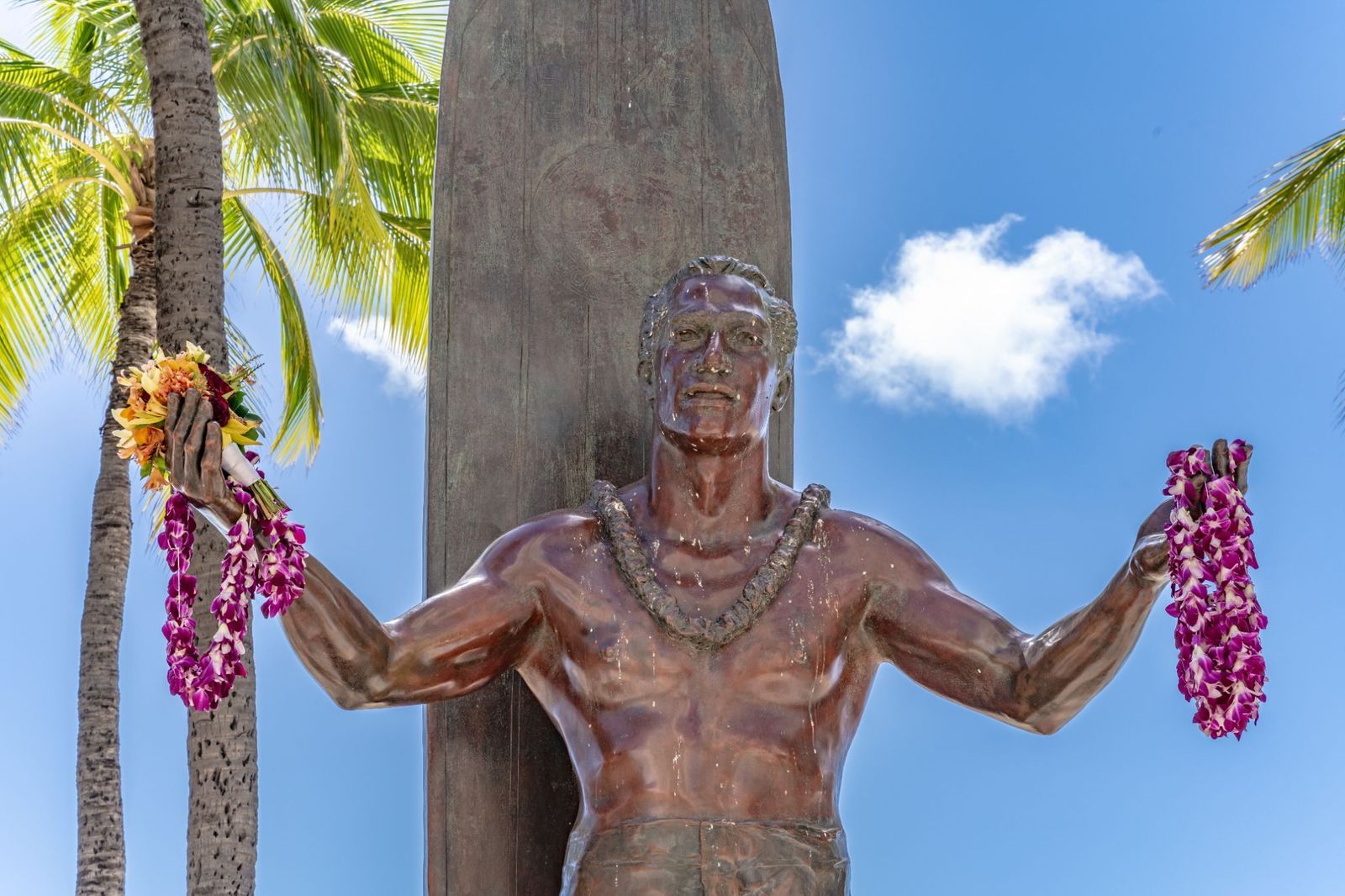
If someone is referred to as the "Big Kahuna", they are the ultimate boss or the expert whose opinion carries the most weight. This term is borrowed directly from the Hawaiian language.

In traditional Hawaiian culture, a kahuna is a respected expert, priest, healer, or master craftsman. When Hawaii became a global surfing destination in the mid-20th century, the term drifted into surf slang. Legendary surfer Duke Kahanamoku was often called the "Big Kahuna". By the late 1950s and 60s, Hollywood surf movies exported "Big Kahuna" to the mainland, where it lost its spiritual meaning and became a nickname for any big boss.

6

Bigfoot

Image: Pixel-Shot

In the world of politics and media, calling someone "Bigfoot" has absolutely nothing to do with searching for a mythical creature in the Pacific Northwest. This modern slang originated in American journalism of the late 1970s.

When a high-profile news story breaks in a small town, national news networks will often fly in their most famous journalists. These prominent reporters trump over the local journalists who had been covering the story first, taking over the prime airtime and top billing. Because they leave a huge footprint wherever they go, frustrated local reporters began calling these elite correspondents "Bigfoots".

7

Bigwig

Image: Vika Glitter

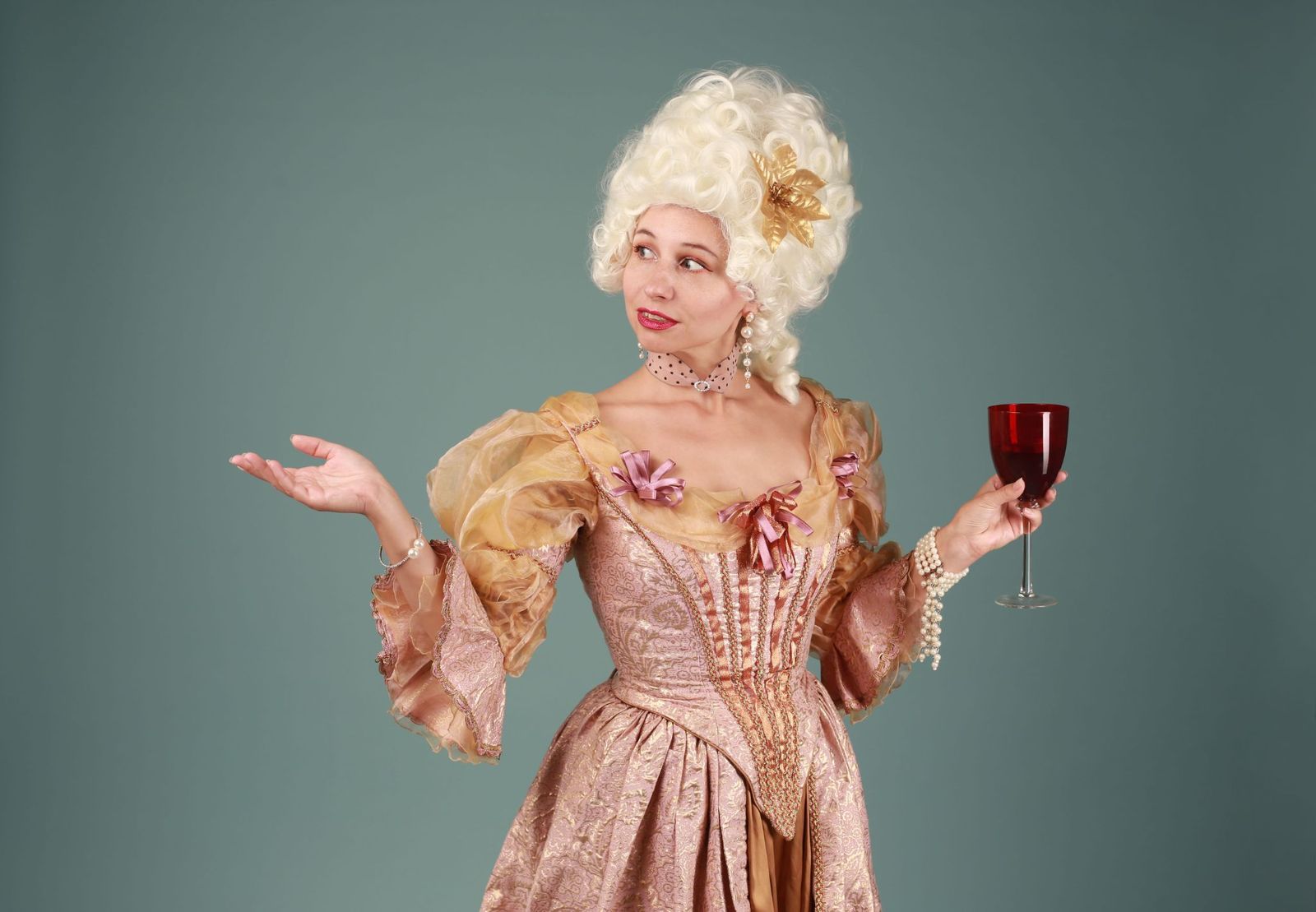
Calling someone a "bigwig" is one of our oldest insults for a person who thinks they are incredibly important, and it has roots in historical fashion. The expression dates back to the 17th and 18th centuries, when powdered wigs (periwigs) were the prime style for wealthy people.

Wigs were incredibly expensive to buy and maintain. Naturally, the wealthier and more powerful a person was, the larger and more elaborate their wig would be. Bishops, judges, and aristocrats wore towering mounds of powdered hair on their heads. So, the working-class began referring to these elites as "bigwigs". Although the fashion died out, the insult survived.

8

Kingfish

Image: reinatsu27

To be a "kingfish" is to be an influential, often charismatic leader who dominates a local area or organization. Though the name originally refers to a predatory marine fish, it became a political nickname in the 1930s.

The term is tied to Huey P. Long, the powerful and controversial Governor and Senator of Louisiana. Long adopted the nickname "The Kingfish" himself, taking it from a character on the popular radio show Amos 'n' Andy. Long used the moniker to project a heroic persona to his supporters, becoming a clever tool of political branding.

9

Big shot

Image: cottonbro studio

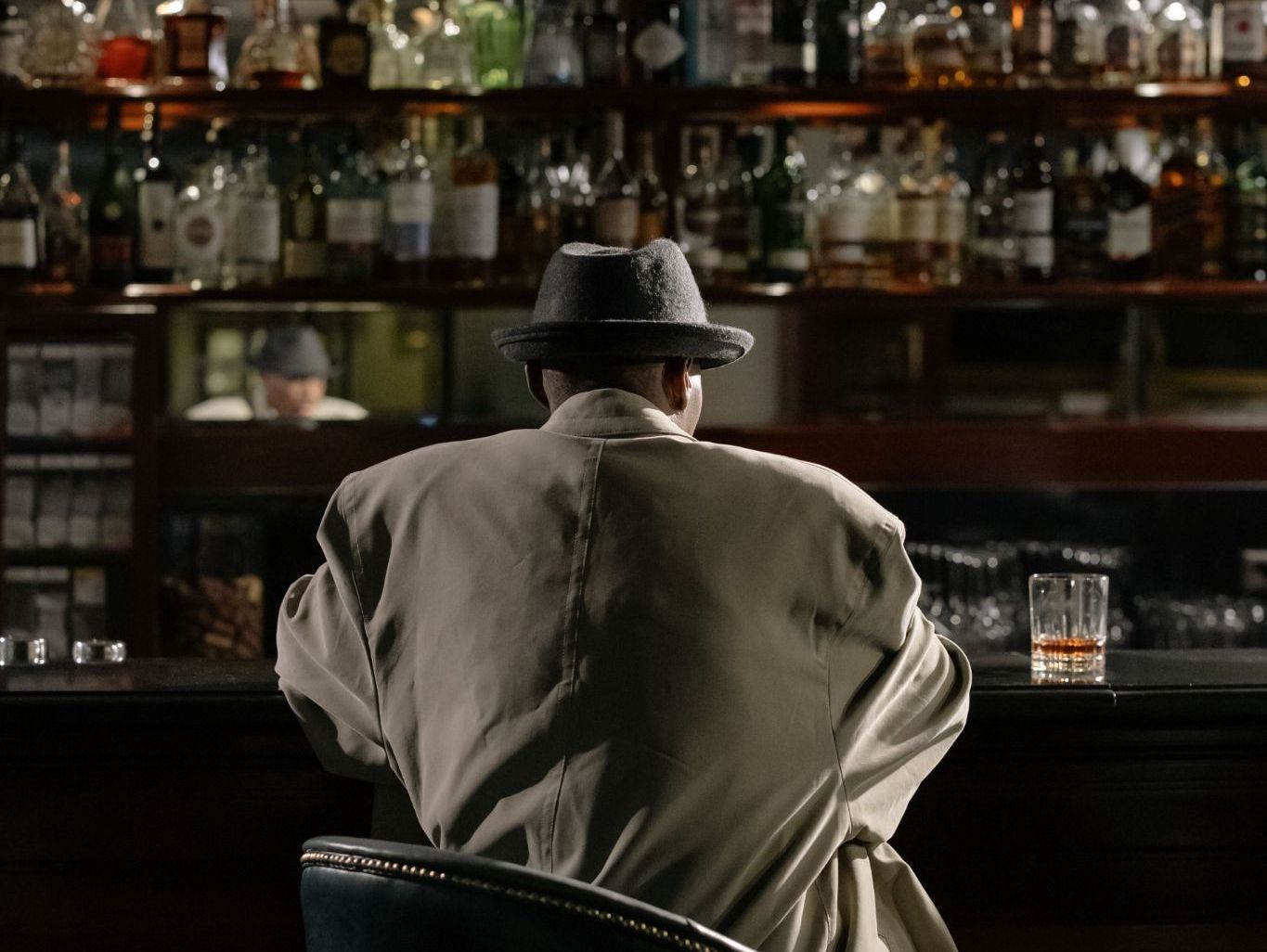
A "big shot" is someone wealthy and influential. This expression became popular in the United States during the Prohibition era of the 1920s.

The term "big shot" was associated with gang violence. Mobsters who controlled the illegal alcohol trade were the "big shots", meaning they were the ones calling the shots and firing the weapons. Over time, the violent side of the term softened, leaving us with a playful way to describe anyone who holds a ton of influence.

10

Top dog

Image: Pixel-Shot

If you are the "top dog", you are the winner, the leader. This idiom can be traced back to 19th-century sports.

In competitive arenas, the competitor that ended up on top of their opponent at the end of a match was crowned the "top dog". The loser, then, was the "underdog". The contrast between these two roles resonated so deeply with the public that both terms migrated into the English language to describe the winners and losers of life, business, and politics.


Deathbed statements

Beyond the grave: Take a look at the last words of 12 famous people


Published on July 26, 2026


Image: Daderot, CC0, via Wikimedia Commons

Throughout history, hundreds of historical figures have left their mark on the world through their marvelous achievements. When their lives came to an end, their last words were often a reflection of their lives and ideals. From George Washington and Mark Twain to Frank Sinatra and Leonardo Da Vinci, in this article, we will reveal 12 final words of memorable personalities.

1

George Washington

Image: The New York Public Library

After serving two terms as the United State's first president, George Washington retired to his Virginia plantation. In mid-December 1799, he developed a cold and a severe sore throat. Despite doctors' efforts to cure him, the end was imminent.

His long-time secretary, Tobias Lear, was at his side during his last days and documented all the events that transpired, including the former president's last words. According to his account, shortly before he took his last breath George Washington said "Tis well" —an old-fashioned way of saying "everything is okay."

2

Humphrey Bogart

Image: Signal Corps Archive from United States, Public domain, via Wikimedia Commons

Noir icon of perpetual elegance and rebellious charisma, Humphrey Bogart is an undisputed legend in cinema history. A Hollywood Golden Age star, Bogart is still remembered today for his scar on his upper lip, his everlasting cigarette, and his perfect portrayal of gangsters and detectives.

At the age of 57 Bogart was diagnosed with esophageal cancer, for which he was hospitalized for several months. According to lore, the legendary star's last words were "I should never have switched from scotch to martinis." However, his wife Lauren Bacall confirmed that the last thing he actually said was "Goodbye Kid. Hurry back," before she left his bedside to get their children.

3

Mark Twain

Image: Miscellaneous Items in High Demand, PPOC, Library of Congress, Public domain, via Wikimedia Commons

As one of the greatest American writers of all time, Mark Twain is usually credited with all sorts of great quotes that he often didn't say. For that reason, there are different versions of what his last words were before he died in 1910 at the age of 74.

The most plausible theory can be found in an article published one day after his death. According to this chronicle, Samuel Langhorne Clemens' last words were not spoken aloud but written. The famous humorist and essayist reportedly wrote to his daughter Clara, who accompanied him on his bedside, "Give me my glasses."

4

Joan Crawford

Image: MGM, Public domain, via Wikimedia Commons

Joan Crawford, the Oscar winner for Mildred Pierce and one of the greatest stars of Hollywood's golden age, died in 1977 of a heart attack.

The actress, who had a complicated personality, was true to her nature until her last breath. She was so ill that her doctor felt it wasn’t worth taking her to the hospital. One of her nurses began to pray aloud in desperation. Losing her patience, Crawford snapped for the last time and said, "Damn it... Don't you dare ask God to help me."

5

Marco Polo

Image: Municipal Library of Trento, CC0, via Wikimedia Commons

The year 2024 marked the 700th anniversary of the death of the man who better described remote lands. Marco Polo was a merchant who spent more than 20 years of his life traveling through the Orient and wrote about his adventures in a book that became a bestseller when the printing press wasn’t even invented.

Marco Polo was, and still is, a legend. When, on his deathbed, his wife and friends begged the brave explorer to confess if what he had told in the book was true, he barely whispered: "I have not told the half of what I saw and did."

6

Groucho Marx

Image: MGM, Public domain, via Wikimedia Commons

Julius Henry Marx, better known as Groucho Marx, is considered one of the most influential comedians of all time. The man with the bushy black mustache was one of the Marx Brothers. Together they made 13 films, including the classic Duck Soup. After a long and prominent career, Groucho passed away in Los Angeles in 1977 at the age of 86.

His brilliant one-liners are still remembered and replayed to this day, so it is not surprising that not one but several final words are attributed to him. A few close friends have suggested that his last line was "This is no way to live!", while most suggest that his last words were in fact dedicated to his wife: "Die, my dear? Why, that's the last thing I'll do!"

7

Voltaire

Image: Nicolas de Largillière, Public domain, via Wikimedia Commons

Voltaire, the French writer, philosopher, historian, and lawyer, one of the major figures of the Enlightenment, died in 1778 at the age of 83. Different accounts of his deathbed make it impossible to determine exactly what his last days were like.

One of these stories, however, is consistent with his ideas about God and his well-known criticism of the Church. According to this version, when the priest asked him if he wanted to renounce Satan before he died, Voltaire replied, "This is no time to make new enemies."

8

L. Frank Baum

Image: William Wallace Denslow, Public domain, via Wikimedia Commons

L. Frank Baum was a prolific American author. He wrote 55 novels, 82 short stories, and more than 200 poems. However, his most memorable work is his series of children's fantasy books The Wonderful Wizard of Oz.

On May 5, 1919, Baum suffered a heart attack. He died the next day, shortly before his 63rd birthday. Disturbed by the imminence of death, he whispered to his wife: "Now we can cross the Shifting Sands," a clear reference to the Land of Oz.

9

Augustus

Image: National Archaeological Museum of Athens, CC0, via Wikimedia Commons

Augustus, the first Roman emperor, is often attributed with the phrase: "Behold, I found Rome of clay, and leave her to you of marble," alluding to the great infrastructural works carried out during his prosperous 40 years of rule.

However, according to other historical accounts, his last words were addressed to the friends who stayed with him on his deathbed: "Have I played the part well? Then applaud, as I exit."

10

Frank Sinatra

Image: English: Distributed by NBC. Photographer unknown., Public domain, via Wikimedia Commons

"Darling, you've gone through worse and you can beat this too. You have to fight," implored Barbara Marx, Frank Sinatra's fourth wife, to her beloved on his deathbed. "I'm losing," The Voice whispered through teary eyes.

Barbara recounted the last hours of the singer of such hits as My Way and New York, New York in her memoir Lady Blue Eyes: My Life With Frank. Frank Sinatra, one of the most popular entertainers of the mid-20th century, pronounced his last words in 1998 at the age of 82.

11

Leonardo Da Vinci

Image: Jean-Auguste-Dominique Ingres, CC0, via Wikimedia Commons

Despite being one of the most famous artists of the Renaissance, Leonardo da Vinci was very hard on himself. All his life he challenged his own limits, evident in his paintings and sculptures as well as in his inventions, some of which were truly revolutionary.

Even after a lifetime of success, he wasn’t quite satisfied. When he suffered a stroke at the age of 67, he sent for a priest to receive the Holy Sacrament and, according to historians, his greatest regret was that he hadn’t achieved excellence with his work. In that sense, it is said that his last words were: "I have offended God and mankind because my work did not reach the quality it should have."

12

Joe DiMaggio

Image: National Museum of Health and Medicine, Public domain, via Wikimedia Commons

The Yankee Clipper was one of the greatest baseball players of all time but he is also known for having been married to the iconic American actress Marilyn Monroe. Joe and Marilyn were together for less than three years. In 1955 the actress left him for American playwright Arthur Miller.

DiMaggio was devastated. He never married again, and never got over his one true love. His last words before he died in 1999 at the age of 84 were: "I'll finally get to see Marilyn."

Looking for an extra scoop of literary fun?

Learn more with our Word of the day

seminal

/ˈsɛmən(ə)l/