Debunked science

Before science got it right: 10 wild misconceptions that misled everyone


Published on April 10, 2026

Image: Philippe BONTEMPS

Before modern science lifted the veil on some of nature’s most baffling phenomena, people relied on what they knew—and when that failed, they invented explanations that now seem spectacularly bizarre. But even if these early ideas now seem strange or even foolish, they helped pave the way for modern science. Each flawed theory pushed curious minds to investigate further and refine how we understand the world. From spontaneous generation to the theory of miasma, here are 10 examples of what people believed not so long ago.

1

Flat Earth

Image: Glenn Carstens-Peters

For centuries, people believed the Earth was a flat disc floating on water. Ancient maps depicted oceans surrounding a flat plane, and falling objects supposedly plummeted straight down to the abyss.

While Aristotle was among the first to argue for Earth’s true shape—observing ships vanishing hull-first over the horizon and the round shadow cast during lunar eclipses—and Eratosthenes later refined these intuitions to calculate the planet’s circumference with remarkable accuracy, the flat-Earth concept still persisted well into the Middle Ages.

2

Spontaneous generation

Image: Adrian Lange

During the Middle Ages, and for long before, it was believed that maggots, mice, and other creatures could arise spontaneously from mud, rotting meat, or grain.

It wasn’t until the 17th century that Francesco Redi’s experiments disproved this idea: maggots appeared only when flies had access to lay their eggs. Later, Pasteur confirmed that microbes also do not arise spontaneously.

3

The Moon’s "breath"

Image: Ganapathy Kumar

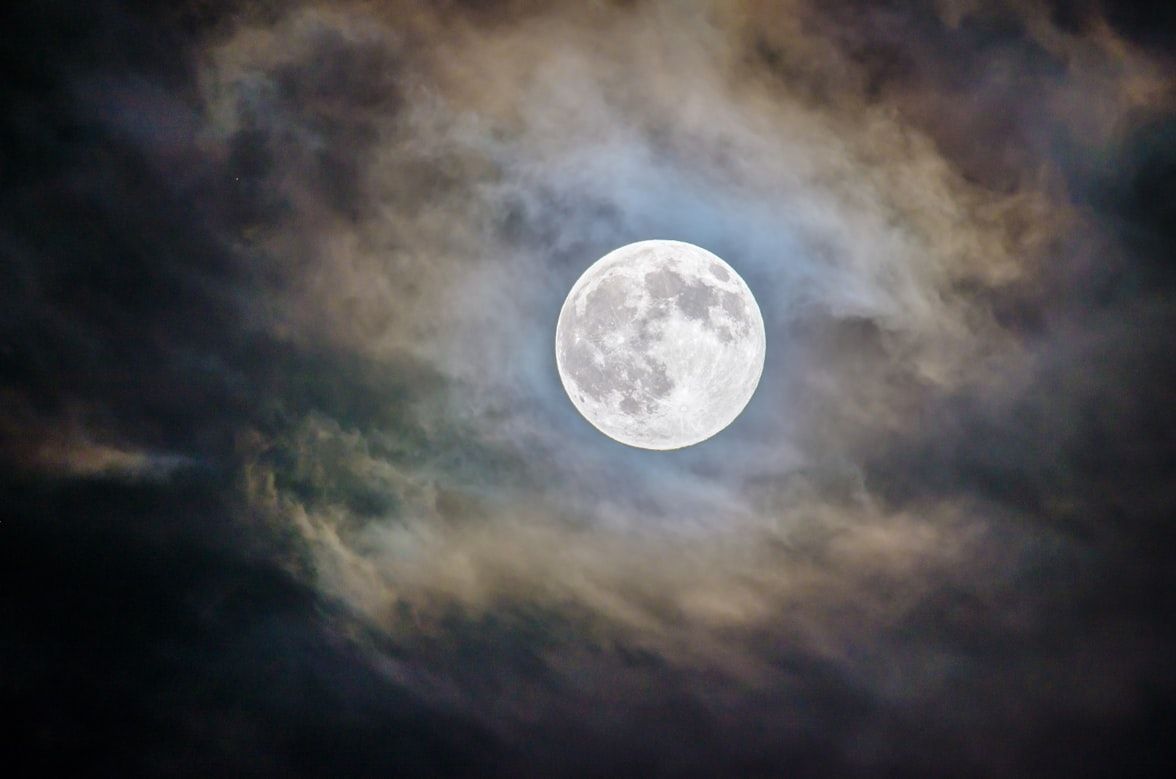
Early natural philosophers suspected the tides followed the Moon’s cycle, but without a concept of gravity, they proposed more imaginative mechanisms. One widely repeated idea described the Moon as "breathing" or exhaling a kind of pneumatic force that pulled the seas upward, much like winds or vapors moving through the air.

It wasn’t until Newton’s work in the 17th century that a clear physical explanation emerged, showing that the tides are driven by the gravitational pull of the Moon and Sun acting on Earth’s oceans.

4

Giant worms cause earthquakes

Image: Karl Callwood

Some early natural philosophers suggested earthquakes were caused by giant underground worms or serpent-like creatures shifting through the Earth. The analogy came from observing how smaller burrowing animals disturbed soil and assuming larger unseen versions could shake the ground itself.

As geological science progressed, however, these notions gave way to evidence showing that earthquakes result from the movement and fracturing of Earth’s crust along fault lines.

5

Flaming gas in the skies

Image: Lightscape

Early explanations for the northern lights often described them as fires or glowing vapors igniting high in the atmosphere. Some natural philosophers proposed that luminous gases rose from Earth’s surface and caught fire in the upper air, while others compared the lights to reflections from vast, distant flames.

With improved observations, scientists showed that auroras are caused by charged particles from the solar wind interacting with Earth’s magnetic field and energizing atmospheric gases.

6

Sunspots as planets crossing the Sun

Image: Javier Miranda

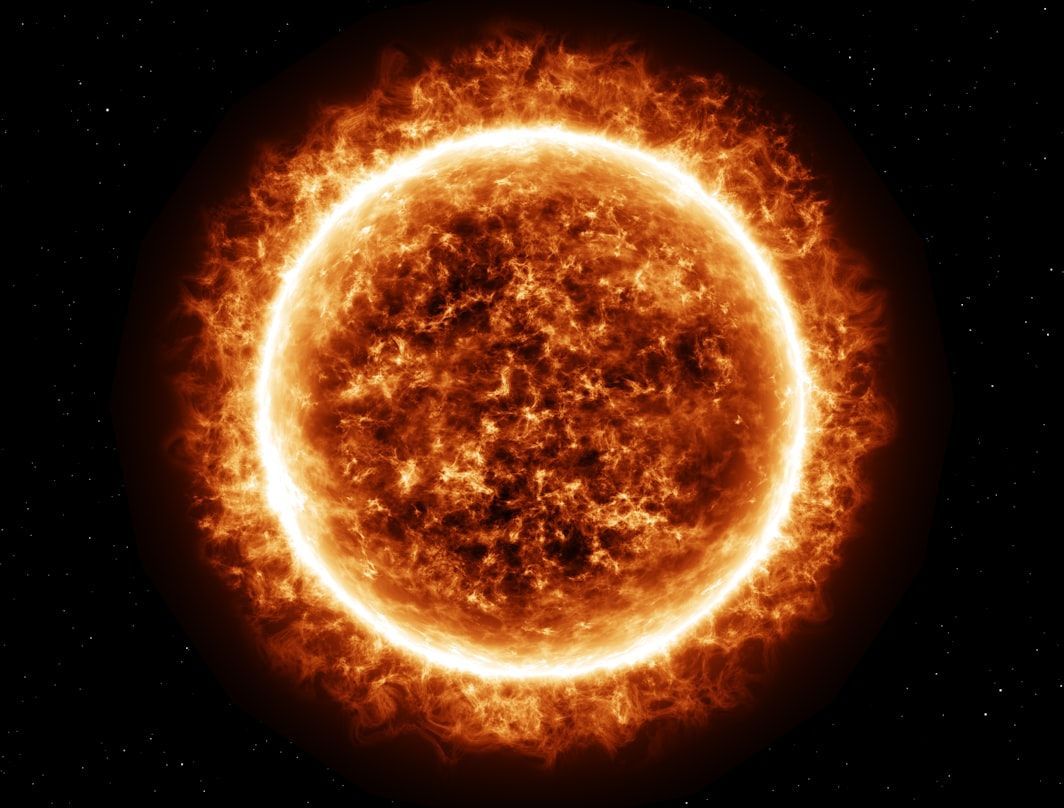
Some early astronomers—including Jesuit priest Christoph Scheiner—argued that sunspots were actually small planets or satellites orbiting the Sun, preserving the idea of a "perfect" Sun untouched by blemishes.

Galileo, however, tracked their shapes and motions and noticed they transformed and changed irregularly, which meant they were on or very close to the Sun’s surface—so they couldn’t be planets.

7

Bad air causes disease

Image: Ruvim Noga

People once believed diseases like cholera, plague, and malaria spread through "miasma," or poisonous bad air rising from decaying matter. The theory shaped public health for centuries and even informed major sanitation reforms in the 19th century.

It wasn’t until the work of Snow, Pasteur, and Koch that germ theory replaced miasma, showing that infectious diseases are caused by specific microorganisms—not foul-smelling air.

8

Underground rivers

Image: Kubo Mičuch

Early hydrologists often believed springs were fed by vast underground rivers flowing through hollow channels in the Earth. The idea came from observing surface rivers disappearing into caves and reappearing elsewhere, leading to the assumption that similar large waterways existed everywhere below ground.

Modern hydrogeology shows that most groundwater doesn’t travel in rivers but moves slowly through porous soil and rock, driven by pressure and permeability rather than hidden subterranean channels.

9

Comets as atmospheric phenomena

Image: Forsaken Films

For centuries, comets were thought to be atmospheric phenomena—fiery vapors or clouds igniting high in the sky. Even Aristotle’s model placed them in the upper atmosphere, and this view persisted well into the Renaissance.

Until Tycho Brahe’s observations in the 1570s showed that comets had no measurable parallax, it hadn’t been realized that they were actually far beyond the Moon. This helped establish comets as true celestial bodies orbiting the Sun.

10

Magnetism from living "souls"

Image: Chris Nagahama

Early explanations for magnetism often invoked a "living force" within lodestones, suggesting they possessed a kind of spirit or soul that allowed them to attract iron. Others claimed magnets emitted invisible _effluvia_—mysterious vapors that pulled metals toward them.

William Gilbert’s De Magnete (1600) replaced these ideas with a physical model, showing that magnetism was a natural property of matter and that Earth itself acted like a giant magnet.



Hospital secrets

What is a "Code Gray" and what you should know if you hear it at the E.R.


Published on April 10, 2026


Image: voronaman

A trip to the emergency room can be stressful enough without hearing doctors and nurses speak a language that sounds like a secret code. One minute, someone is asking for medication "STAT," the next there’s a "Code Gray," and another patient is suddenly "NPO." What do those words really mean? Some are official medical terms, others are insider slang, but they all help hospital staff communicate quickly when every second counts. Here are 10 of those codes explained.

1

Code Gray

Image: PeopleImages

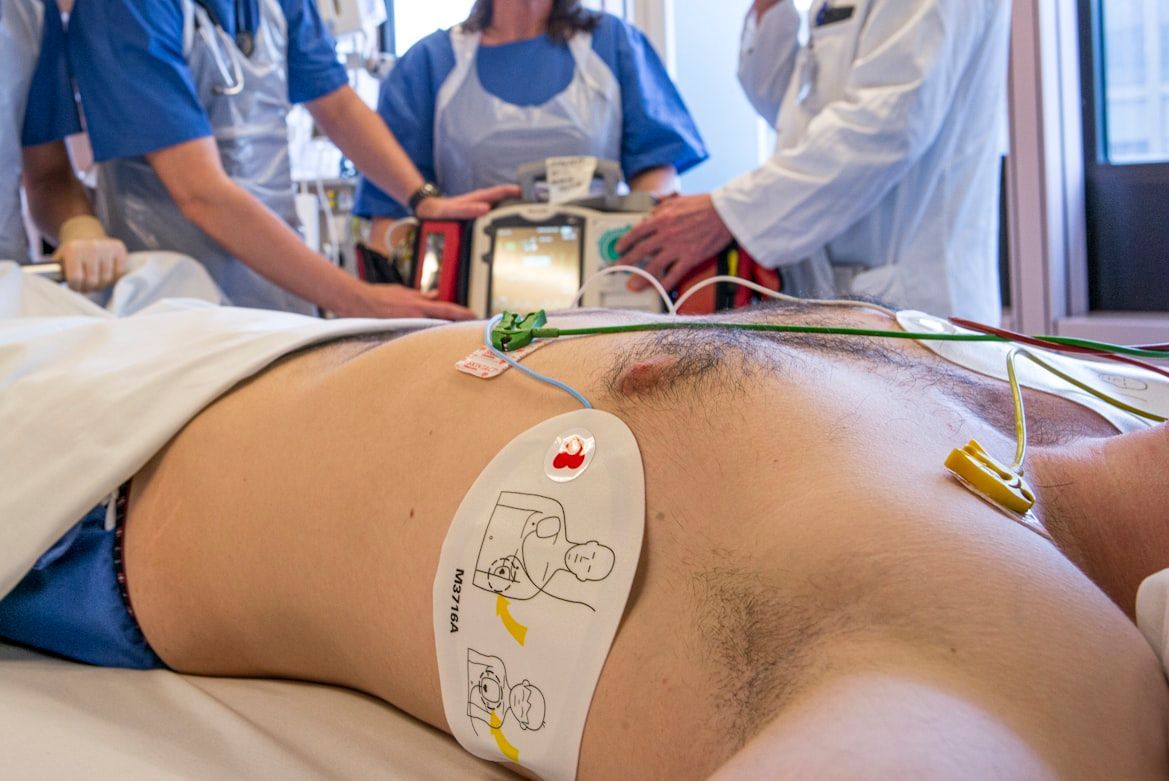
The E.R. can be hectic and unpredictable. Most patients are frightened or uncomfortable, but now and then someone becomes aggressive because of pain, confusion, mental illness, or the effects of alcohol or other substances. That’s when you can hear "Code Gray" announced over the speakers.

The code is used to summon security officers to help manage a violent or combative situation. While color codes vary from one hospital to another, Code Gray commonly signals that staff needs extra assistance to protect patients, visitors, and healthcare workers. Even if you know it now, most people in the waiting room never know what happened, and that’s exactly the point.

2

NPO

Image: PeopleImages

You have a scheduled surgery, you’re in your bed waiting to be taken to the surgery room, and you ask for a cup of coffee to make the wait lighter. The nurse will probably tell you you’re an NPO. You may think it’s serious, but it’s simply a procedure.

"NPO" is an abbreviation that comes from the Latin phrase Nil Per Os, which means "nothing by mouth." It tells patients they cannot eat, drink, or sometimes even take medication until doctors say it’s safe. The rule is most common before surgery or certain medical tests, when food or liquids could increase the risk of complications or alter the results. It may be frustrating, but it’s an important part of keeping patients safe.

3

STAT!

Image: PeopleImages

You’ve probably been through the experience of visiting an emergency room, either to get checked or to visit a loved one. In that part of the hospital where everyone is rushing to save lives, you’ve probably heard a doctor asking for the R.C.P. cart or medication "STAT!" It sounds urgent, and that's because it is.

The expression comes from the Latin statim, which means "immediately" or "without delay." Hospitals have used Latin medical terms for centuries, but STAT is one of the few that remains part of everyday conversation. When a doctor says it, the request jumps to the top of the priority list. It doesn’t always refer to a life-or-death situation, but it does mean the medical team needs something done as quickly as possible.

4

Code Pink

Image: Vladimir Tretyakov

Newborns are always a reason to celebrate at the hospital. Parents usually rest happily next to their child as they receive congratulations from close relatives. However, the hospital is always prepared to handle extremely rare emergencies under "code pink."

If you hear a "Code Pink," it usually means a baby or young child is suspected of being abducted from the hospital. Within seconds, security officers respond, exits may be monitored or blocked, and staff begins following carefully rehearsed procedures. Although different hospitals sometimes use different color codes, Code Pink has become widely recognized across North America as one of the most serious alerts a hospital can issue.

5

Walkie-talkie

Image: Arunporn Thanapotivirat

If you’ve ever spent a few days in the hospital, you’ve probably noticed that some patients are walking up and down the halls, while others need help just getting out of bed. When a nurse refers to someone as a "walkie-talkie," it’s actually good news.

This informal expression refers to patients who can walk on their own, use the bathroom without assistance, and handle most basic tasks independently. It’s not an official medical term, of course, but it’s commonly used among healthcare workers because it quickly tells the next shift that the patient requires less hands-on care than many others.

6

Total

Image: sebra

As nurses change shifts, you’ll often hear them give a quick report about each patient. One person may only need medication, while another is described as a "total."

The term is short for a patient who requires total care. They may need help eating, bathing, getting dressed, turning in bed, or moving from one place to another. Although the expression sounds impersonal, it’s simply a practical way for caregivers to communicate how much assistance someone needs.

7

Frequent flyer

Image: Studio Romantic

Most people hear "frequent flyer" and think of an airline reward program. And that’s correct, but in an emergency room, the phrase has a very different meaning.

A frequent flyer is an informal nickname for patients who repeatedly return to the hospital, often due to chronic illness, recurring medical conditions, or other ongoing health issues. Behind the light-hearted nickname is often a difficult reality. Many of these patients are simply dealing with medical problems that require regular emergency care, and the expression is just a way to make the experience a bit lighter among the familiar faces of doctors and nurses.

8

WOW

Image: Studio Romantic

Not all codes are for patients. The next time you’re in a hospital, look closely at what the nurse is pushing from room to room. It may look like a small rolling desk with a computer on top. Staff often call it a "WOW," short for "workstation on wheels."

As hospitals switched from paper charts to electronic medical records, these mobile computers became essential. Nurses use them to review test results, scan medications, update patient charts, and check doctors’ orders without leaving the bedside. The name sounds funny, but the technology helps caregivers spend more time with patients instead of walking back and forth to a nursing station.

9

Sharp container

Image: NMK-Studio

After getting a shot or having blood drawn, most patients never think about where the used needle ends up. It certainly doesn't go into an ordinary trash can.

Hospitals place needles, scalpels, and other sharp medical instruments into special containers designed to prevent accidental injuries. These sturdy, puncture-resistant boxes are sealed when full and safely disposed of in accordance with strict health regulations. This not only protects nurses, but it also protects cleaning crews, waste handlers, and even the public from dangerous needle sticks. It’s one of the most important safety measures in every hospital, even though most patients never notice it.

10

B-52

Image: Photoroyalty

If you’ve ever watched a medical drama, you've probably seen a patient become so agitated that several staff members rush into the room. In situations like that, a doctor or nurse may ask for a "B-52." But the name has nothing to do with numbers themselves; it actually comes from a medicine.

B-52 is hospital slang for a fast-acting injection used to calm down patients who are severely combative or at risk of harming themselves or others. The nickname comes from a commonly used combination of medications that usually include diphenhydramine, haloperidol, and lorazepam. It’s strictly reserved for when other methods of calming the patient haven’t worked.

Looking for an extra scoop of literary fun?

Learn more with our Word of the day

averse

/əˈvərs/