A guide to refined verbal warfare

Why use a slur when you could call someone "pusillanimous"?


Published on April 19, 2026


Image: Edmond Dantès

In a world increasingly dominated by four-letter words and monosyllabic grunts of disapproval, the art of the sophisticated insult has become something of a lost relic. There is a profound difference between being rude and being cutting. A common insult is a blunt instrument, but it rarely leaves a lasting mark. A sophisticated insult, however, is precise, elegant, and often so sharp that the recipient doesn't realize they’ve been wounded until they try to walk away. Here is an exploration of 10 linguistic gems that will elevate your verbal sparring from a playground scuffle to a high-stakes duel.

1

Insipid

Image: Vitaly Gariev

Insipid is the ultimate insult for the boring. It means "lacking flavor, vigor, or interest." While bland describes a soup, insipid describes someone with the personality of lukewarm tap water.

It’s derived from the Latin sapere (to taste), with the prefix in- (not). So, when someone presents an idea so unimaginative and derivative that it’s physically painful to endure, you can just call them insipid.

2

Twee

Image: Yosi Prihantoro

What does it mean exactly? "Excessively or affectedly quaint, pretty, or sentimental." Originally a childish mispronunciation of "sweet," twee is the insult for the person who tries too hard to be precious. Think of someone whose entire personality and aesthetic feels performative and overly "cute" to the point of nausea. Twee suggests their unique personality is actually a shallow, annoying affectation.

3

Fatuous

Image: Steve Johnson

To be fatuous is to be silly and pointless in a way that is self-satisfied. It first appeared in the English language in the early 17th century and is derived from the Latin adjective fatuus, which meant "foolish, simple." In its original Latin context, it was often used to imply that someone was not just lacking in intelligence, but also believed they were being profound while saying nothing of substance. Today, you can use it to describe a person who quotes inspirational cliches as if they were divine revelations. You’d be attacking their intellect and their ego simultaneously.

4

Sanctimonious

Image: Budgeron Bach

Do you know anyone who tends to make a show of being morally superior to other people? We all have one or two of those in our lives! A sanctimonious person isn't necessarily a good person; they are just someone very loud about how much better they are than you.

Initially, in the 15th and 16th centuries, to describe someone as sanctimonious was actually a compliment. It simply meant they possessed sanctimonia, meaning they were truly devout or holy. Around the early 17th century, the word underwent a pejorative shift. People began using it ironically to describe individuals who made a massive, public show of their holiness but lacked the actual virtue to back it up.

5

Vacuous

Image: MART PRODUCTION

Simply put, vacuous means "showing a lack of thought or intelligence; mindless." Derived from the same root as "vacuum," to be vacuous is to be empty. It’s the "lights are on, but nobody’s home" insult. It implies a total absence of any internal life or critical thinking. You can use it when someone offers a fix to a complex problem that proves they haven't understood a single word of the conversation.

6

Unctuous

Image: Pixabay

This word originally referred to greasy or soapy substances. This is the same linguistic family that gave us unguent (a medicinal ointment or salve). In the late 16th and early 17th centuries, it began to be used to refer to people "excessively or ingratiatingly flattering." Just as an oily substance is slippery and leaves a residue that is hard to wash off, an unctuous person is someone whose flattery feels thick, pervasive, and slightly gross. It’s usually the person who laughs a little too hard at the boss’s jokes and uses your name in every sentence to build rapport.

7

Craven

Image: Pavel Danilyuk

Coward is a common noun, but craven is a judgment. It suggests a deep-seated, shameful lack of backbone. It’s not just being afraid; it’s being so afraid that you abandon your principles.

The ancestor of craven —the Latin crepare, meaning "to crack," "to creak," or "to snap"— describes the sound of something breaking under pressure. It suggests that a coward is someone who cracks when the situation gets too intense. Think of a person who throws a subordinate under the bus to save their own skin.

8

Pusillanimous

Image: Thirdman

You’ll like this one. When a decision-maker refuses to make a choice because they are terrified of any potential criticism, you can use the word pusillanimous. It implies they are too small, spiritually and emotionally, to handle the situation. Derived from the Latin pusillus (very small) and animus (spirit), it literally means having a "tiny soul." It is one of the most fun words to say, as the sibilant "s" sounds almost like a hiss of contempt.

9

Obstreperous

Image: Icons8 Team

This isn't just "loud." An obstreperous person is aggressively unruly, noisy, and difficult to control. It’s the energy of someone who starts a fight at a PTA meeting or screams at a flight attendant over a lack of pretzels, thinking that the louder they yell, the more "right" they become.

The word comes from the Latin verb obstrepere, which is a combination of the prefix ob-, meaning "against" or "in the way of," and strepere, "to make a noise," "to rattle," "to murmur," or "to roar." Literally translated, to be obstreperous is "to make a noise against" something or someone.

10

Obtuse

Image: Liza Summer

In geometry, an obtuse angle is wide and blunt. In conversation, an obtuse person is someone who is annoyingly insensitive or slow to understand. Often, it’s used to describe someone who is deliberately failing to see the point because the truth is inconvenient for them. When to use it? When you’ve explained the same simple concept three times, and they still respond with, "I don't see what the big deal is."



Hospital secrets

What is a "Code Gray" and what you should know if you hear it at the E.R.


Published on April 19, 2026


Image: voronaman

A trip to the emergency room can be stressful enough without hearing doctors and nurses speak a language that sounds like a secret code. One minute, someone is asking for medication "STAT," the next there’s a "Code Gray," and another patient is suddenly "NPO." What do those words really mean? Some are official medical terms, others are insider slang, but they all help hospital staff communicate quickly when every second counts. Here are 10 of those codes explained.

1

Code Gray

Image: PeopleImages

The E.R. can be hectic and unpredictable. Most patients are frightened or uncomfortable, but now and then someone becomes aggressive because of pain, confusion, mental illness, or the effects of alcohol or other substances. That’s when you can hear "Code Gray" announced over the speakers.

The code is used to summon security officers to help manage a violent or combative situation. While color codes vary from one hospital to another, Code Gray commonly signals that staff needs extra assistance to protect patients, visitors, and healthcare workers. Even if you know it now, most people in the waiting room never know what happened, and that’s exactly the point.

2

NPO

Image: PeopleImages

You have a scheduled surgery, you’re in your bed waiting to be taken to the surgery room, and you ask for a cup of coffee to make the wait lighter. The nurse will probably tell you you’re an NPO. You may think it’s serious, but it’s simply a procedure.

"NPO" is an abbreviation that comes from the Latin phrase Nil Per Os, which means "nothing by mouth." It tells patients they cannot eat, drink, or sometimes even take medication until doctors say it’s safe. The rule is most common before surgery or certain medical tests, when food or liquids could increase the risk of complications or alter the results. It may be frustrating, but it’s an important part of keeping patients safe.

3

STAT!

Image: PeopleImages

You’ve probably been through the experience of visiting an emergency room, either to get checked or to visit a loved one. In that part of the hospital where everyone is rushing to save lives, you’ve probably heard a doctor asking for the R.C.P. cart or medication "STAT!" It sounds urgent, and that's because it is.

The expression comes from the Latin statim, which means "immediately" or "without delay." Hospitals have used Latin medical terms for centuries, but STAT is one of the few that remains part of everyday conversation. When a doctor says it, the request jumps to the top of the priority list. It doesn’t always refer to a life-or-death situation, but it does mean the medical team needs something done as quickly as possible.

4

Code Pink

Image: Vladimir Tretyakov

Newborns are always a reason to celebrate at the hospital. Parents usually rest happily next to their child as they receive congratulations from close relatives. However, the hospital is always prepared to handle extremely rare emergencies under "code pink."

If you hear a "Code Pink," it usually means a baby or young child is suspected of being abducted from the hospital. Within seconds, security officers respond, exits may be monitored or blocked, and staff begins following carefully rehearsed procedures. Although different hospitals sometimes use different color codes, Code Pink has become widely recognized across North America as one of the most serious alerts a hospital can issue.

5

Walkie-talkie

Image: Arunporn Thanapotivirat

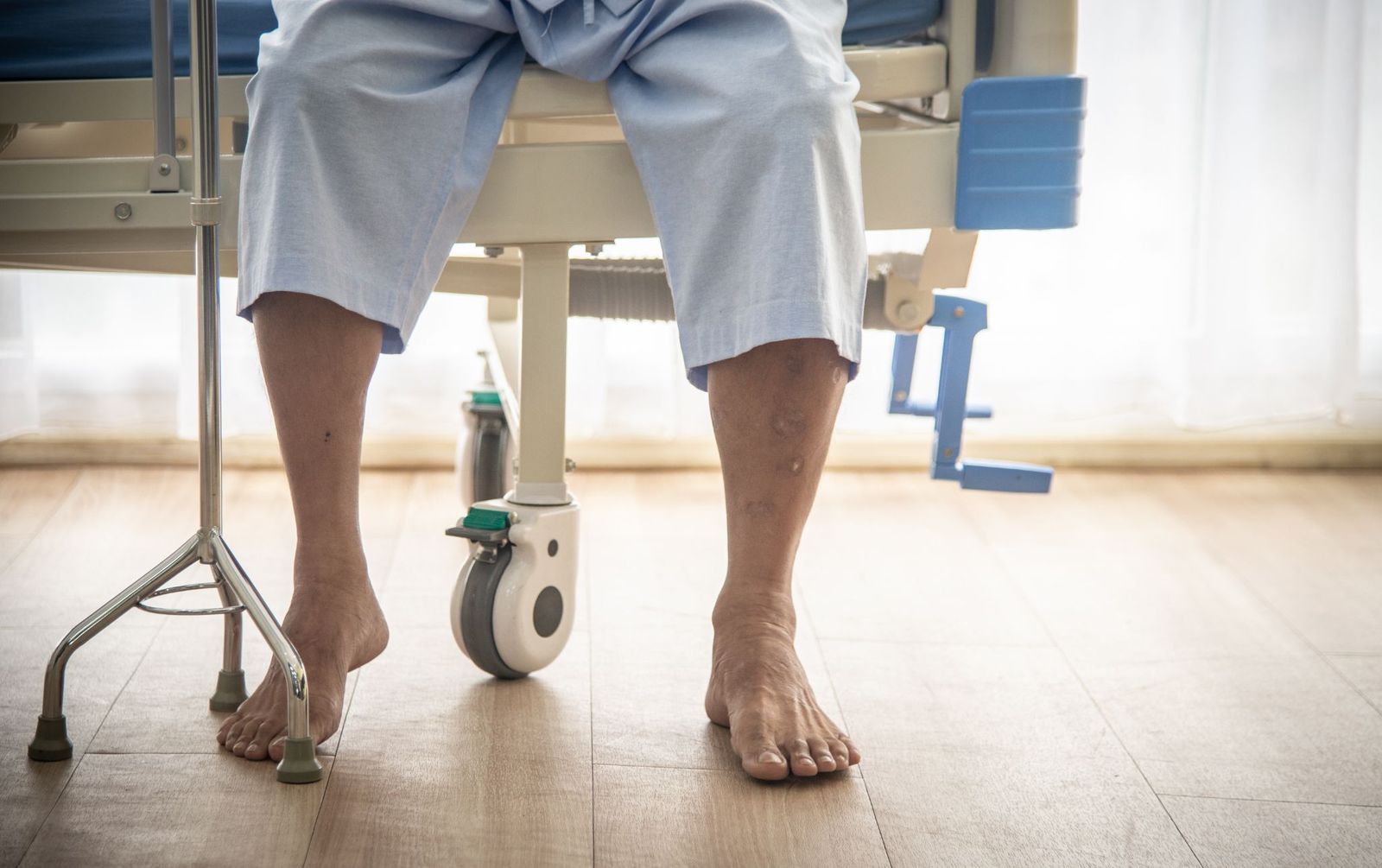
If you’ve ever spent a few days in the hospital, you’ve probably noticed that some patients are walking up and down the halls, while others need help just getting out of bed. When a nurse refers to someone as a "walkie-talkie," it’s actually good news.

This informal expression refers to patients who can walk on their own, use the bathroom without assistance, and handle most basic tasks independently. It’s not an official medical term, of course, but it’s commonly used among healthcare workers because it quickly tells the next shift that the patient requires less hands-on care than many others.

6

Total

Image: sebra

As nurses change shifts, you’ll often hear them give a quick report about each patient. One person may only need medication, while another is described as a "total."

The term is short for a patient who requires total care. They may need help eating, bathing, getting dressed, turning in bed, or moving from one place to another. Although the expression sounds impersonal, it’s simply a practical way for caregivers to communicate how much assistance someone needs.

7

Frequent flyer

Image: Studio Romantic

Most people hear "frequent flyer" and think of an airline reward program. And that’s correct, but in an emergency room, the phrase has a very different meaning.

A frequent flyer is an informal nickname for patients who repeatedly return to the hospital, often due to chronic illness, recurring medical conditions, or other ongoing health issues. Behind the light-hearted nickname is often a difficult reality. Many of these patients are simply dealing with medical problems that require regular emergency care, and the expression is just a way to make the experience a bit lighter among the familiar faces of doctors and nurses.

8

WOW

Image: Studio Romantic

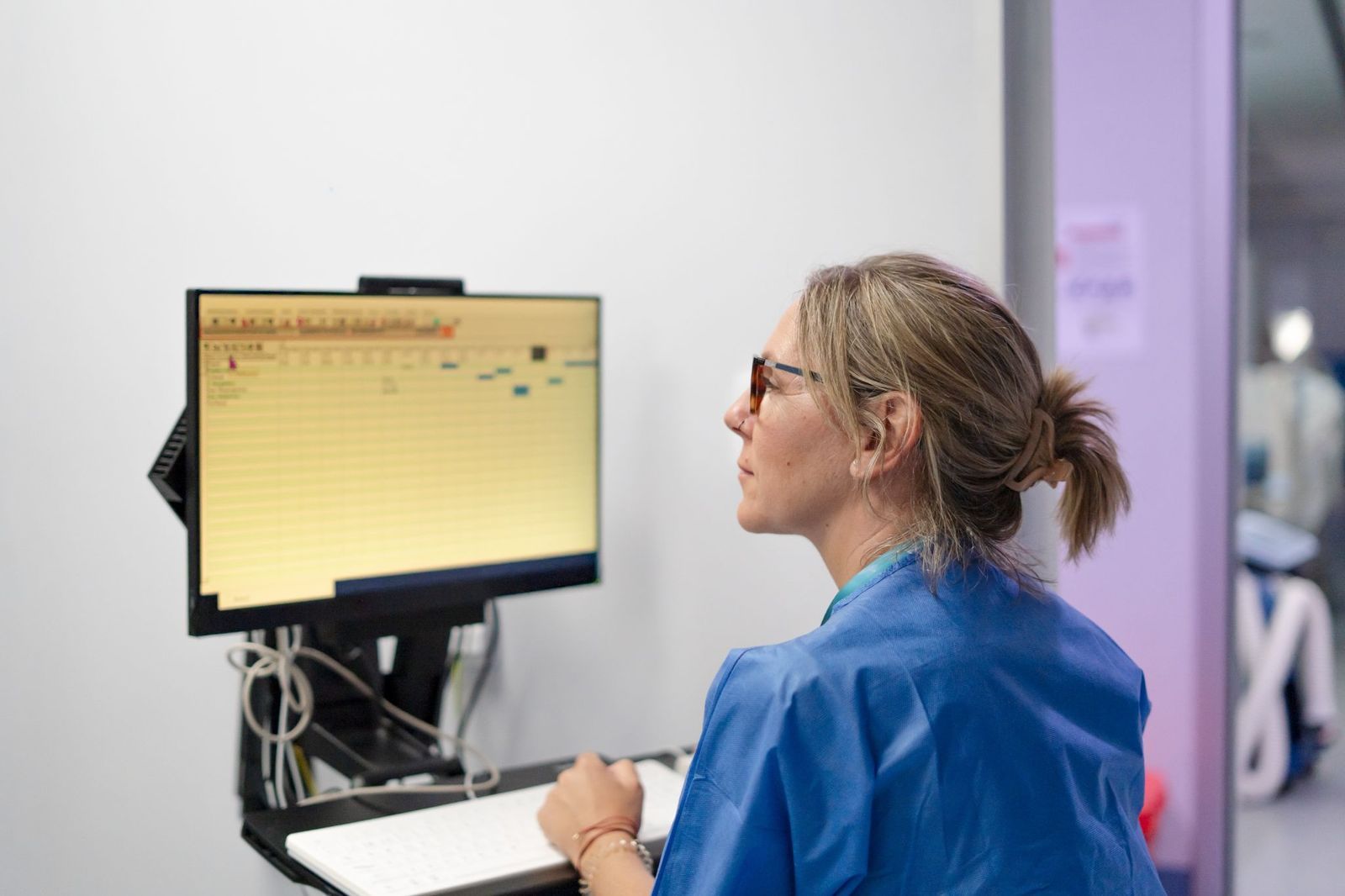
Not all codes are for patients. The next time you’re in a hospital, look closely at what the nurse is pushing from room to room. It may look like a small rolling desk with a computer on top. Staff often call it a "WOW," short for "workstation on wheels."

As hospitals switched from paper charts to electronic medical records, these mobile computers became essential. Nurses use them to review test results, scan medications, update patient charts, and check doctors’ orders without leaving the bedside. The name sounds funny, but the technology helps caregivers spend more time with patients instead of walking back and forth to a nursing station.

9

Sharp container

Image: NMK-Studio

After getting a shot or having blood drawn, most patients never think about where the used needle ends up. It certainly doesn't go into an ordinary trash can.

Hospitals place needles, scalpels, and other sharp medical instruments into special containers designed to prevent accidental injuries. These sturdy, puncture-resistant boxes are sealed when full and safely disposed of in accordance with strict health regulations. This not only protects nurses, but it also protects cleaning crews, waste handlers, and even the public from dangerous needle sticks. It’s one of the most important safety measures in every hospital, even though most patients never notice it.

10

B-52

Image: Photoroyalty

If you’ve ever watched a medical drama, you've probably seen a patient become so agitated that several staff members rush into the room. In situations like that, a doctor or nurse may ask for a "B-52." But the name has nothing to do with numbers themselves; it actually comes from a medicine.

B-52 is hospital slang for a fast-acting injection used to calm down patients who are severely combative or at risk of harming themselves or others. The nickname comes from a commonly used combination of medications that usually include diphenhydramine, haloperidol, and lorazepam. It’s strictly reserved for when other methods of calming the patient haven’t worked.

Looking for an extra scoop of literary fun?

Learn more with our Word of the day

timely

/ˈtaɪmli/