Final words
Do you know what is written on Frank Sinatra's tombstone? Take a look!
Published on March 27, 2025
 Image: Greg Bulla
Derived from the Greek epitaphios meaning "a funeral oration," epitaphs are quotations or phrases carved on a grave to honor a deceased person. These poignant inscriptions —some written with a great sense of humor— portray the final thoughts and legacy of the departed. From famous writers to rockstars and Wild West outlaws, here's a selection of our 12 favorite celebrity epitaphs!
Emily Dickinson
 Image: Scott Rodgerson
The epitaph inscribed on Emily Dickinson's tomb reflects her characteristically concise style: "Born Dec.10.1830, Called back May.15.1886". This inscription, simple yet loaded with meaning, captures the essence of her work, marked by an economy of words and emotional depth.
The phrase is taken from what is believed to be her last letter, which simply read: "Little Cousins, Called Back. Emily." In addition, Called Back is the title of a novella by Hugh Conway that the poet was fond of. Dickinson, one of the most important figures in American poetry, lived a life of isolation but left a poetic legacy that continues to resonate with readers even today.
Jimi Hendrix
 Image: By Steven Pavlov - Own work, CC0
Jimi Hendrix, one of the most influential guitarists in rock and roll history, left a simple but powerful epitaph: "Forever in Our Hearts". This inscription, along with a carved Stratocaster guitar, celebrates his contribution to the world of music and his lasting impact on his fans.
Hendrix, known for his virtuosity and innovative style, remains an iconic figure in the music world despite dying at a young age. Thanks to this epitaph, his memory will live on in the hearts of those who loved him and in future generations.
Mel Blanc
 Image: Nate Biddle
Mel Blanc, the legendary voice actor known for voicing iconic Looney Tunes characters, left an epitaph featuring his most famous catchphrase: "That's all folks".
This iconic line from the cartoons that entertained generations of viewers pays tribute to his career and his impact on popular culture. Blanc, who lent his voice to characters such as Porky Pig, Bugs Bunny, and Daffy Duck, remains a beloved figure, and his epitaph ensures that the laughs will go on forever.
Edgar Allan Poe
 Image: By KRichter - probably own picture (see original filename), Public Domain
Edgar Allan Poe was best known for his gothic poetry and short stories. Despite being one of America's most famous writers, his grave remained unmarked after his death. Twenty-five years later, his family managed to raise enough money to install an epitaph honoring his most famous poem, "The Raven."
Edgar Allan Poe's epitaph reads: "Quoth the raven, ‘Nevermore.’" The connection between his resting place and his most celebrated work emphasizes Poe's lasting influence on literature, ensuring that his legacy will continue to fascinate and inspire future generations of readers.
Billy Wilder
 Image: Marco Rickhoff
Film director Billy Wilder, known for films such as Sunset Boulevard, Sabrina, and The Seven Year Itch, had a keen sense of humor. So it's no wonder he left an epitaph that reflects his knack for satire and his distinctive wit.
"I'm a writer, but then nobody's perfect" is the inscription on the grave of the seven-time Academy Award-winning director, a reference to the iconic final line of his film Some Like It Hot. This epitaph not only pays tribute to his film career but also attests to his ironic and positive perspective on life.
Francis Scott Fitzgerald
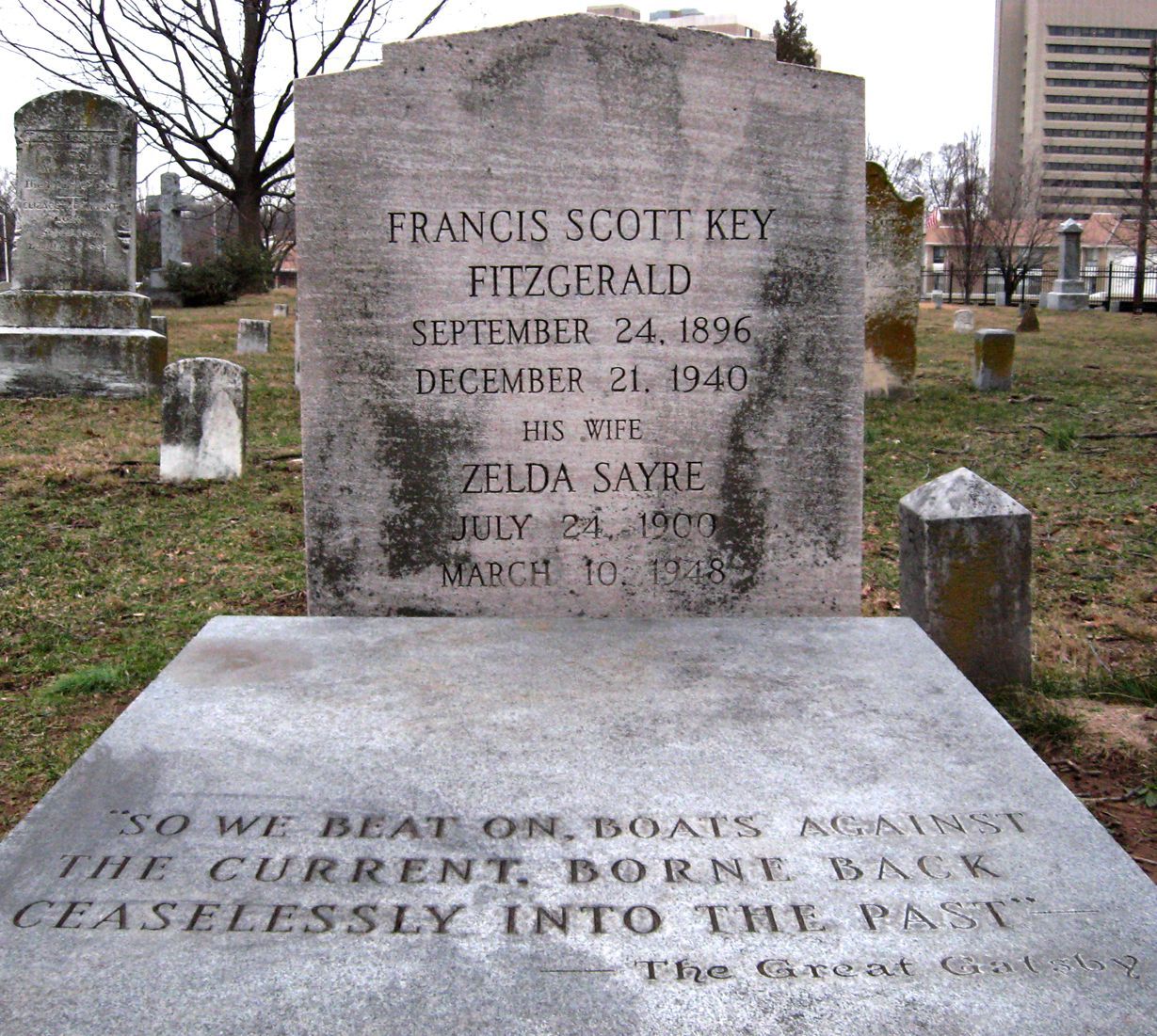 Image: By JayHenry - Own work, Public Domain
Francis Scott Fitzgerald, one of the best American novelists of the 20th century, is best known for his fabulous portrayal of the 1920s Jazz Age. Fitzgerald lived like his characters, surrounded by glamour, melancholy, and excess. Unfortunately, his career, though successful, was short. He died of a heart attack at the age of 44 and is now buried alongside his wife Zelda at St. Mary's Church Historic Cemetery in Rockville, Maryland.
Written on their gravestone is the last line from his greatest novel, The Great Gatsby: "So we beat on, boats against the current, borne back ceaselessly into the past."
Marlene Dietrich
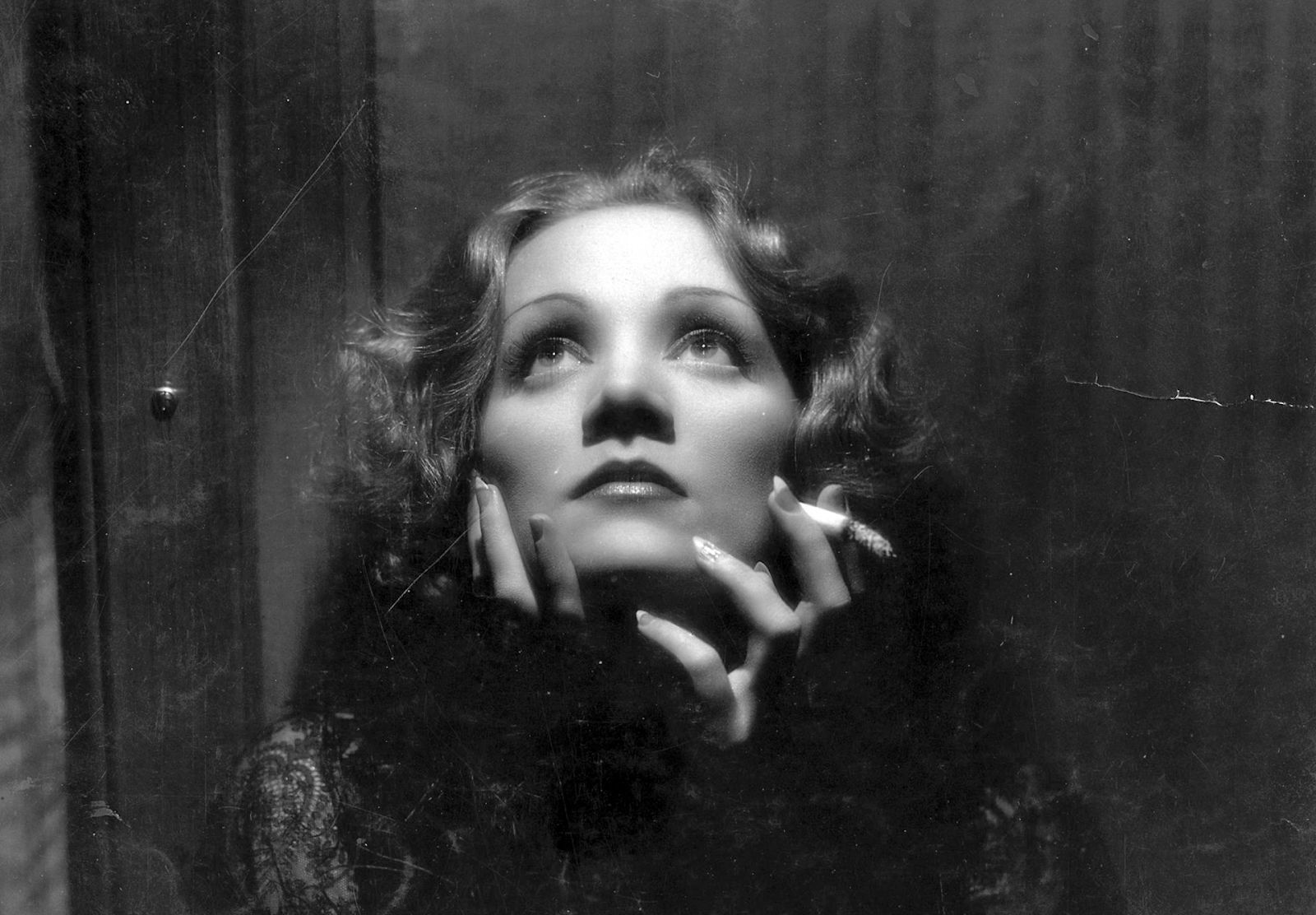 Image: By Don English (1901-1964); Paramount Pictures - Heritage Auctions, Public Domain
Marlene Dietrich, the iconic German-American actress and singer, left an epitaph that reflects her elegance and poetic sense: "Hier steh ich an den Marken meiner Tage" ("Here I am standing at the border stones of my days").
Dietrich, known for her glamorous persona and exotic looks, was one of the highest-paid actresses of Hollywood's golden age. The phrase on her gravestone in Berlin, though laden with melancholy, is also a tribute to her career in the arts, and her lifelong humanitarian efforts.
Jim Morrison
 Image: Pierre Antona
Jim Morrison, the charismatic leader of The Doors, left an epitaph that reflects his rebellious spirit and philosophy of life: "Kata ton daimona eaytoy" ("True to his own spirit", in classical Greek).
This inscription is carved on a bronze plaque at his resting place at the Père-Lachaise cemetery in Paris, one of the most visited graves by fans from all over the world. The simple but poignant phrase manages to convey the essence of Morrison as an artist who lived by his own rules. His epitaph, as well as his musical and poetic legacy, continues to inspire those who seek to live authentically.
Jesse James
 Image: By Missouri State Archives
Jesse James, the famous Wild West outlaw, was treacherously murdered by his friend Robert Ford when he was only 34 years old. His mother, outraged by this heinous act, recorded her grievance on his epitaph: "Murdered by a traitor and coward whose name is not worthy to appear here."
This inscription, loaded with resentment, reflects the controversy and myth surrounding the figure of James. The original grave site is located in the backyard of the James family farm in Kearney, Missouri. The Jesse James Birthplace Museum, open for tours, displays family artifacts and, of course, Jesse's original epitaph.
Freddie Mercury
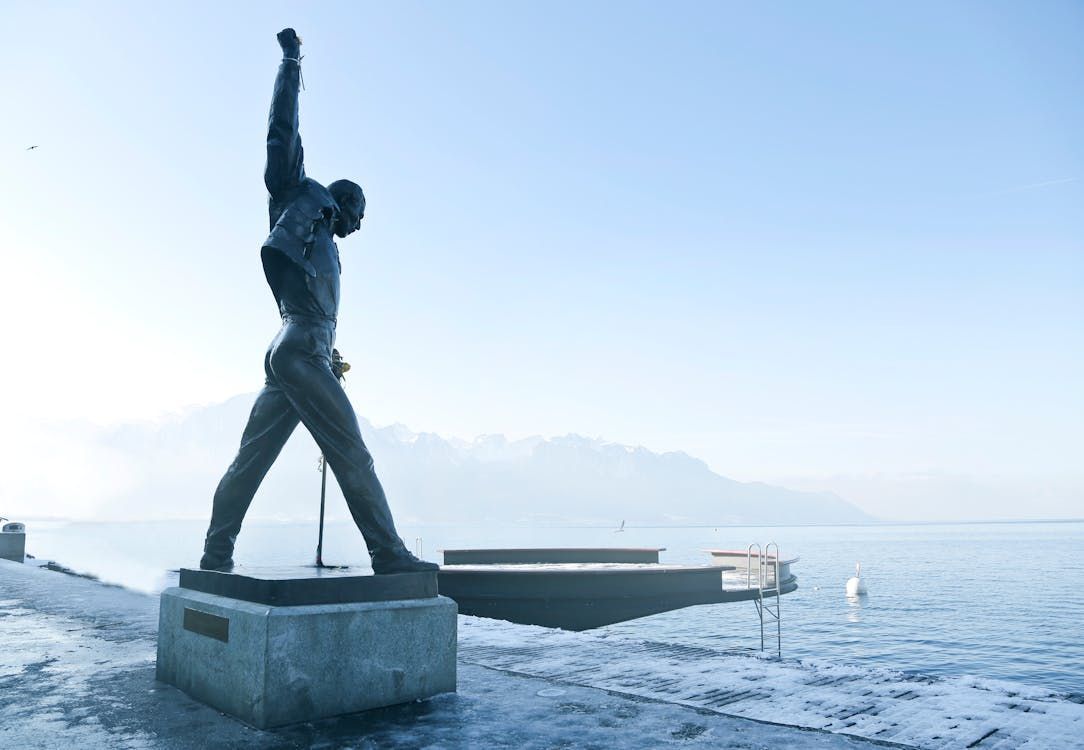 Image: Andrea Piacquadio
Freddie Mercury, lead singer of the popular British rock group Queen, has one of the most famous epitaphs among rock stars. Freddie died at the young age of 45 and was cremated at West London Crematorium in Kensal Green Cemetery, where there is now a cenotaph in his honor that reads: "Lover of life, singer of songs".
The touching phrase, penned by bandmate Brian May, accurately describes the complex figure of one of the greatest showmen ever. Freddie’s theatrical stage appearances captured the world's attention in the 1970s but he will always be remembered for his incredible voice, flamboyant style, and unparalleled talent.
Frank Sinatra
 Image: By Diagram Lajard - Own work, Public Domain
Frank Sinatra, legendary singer and actor, left an epitaph that reflects his unwavering optimism: "The best is yet to come". This phrase, which is also the title of one of his most famous songs, embodies a sense of hope and the promise of a better future.
For his fans, Sinatra's epitaph is a reminder of his musical legacy and indomitable spirit. But it is also a testament to his enormous legacy, a wonderful voice that will continue to resonate long after he is gone.
John Keats
 Image: By Syd Storm - Own work, CC0
John Keats, one of the great British poets of Romanticism, died of tuberculosis in 1821 when he was only 25 years old. Despite his young age, he left us a remarkable body of work that remains among the most popular and analyzed in English literature still to this day.
Knowing himself to be very ill, Keats had only one last wish, to be buried under a tombstone bearing no name or date, only the words, "Here lies One whose Name was writ in Water." Pretty poetic, don’t you think?


