Fear Factor
What pet was Julius Caesar afraid of? Discover 10 rare phobias!
Published on December 21, 2024
 Image: Nik
We all feel scared sometimes, right? But phobias aren't simple fears; They represent a type of irrational and strong fear of objects, situations, or activities that can cause intense feelings of anxiety. Some are very frequent, such as arachnophobia (fear of spiders) or claustrophobia (fear of confined spaces). However, there are many other phobias that are not only rare but also have some of the strangest names. Have you ever heard of chaetophobia? Do you know the term for mirror phobia? If you want to discover 10 uncommon phobias and the origin of their names, read on!
Anthophobia
 Image: Gabriela Popa
Since old times, poets and artists have dedicated part of their work to nature, particularly flowers. In all types, sizes, and colors, Mother Nature has a flower for everyone, and we, as humans, have incorporated them into our culture in countless ways.
But not everything is rosy. Some people struggle when spring arrives. We're not talking about those allergic to pollen –although they suffer too– but those with anthophobia.
Άνθος (anthos) is the Greek word for flower. So, as the name implies, it's a deep fear of flowers, their appearance, contact with them, or, in some cases, even their scent.
Arithmophobia
 Image: Waldemar
Do you have a lucky number? We do! Numbers represent a lot in our lives, both socially and personally. In fact, many cultures have adopted certain numbers as positive or negative symbols. For example, according to Chinese culture, 8 is a lucky number, while 4 heralds bad news. In Japanese culture, 7 is responsible for announcing good fortune.
Arithmophobia is the irrational fear of numbers. Some people with arithmophobia may reject all numbers in general, while others may associate the fear with a specific number, especially those considered negative or unlucky. Just like the word "arithmetics," arithmophobia has its origin in the Greek ἀριθμός (arithmós), meaning "numbers" or "counting."
Nomophobia
 Image: Yura Fresh
While connectivity allows us to work, find out what's going on in the world, keep in touch with our loved ones, and receive funny memes, technology can also have its downside.
Our reliance and dependence on laptops and cell phones have increased in recent years, and one of the consequences was the emergence of a condition called nomophobia.
According to the National Library of Medicine, nomophobia is the severe anxiety caused by the fear of being without your phone, losing it, or lacking cell service. Unlike most phobias, its name doesn't have Greek origins; it's actually a portmanteau: NO MObile PHOne phoBIA.
Ailurophobia
 Image: Kim Davies
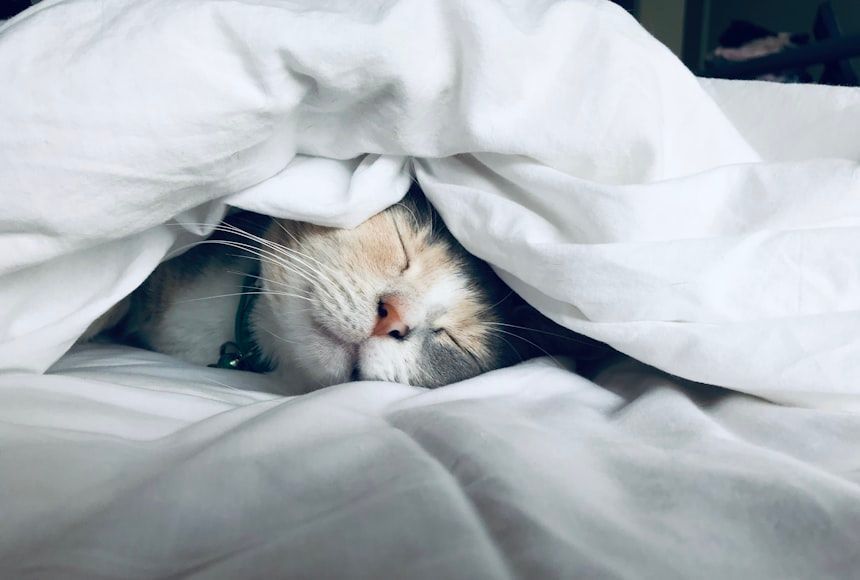
Cats and dogs have been part of our lives for ages, but while many of us may find them adorable, some people would prefer another type of pet. Why? Well, for many and varied reasons, and one of them could be ailurophobia.
Ailurophobia is the intense and irrational fear of cats. Its name comes from the Greek αἴλουρος (ailouros), meaning "cat," and φόβος (phóbos), "fear," and its symptoms and triggers can vary from person to person.
Surprising as it may be, this phobia is not new. It seems that this fear has been around since ancient times. In fact, some stories claim that figures such as Julius Caesar and Alexander the Great experienced this phobia.
Eisoptrophobia
 Image: Caroline Veronez
What's the first thing you do when you wake up in the morning? For many of us, looking in the mirror is part of our daily routine, whether it's brushing our teeth or trying on the outfit we'll wear to work. For some, however, a mirror isn't necessary. In fact, they would prefer to avoid it at all costs.
We're talking about eisoptrophobia, the irrational fear of mirrors. As you've probably guessed by now, this word is also derived from Greek but is a bit more specific. εἰς (eis) means "into," and ὀπτῐκός (optikos) refers to vision, image, or sight. As you can see, the word's etymology points to a fear of the reflected image rather than the mirror itself.
Logophobia
 Image: Ionela Mat
Wherever you go, wherever you look, there will be words. On your phone screen, on the TV, on book spines, food packages, clothing labels, street signs, and even graffiti. They're everywhere!
All that will seem overwhelming when you learn about logophobia, the fear or terror of words. As you know, Φόβος is the Greek word for "fear," while λόγος (logos) translates as "word" or "speech." This fear can be triggered by a specific word, a type of word, or all of them.
Sesquipedalophobia
 Image: Sergi Kabrera
Believe it or not, sesquipedalophobia is the fear of long words. Ironic, isn't it?
In Latin, sesqui means "one and a half," while pedis is "foot." In Rome, there was a term for really long words: sesquipedalis, those that seemed "a foot and a half long." Over time, this Latin joke became part of the medical term.
But there's more! As if "sesquipedalophobia" wasn't long enough, the term "hippopotomonstrosesquippedaliophobia" has emerged in recent years to describe the same fear. While the latter is not officially recognized, it seems that someone thought it would be good to exaggerate the term by adding the Latin monstrum ("monster") and hippopotamus.
Arachibutyrophobia
 Image: Towfiqu barbhuiya
Peanut butter is one of Americans' major favorites. Whether it's breakfast or any other meal, this ingredient is a staple in most of our diets. However, there are those who can't tolerate it.
If you experience sweaty palms, dizziness, discomfort, or anxiety at the mere thought of peanut butter entering your mouth, perhaps it's arachibutyrophobia.
Arachi is a Greek term related to leguminous plants such as peanuts, and βούτυρον (bouturon) means "butter." Some people associate this specific phobia with the idea of peanut butter sticking to the roof of their mouth, which triggers a fear of choking.
Chaetophobia
 Image: Tim Mossholder
When it comes to looking good, hair is the key. We all know things aren't easy when it's a bad hair day, right?
While for most of us, it's as simple as going to the salon or taking some time out of our day to fix our hair, it's not so simple for others.
No one enjoys walking into the bathroom just to find a pile of loose hair scattered around. Definitely not pleasant scenery! But when dislike reaches an extreme, it can be chaetophobia, an irrational and persistent fear of hair. This name comes from the Greek χαίτη (khaitē), meaning "loose, flowing hair."
Globophobia
 Image: Adi Goldstein
"Pennywise" is a familiar name to most of us, isn't it? Thanks to this iconic clown from Stephen King's novel and the movies based on it, we have all come to hear about coulrophobia, the fear of clowns.
While coulrophobia is quite common, there is another related phobia that is much less frequent. This is globophobia, the extreme fear of balloons, their texture, smell, the material they are made of, or the possibility of them popping. For that reason, globophobia is one of the phonophobias, associated with loud sounds.