Ye olde!

Do you know what the Old English word for love is? Not what you'd expect!


Published on March 26, 2026
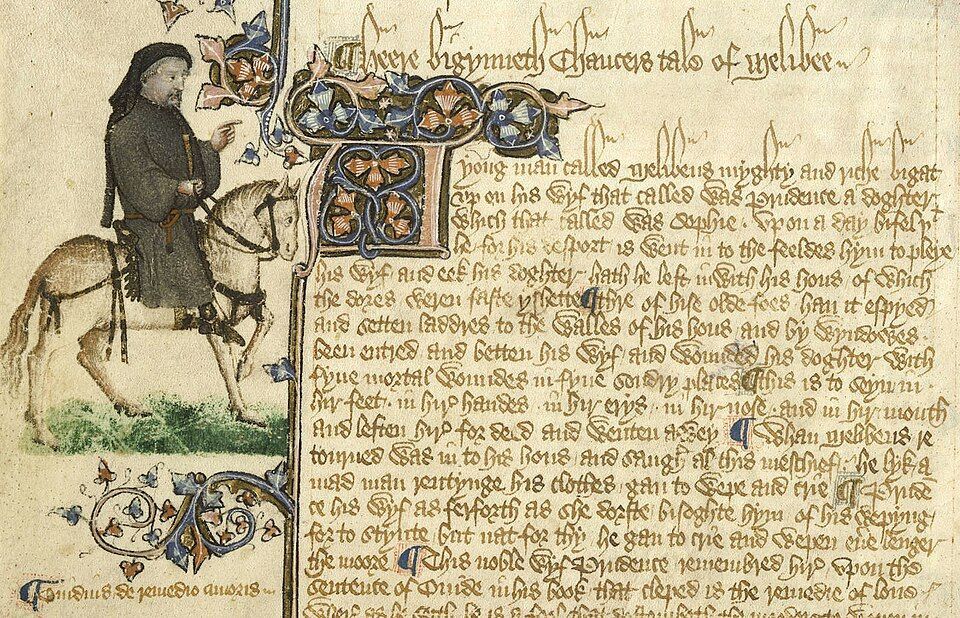

Image: unknown artist, 1400-1410, England, Public domain, via Wikimedia Commons

When people think about "Old English," they usually picture Shakespeare—all those thees, thous, and haths. But in reality, Shakespeare wrote in Early Modern English, which is practically current compared to the real thing. True Old English (or Anglo-Saxon) was spoken more than a millennium ago. It’s the language of Beowulf, filled with vivid, metaphorical words that describe the world in ways we’ve almost entirely forgotten. To understand the DNA of our modern vocabulary, we have to look back past the Renaissance to a time when the body could be described as a "bone-locker" and destiny was an inescapable force. Here are 10 Old English terms that reveal the epic, haunting roots of some of the words we use today.

1

Wyrd

Image: Darius Bashar

In Old English, wyrd wasn't an adjective for something "strange"; it was a powerful noun representing the inescapable force of destiny. The Anglo-Saxons believed that while a person had some agency, the ultimate weaving of their life was handled by forces beyond their control. In that sense, wyrd could be translated as "the way things are meant to be." This is where Shakespeare got the "Weird Sisters" in Macbeth—they weren't just odd; they were the "Fates."

2

Banloca

Image: dada_design

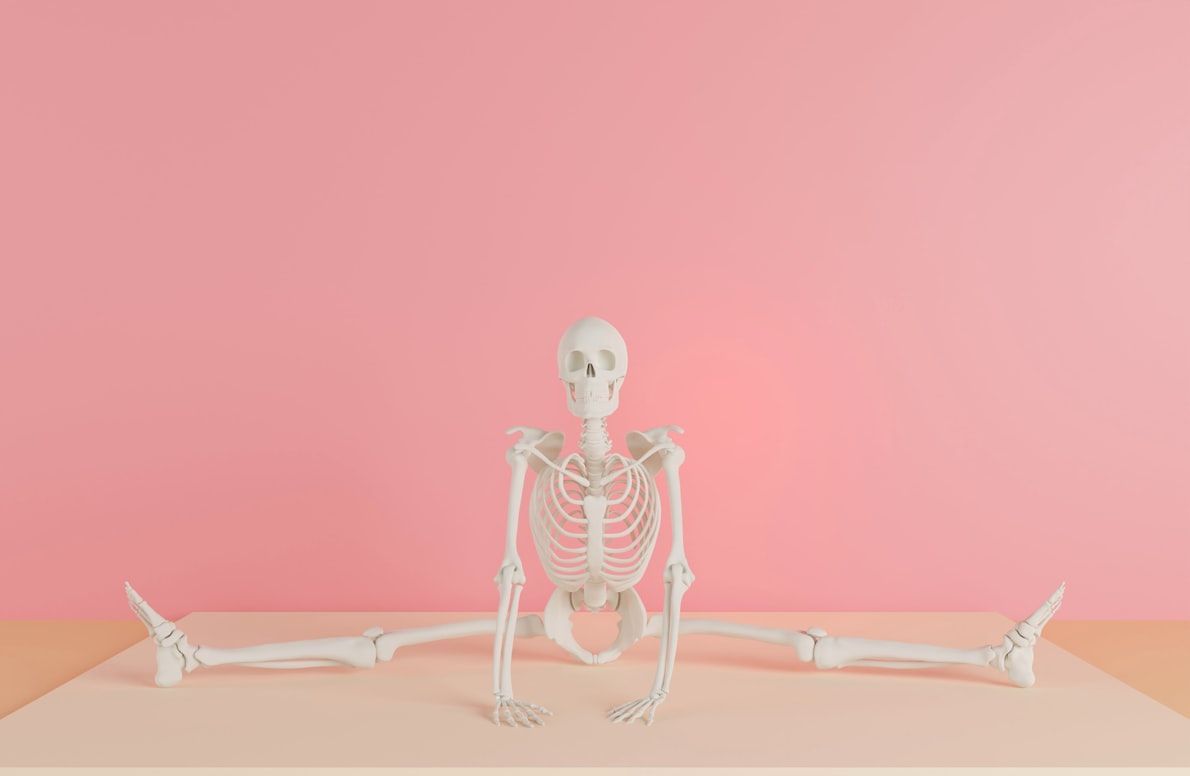
The Anglo-Saxons were masters of the "kenning," a compound expression with metaphorical meaning. Banloca literally translates to "bone-locker." It paints the human body not as a temple, but as a sturdy enclosure designed to keep your skeleton and spirit from wandering off. Interesting, don’t you think?

3

Úhtcearu

Image: cottonbro studio

If you’ve ever woken up at 4:00 a.m. and immediately started stressing about every mistake you’ve made since the third grade, you’ve experienced úhtcearu. Úht refers to the hour just before dawn, and cearu means "care" or "sorrow." In other words, it describes pre-dawn anxiety or what we might jokingly call the "3:00 a.m. scaries."

4

Beadurof

Image: svklimkin

This is a word you might find in an epic like Beowulf and would have been the ultimate Anglo-Saxon compliment. Beadu means "battle," and rof means "strong" or "valiant." It describes a very specific type of courage, the kind that flourishes only when the swords are drawn. To make it easier for modern readers, today it would translate into "battle-brave." Back then, it was the highest form of social currency.

5

Lufu

Image: RDNE Stock project

This is the direct ancestor of our modern word "love." While it sounds cute and fluffy now, the Old English lufu carried a weight of duty, affection, or religious devotion (such as the love of God). It shared roots with the Old High German lubo, emphasizing a deep, enduring bond rather than just a fleeting crush. It really took centuries to evolve into the lighthearted "love" we use today, even for pizza or hobbies.

6

Heofon-candel

Image: Timo Volz

Another brilliant kenning, heofon-candel, is a very poetic compound word. Heofon means "heaven" and candel, "candle." The Anglo-Saxons saw the sun as a guiding light placed in the sky by a higher power. The phrase suggests that the sun is a gift, a light set out in the house of the world by a divine creator.

7

Swefn

Image: Bruce Christianson

Did you ever have a dream that felt ominous or strangely significant? While we use the word "dream" today, the Anglo-Saxons had a more accurate term for those prophetic kinds of dreams, swefn. The word is related to other Germanic terms associated with sleep, such as Old English swefan ("to sleep"). Yet, to them, a swefn wasn't just a random brain-firing; it was often seen as a vision or an omen.

8

Maegth

Image: Kevin Delvecchio

The simple way to translate this term is with the word "family." But back in the Middle Ages, a family wasn’t just your mom, dad, and siblings. In a tribal society, your maegth was everything. It refers to your clan, your bloodline, and your extended family. If you didn't have a maegth, you were essentially a ghost in the eyes of the law. The maegth was actually responsible for paying wergild (blood money) if you committed a crime.

9

Andsaca

Image: maks_d

Literally, andsaca translates as "one who speaks against," meaning someone who denies, accuses, or opposes. In other words, it referred to an enemy, an adversary. But it wasn't just someone you disliked; an andsaca was someone who stood in direct opposition to your truth or your faith. In Old English literature, andsaca could describe spiritual enemies as well as literal monsters. In Christian texts, it was even used as a term for Satan, the ultimate adversary.

10

Wuldor

Image: Carlos N. Cuatzo Meza

Wuldor was a word used to express glory, splendor, or honor. It often referred to the radiance of God or the celebrated fame of a great king. In Old English, wuldor was the term for "celestial splendor." The word conveys more than simple praise—it suggests a brilliance of reputation or divine glory so powerful that it seems almost to shine.


What science says

It was false after all: 10 health myths that sound true—but aren't


Published on March 26, 2026


Image: Alicja Gancarz

Health myths are everywhere! These ideas were simply passed down for so long that they became part of what we believed. But now science has stepped in to clear things up. Does cold weather make you sick? Can lemon detox your body? Is reading in low light really harmful? Let's uncover the truth behind 10 common health myths!

1

Cutting your hair makes it grow faster

Image: Element5 Digital

Have you ever been told that cutting your hair will make it grow faster? We're sorry to say that's just a myth. Hair grows from the root, not the ends. So, trimming it won't boost growth, though it does help remove split ends that can make your hair look dry or unhealthy.

2

Cold weather causes colds

Image: Thom Holmes

This is one of the most common health myths. Cold weather often gets blamed, but it's not the temperature that makes you catch a cold. During winter, we tend to stay indoors with others and keep the windows closed, an environment that makes it easier for viruses to spread. That's why colds tend to be more common in winter!

3

Eating before bed makes you gain weight

Image: Michelen Studios

The idea that eating before bed automatically leads to weight gain is a myth. In reality, it has more to do with what you eat and how much, rather than the time of day. Often, when we eat very late at night, we're tired and more likely to reach for quick, high-calorie, heavy foods. This can disrupt sleep and lead to consuming more calories than we burn, both of which may affect weight. If it's close to bedtime, it's better to have something light and healthy in a moderate portion than to skip a meal altogether.

4

Wearing glasses weakens your vision

Image: Bud Helisson

Does wearing glasses weaken your vision? Myth! If an eye doctor prescribes glasses, wearing them as directed helps correct your vision; it won't make it worse. Additionally, the right glasses can help prevent or reduce headaches caused by reading or spending long hours in front of a screen.

5

Reading in low light causes permanent eye damage

Image: Amir Balam

This myth is closely related to the previous one. If you love reading and sometimes have to do it in low light because of the situation, don't worry. According to experts, reading in low light doesn't cause permanent or irreversible eye damage. However, it's not recommended because it can make your eyes feel tired or strained, leading to discomfort or headaches.

6

You need to drink 8 glasses of water a day

Image: engin akyurt

We're all different, and so are our bodies. The idea that everyone should drink exactly eight glasses of water a day is more of a general guideline than a rule. Staying well hydrated throughout the day is extremely important, but how much water you need depends on factors like your weight, age, climate, and overall health. We should prioritize staying consistently hydrated instead of obsessing over the number of glasses we drink.

7

Lemon water detox and cleanse your body

Image: Tirza van Dijk

Some people say drinking lemon water helps eliminate toxins and cleanse the body. While adding a slice of lemon to your water is a refreshing way to stay hydrated, it doesn't have any special "detoxifying" powers. The vitamin C in citrus fruits is beneficial, but the body has its own natural detox system. The liver and kidneys are the main organs that filter waste and eliminate toxins.

8

All fat is bad

Image: Aneta Voborilova

Not all fats are bad! Just like other food groups, your body needs fats to function properly. The important thing is knowing the difference between healthy fats and those that can be harmful. Foods like avocados, seeds, olive oil, fish, and nuts are rich in healthy fats. On the other hand, the fats found in processed or fried foods are the ones that can have a negative impact on your body.

9

Liver disease is always caused by alcohol or fats

Image: Elevate

Liver diseases can be serious. While heavy and frequent consumption of alcohol and fats is a major contributor, it's not the only cause. Liver problems can also result from many other factors. These include viral infections, autoimmune diseases, genetic disorders, high blood pressure, and exposure to certain chemicals.

10

Breakfast is the most important meal

Image: Brooke Lark

There's some truth to it: breakfast is important because it replenishes our glucose and energy levels and supports proper metabolism. However, the idea that it's the most important meal of the day might be an exaggeration. Everyone's body has different needs, and all meals are important, so we shouldn't skip any of them!

Looking for an extra scoop of literary fun?

Learn more with our Word of the day

heave

/hiv/