From turbans to rainbows: The ancient origins of 10 famous flower names


Published on August 31, 2026


Image: M.Ibnu C Nugraha

The names of the flowers blooming in gardens, parks, and shops carry centuries of linguistic history. Modern botanical taxonomies standardized plant classification, but everyday names were forged through visual observation, ancient mythology, and cultural trade. Exploring flower etymologies reveals how past generations perceived the natural world. Keep reading to discover the origin of the names of 10 common flowers.

1

Dandelion

Image: AustralianCamera

The common bright yellow flower often dismissed as a lawn weed derives its name from an anatomical comparison. "Dandelion" enters English from the Anglo-French phrase dent-de-lion, which translates literally to "lion’s tooth".

Rather than referring to the yellow blossom, the name describes the plant’s sharp green leaves. Medieval botanists noted that these jagged edges of foliage closely resembled the sharp incisors of a lion. Similar literal translations exist in other languages, including the German Löwenzahn and the Spanish diente de león.

2

Azalea

Image: Katerina Maksymenko

Derived from the Ancient Greek adjective azaleos, meaning "dry" or "parched", the azalea received its name from the pioneering Swedish botanist Carl Linnaeus in the 18th century.

Linnaeus picked the name because this flower typically thrives in dry sandy soils and suffers when rooted in waterlogged ground. Though modern gardeners associate azaleas with damp spring rains and temperate woodlands, the name is a tribute to the plant’s preference for dry soil conditions.

3

Pansy

Image: Elena Krivorotova

The name of the garden pansy originates from the Middle French word pensée, meaning "thought" or "remembrance" (derived from the Latin verb pensare, meaning "to consider" or "to ponder").

During the Renaissance, herbalists felt the flower’s dark center and forward-facing petals resembled a human face bowed slightly forward in deep contemplation. Because of this association, pansies became traditional gifts to signal that the giver was thinking of the recipient, a symbolism later immortalized in Shakespeare’s Hamlet when Ophelia remarks, "there is pansies, that’s for thoughts".

4

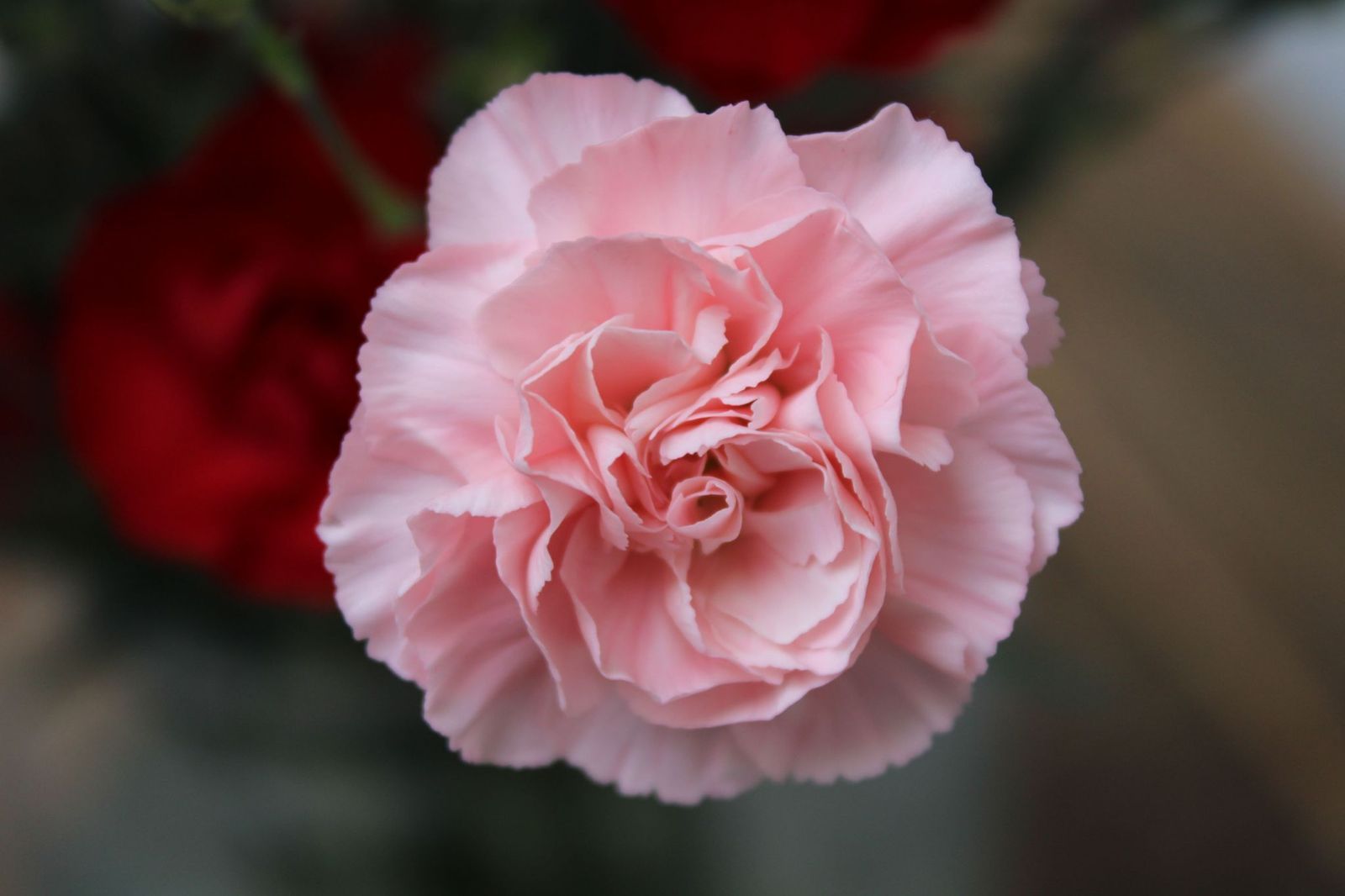
Carnation

Image: Wirestock Creators

The etymology of "carnation" follows two intertwined historical paths. The most widely accepted origin traces back to the Middle French carnation and the Latin carnatio (derived from caro, meaning "flesh"), referencing the soft pinkish flesh tone characteristic of the original wild blooms.

Another linguistic influence stems from "coronation". In ancient Greece and Rome, carnation blooms were woven into floral crowns (coronae) worn during ceremonial festivities and royal coronation rites. Over centuries of English usage, the terms for flesh color and ceremonial crowns merged into the modern word.

5

Tulip

Image: ShuttrDrift

The story of the tulip’s name reflects the historical trade routes between Western Europe and the Ottoman Empire during the 16th century. The word comes into English via Middle French (tulipe) and Italian (tulipano), which adapted the Ottoman Turkish word tülbend (derived from the Persian dulband), meaning "turban".

European travelers visiting Constantinople were impressed by the resemblance between the folded layers of fabric in a traditional Ottoman turban and the cup-shaped, overlapping petals of the flower.

6

Daisy

Image: Smile Donor

"Daisy" stands as an example of Old English botanical descriptive naming. Originating from the compound word dægesēage (literally translating to "day’s eye"), the name describes the flower’s natural sleep movement.

At nightfall, a daisy’s white outer petals fold inward over its central yellow disk. As dawn arrives, the petals unfold, exposing the golden center to the morning sun, mimicking an eye opening at the break of day.

7

Hydrangea

Image: Aliaksandra M

Coined by French botanist Philibert Commerson in the 18th century, "hydrangea" combines two ancient Greek roots: hydr- (meaning "water") and angeion (meaning "vessel", "picher", or "capsule").

Many gardeners assume the name refers to the plant’s high water requirements; however, it actually describes the distinct shape of the plant’s mature seed pods. Once the colorful petals drop, the small seed capsules resemble traditional Greek water jars or pitchers.

8

Calendula

Image: Wut_Moppie

Popularly known as pot marigold, "calendula" derives its name from the Medieval Latin calendula, a diminutive form of calendar (the "calends", or the first day of each month in the Roman calendar).

The Romans observed that in mild Mediterranean climates, calendula plants bloomed on or near the first day of almost every month of the year. This way, the name acts as a botanical calendar.

9

Petunia

Image: AW777_Photo

The word "petunia" arrived in European languages during the 18th century through French botanical reports from South America. French herbalists adapted the word pétun, an early French term for tobacco borrowed from petyn, a word used by the indigenous Tupi-Guarani peoples of Brazil.

When early European explorers encountered petunias growing wild in South America, they recognized their close physical resemblance to tobacco plants. Modern taxonomy confirmed this intuition: both petunias and tobacco belong to the nightshade family (Solanaceae).

10

Iris

Image: Lipatova Maryna

Named after Iris, the Greek goddess of the rainbow and divine messenger between heaven and earth, this classic garden perennial boasts an ancient name.

In Greek mythology, the goddess Iris traveled along rainbows, connecting the realms of gods and mortals. Ancient botanists bestowed her name upon the flower because of its remarkable spectrum of natural colors, ranging from deep purple and cobalt blue to yellow, pink, and white.



Hospital secrets

What is a "Code Gray" and what you should know if you hear it at the E.R.


Published on August 31, 2026


Image: voronaman

A trip to the emergency room can be stressful enough without hearing doctors and nurses speak a language that sounds like a secret code. One minute, someone is asking for medication "STAT," the next there’s a "Code Gray," and another patient is suddenly "NPO." What do those words really mean? Some are official medical terms, others are insider slang, but they all help hospital staff communicate quickly when every second counts. Here are 10 of those codes explained.

1

Code Gray

Image: PeopleImages

The E.R. can be hectic and unpredictable. Most patients are frightened or uncomfortable, but now and then someone becomes aggressive because of pain, confusion, mental illness, or the effects of alcohol or other substances. That’s when you can hear "Code Gray" announced over the speakers.

The code is used to summon security officers to help manage a violent or combative situation. While color codes vary from one hospital to another, Code Gray commonly signals that staff needs extra assistance to protect patients, visitors, and healthcare workers. Even if you know it now, most people in the waiting room never know what happened, and that’s exactly the point.

2

NPO

Image: PeopleImages

You have a scheduled surgery, you’re in your bed waiting to be taken to the surgery room, and you ask for a cup of coffee to make the wait lighter. The nurse will probably tell you you’re an NPO. You may think it’s serious, but it’s simply a procedure.

"NPO" is an abbreviation that comes from the Latin phrase Nil Per Os, which means "nothing by mouth." It tells patients they cannot eat, drink, or sometimes even take medication until doctors say it’s safe. The rule is most common before surgery or certain medical tests, when food or liquids could increase the risk of complications or alter the results. It may be frustrating, but it’s an important part of keeping patients safe.

3

STAT!

Image: PeopleImages

You’ve probably been through the experience of visiting an emergency room, either to get checked or to visit a loved one. In that part of the hospital where everyone is rushing to save lives, you’ve probably heard a doctor asking for the R.C.P. cart or medication "STAT!" It sounds urgent, and that's because it is.

The expression comes from the Latin statim, which means "immediately" or "without delay." Hospitals have used Latin medical terms for centuries, but STAT is one of the few that remains part of everyday conversation. When a doctor says it, the request jumps to the top of the priority list. It doesn’t always refer to a life-or-death situation, but it does mean the medical team needs something done as quickly as possible.

4

Code Pink

Image: Vladimir Tretyakov

Newborns are always a reason to celebrate at the hospital. Parents usually rest happily next to their child as they receive congratulations from close relatives. However, the hospital is always prepared to handle extremely rare emergencies under "code pink."

If you hear a "Code Pink," it usually means a baby or young child is suspected of being abducted from the hospital. Within seconds, security officers respond, exits may be monitored or blocked, and staff begins following carefully rehearsed procedures. Although different hospitals sometimes use different color codes, Code Pink has become widely recognized across North America as one of the most serious alerts a hospital can issue.

5

Walkie-talkie

Image: Arunporn Thanapotivirat

If you’ve ever spent a few days in the hospital, you’ve probably noticed that some patients are walking up and down the halls, while others need help just getting out of bed. When a nurse refers to someone as a "walkie-talkie," it’s actually good news.

This informal expression refers to patients who can walk on their own, use the bathroom without assistance, and handle most basic tasks independently. It’s not an official medical term, of course, but it’s commonly used among healthcare workers because it quickly tells the next shift that the patient requires less hands-on care than many others.

6

Total

Image: sebra

As nurses change shifts, you’ll often hear them give a quick report about each patient. One person may only need medication, while another is described as a "total."

The term is short for a patient who requires total care. They may need help eating, bathing, getting dressed, turning in bed, or moving from one place to another. Although the expression sounds impersonal, it’s simply a practical way for caregivers to communicate how much assistance someone needs.

7

Frequent flyer

Image: Studio Romantic

Most people hear "frequent flyer" and think of an airline reward program. And that’s correct, but in an emergency room, the phrase has a very different meaning.

A frequent flyer is an informal nickname for patients who repeatedly return to the hospital, often due to chronic illness, recurring medical conditions, or other ongoing health issues. Behind the light-hearted nickname is often a difficult reality. Many of these patients are simply dealing with medical problems that require regular emergency care, and the expression is just a way to make the experience a bit lighter among the familiar faces of doctors and nurses.

8

WOW

Image: Studio Romantic

Not all codes are for patients. The next time you’re in a hospital, look closely at what the nurse is pushing from room to room. It may look like a small rolling desk with a computer on top. Staff often call it a "WOW," short for "workstation on wheels."

As hospitals switched from paper charts to electronic medical records, these mobile computers became essential. Nurses use them to review test results, scan medications, update patient charts, and check doctors’ orders without leaving the bedside. The name sounds funny, but the technology helps caregivers spend more time with patients instead of walking back and forth to a nursing station.

9

Sharp container

Image: NMK-Studio

After getting a shot or having blood drawn, most patients never think about where the used needle ends up. It certainly doesn't go into an ordinary trash can.

Hospitals place needles, scalpels, and other sharp medical instruments into special containers designed to prevent accidental injuries. These sturdy, puncture-resistant boxes are sealed when full and safely disposed of in accordance with strict health regulations. This not only protects nurses, but it also protects cleaning crews, waste handlers, and even the public from dangerous needle sticks. It’s one of the most important safety measures in every hospital, even though most patients never notice it.

10

B-52

Image: Photoroyalty

If you’ve ever watched a medical drama, you've probably seen a patient become so agitated that several staff members rush into the room. In situations like that, a doctor or nurse may ask for a "B-52." But the name has nothing to do with numbers themselves; it actually comes from a medicine.

B-52 is hospital slang for a fast-acting injection used to calm down patients who are severely combative or at risk of harming themselves or others. The nickname comes from a commonly used combination of medications that usually include diphenhydramine, haloperidol, and lorazepam. It’s strictly reserved for when other methods of calming the patient haven’t worked.

Looking for an extra scoop of literary fun?

Learn more with our Word of the day

felicitous

/fəˈlɪsədəs/