Context matters

10 dangerous words that can make you say the opposite of what you mean


Published on August 24, 2026


Image: Pla2na

Imagine telling someone you were carefully supervising a project, only for them to think you completely forgot about it. Or saying you dusted the furniture, and someone isn't sure whether you cleaned it or covered it with powder. It sounds weird, but in English, it happens more often than you might think. Most of us know that many words have more than one meaning, but some English words do something even stranger: they can mean the exact opposite of themselves. These linguistic oddities are called contronyms, and once you know them, you'll start noticing them everywhere. Here are 10 surprising examples that can completely change the meaning of what you're trying to say.

1

Dust

Image: Herbert Goetsch

Sometimes the context makes the meaning obvious, but not always. Imagine a baker telling an assistant to "dust the counter." Does that mean wipe the flour off or sprinkle more flour on it? Surprisingly, it could mean either one.

The verb "dust" comes from the Old English noun dūst, meaning fine powder, and it's one of English's best-known contronyms, words with two opposite meanings. Depending on the situation, "dust" can mean to remove fine particles from a surface or to cover something with fine particles, such as flour, powdered sugar, or even fingerprints for forensic analysis. The word doesn’t change; only the context can tell you which meaning is intended.

2

Fast

Image: Take Time

We all know "fast" as the word for something that moves quickly. But hidden inside this everyday word is a surprising twist: it's also a true contronym.

Today, "fast" can describe something moving at high speed, or something that can't move at all. But how? It makes a lot more sense once you know where the word comes from. This adjective traces back to the Old English fæst, meaning "firm," "fixed," or "secure." A sprinter can be "a fast runner," while a sailor might say, "Make the rope fast to the dock," meaning to secure it firmly in place.

3

Sanction

Image: Tingey Injury Law Firm

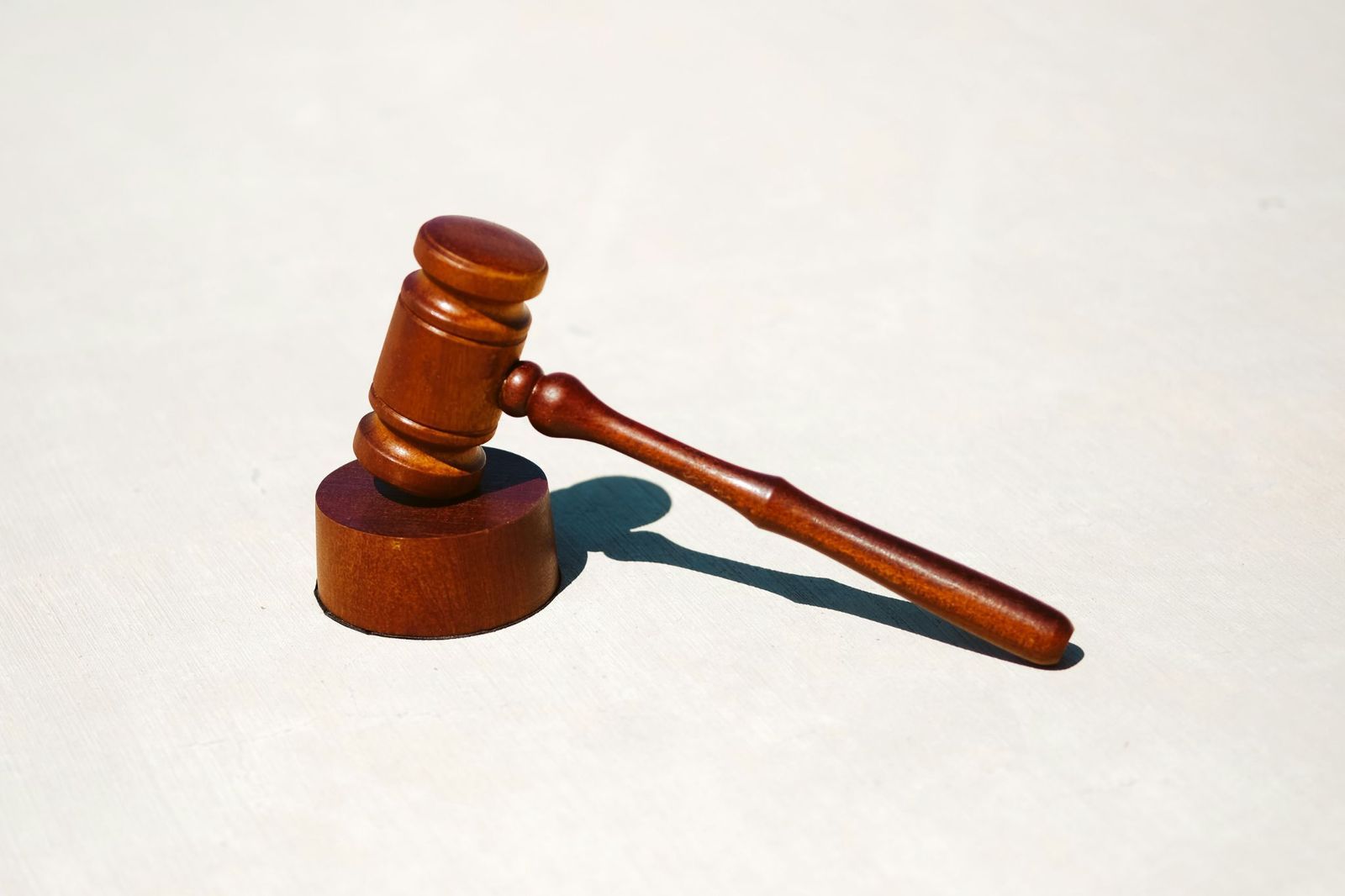
If you read the headline: "The board voted to sanction the company’s project," did they punish it or approve the idea? It turns out, either interpretation could be correct.

That's because "sanction" is one of English's most confusing contronyms. It can mean "to impose a penalty," but it can also mean "to officially approve or authorize something." The clue lies in the word's history: it comes from the Latin sanctio, meaning a decree or law, which could either establish a rule or prescribe a penalty for breaking one. So if you hear that "The city council sanctioned the new downtown street market," you'll have to rely on the context to know whether the market just got the green light or landed in trouble.

4

Oversight

Image: Nathy dog

At first glance, "oversight" sounds like an ordinary noun, but don't let it fool you; it has two opposite meanings. It can mean careful supervision, as in "The project was completed under the oversight of senior engineers." Or it can indicate an accidental mistake or omission, as in "Leaving your name off the application was an oversight." But how did that happen?

The answer lies in two closely related verbs. The first meaning is related to the verb "oversee," which means to supervise or watch over. The second is often linked to "overlook," meaning to fail to notice something. That's why a sentence like "The directors are responsible for the oversight of the company's financial operations" could refer to both.

5

Seed

Image: CHUTTERSNAP

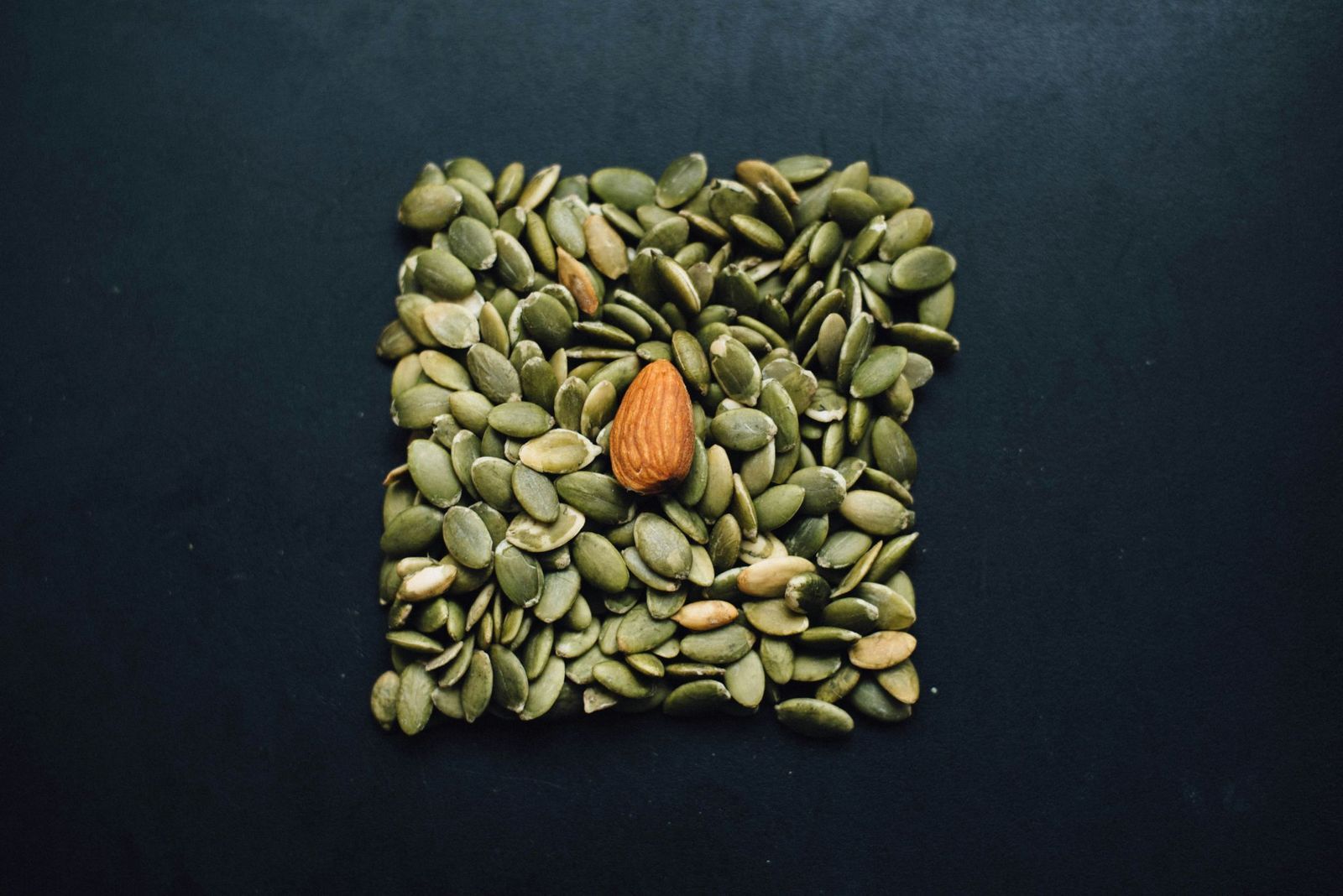
If you read "The chef seeded the peppers for the recipe," you might wonder: what did the chef actually do? This everyday verb can mean two opposite actions.

The word "seed" comes from the Old English sǣd, which ultimately traces back to the ancient Proto-Indo-European root seh- meaning "to sow." Over time, English developed two opposite uses for the verb: to plant or add seeds and, on the contrary, to remove seeds. So, depending on the context, our sentence could mean the chef was planting pepper seeds for future recipes, or preparing peppers by taking their seeds out before cooking.

6

Screen

Image: Jake Hills

Have you ever noticed that "to screen" can mean two completely different things? It can suggest to display or project, as in "to screen a movie," but it can also mean to hide or protect, as in "to screen the porch to keep insects out." How is this possible?

"Screen" comes from Old French escren, which came from Germanic roots meaning a cover or shelter. Originally, a screen was something that blocked, protected, or concealed, but with the rise of cinema in the early 20th century, the word took on a surprising new meaning: the screen that once blocked light became the surface that received light and displayed images.

7

Trim

Image: Margarita Shtyfura

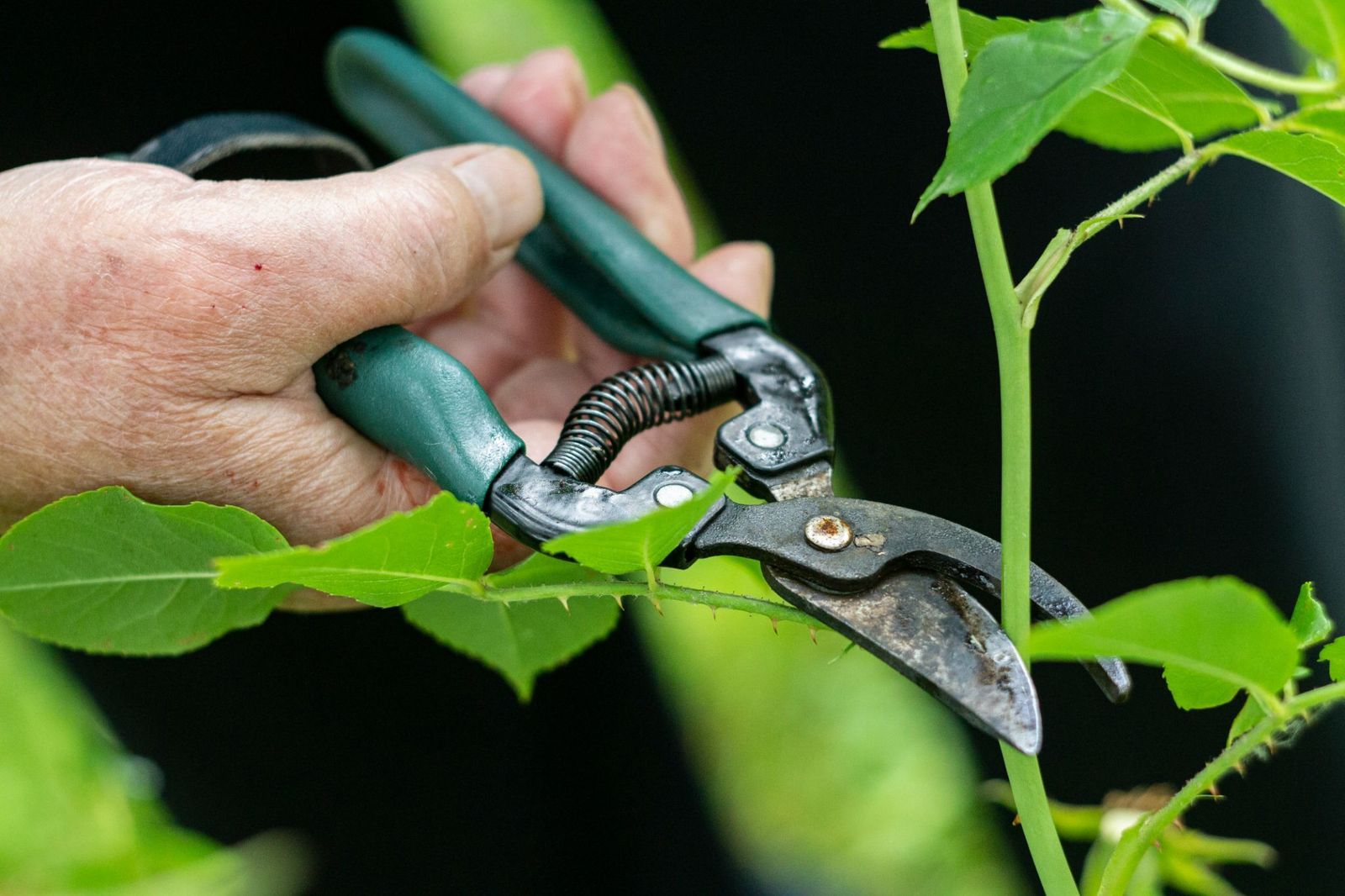
What would you think if a friend told you they had been "trimming the tree for the holidays"? Did they decorate it with ornaments, or were they cutting some of the branches?

That’s the unexpected thing about the verb "trim": it can mean both to remove something extra, as in "He trimmed the fat from the steak," and to add decorative details, as in "They trimmed the Christmas tree with lights." Once again, the reason goes back to the word’s origins. "Trim" comes from the Old English verb trymman, meaning to make firm, strengthen, or prepare. Over time, the idea of "preparing" something developed in two directions: making it neat by cutting away what was unnecessary and making it complete by adding finishing touches.

8

Rent

Image: Tierra Mallorca

We use the word "rent" all the time, but without context, it can leave us wondering who is paying whom?

That’s because the verb "rent" can mean to pay to use something temporarily or, conversely, to allow someone else to use something in exchange for payment. The word comes from Old French rente ("income" or "revenue"), connected to the idea of payment. Over time, English simply expanded the verb in both directions, creating a word whose meaning depends entirely on who is taking the action. For example, if someone says, "I need to rent a tuxedo for the wedding," it’s pretty clear they want one temporarily. But if someone says, "The company rents office space," things become less obvious: are they paying to use the space, or are they making money by leasing it to others?

9

Cleave

Image: Christian Agbede

Although the verb "cleave" is not very common in everyday conversation, it is one of English’s best examples of contronyms. It can mean to split apart, as in "The axe cleaved the log in half," or to cling tightly, as in "She cleaved to her family during difficult times."

What makes this word even more unusual is that these opposite meanings did not evolve from a shared origin. Instead, they came from two completely different Old English words that eventually merged into one spelling. The first meaning comes from clēofan, meaning to split, separate, or divide. The second comes from clifian and clīfan, meaning "to stick, cling, or remain attached." Over centuries, these unrelated words ended up as the same modern English word, while keeping their opposite meanings.

10

Ravel

Image: Dan Dennis

The word "ravel" is another fascinating contronym that can mean to tangle or become knotted, as in "The fishing line became raveled around the hook," and to untangle or solve, as in "To ravel a mystery."

What makes "ravel" especially interesting is that it was already carrying both meanings before it entered English. The word comes from the 1580s Dutch ravelen or rafelen, which meant "to fray," "to unravel," and "to tangle." When English borrowed the word, it inherited both ideas at the same time. The reason for this double meaning comes from the world of textiles. When fabric begins to unravel, loose threads don’t simply separate; they often twist, knot, and become tangled. In a way, the same process can create both disorder and the path toward undoing it.


Deathbed statements

Beyond the grave: Take a look at the last words of 12 famous people


Published on August 24, 2026


Image: Daderot, CC0, via Wikimedia Commons

Throughout history, hundreds of historical figures have left their mark on the world through their marvelous achievements. When their lives came to an end, their last words were often a reflection of their lives and ideals. From George Washington and Mark Twain to Frank Sinatra and Leonardo Da Vinci, in this article, we will reveal 12 final words of memorable personalities.

1

George Washington

Image: The New York Public Library

After serving two terms as the United State's first president, George Washington retired to his Virginia plantation. In mid-December 1799, he developed a cold and a severe sore throat. Despite doctors' efforts to cure him, the end was imminent.

His long-time secretary, Tobias Lear, was at his side during his last days and documented all the events that transpired, including the former president's last words. According to his account, shortly before he took his last breath George Washington said "Tis well" —an old-fashioned way of saying "everything is okay."

2

Humphrey Bogart

Image: Signal Corps Archive from United States, Public domain, via Wikimedia Commons

Noir icon of perpetual elegance and rebellious charisma, Humphrey Bogart is an undisputed legend in cinema history. A Hollywood Golden Age star, Bogart is still remembered today for his scar on his upper lip, his everlasting cigarette, and his perfect portrayal of gangsters and detectives.

At the age of 57 Bogart was diagnosed with esophageal cancer, for which he was hospitalized for several months. According to lore, the legendary star's last words were "I should never have switched from scotch to martinis." However, his wife Lauren Bacall confirmed that the last thing he actually said was "Goodbye Kid. Hurry back," before she left his bedside to get their children.

3

Mark Twain

Image: Miscellaneous Items in High Demand, PPOC, Library of Congress, Public domain, via Wikimedia Commons

As one of the greatest American writers of all time, Mark Twain is usually credited with all sorts of great quotes that he often didn't say. For that reason, there are different versions of what his last words were before he died in 1910 at the age of 74.

The most plausible theory can be found in an article published one day after his death. According to this chronicle, Samuel Langhorne Clemens' last words were not spoken aloud but written. The famous humorist and essayist reportedly wrote to his daughter Clara, who accompanied him on his bedside, "Give me my glasses."

4

Joan Crawford

Image: MGM, Public domain, via Wikimedia Commons

Joan Crawford, the Oscar winner for Mildred Pierce and one of the greatest stars of Hollywood's golden age, died in 1977 of a heart attack.

The actress, who had a complicated personality, was true to her nature until her last breath. She was so ill that her doctor felt it wasn’t worth taking her to the hospital. One of her nurses began to pray aloud in desperation. Losing her patience, Crawford snapped for the last time and said, "Damn it... Don't you dare ask God to help me."

5

Marco Polo

Image: Municipal Library of Trento, CC0, via Wikimedia Commons

The year 2024 marked the 700th anniversary of the death of the man who better described remote lands. Marco Polo was a merchant who spent more than 20 years of his life traveling through the Orient and wrote about his adventures in a book that became a bestseller when the printing press wasn’t even invented.

Marco Polo was, and still is, a legend. When, on his deathbed, his wife and friends begged the brave explorer to confess if what he had told in the book was true, he barely whispered: "I have not told the half of what I saw and did."

6

Groucho Marx

Image: MGM, Public domain, via Wikimedia Commons

Julius Henry Marx, better known as Groucho Marx, is considered one of the most influential comedians of all time. The man with the bushy black mustache was one of the Marx Brothers. Together they made 13 films, including the classic Duck Soup. After a long and prominent career, Groucho passed away in Los Angeles in 1977 at the age of 86.

His brilliant one-liners are still remembered and replayed to this day, so it is not surprising that not one but several final words are attributed to him. A few close friends have suggested that his last line was "This is no way to live!", while most suggest that his last words were in fact dedicated to his wife: "Die, my dear? Why, that's the last thing I'll do!"

7

Voltaire

Image: Nicolas de Largillière, Public domain, via Wikimedia Commons

Voltaire, the French writer, philosopher, historian, and lawyer, one of the major figures of the Enlightenment, died in 1778 at the age of 83. Different accounts of his deathbed make it impossible to determine exactly what his last days were like.

One of these stories, however, is consistent with his ideas about God and his well-known criticism of the Church. According to this version, when the priest asked him if he wanted to renounce Satan before he died, Voltaire replied, "This is no time to make new enemies."

8

L. Frank Baum

Image: William Wallace Denslow, Public domain, via Wikimedia Commons

L. Frank Baum was a prolific American author. He wrote 55 novels, 82 short stories, and more than 200 poems. However, his most memorable work is his series of children's fantasy books The Wonderful Wizard of Oz.

On May 5, 1919, Baum suffered a heart attack. He died the next day, shortly before his 63rd birthday. Disturbed by the imminence of death, he whispered to his wife: "Now we can cross the Shifting Sands," a clear reference to the Land of Oz.

9

Augustus

Image: National Archaeological Museum of Athens, CC0, via Wikimedia Commons

Augustus, the first Roman emperor, is often attributed with the phrase: "Behold, I found Rome of clay, and leave her to you of marble," alluding to the great infrastructural works carried out during his prosperous 40 years of rule.

However, according to other historical accounts, his last words were addressed to the friends who stayed with him on his deathbed: "Have I played the part well? Then applaud, as I exit."

10

Frank Sinatra

Image: English: Distributed by NBC. Photographer unknown., Public domain, via Wikimedia Commons

"Darling, you've gone through worse and you can beat this too. You have to fight," implored Barbara Marx, Frank Sinatra's fourth wife, to her beloved on his deathbed. "I'm losing," The Voice whispered through teary eyes.

Barbara recounted the last hours of the singer of such hits as My Way and New York, New York in her memoir Lady Blue Eyes: My Life With Frank. Frank Sinatra, one of the most popular entertainers of the mid-20th century, pronounced his last words in 1998 at the age of 82.

11

Leonardo Da Vinci

Image: Jean-Auguste-Dominique Ingres, CC0, via Wikimedia Commons

Despite being one of the most famous artists of the Renaissance, Leonardo da Vinci was very hard on himself. All his life he challenged his own limits, evident in his paintings and sculptures as well as in his inventions, some of which were truly revolutionary.

Even after a lifetime of success, he wasn’t quite satisfied. When he suffered a stroke at the age of 67, he sent for a priest to receive the Holy Sacrament and, according to historians, his greatest regret was that he hadn’t achieved excellence with his work. In that sense, it is said that his last words were: "I have offended God and mankind because my work did not reach the quality it should have."

12

Joe DiMaggio

Image: National Museum of Health and Medicine, Public domain, via Wikimedia Commons

The Yankee Clipper was one of the greatest baseball players of all time but he is also known for having been married to the iconic American actress Marilyn Monroe. Joe and Marilyn were together for less than three years. In 1955 the actress left him for American playwright Arthur Miller.

DiMaggio was devastated. He never married again, and never got over his one true love. His last words before he died in 1999 at the age of 84 were: "I'll finally get to see Marilyn."

Looking for an extra scoop of literary fun?

Learn more with our Word of the day

crux

/krəks/