Be articulate!

Most people don’t know the exact word for these 12 situations. Do you?


Published on June 27, 2026


Image: Pisit Heng

English is full of surprisingly precise words for feelings, situations, and experiences that most people struggle to describe. Some come from ancient Greek or Latin, while others were borrowed from languages like Welsh or Swedish. A few are still rare today, but all of them manage to describe very specific things. Take a look at the following 12 examples and see if there are one or two that you can add to your daily vocabulary!

1

Paraprosdokian

Image: Paolo Bendandi

A paraprosdokian is a sentence that suddenly changes meaning at the very end, forcing you to rethink what came before. The word comes from Greek roots meaning "against expectation."

Unsurprisingly, comedians and writers love using paraprosdokians for humor and surprise (pun intended). A famous example is: "I’ve had a perfectly wonderful evening, but this wasn’t it." The unexpected ending is what makes it work.

2

Nibling

Image: Mahdi Teymouri

"Nibling" is a gender-neutral word that refers to a niece or nephew. It is widely credited to linguist Samuel E. Martin in 1951 as a parallel to the word "sibling."

For decades, the term remained obscure, but it became more popular online in the 2010s as many English speakers sought more inclusive family language.

3

Kakorrhaphiophobia

Image: Usman Yousaf

Kakorrhaphiophobia means an irrational fear of failure. The intimidating word comes from Greek roots connected to fear and failure, making it one of English’s longest phobia names.

Although rarely used in everyday life, psychologists connect the idea to perfectionism, anxiety, and fear of disappointing others. The word often appears in lists of unusual English vocabulary.

4

Formication

Image: Jan Baborák

Formication is the sensation that insects are crawling on or under your skin when nothing is actually there. The term comes from the Latin word formica, meaning "ant."

Doctors recognize it as a real neurological symptom linked to anxiety, sleep deprivation, menopause, certain illnesses, and drug withdrawal. Despite the strange name, it has been documented for decades.

5

Dysania

Image: Slaapwijsheid.nl

Dysania describes the extreme difficulty of getting out of bed in the morning. While many people jokingly relate to it, the term is often associated with fatigue, depression, or sleep disorders.

Unlike ordinary laziness, dysania refers to a persistent struggle to leave the bed even after waking up. The word became popular online thanks to lists of oddly specific modern vocabulary (not unlike this one).

6

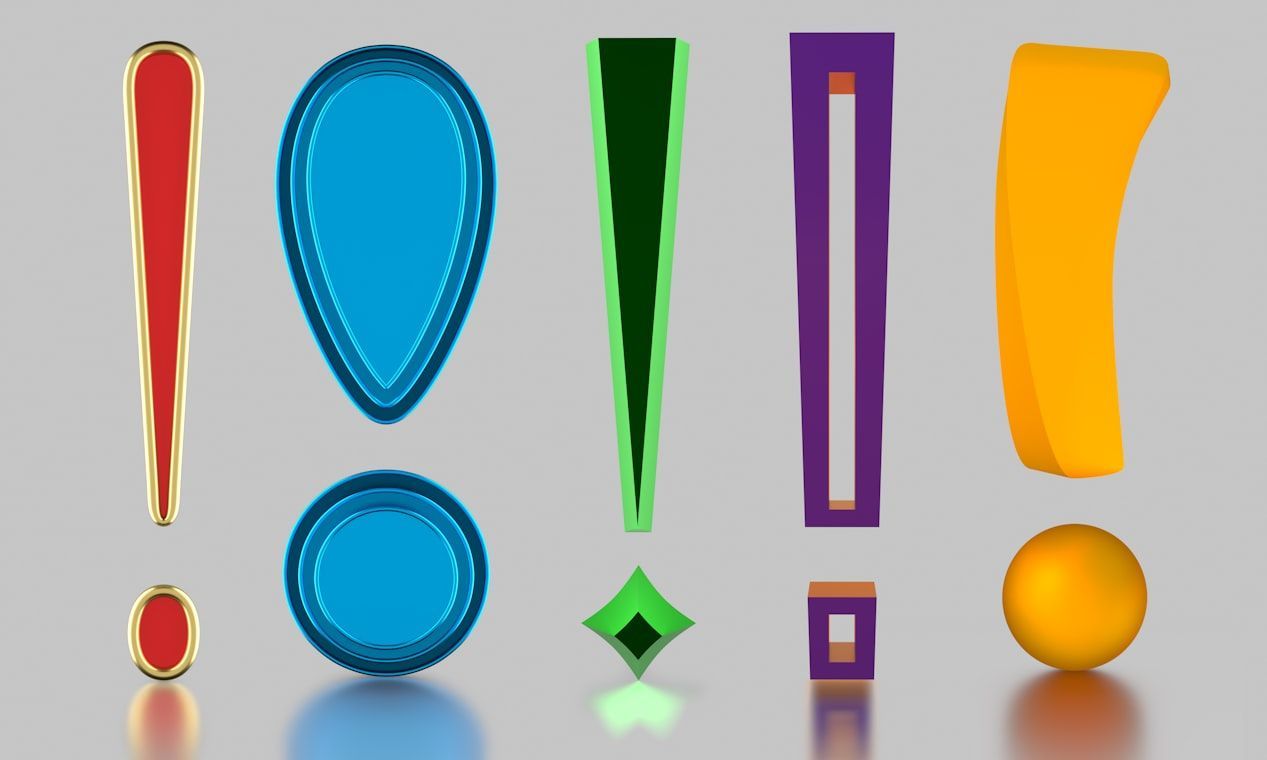
Interrobang

Image: Buddha Elemental 3D

The interrobang combines a question mark and an exclamation point into one punctuation mark. It was invented in 1962 by advertising executive Martin K. Speckter.

He believed advertisements needed a cleaner way to show excited questions like "You paid how much???!!!" Although it never became standard punctuation, the symbol still exists in Unicode and modern fonts.

7

Latibulate

Image: Thomas Bormans

"Latibulate" means to hide away from society or retreat into a safe corner. It comes from the Latin latibulum, meaning "hiding place."

The word is extremely rare today, which only adds to its mysterious appeal. It is often included in collections of forgotten English words.

8

Hiraeth

Image: Billy Williams

Hiraeth is a Welsh word describing deep longing for a home, place, or time that may never truly return. It goes beyond ordinary nostalgia or homesickness.

Many writers describe hiraeth as mourning something lost, imagined, or impossible to recover fully. Among them, J.L. Borges said, "One does not miss places, but the moments spent in them."

9

Tmesis

Image: Hakim Menikh

Tmesis happens when a word or phrase is split apart, and another word is inserted in the middle. English examples include "abso-bloody-lutely" and "fan-freaking-tastic."

The term comes from a Greek word meaning "cutting." Ancient Greek and Latin poets used tmesis long before modern English speakers turned it into a playful part of casual conversation.

10

Apricity

Image: Cristina Gottardi

Apricity means the warmth of the sun during winter. The word entered English in the 1600s and comes from the Latin apricus, meaning "warmed by the sun."

Although it disappeared from common speech for centuries, apricity can sometimes be found in specific texts, since few terms describe such a precise seasonal feeling so well.

11

Clinomania

Image: Tom Hills

Clinomania refers to an overwhelming desire to stay in bed. The name combines Greek roots linked to beds and obsession, giving it a more intense meaning than simple tiredness.

The word is sometimes confused with dysania, but clinomania suggests a stronger emotional urge to remain under the covers.

12

Lagom

Image: Tracey Parish

Lagom is a Swedish word meaning "just the right amount," not too much nor too little. It reflects a broader Scandinavian philosophy centered on balance and moderation.

The term became internationally popular during the 2010s alongside Nordic lifestyle trends like hygge.


What science says

It was false after all: 10 health myths that sound true—but aren't


Published on June 27, 2026


Image: Alicja Gancarz

Health myths are everywhere! These ideas were simply passed down for so long that they became part of what we believed. But now science has stepped in to clear things up. Does cold weather make you sick? Can lemon detox your body? Is reading in low light really harmful? Let's uncover the truth behind 10 common health myths!

1

Cutting your hair makes it grow faster

Image: Element5 Digital

Have you ever been told that cutting your hair will make it grow faster? We're sorry to say that's just a myth. Hair grows from the root, not the ends. So, trimming it won't boost growth, though it does help remove split ends that can make your hair look dry or unhealthy.

2

Cold weather causes colds

Image: Thom Holmes

This is one of the most common health myths. Cold weather often gets blamed, but it's not the temperature that makes you catch a cold. During winter, we tend to stay indoors with others and keep the windows closed, an environment that makes it easier for viruses to spread. That's why colds tend to be more common in winter!

3

Eating before bed makes you gain weight

Image: Michelen Studios

The idea that eating before bed automatically leads to weight gain is a myth. In reality, it has more to do with what you eat and how much, rather than the time of day. Often, when we eat very late at night, we're tired and more likely to reach for quick, high-calorie, heavy foods. This can disrupt sleep and lead to consuming more calories than we burn, both of which may affect weight. If it's close to bedtime, it's better to have something light and healthy in a moderate portion than to skip a meal altogether.

4

Wearing glasses weakens your vision

Image: Bud Helisson

Does wearing glasses weaken your vision? Myth! If an eye doctor prescribes glasses, wearing them as directed helps correct your vision; it won't make it worse. Additionally, the right glasses can help prevent or reduce headaches caused by reading or spending long hours in front of a screen.

5

Reading in low light causes permanent eye damage

Image: Amir Balam

This myth is closely related to the previous one. If you love reading and sometimes have to do it in low light because of the situation, don't worry. According to experts, reading in low light doesn't cause permanent or irreversible eye damage. However, it's not recommended because it can make your eyes feel tired or strained, leading to discomfort or headaches.

6

You need to drink 8 glasses of water a day

Image: engin akyurt

We're all different, and so are our bodies. The idea that everyone should drink exactly eight glasses of water a day is more of a general guideline than a rule. Staying well hydrated throughout the day is extremely important, but how much water you need depends on factors like your weight, age, climate, and overall health. We should prioritize staying consistently hydrated instead of obsessing over the number of glasses we drink.

7

Lemon water detox and cleanse your body

Image: Tirza van Dijk

Some people say drinking lemon water helps eliminate toxins and cleanse the body. While adding a slice of lemon to your water is a refreshing way to stay hydrated, it doesn't have any special "detoxifying" powers. The vitamin C in citrus fruits is beneficial, but the body has its own natural detox system. The liver and kidneys are the main organs that filter waste and eliminate toxins.

8

All fat is bad

Image: Aneta Voborilova

Not all fats are bad! Just like other food groups, your body needs fats to function properly. The important thing is knowing the difference between healthy fats and those that can be harmful. Foods like avocados, seeds, olive oil, fish, and nuts are rich in healthy fats. On the other hand, the fats found in processed or fried foods are the ones that can have a negative impact on your body.

9

Liver disease is always caused by alcohol or fats

Image: Elevate

Liver diseases can be serious. While heavy and frequent consumption of alcohol and fats is a major contributor, it's not the only cause. Liver problems can also result from many other factors. These include viral infections, autoimmune diseases, genetic disorders, high blood pressure, and exposure to certain chemicals.

10

Breakfast is the most important meal

Image: Brooke Lark

There's some truth to it: breakfast is important because it replenishes our glucose and energy levels and supports proper metabolism. However, the idea that it's the most important meal of the day might be an exaggeration. Everyone's body has different needs, and all meals are important, so we shouldn't skip any of them!

Looking for an extra scoop of literary fun?

Learn more with our Word of the day

insatiable

/ɪnˈseɪʃəb(ə)l/