Words of wisdom

Did you know that the idiom "by and large" comes from sailors?


Published on January 18, 2025


Image: Mick Haupt

The English language is filled to the brim with impactful, deep, and sometimes whimsical imagery: Have you ever stopped to think about how much we rely on a vast array of unusual phrases to relay very common concepts? We are of course talking about idioms, those quirky and eccentric sentences that, if anything, provide a bit of color and variety to our everyday lives. But have you wondered where the idioms we say daily come from? Who was the first person to warn someone not to look into a gifted horse’s mouth? Don’t worry, we got you covered: We have researched the origins of 10 of the most common idioms in the English language. Enjoy!

1

Fly off the handle

Image: Towfiqu barbhuiya

The idiom "to fly off the handle" is used to describe someone who is not in full control of their emotions: Someone might fly off the handle if they angrily and suddenly overreact to a minor inconvenience.

You might be inclined to think that the titular handle is one found in an everyday tool like a frying pan or a wok, but it in fact comes from the world of lumberjacks: According to historians, this idiom comes from badly manufactured axes, out of which poorly fastened axe heads would sometimes come off flying. Since this outcome is obviously dangerous, this idiom perfectly describes unpredictable and potentially unpleasant situations.

2

Chew the fat

Image: Ayla Verschueren

This idiom is a bit off-putting, isn’t it? Someone "chewing the fat" is engaged in pleasant yet trivial conversation: Whether it is idle chit-chat or harmless gossip, two (or more) people chewing the fat are usually chatting without a care in the world.

If you are wondering how chewing fat would eventually morph to mean chatting, you might want to take a look at the world of 19th-century sailors. In the days before refrigerators, sailors had to carry food that wouldn’t spoil on their voyages: One of these items was salted pork skin, which largely consisted of fat. In due time, the idle chatter that came from the long time it took to consume this honestly disgusting food became synonymous with the action itself.

3

Once in a blue moon

Image: Igor

This is one of the idioms on this list that makes the most sense. An astrological blue moon is a rare occurrence in which the second full moon of a month might be seen with a pale blue tint. Blue moons usually occur approximately every 3 years, although some phenomena like volcanic eruptions or forest fires might produce them as well.

Logically, the idiom "once in a blue moon" is used to describe something that happens very rarely. In any case, this idiom does bring a certain mystique to complaining about that friend who is never able to hang out: You can simply say that they come around "once in a blue moon".

4

Give the cold shoulder

Image: Ilyuza Mingazova

No one wants to be on the receiving end of a "cold shoulder": This idiom is used to describe someone who is intentionally unfriendly to someone else. From an angry friend to a disgruntled coworker, if anyone is giving you the cold shoulder, you might want to look into what made them mad in the first place.

You might be inclined to believe that the origin of this idiom comes from the action of literally turning away from someone. However, some historians have a more interesting theory: They believe that it comes from medieval etiquette. According to these linguists, whenever the host of a dinner party in medieval times wanted their guests to leave, they would serve a cold cut of pork or mutton shoulder.

5

Till the cows come home

Image: Kylee Alons

Isn’t this idiom adorable? We instantly think about a worried cow waiting for her teenage cows to come home only to scold them for being out past their curfew. In any case, the idiom "till the cows come home" is used to describe something that takes a long and indefinite amount of time.

As you would expect, this idiom comes from the world of farming, and it dates back to at least the 1500s. Since cows were often milked late at night, the last job a farmer would have to do before turning in for the night would be to return the cows to their barns. And, as anyone with an office job will attest, the last task of the day often seems like the longest.

6

Blood is thicker than water

Image: LuAnn Hunt

The idiom "blood is thicker than water" is regularly used to highlight the importance of family, where blood is used as a symbol of family bonds. When someone tells you this idiom, they are trying to remind you that family needs to stick together through thick and thin.

Curiously, some historians believe that the origins of this idiom can be traced back to a mistranslation. According to them, the full adage states: "The blood of the covenant is thicker than the water of the womb". Therefore, if this theory is to be believed, the meaning of this idiom would be the exact opposite, and bonds of friendship would supersede family bonds.

7

Let the cat out of the bag

Image: Ben Wogl

This idiom should be fairly self-explanatory: Unless they are about to go on a delightful walk through the park, cats should never be placed inside bags. Not that this reminder will do anyone any good: As every single cat owner can attest, cats can (and will) go inside any object they find even slightly suitable.

In any case, what’s the origin of the idiom "to let the cat out of the bag"? Well, the answer might lie in Medieval markets, of all places. According to one theory, some unscrupulous merchants might trick patrons into buying small kittens, passing them as piglets sold inside a bag. Once the titular cat was "let out of the cat", the enraged patron would realize they were bamboozled, at which point it would probably be too late.

8

By and large

Image: Ekaterina Grosheva

"By and large" is an idiom used to describe a situation in general: For instance, you might be complaining about your job, only to end your sentence by saying "But by and large, I think it is a good workplace".

As with many other English idioms, "by and large" comes from sailor slang. In the old days, sailors would use the nautical term "full and by" to refer to traveling into the wind, while "large" was used to describe the exact opposite: Wind coming from behind. In that sense, the term "by and large" emerged to describe a situation in which the wind was coming from all directions.

9

White elephant

Image: Simon Hurry

The idiom "white elephant" is used to describe something lavish and expensive that however doesn’t seem to serve any function whatsoever, rendering it burdensome. This phrase might seem nonsensical, but it does make perfect sense when you think about it: Would you like to receive a costly elephant as a birthday present?

You might think we are joking, but this is actually the historical basis behind this idiom: According to historians, rulers of the Kingdom of Siam (now present-day Thailand) would gift white elephants as gifts. However, you might be surprised to learn that these outlandish gifts were actually punishment: Since the elephants were extremely costly to keep, they would often become financial burdens to their owners.

10

Cat got your tongue

Image: Julia Kwiek

We’ll end this article with one of the most baffling idioms we were able to find. The idiom "cat got your tongue" is used to describe someone rendered speechless after learning a particularly shocking piece of information. However, why these adorable pets are associated with losing the ability to speak is a mystery we can’t stop thinking about.

And while we can’t provide you with a definitive answer, here are some plausible theories: Some believe that it refers to Medieval times, in which blasphemers would be punished by forcefully removing their tongues and feeding them to street cats and other vermin. Others believe that it comes from the fear of witches, who would supposedly command their cat familiars to hex and curse their victims, rendering them speechless and catatonic.

10 weird historical events that no one has been able to explain (yet)


Published on January 18, 2025


Image: Walters Art Museum, Public domain, via Wikimedia Commons

Who doesn't like a good mystery? And if the mystery isn’t a work of fiction but the result of a true story, even better! The great unsolved enigmas of history are absolutely fascinating. Some have been solved over time, but there are still many old secrets for which neither scientists nor historians have found an explanation—yet. Time-travel with us as we uncover 10 of the biggest historical mysteries that will probably never be cracked!

1

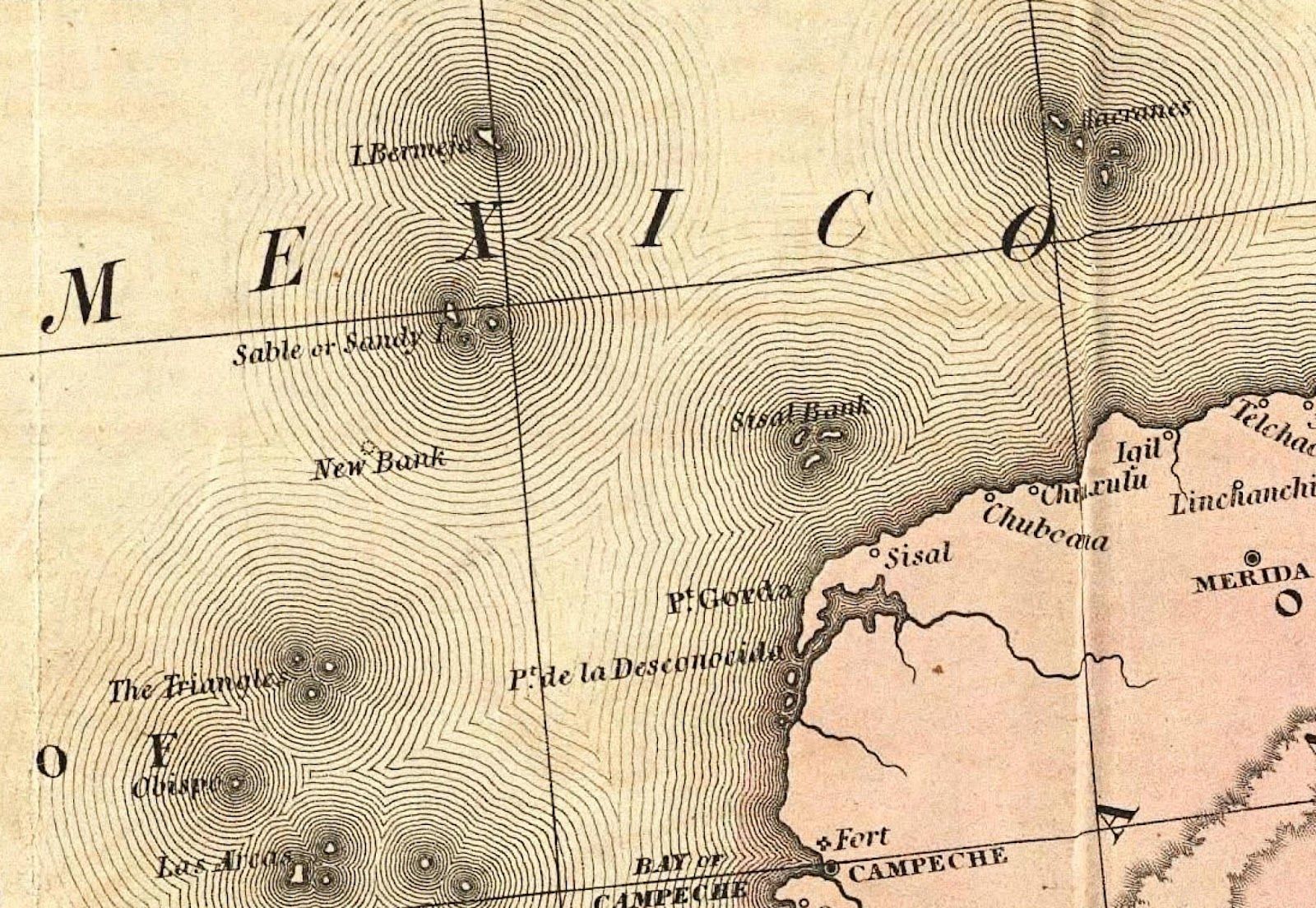
A ghost island

Image: Tanner, Henry S., Public domain, via Wikimedia Commons

Bermeja Island is mentioned in navigation texts written by European travelers and appears in cartography from the 16th to 19th centuries. Old maps place it off the north coast of the Yucatán Peninsula; however, multiple searches over the years have yielded no concrete evidence of its existence.

So, what happened to Isla Bermeja? Was it a cartographic error? Did it sink due to a tidal wave? Because of its geopolitical significance, some have even suggested that it was blown up by the CIA! A 2009 study by the Autonomous University of Mexico concluded that Isla Bermeja does not exist today, nor were any traces found at its supposed coordinates. Yet, it will forever remain a mystery that will surely keep many entertained.

2

The longest alien signal ever

Image: Credit: Big Ear Radio Observatory and North American AstroPhysical Observatory (NAAPO)., Public domain, via Wikimedia Commons

In 1977, Ohio State University’s Big Ear radio telescope, used in the search for extraterrestrial intelligence, detected a signal now known as the Wow! signal. While reviewing the data, astronomer Jerry R. Ehman noticed a sequence represented as "6EQUJ5." Baffled by the anomaly, he circled it and wrote "Wow!" in the margins.

The signal lasted 72 seconds and, unfortunately, has never been repeated. To this day, no one can fully explain the phenomenon, although some suggest it may have come from a man-made source. Still, the Wow! signal remains one of the strongest candidates for potential extraterrestrial contact ever detected.

3

The disappearance of an entire Inuit village

Image: Edward S. Curtis, Public domain, via Wikimedia Commons

How is it possible for an entire village to vanish without a trace? Believe it or not, this is said to have happened nearly a century ago. According to lore, a small Inuit village in Canada was well known among fur trappers who visited regularly to trade. But in 1930, something very strange supposedly occurred.

A hunter named Joe Labelle claimed he visited the village one day and couldn’t find a single person. Reports said there were guns and food left behind, and even claims that the graves in the cemetery were empty. A thorough investigation, however, found no conclusive evidence of what happened to the villagers. Some witnesses from nearby towns even reported seeing a huge green light. Theories ranged from mass migration to extraterrestrial abductions. The Royal Canadian Mounted Police has since dismissed the case as an urban legend. Some still believe the story to be true.

4

The Joyita Mystery

Image: bbb

We know thousands of shipwreck stories, but this one is quite unique. The MV Joyita, designed to be nearly unsinkable, was found adrift in the South Pacific, practically unharmed, but the crew had disappeared completely.

In October 1955, the American merchant vessel left the port of Apia in Samoa with 16 crew members and 9 passengers bound for the Tokelau Islands. After days without news, a rescue mission was launched. Five weeks later, the Joyita was spotted more than 600 miles west of its intended route. The vessel was partially submerged, and there was no sign of the passengers or crew. Four tons of cargo and all three life rafts were missing. They were never seen again.

5

A mummy and a mysterious fluid

Image: Gary Todd from Xinzheng, China, CC0, via Wikimedia Commons

Do you know where one of the best-preserved mummies was found? Hint: not in Egypt. Xin Zhui, the Marquise of Dai during the Western Han Dynasty in China, was discovered in her tomb at Mawangdui 2,000 years after her death, along with hundreds of valuable documents and artifacts.

What makes this mummy so extraordinary is how well-preserved her body is. Her organs and veins remain intact, and she still has hair and even eyelashes. Scientists analyzed the fluid present in the coffin and discovered it was acidic and contained salt and magnesium. They believe this mysterious liquid may have been responsible for preserving Xin Zhui so well. What they don’t know is whether it was intentionally poured into the coffin or came from the body itself.

6

A missing prime minister

Image: Yoichi Okamoto, Public domain, via Wikimedia Commons

The United States has its fair share of presidents who died while in office, but none of our 45 presidents have ever disappeared without a trace. Did you know that this actually happened in The Land Down Under?

Harold Edward Holt was the Prime Minister of Australia from 1966 until his presumed death in 1967. He loved the ocean and spearfishing. During a weekend trip with friends, Holt visited the remote Cheviot Beach to take a swim. Rough sea conditions that day caused him to be swept away by the waves, and he never reappeared. Despite an intensive search, his body was never found, which has given rise to numerous conspiracy theories. Ironically, Australians built the Harold Holt Memorial Swimming Centre in Melbourne in his honor.

7

The anonymous hijacker

Image: FBI, Public domain, via Wikimedia Commons

Many famous criminals have managed to remain unidentified for decades, but the D.B. Cooper case is something else entirely. In 1971, Cooper boarded a flight from Portland to Seattle. Shortly after takeoff, he showed a flight attendant a device he claimed was a bomb and demanded four parachutes and $200,000 in cash.

The crew landed to meet Cooper’s demands in exchange for the passengers and then took off again. As the plane flew over southwestern Washington, Cooper jumped into the cold, rainy night carrying his haul. His whereabouts and true identity were never discovered, although it is likely he didn’t survive the jump. In 1980, some of the ransom money was found near the Columbia River. Although the FBI officially closed the case in 2016, amateur sleuths continue to try to crack it.

8

Dancing to death

Image: Pieter Brueghel the Elder, Public domain, via Wikimedia Commons

Can you imagine an epidemic where the main symptom is uncontrollable dancing? Sounds like science fiction, doesn’t it? Yet this really happened during the Middle Ages. In 1518, a dancing plague struck Strasbourg, Alsace, in what is now France. This strange condition affected up to 400 people, making them dance frantically for weeks. It is said that some even died of heart attacks, exhaustion, or strokes.

Doctors and authorities tried all kinds of measures to stop the spread. They even banned music for a while! To this day, scientists are not certain what caused this bizarre condition: it may have been food poisoning from toxins in the ergot fungus, or perhaps a case of stress-induced mass hysteria.

9

A manuscript no one understands

Image: Public domain, via Wikimedia Commons

The Voynich manuscript is a codex written roughly 500 years ago in an unknown language and writing system by an anonymous author. Known as Voynichese, the manuscript was named after Wilfrid Voynich, a Polish bibliophile and antiquarian who purchased it in 1912.

Radiocarbon testing has shown that it dates to the early 15th century. Many cryptographers and codebreakers have attempted to decipher its roughly 240 pages without success. The manuscript contains diagrams and illustrations of unknown plants and astrological symbols. Some believe it may be a made-up language, a secret code, a work of fiction, or even a hoax. If you think you can solve this mystery, the Voynich manuscript is available for viewing at Yale University’s Beinecke Rare Book and Manuscript Library.

10

An ancestor of movable-type printing

Image: Bernhard

Similar to the Voynich manuscript, the Phaistos Disc is a fired clay disc believed to have been created during the Bronze Age. It was discovered by an Italian archaeologist in the basement of a palace in Crete, Greece, in 1908.

What makes this disc fascinating is that it contains a mysterious message. Stamped into the clay is a set of signs, forming a text that many scientists have tried to decipher—without success. It is considered an early attempt at printing, a technological innovation that would not become widespread for several centuries. While enthusiasts still hope the enigma can be solved, this is unlikely unless other documents are discovered to provide context.

Looking for an extra scoop of literary fun?

Learn more with our Word of the day

constraint

/kənˈstreɪnt/