Time changes things

Little boys were once called "girls": The shocking past of 12 words


Published on August 3, 2026


Image: Pixabay

There was a time when thousands of people were "villains," and most young people were "girls." The English language is a living, breathing thing. That’s why describing something as "nice", "terrible", or "artificial" would have meant entirely different things at other points in history. Join us in uncovering the original meanings of these everyday words!

1

Girl

Image: Annie Spratt

Such a short and straightforward word! How could it ever have had a different meaning? Believe it or not, "girl" didn't always refer specifically to a young female.

Around the 13th century, in Middle English, "girl" or girle was a general term for a child or young person of either sex. It wasn't until the 15th century that "girl" became exclusively associated with any young woman.

2

Guy

Image: Francesco Paggiaro

Did you guess it? The word "guy" comes from the name Guy Fawkes, the infamous conspirator behind the 1605 attempt to blow up the English Parliament.

Effigies of Fawkes, known as "guys," were burned during the annual Guy Fawkes Day celebrations. Eventually, "guy" came to refer to any oddly dressed or grotesque figure, and later, to any man in general.

3

Villain

Image: Didier VEILLON

Every good story needs a "villain," but this word has humble origins. It comes from the Late Latin word villanus, which meant "farmhand" or "peasant."

As social hierarchies shifted and Medieval city-dwellers sought to distinguish themselves from those living in rural areas, "villain" came to be associated with someone of low social standing, and eventually, with someone who was wicked or evil. Talk about looking down on your neighbors.

4

Nice

Image: Ahmed Zayan

"Nice" comes from the 12th century, when the Old French word nice meant "silly" or "foolish." It can be traced further back to the Latin word nescius, meaning "ignorant."

Basically, calling someone "nice" was like saying they were a bit of a dunce. It was only by the 18th century that "nice" had evolved to mean "coy", or "refined", before finally settling on the "agreeable" or "thoughtful" meaning we know today.

5

Silly

Image: Oleksandr P

The Old Norse word for "happiness" was sæl. Do you see where this is going? Seel was the Old English adaptation of it, which derived into "seely" and eventually "silly." For a long time, before the late 13th century, it meant "blessed" or "joyous."

Over time, it evolved to mean "pious" or "innocent," and then "weak" or "helpless." By the 1570s, its definition had settled on its current meaning of "foolish" or "whimsical."

6

Clue

Image: Олександр К

"Clue" comes from the Greek word kleos, meaning "fame" or "glory." It then entered Old English as "cliewen," which referred to a ball of yarn. Do you see the connection?

Think of the Greek myth of Theseus, who used a ball of yarn to navigate the Labyrinth and slay the Minotaur. When this myth was popularized in England by Chaucer (in the late 1300s), the image of the yarn guiding Theseus out of the maze led to "clue" becoming the term for a hint or a tool that helps solve a problem. The spelling shifted to "clue" in Early Modern English, around the 1500s-1600s.

7

Naughty

Image: Darío Méndez

"Naughty" might bring to mind a mischievous child or a playful prank. But we all know that "naught" means "nothing." Essentially, in Old English, around the 1300s or 1400s, if you were "naughty," you were considered "worthless" or "good for nothing!"

Over time, the meaning softened, shifting to "wicked" or simply "disobedient" or "mischievous."

8

Terrible

Image: Giorgia Sormani

Today, we may catch ourselves using "terrible" and "lousy" interchangeably. But there was a time when "terrible" meant "awe-inspiring." That’s more closely related to the other meaning of "terrible," which is horrible or frightful.

It comes from the classical Latin word terribilis, used pre-500 AD, more closely related to reverence than to dread.

9

Nervous

Image: Simone Pellegrini

In Latin, nervosus meant "sinewy" or "vigorous". Initially, it described someone outstandingly strong—but that’s not what we mean today when we say we feel "nervous".

The term as we know it today emerged in the 1700s, describing a state of excitability or anxiety, perhaps because people associated those feelings with a tensing of the muscles and sinews.

10

Artificial

Image: Birmingham Museums Trust

Today, the term "artificial" might conjure the image of plastic flowers or even a computer generating Artificial Intelligence. But the word once meant "full of artistic or technical skill".

That is, it was used for creations we would now refer to as art, or even technology: Things crafted by human ingenuity, most often with positive connotations. Its current negative or synthetic connotation developed in more modern times, through the 1700s-1800s.

11

Meat

Image: Nathan Dumlao

There was a time when "meat" referred to any kind of solid food. It came from the Old English word mete, which, before the 1100s, could refer to any edible, from a juicy steak to a bowl of porridge.

It wasn't until later that "meat" narrowed its focus to the flesh of animals.

12

Myriad

Image: Paul Bergmeir

Another Greek origin. Even in Ancient Greece, if you had a myrios of problems, you still had a lot of them. Its meaning was exactly "ten thousand", although it was also used as an expression to mean "indefinitely large."

It later entered the English language in the 1550s, meaning specifically "the number of 10,000."


We just know that we know nothing

12 facts that people often get wrong


Published on August 3, 2026


Image: Andrea De Santis

No one can claim to know everything, but most people go through life confident about certain things. However, some of these widely held beliefs are not actually correct, despite their popularity. Let’s have a look at some "facts" you might have gotten wrong!

1

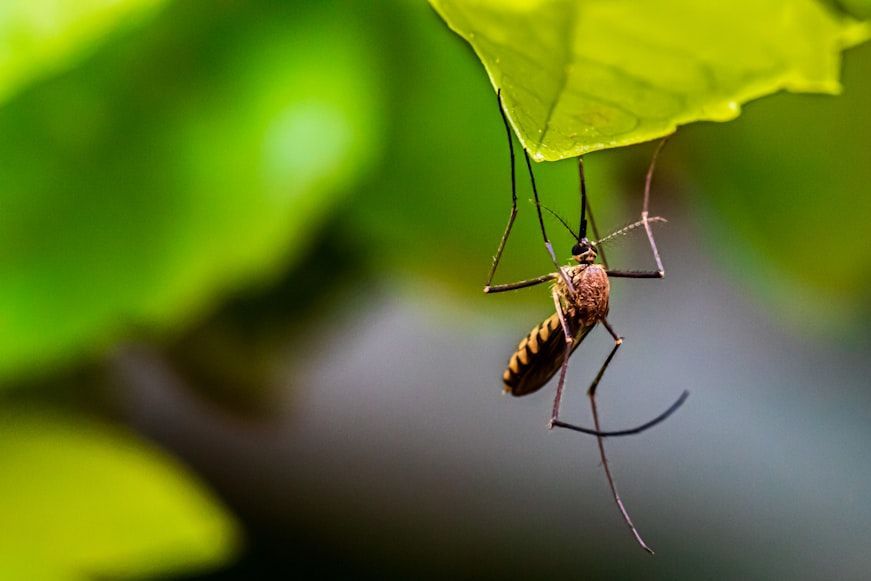
Insects are animals

Image: Syed Ali

The idea that insects—particularly mosquitoes—are not animals is widespread, but it’s also incorrect. In fact, insects are the most diverse group within the Animal kingdom, with more than a million species described and representing more than half of the animal population of the planet.

2

Tomatoes (and many other "veggies") are actually fruits

Image: Heder Neves

The mistake comes from not considering that "fruit" is not only a culinary term but also a botanical one. Botanically, a fruit is the part of a plant that develops from a flower and contains seeds. This makes tomatoes, peppers, cucumbers, eggplants, and many other foods that we call vegetables actually fruits in the scientific sense.

3

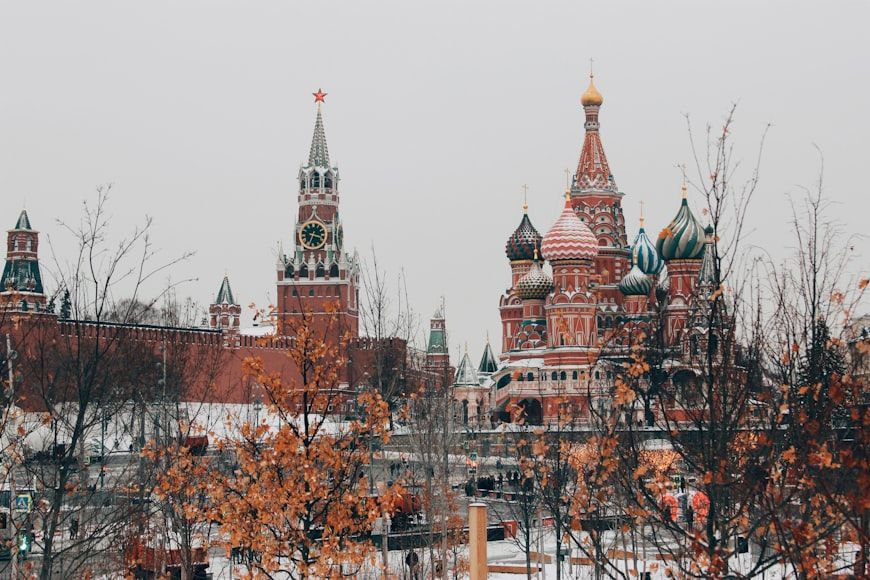
Russia is both in Europe and Asia

Image: Michael Parulava

Countries have a political delimitation, while continents are divided according to geographical criteria. The Russian Federation is the largest country on Earth, bordering fourteen other countries and extending across eleven time zones. It spans across a good part of Eastern Europe, but also across the Ural mountains—one of the recognized borders between Europe and Asia—and stretches deep into northern Asia.

4

The flu is not caused by cold weather

Image: Towfiqu barbhuiya

While cold weather isn’t harmless, it is not the direct cause of illnesses like the flu, which are caused by viruses. In colder months, people tend to spend more time indoors and often avoid ventilating rooms, creating conditions that make it easier for viruses to spread and cause illness.

5

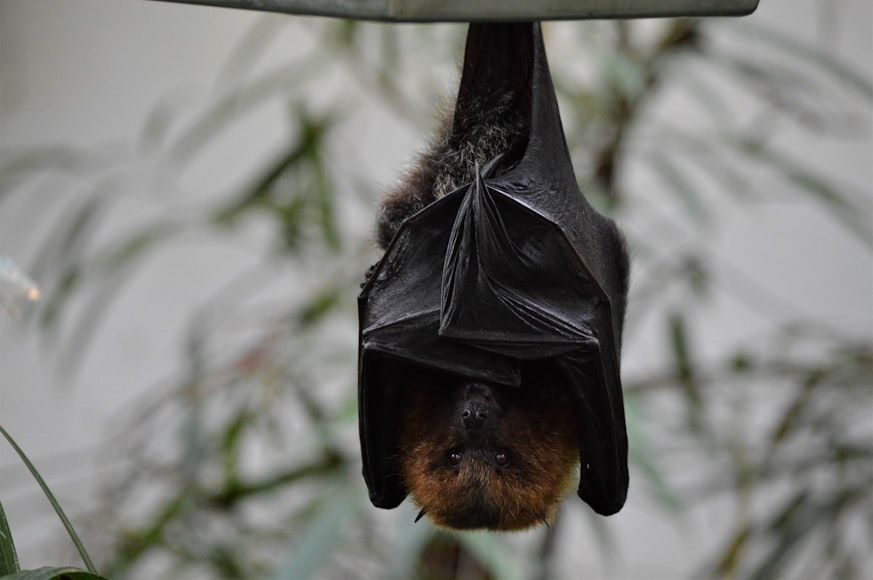
Bats are not blind

Image: Riizz

Bats might not prefer to be out during bright daylight, but this does not mean that they are blind. In fact, many species have excellent eyesight, though it is adapted to low-light or nighttime conditions. On top of that, bats also use echolocation, which allows them to navigate and hunt with remarkable precision in complete darkness.

6

You don't need to wait 24 hours to file a missing persons report

Image: Volodymyr Hryshchenko

The belief that you must wait a full day before reporting someone missing is a myth popularized by movies and TV shows. In reality, the law does not require a waiting period. In fact, law enforcement agencies stress that the first 24 hours are often the most critical, so a missing person should be reported immediately.

7

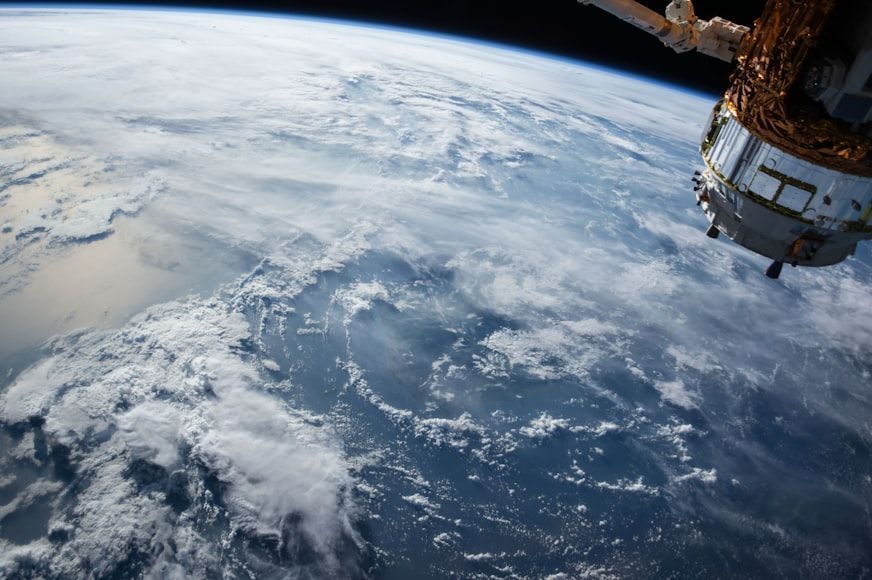
The Great Wall of China can’t be seen from space

Image: NASA

Some man-made structures are visible from space without magnification, but despite popular belief, the Great Wall of China is not one of them. While it is quite long, being over 13,000 miles long, it is relatively narrow, and its earthy colors blend in with the surrounding landscape, making it nearly impossible to spot with the naked eye from orbit.

8

Mount Everest is not the tallest mountain on Earth

Image: Andreas Gäbler

This one is tricky: Mount Everest is the highest mountain on Earth (29,032 feet)… if you measure the distance from sea level to peak. For the actual tallest mountain, the answer might vary depending on how you measure. Measured from base to summit, Mauna Kea in Hawaii is the tallest at 33,474 feet—though much of it is underwater. Mount McKinley (Denali) in Alaska rises about 18,000 feet from its base to the peak, making it the tallest mountain entirely above sea level. And Ecuador’s Mount Chimborazo, while shorter in height, is the farthest point on Earth from the planet’s center due to the equatorial bulge.

9

The Northern and Southern Hemispheres have opposite seasons

Image: Kyle Glenn

The Earth is tilted on an axis, which causes the amount of sunlight each hemisphere receives to change as it orbits the Sun. Because of this tilt, when the Northern Hemisphere is tilted toward the Sun and experiences summer, the Southern Hemisphere is tilted away and experiences winter—and vice versa. This is why the Southern Hemisphere celebrates Christmas during summer.

10

It’s not dangerous to wake a sleepwalking person

Image: Kate Stone Matheson

Standard medical advice is to gently guide a sleepwalker back to bed rather than waking them, but not because waking them is inherently dangerous. People tend to sleepwalk during deep sleep, so waking them up might startle them or cause confusion and disorientation.

11

Shaving won’t make your hair grow thicker

Image: Supply

Hair color and thickness are determined by genetics, not by shaving. Hair naturally gets thin at the ends, so when you shave it, the hair shaft appears to be thicker and darker because of the blunt cut. But it's just an optical illusion; the natural size of the shaft remains unchanged.

12

Coffee won’t dehydrate you

Image: Mike Kenneally

Coffee is a natural diuretic, meaning it can increase trips to the bathroom. However, the water in brewed coffee still contributes to your hydration and offsets its mild diuretic effect. If you consume coffee in moderation—3 to 5 cups a day, depending on your tolerance—you should be alright. However, drinking extra water on the side is never a bad idea.

Looking for an extra scoop of literary fun?

Learn more with our Word of the day

gloom

/ɡlum/