State mottos explained

Your state has a motto, here's what it actually means


Published on September 18, 2026


Image: Donald Mroczkowski

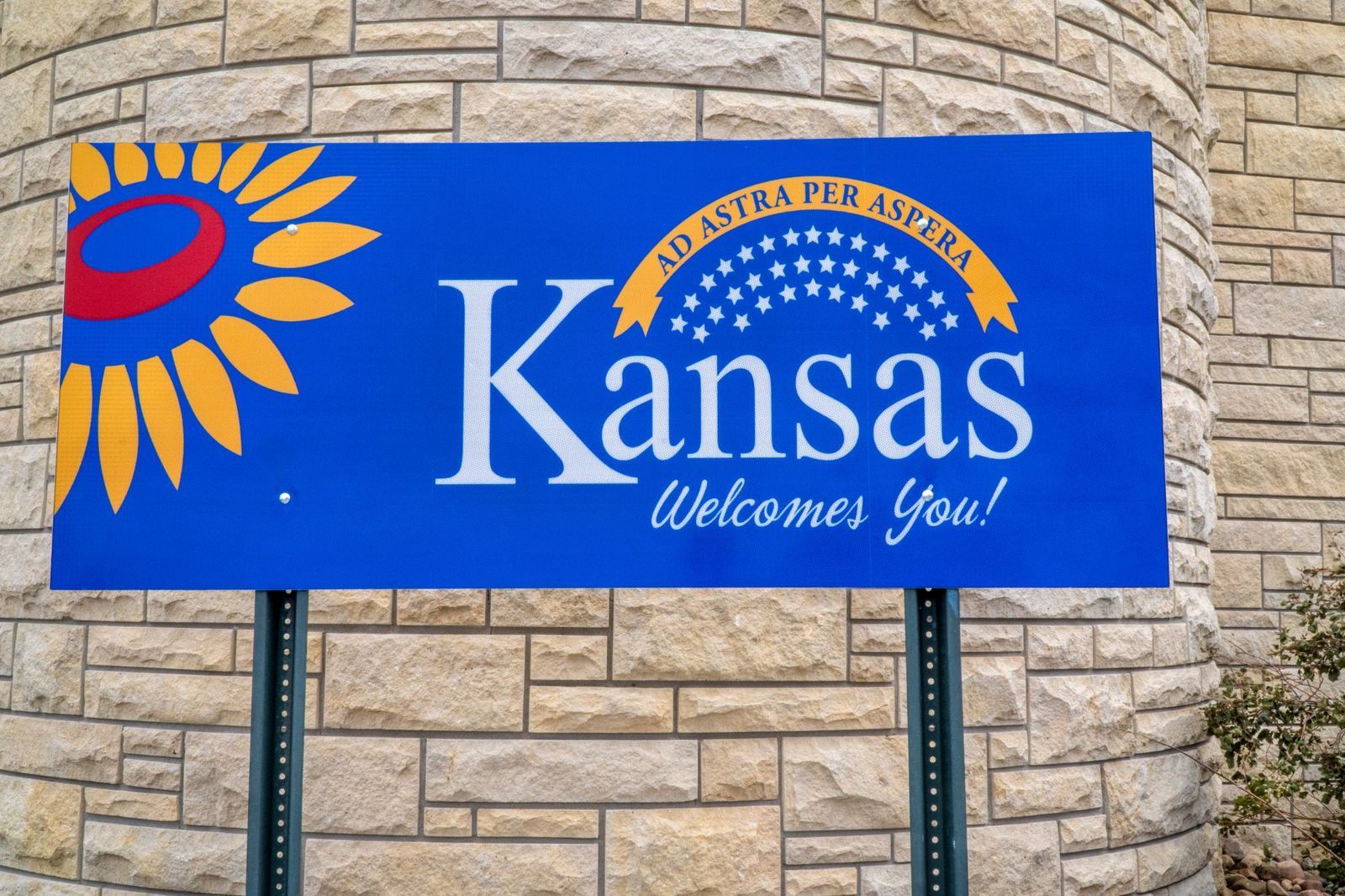
A motto is part of a state's identity, much like a nickname or a famous landmark, and is often born from a real moment in history. Take Kansas, whose motto "Ad astra per aspera" ("To the stars through difficulties") nods to its rocky road to statehood. Or Virginia's "Sic semper tyrannis" ("Thus always to tyrants"), a phrase with a dramatic afterlife nobody saw coming. Let's dig into 10 of these mottos and the history that shaped them.

1

Kansas: Ad astra per aspera

Image: marekuliasz

This one means "to the stars through difficulties," and it fits Kansas like a glove. The phrase was adopted in 1861, the same year Kansas became a state after years of violent conflict known as "Bleeding Kansas," where pro- and anti-slavery settlers clashed.

Written by John James Ingalls, it reminds Kansans that their state was forged through real struggle: hardship before triumph.

2

Virginia: Sic semper tyrannis

Image: nmoyPhoto

"Thus always to tyrants" sounds dramatic, and it is. Adopted in 1776 as Virginia broke from British rule, it celebrates the overthrow of oppressive power. Ironically, it became infamous in 1865 when John Wilkes Booth shouted it after assassinating Lincoln.

Virginians today still see it as a proud statement against tyranny, despite that dark historical footnote.

3

New York: Excelsior

Image: Oleg Kovtun Hydrobio

Meaning "ever upward," this motto was adopted in 1778, shortly after New York became a state, appearing on its seal. It reflects ambition and progress, a fitting message for a state built on skyscrapers and big dreams. New Yorkers still embrace it as a nod to reaching higher, no matter the obstacle.

4

California: Eureka

Image: ZikG

"I have found it!" was adopted as California's motto around the Gold Rush era of 1849, officially made law in 1963. It captures the thrill of prospectors striking gold in the hills, and more broadly, the spirit of discovery and opportunity that drew millions west.

5

New Hampshire: Live Free or Die

Image: NayaDadara

Perhaps the boldest motto in the country, this phrase came from Revolutionary War general John Stark, who wrote it in an 1809 toast to his old soldiers. It became the official state motto in 1945. It's stamped on license plates, embodying New Hampshire's fierce independent streak.

6

Hawaii: Ua Mau ke Ea o ka ʻĀina i ka Pono

Image: Bennian

Translated as "the life of the land is perpetuated in righteousness," this motto comes from a powerful moment: in 1843, King Kamehameha III spoke these words after Britain briefly seized Hawaii and then restored its sovereignty. It's a celebration of justice winning out, and it remains deeply meaningful to Native Hawaiian identity today.

7

Missouri: Salus populi suprema lex esto

Image: Prachaya Roekdeethaweesab

This mouthful translates to "let the welfare of the people be the supreme law." Adopted in 1822 when Missouri joined the Union, it’s borrowed from Roman statesman Cicero. It reminds citizens that the government exists to serve the people first; a principle still cited in political debates about public good today.

8

North Carolina: Esse quam videri

Image: zimmytws

Meaning "to be, rather than to seem," this motto was officially adopted in 1893, borrowed from Cicero once again. It champions authenticity over image: valuing genuine character over putting on a show. For North Carolinians, it's a point of quiet pride: substance matters more than flash, a value many still hold dear today.

9

Idaho: Esto perpetua

Image: zmotions

"Let it be perpetual" was adopted in 1867, years before Idaho even became a state in 1890. The phrase is borrowed from a 17th-century Venetian friar named Paolo Sarpi, said when Venice's independence was threatened. For Idaho, it's a hopeful wish that the state, and its freedoms, will endure forever.

10

Maryland: Fatti maschii, parole femine

Image: grandbrothers

Loosely translated as "strong deeds, gentle words," this Italian phrase traces back to the coat of arms of the Calvert family, Maryland's founding Lords Baltimore, and was formally adopted in 1874. It suggests that actions should speak louder than talk: a value Marylanders still nod to with quiet pride.


Your pup will thank you

You've been wrong about dogs this whole time! Here's the truth!


Published on September 18, 2026


Image: Jametlene Reskp

Dogs are part of the family: They're our best friends and our constant companions. But over the years, myths about dog behavior have made their way into common belief. Some sound logical, while others are just crazy, but how do we separate fact from fiction? Can dogs really tell time? Is chocolate always deadly? Let's take a look at some of the most common myths about our four-legged friends, some of which might just surprise you!

1

Myth: You can’t teach an old dog new tricks

Image: Dominik QN

Many dog owners believe that once their pup has reached a certain age, training becomes impossible. It’s only logical: When we see a young pup and their eagerness to pick up on commands quickly, we tend to think older ones won’t be able to do that. Because of this, many people give up on training their senior dogs, assuming the effort won’t pay off. But is this belief really true? Place your bets!

2

Myth debunked! Old dogs can learn new tricks

Image: Camylla Battani

As it turns out, age is just a number: Dogs are capable of learning at any stage of life! While older dogs may take a little longer to pick up new habits, just like we humans, their brains remain highly adaptable.

Training activities work best when it’s fun, positive, and rewarding, so grab some tasty treats and start small. Short, frequent training sessions are the key to success.

3

Myth: Dogs have no sense of time

Image: Matthew Henry

Ever leave the house and come back to a dog who acts like you’ve been gone for years? Many assume dogs don’t understand time, thinking they react the same whether you’ve been gone for five minutes or five hours.

Since they don’t read clocks, it’s easy to assume they live entirely in the moment. But if that’s the case, how do they seem to know exactly when it’s time for dinner or their daily walk?

4

Myth debunked! Dogs do know the difference

Image: Karsten Winegeart

Science confirms that dogs have a sense of time. Studies have shown that dogs can distinguish between different time intervals, meaning they know the difference between an hour and several hours. But how?

They associate events with specific routines. If you always walk them at a certain time, they’ll start anticipating it. Some experts believe dogs use scent to tell time, as human odors change throughout the day. So yes, your dog really does know if you’re late for dinner!

5

Myth: It’s safe to leave a dog in a car with the windows down

Image: Tim Mossholder

On warm days, it’s tempting to crack the windows and run into the store, thinking your pup will be fine for a few minutes. After all, they have fresh air, right? Many people assume that as long as the windows are open, there’s no risk of overheating. But just how safe is it?

6

Myth debunked! Even with windows down, a hot car is deadly

Image: John Carlo Tubelleza

Leaving a dog in a parked car, even for a few minutes, can be incredibly dangerous. Cars heat up shockingly fast, even with the windows cracked, and dogs have a harder time regulating body temperature than humans.

Heatstroke can set in quickly, and once it does, it can be fatal. If you wouldn’t sit in a parked car on a hot day, why would you let your dog do so?

7

Myth: Dogs can’t smell your feelings

Image: Erica Magugliani

Humans rely on words to express emotions, but dogs sadly don’t have that luxury. Many assume that while dogs pick up on body language, they can’t actually sense how we feel.

After all, emotions are internal, right? However, have you ever felt your dog was closer than ever when you’re feeling down? Is that real, or is it just your mind playing tricks?

8

Myth debunked! Dogs can smell your emotions

Image: Eric Ward

If you said this was possible, you were right! Dogs don’t just guess your feelings; they can smell them! Their noses are 100,000 times more powerful than ours, meaning they pick up on chemical changes in our bodies.

When we’re scared or anxious, we sweat slightly differently, releasing hormones like adrenaline and cortisol. Your dog doesn’t just see your nervous body language; they literally smell your fear. So yes, they know when you’re having a bad day, and that’s why they’re always ready to comfort you.

9

Myth: A little bit of chocolate won’t hurt a dog

Image: James Barker

Chocolate is delicious, and dogs seem eager to try everything we eat, don’t they? We might feel tempted to share our piece of chocolate with our furry best friend.

Many people believe that while chocolate is technically bad for dogs, a small amount won’t actually cause harm. If a dog sneaks a bite of a cookie or a tiny piece of chocolate, it’s no big deal… right?

10

Myth debunked! Even small amounts of chocolate can be dangerous

Image: Artem Sapegin

Well, chocolate contains theobromine, a chemical that is toxic to dogs. The danger of it depends on the type of chocolate and the size of the dog. Naturally, dark chocolate is the worst, as it contains the highest levels of theobromine.

While a tiny bit of milk chocolate might not be fatal, it can still cause vomiting, diarrhea, or heart issues. If your dog eats any chocolate, call your vet immediately. You know the saying: Better safe than sorry!

11

Myth: It’s okay to give my dog ibuprofen for pain

Image: Stas Svechnikov

When humans have aches and pains, we reach for ibuprofen or aspirin. Some dog owners assume it’s safe to give their pups a tiny dose of these medications if they’re injured or sick. After all, if it helps humans, it must help dogs too, right?

12

Myth debunked! Human medications can be highly toxic to dogs

Image: Laula Co

That’s actually not the case! Giving ibuprofen to your dog can have serious, even fatal, consequences.

Dogs process medication differently than humans, and even small doses can cause stomach ulcers, kidney damage, or liver failure. If your dog is in pain, never give them human medicine. Just consult your vet for safe, pet-approved pain relief options. What works for us doesn’t always work for them!

Looking for an extra scoop of literary fun?

Learn more with our Word of the day

puissant

/ˈpwɪsnt/