Diggin’ deeper
A 2,000-year-old computer? 10 archaeological finds that challenge history
Published on January 28, 2026
 Image: The Cleveland Museum of Art
Most of the time, archaeology uncovers little more than pottery shards and ancient tools—not that there’s anything wrong with those. But sometimes, when luck strikes, excavations can reveal bizarre, baffling, and downright eerie artifacts that challenge our understanding of history. Join us on a journey through 10 of the most fascinating mysteries and unexpected finds ever unearthed.
Antikythera Mechanism
 Image: Constantinos Kollias
Recovered from a shipwreck in 1901, the Antikythera Mechanism was a surprisingly complex artifact that used intricate bronze gears to predict eclipses, track planetary positions, and regulate calendars.
Advanced imaging techniques revealed it contained at least 37 interlocking gears, operated by a hand crank, earning it the title of the world’s first known analog computer.
Nazca Lines
 Image: Seiji Seiji
Dating back to 500 BCE–500 CE, these lines cover over 400 square miles and depict animals, plants, and geometric shapes. Created by removing the top layer of reddish pebbles to expose the lighter soil beneath, they have remained intact thanks to the region’s dry climate.
While their full extent can only be appreciated from the air, scholars believe they served astronomical or ceremonial purposes at the time.
Roman Dodecahedrons
 Image: Spencer Davis
Found across Europe, these hollow 12-sided polyhedra date to the 2nd–4th centuries CE. From the start, they puzzled scientists, who couldn’t determine their purpose.
Their size, ranging from 1.6 to 4.3 inches, and evenly spaced holes suggest they may have been measuring tools, religious artifacts, or even knitting aids. However, no ancient texts explain their use, and, so far, the mystery remains unsolved.
The Baghdad Battery
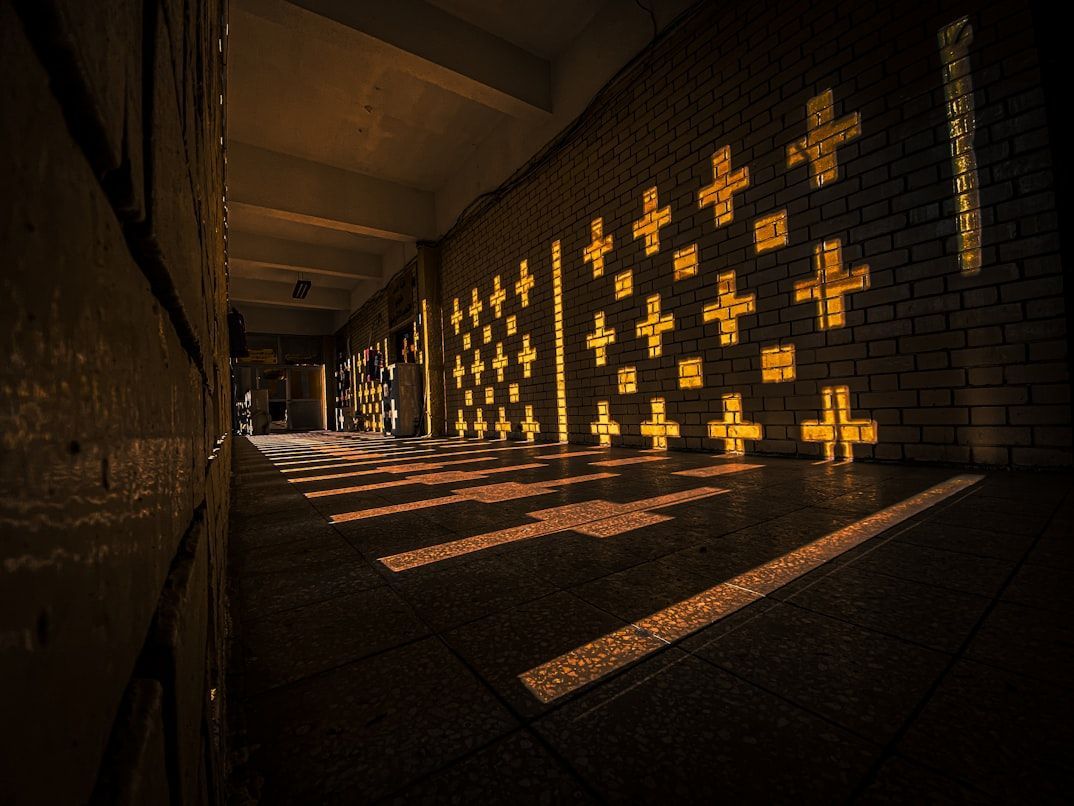 Image: F𝓪7𝓪𝓭 ✔️ .
This 2,000-year-old ceramic jar contained a copper cylinder and an iron rod, which some have speculated could have been part of an ancient galvanic cell.
It might have generated the electricity required for electroplating or medicinal purposes. Tests with modern replicas show it can produce a small voltage, though its true function remains unconfirmed.
Piri Reis Map
 Image: The New York Public Library
Drawn by Ottoman admiral Piri Reis in 1513, this early world map depicts parts of Europe, Africa, and the Americas with surprising precision.
Some theories claim it even shows Antarctica centuries before its official discovery. The surviving fragment is now kept in Istanbul’s Topkapı Palace.
The Voynich Manuscript
 Image: Mark Rasmuson
Carbon-dated to the early 15th century, this mysterious 240-page manuscript is written in an unknown script with even stranger botanical drawings.
Despite decades of cryptographic attempts, no one has cracked its meaning. It’s housed at Yale University’s Beinecke Library.
L’Anse aux Meadows
 Image: Steinar Engeland
At the northernmost tip of the island of Newfoundland, Canada, lies the first confirmed Viking settlement in North America, dated to around 1000 CE. Excavations have revealed turf houses, iron-working remains, and Viking-style artifacts.
This UNESCO World Heritage site provides clear evidence that Norse explorers reached North America nearly 500 years before Columbus.
The Clay Army
 Image: Aaron Greenwood
Discovered in 1974, China’s Terracotta Warriors consist of over 8,000 life-sized clay soldiers standing in battle formation near Emperor Qin Shi Huang’s tomb.
Buried with the emperor around 210 BCE, these warriors were created to serve as his protectors in the afterlife, reflecting the emperor’s power and beliefs about immortality. The site remains one of the most significant archaeological discoveries in history.
Ötzi the Iceman
 Image: Gabriel Garcia Marengo
Discovered in the Alps in 1991, Ötzi is a naturally mummified man from the Copper Age, over 5,300 years old. Found with a copper axe and clothing made from multiple animal hides, his body is so perfectly preserved that even multiple tattoos can be identified.
Curiously, analysis of Ötzi’s remains revealed he died from an arrow wound, offering rare and valuable insight into prehistoric life, violence, and death during the Copper Age. A literal cold case from millennia ago, eh?
Rosetta Stone
 Image: Matteo Vistocco
Discovered in 1799, the Rosetta Stone is a granodiorite stele inscribed with the same text in three scripts: Greek, Demotic, and hieroglyphic. This unique trilingual inscription provided the crucial key to understanding ancient Egyptian hieroglyphs.
Thanks to the Rosetta Stone, Jean-François Champollion was able to crack the hieroglyphic code in 1822, unlocking centuries of Egyptian history. The artifact is now prominently displayed in the British Museum.