10 Mystery novels and authors that still keep us guessing


Published on August 27, 2026


Image: Nicoleta Ionescu

You’ve probably imagined yourself as a detective at least once and wondered if you would trust your instincts or question every clue. Quite possibly one of these world-famous mystery authors should have written a story about you. Today, we will be looking at 10 of the best intrigue masters who keep readers on the edge of their seats with thrilling stories of secrets and riddles that must be solved sooner rather than later.

1

Agatha Christie - The Queen of Mystery

Image: Doodeez

If you love constant intrigue, then Agatha Christie (1890-1976) is an essential read. She is a world-famous British writer and the undisputed Queen of Mystery, having written 66 novels that keep readers on their toes with ingenious misdirection and shocking plot twists, leaving generations of readers guessing right up to the final page.

And Then There Were None is her must-read novel. Published on November 3, 1939, it is the world’s best-selling mystery novel where 10 strangers are lured to an isolated island off the Devon coast by an intriguing host. While accused of past crimes, they are killed one by one, following a nursery rhyme.

2

Sir Arthur Conan Doyle - The Original Detective Genius

Image: Sir Arthur Conan Doyle

Logic isn’t the only thing that leads to solving mysteries. Sir Arthur Conan Doyle (1859-1930) created none other than the world's most famous consulting detective, Sherlock Holmes, and proved that. Holmes appeared in four novels and 56 short stories, alongside his loyal friend and narrator, Dr. John Watson, and changed mystery fiction forever.

Published in 1902, The Hound of the Baskervilles is a masterpiece of detective fiction that comes to life through Sherlock's sharp mind; alongside his research of supernatural myths, it became a timeless story of suspense and surprise.

3

John Grisham - Legal Thrillers That Feel Real

Image: bella1105

Success can sometimes come at a dangerous price. John Grisham, born February 8, 1955, brought this to light by writing many popular legal thrillers that feel very real. He used his own professional experience as a lawyer in a small-town Mississippi firm to build authentic courtroom scenes, flawed human characters, and high-pressure, controversial moral dilemmas.

The Firm, his novel published in 1991 and made into a film starring Tom Cruise, is deeply mysterious and suspenseful, centering on a young lawyer who joins a secretive law firm that offers massive wealth, only to uncover deep, dark secrets, suspicious deaths, and a Mafia conspiracy.

4

Mary Higgins Clark - The Suspense Queen

Image: Volodymyr TVERDOKHLIB

More often than not, the people closest to you hold secrets you wouldn’t imagine possible. Mary Higgins Clark (1927-2020) was a widely acclaimed American author, known as the "Queen of Suspense," who reflected this in her work. Her thrillers are known for being wholesome, avoiding gory or explicit descriptions, and for having self-reliant female heroines in stories filled with relatable fears such as domestic tensions, memory loss, and threats to family or children.

Following those themes, her first novel, Where Are the Children?, published in 1975, became a breakout hit and helped build a legacy defined by clean, fast-paced, and gripping psychological books.

5

Raymond Chandler - Noir at Its Finest

Image: Ned Snowman

If you prefer your mysteries dark, gritty, and morally complex, then Raymond Chandler (1888-1959), a British-American author best known for his novels and screenplays, is the answer. He helped define what is known as "hard-boiled" detective fiction through his complex plots, including his private-eye detective, Philip Marlowe, set against the dark side of the American dream, where deceit and corruption lurk beneath the Los Angeles sun.

He spent his early years in England and later wrote classic crime noir novels, such as his 1939 classic, The Big Sleep, where inspector Marlowe is hired by a wealthy general to investigate a blackmail scheme involving his daughter. In doing so, Chandler’s lead detective dives into the shadowy world of murder, deceit, and corruption.

6

Sue Grafton - Letter Crafter

Image: beeboys

Sometimes it feels like every letter could bring a new secret to light. Sue Grafton (1940—2017) brought this feeling to life in her Alphabet Series, a widely celebrated collection of hard-boiled detective stories featuring a female private investigator and former cop, Kinsey Millhone.

Kicking off with A Is for Alibi in 1982 and concluding with Y Is for Yesterday in 2017, the bestselling series spans 25 books, was inspired in part by Edward Gorey’s alphabet-based book The Gashleycrumb Tinies, and is set in the fictional California town of Santa Teresa (modeled after Santa Barbara).

7

Robert B. Parker - Classic American Detective Stories

Image: fluidworkshop

We don’t often think of a detective as both tough and thoughtful, but Robert B. Parker (1932-2010) was a master of modern American crime fiction, who reshaped the detective genre by combining tough-guy action with sharp wit and a deep moral code.

Spenser, for example, is his leading investigator who cooks, quotes poetry, and loves his partner, Susan Silverman. The Godwulf Manuscript (1973) is the first Spenser book, introducing this character as a wisecracking private investigator searching for a stolen medieval university manuscript.

8

P.D. James - Literary Mystery at Its Best

Image: HelgaQ

The best mysteries are those layered with emotion and insight. P.D. James (1920-2019) was such a masterful British crime fiction writer who achieved both and was known by many as the "Queen of Crime". Her books present clever puzzles mixed with a deeper human understanding, making her famous for her thoughtful style amidst dark plots.

Cover Her Face is her 1962 debut crime novel, introducing her famously clever and sensitive Scotland Yard detective Adam Dalgliesh, as he investigates the shocking murder of an ambitious young housemaid in an English country manor.

9

Tana French - Psychological Mystery Mastery

Image: DavideDiLernia

It’s not often that we see a character solving a crime while answering their own personal questions, but Tana French, born May 10, 1973, is an acclaimed Irish author who explores such scenarios. She is known by many as the "First Lady of Irish Crime," renowned for her psychological mystery style that focuses intensely on human flaws, memory, guilt, and the deep emotional impacts of a crime, rather than just procedural puzzle-solving.

In the Woods, published in 2007, is her debut psychological mystery novel, and the first book in the Dublin Murder Squad series. It follows detective Rob Ryan as he investigates a young girl’s murder, echoing some of his own childhood trauma.

10

Tony Hillerman - Mystery Meets the American Southwest

Image: Kathleen Thomas-McCue

Besides the characters, the landscape can also hold secrets, and sometimes tradition can reveal what evidence cannot. Tony Hillerman (1925 - 2008) was a best-selling writer and journalist, famous for his detective novels set in the American Southwest, who brought these ideas to the table. His stories take place in the Navajo Nation, starring tribal police officers Joe Leaphorn and Jim Chee. His books intertwine classic crime puzzles with a deep respect for Native American ways and desert landscapes.

Published in 1970, The Blessing Way was his debut novel, set across Arizona and New Mexico, centering on a baffling murder with no tracks in the sand, while blending local fears of the skinwalker (or "Wolf Witch") with modern Cold War surveillance methods.

The real origins

A house divided against itself: 10 famous phrases with biblical roots


Published on August 27, 2026


Image: Everett Collection

We use a lot of set phrases every day without giving much thought to where they came from. But you might be surprised to learn that many of them, even the ones you’d least expect, have biblical roots. Some have survived for centuries with barely a change, while others have taken on surprising new meanings. How does a saying last that long? From "A house divided against itself cannot stand" to "by the skin of your teeth," here are 10 everyday expressions that came straight from the Bible.

1

"A house divided against itself cannot stand" (Matthew 12:25, Mark 3:25, and Luke 11:17)

Image: Alexander Gardner, Public domain, via Wikimedia Commons

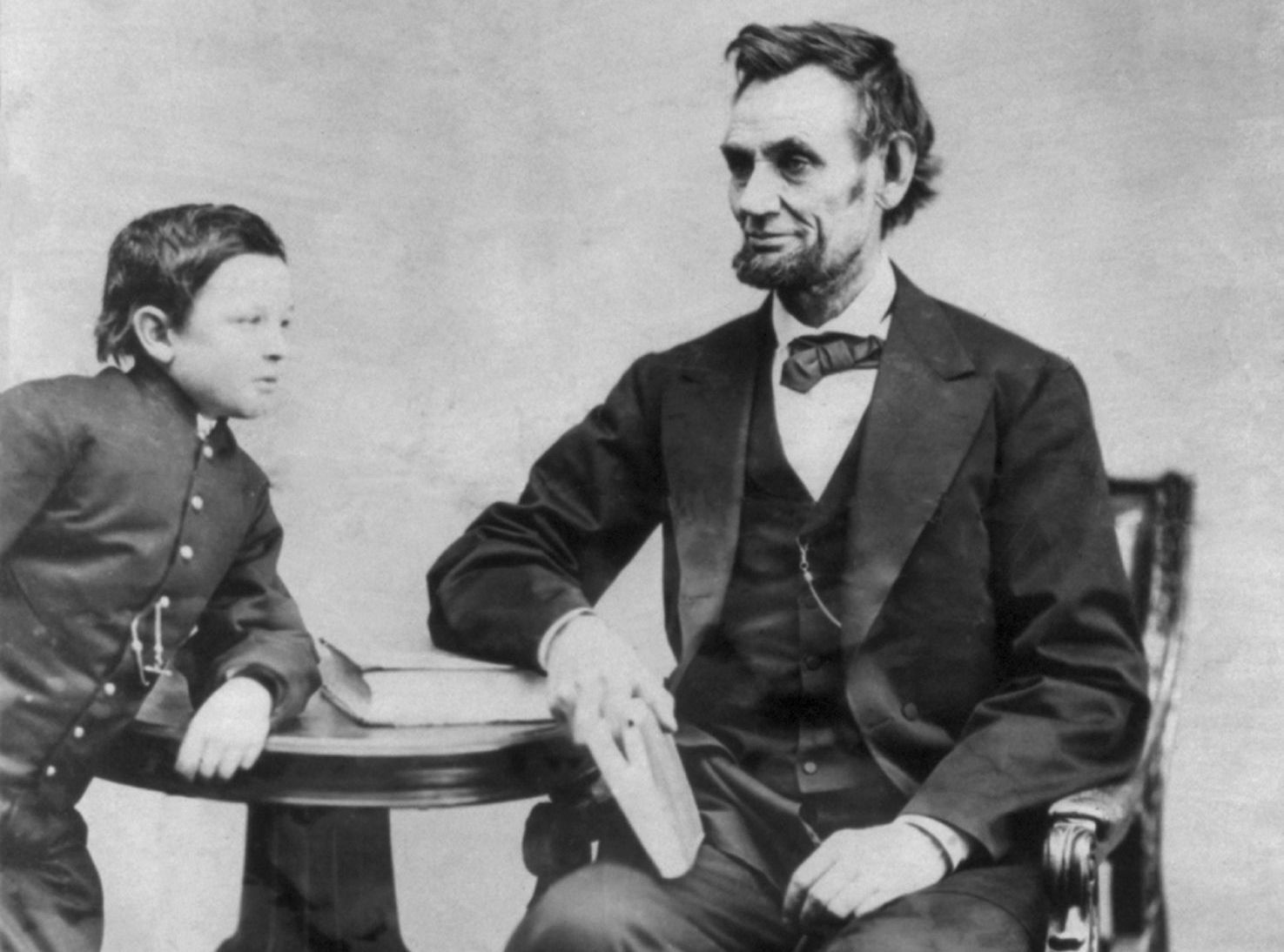
Most people associate "A house divided against itself cannot stand" with Abraham Lincoln, who used it in a famous 1858 speech while accepting the Republican nomination for US Senate. But the phrase is much older, with roots in the Bible.

It appears three times in the New Testament, used by Jesus to make a point during a dispute. According to the narrative, after he healed a man possessed by a demon, some leaders accused him of using Satan’s power. Jesus turned their argument against them: why would Satan fight his own forces? A kingdom or household divided against itself cannot survive. As English Bible translations spread, biblical expressions entered everyday speech. By the 1700s, this phrase was being used to describe feuding families, struggling businesses, and divided political groups, even before Lincoln made it famous in American history.

2

"Good Samaritan" (Luke 10:25–37)

Image: Brett Jordan

When someone stops to help a stranger in trouble, we call them a "Good Samaritan." It’s an everyday expression, but few know it comes from a biblical story.

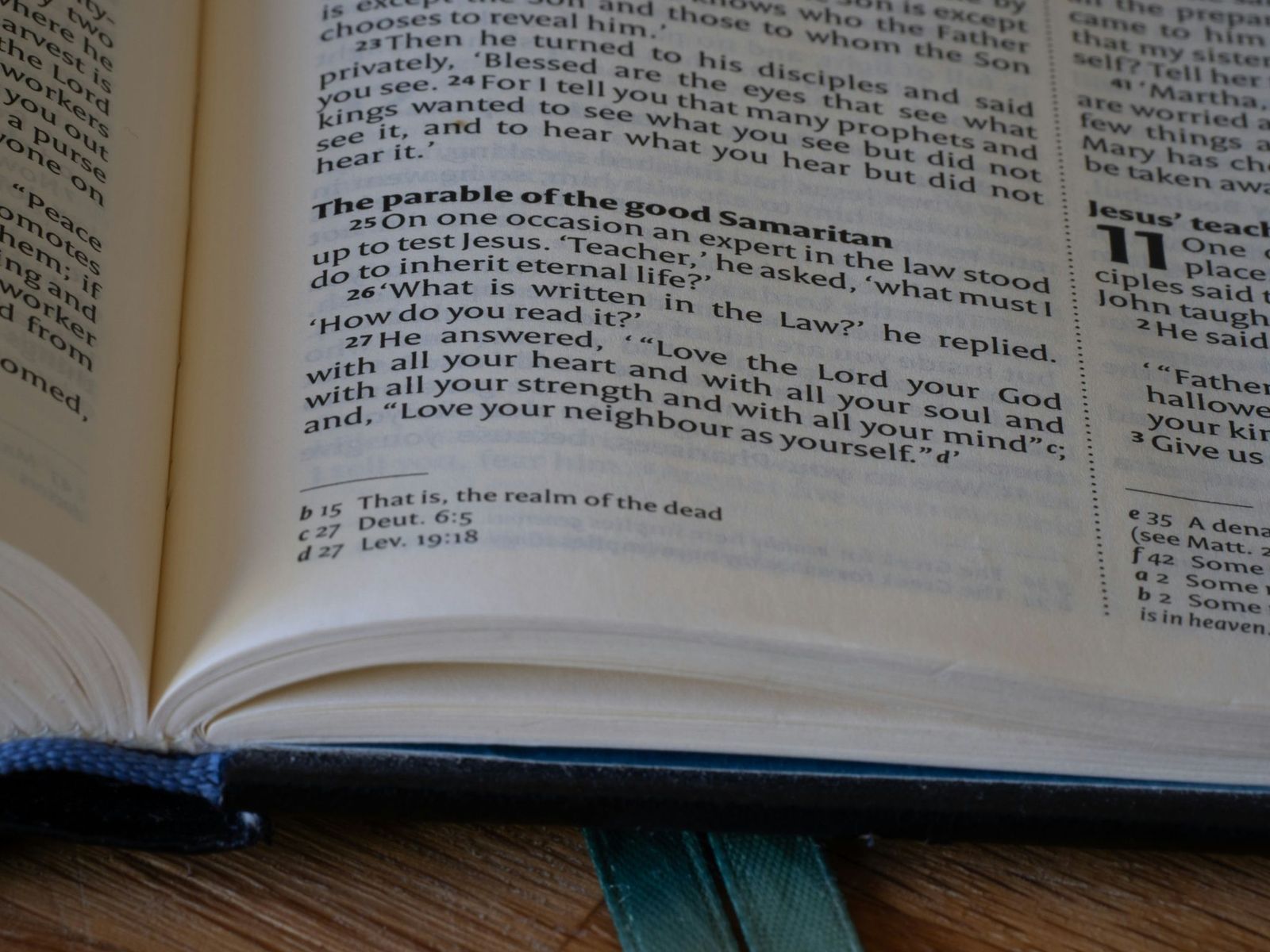
In the Gospel of Luke, Jesus tells of a Jewish traveler who is robbed and beaten, left barely alive by the roadside. Several people pass him without stopping, but a Samaritan, a member of a community that had a long-standing rivalry with the Jews, stops to help and tends to his wounds. The message is clear: kindness can come from and be given to someone you least expect, even someone your own community regards as an outsider. As the story spread through Christian teaching and English Bible translations, "Good Samaritan" gradually entered everyday language. By the mid 1600s, it was becoming an established expression for anyone who goes out of their way to help someone in need.

3

"An eye for an eye" (Exodus 21:24, Leviticus 24:20, Deuteronomy 19:21, and Matthew 5:38–39)

Image: v2osk

Today, "an eye for an eye" often sounds like a license to get even, but its original purpose was almost the opposite.

The principle appears in several Old Testament passages and in much older legal codes, including the Code of Hammurabi. Known as lex talionis, it established punishment to match the offense, limiting the kind of endless blood feuds in which one injury could trigger another, and another. Rather than permitting people to take revenge, it set a boundary: no more than the offense deserved. In fact, in the New Testament (Matthew 5:38–39), Jesus criticizes the use of this rule as a justification for personal vengeance. William Tyndale used the wording "an eye for an eye" in his 1526 New Testament version, and the King James Bible helped popularize it. As Bible translations spread, the phrase entered everyday English. Over time, the expression moved from the language of law into everyday speech, where it now reflects an all-too-human urge.

4

"The writing is on the wall" (Daniel 5)

Image: Randy Tarampi

When someone says "the writing is on the wall," they’re warning you that trouble is coming and that it looks hard to avoid, but this everyday expression began with a scene straight out of the Bible.

In the Old Testament, King Belshazzar of Babylon throws a lavish feast and drinks from sacred vessels taken from the Jewish temple. Suddenly, a mysterious hand appears and writes four Aramaic words on the palace wall: Mene, Mene, Tekel, Upharsin. The prophet Daniel interprets the message as a warning that the king’s reign is about to end, and that very night, Babylon falls. In the 1500s, early English writers and theologians used the story as a divine warning to corrupt rulers. By 1720, Jonathan Swift, author of Gulliver's Travels (1726), was using "the handwriting on the wall" as a broader warning of trouble, without relying on the original religious meaning. By the 1800s, the expression had become part of everyday English as a way of saying that the signs are there; you just have to be willing to read them.

5

"Wolf in sheep’s clothing" (Matthew 7:15)

Image: photomaster

A "wolf in sheep’s clothing" is someone who seems harmless or trustworthy but is hiding bad intentions. The expression has kept much of its original meaning for centuries, though it began as a warning about a very specific kind of deceivers.

In Matthew 7:15, Jesus warns his followers about false prophets, saying, "They come to you in sheep’s clothing, but inwardly they are ferocious wolves." The image was strong: a dangerous predator disguised as something gentle. The King James Bible, published in 1611, helped spread the phrase throughout the English-speaking world. During the 1700s and 1800s, writers began applying it to dishonest politicians or deceptive lawyers. By the 19th century, the wolf in sheep’s clothing had moved away from its strictly religious meaning and entered everyday speech as a label for anyone whose friendly appearance hides a less nice side.

6

"Blind leading the blind" (Matthew 15:14)

Image: Standret

Ever had a coworker try to teach you a computer program they barely understand themselves? That’s a perfect example of "the blind leading the blind", and this familiar expression has a long history behind it.

It comes from Matthew 15:14, where Jesus warns about religious leaders who actually don’t follow God: "If the blind lead the blind, both will fall into a pit." The image stuck, and in 1500, Dutch scholar Desiderius Erasmus included the saying in Adagia, his widely read collection of proverbs. By the 1700s, as English Bible translations became more widely read, the biblical expression found its way into everyday language. Writers and playwrights began using it to criticize incompetent politicians, bad doctors, or clueless artists. Over time, its meaning broadened into the phrase we know today: people who don’t know what they’re doing trying to lead others who are just as lost.

7

"The love of money is a root of all kinds of evil" (1 Timothy 6:10)

Image: Artem Svystun

"Money is the root of all evil" is a saying many people attribute to the Bible, but the thing is that’s not quite what the Bible says. The original warning is about the love of money, not money itself; a small change that makes a big difference.

In 1 Timothy 6:10, the apostle Paul says, "The love of money is a root of all kinds of evil," to warn a young pastor named Timothy that the pursuit of wealth could lead people away from their faith and bring them trouble. The target was greed, not the contents of your wallet. By the 14th century, the saying had become a familiar warning against avarice in Catholic preaching and also appeared in Geoffrey Chaucer’s famous The Canterbury Tales (1476-1477). Then, the King James Bible (1611) helped cement the wording in English. As biblical language spread into everyday speech, the original warning gradually lost a few words and some of its nuance. Today, "money is the root of all evil" is often used to criticize not just greed, but money itself and even capitalism.

8

"By the skin of your teeth" (Job 19:20)

Image: Ozkan Guner

Ever made it to the airport just as the gate was closing, or escaped a serious mistake at the very last second? You might say you got away "by the skin of your teeth." It’s a strange expression, though, so where did it come from?

The phrase traces back to the biblical Book of Job, where Job describes his terrible suffering and says in the King James Version, "I have escaped by the skin of my teeth" (Job 19:20). Although scholars still debate the use of "teeth" in this translation, Job, worn down by pain and illness, was describing survival at the very edge of endurance, not a last-second getaway. Over time, writers such as John Milton in Paradise Lost (1667), Charles Dickens in David Copperfield (1849-1850), and Victor Hugo in Les Misérables (1862) helped carry the expression into literature and consequently into everyday speech. By the 19th and 20th centuries, its religious context had faded, leaving us with the meaning we know today: escaping danger or succeeding by the narrowest margin.

9

"The last shall be first" (Matthew 19:30; Matthew 20:16)

Image: Aaron Burden

Imagine a struggling football team pulling off a stunning upset against a longtime champion. When the underdogs are on top, the saying "the last shall be first" seems to fit perfectly. But this familiar expression began with a much more complex idea than an unexpected win.

The phrase comes from the Gospel of Matthew, where Jesus declares, "The last shall be first, and the first shall be last." In an ancient world where wealth, power, and high social standing were often viewed as signs of God's favor, he turned that order upside down. In the Kingdom of God, he taught, the humble and overlooked could be honored above the powerful and privileged. By the 17th century, the saying had also become a familiar way to encourage people facing hard times. And in the 19th and 20th centuries, it took on broader social and political meaning, inspiring people fighting for equality and liberation.

10

"Salt of the earth" (Matthew 5:13)

Image: Royce Fonseca

Got neighbors who are always ready to lend a hand and never expect anything in return? You might call them "the salt of the earth". Today, it’s a warm compliment, but its roots go back directly to the Bible.

In Matthew 5:13, Jesus tells his followers, "You are the salt of the earth: but if the salt have lost his savour, wherewith shall it be salted?" In the first century, salt was highly prized, used to preserve food, treat wounds, mark sacred agreements, and in some places, it even served as a form of payment. So the comparison carried a powerful message: just as salt kept food from spoiling, people should help preserve goodness and integrity in the world. The expression later spread into everyday English, appearing in Geoffrey Chaucer’s The Canterbury Tales in the 14th century. Over time, its religious meaning faded, and by the 19th century, the phrase shifted from urging people to live with integrity to describing those who do.

Looking for an extra scoop of literary fun?

Learn more with our Word of the day

amenable

/əˈminəb(ə)l/