Brands and inventions

When brands become words: 10 U.S. classics


Published on May 7, 2026


Image: Kvalifik

Some 20th-century inventions solved real problems of everyday life, and their stories are just as surprising: like Band-Aid helping soldiers during World War II, or the Jacuzzi being created to relieve arthritis pain. Over time, many of these products became so popular that their brand names turned into everyday words. Here are 10 brand names that became everyday words.

1

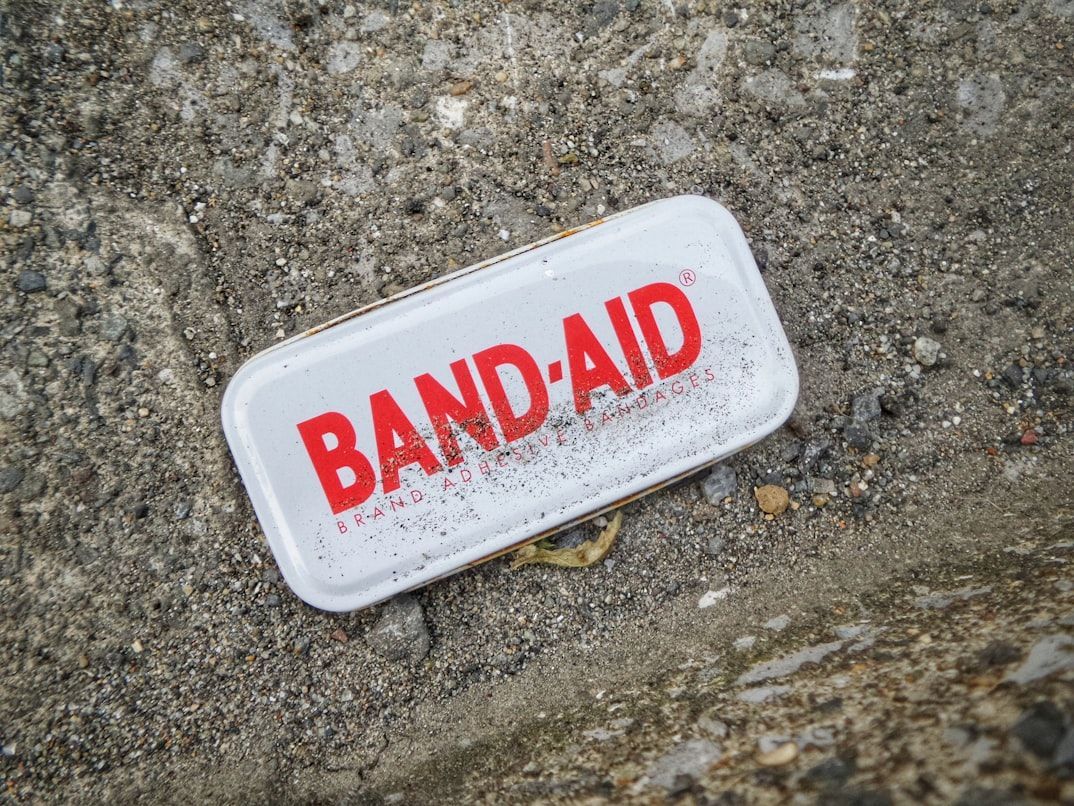
Band-Aid

Image: Possessed Photography

Every small cut brings it to mind, but did you know that Band-Aid was created in 1920 by Earle Dickson, a Johnson & Johnson employee, for his wife? Josephine Dickson often got cut and burned while cooking, so Earle combined two products: adhesive tape and gauze, and the Band-Aid Brand adhesive bandage was created. One year later, 1921, they were already in stores, and in 1942, Band-Aid was the product in every soldier's kit on the front lines of World War II. One century later, in 2021, Band-Aid introduced "OURTONE" bandages, designed to better blend with brown skin tones. Today, it remains the top-selling bandage brand.

2

Jacuzzi

Image: Dimitris Kiriakakis

Although today they’re linked to relaxation and luxury, the Jacuzzi wasn’t originally designed for that. The story begins with seven Italian brothers who moved to California in the early 1900s. Known as the Jacuzzi Brothers Inc., they worked as inventors, developing water pumps for agriculture and engineering solutions for aviation.

Their most important invention came from a personal need. After one of the brothers’ sons, Kenneth, was diagnosed with juvenile arthritis, Candido Jacuzzi created a portable hydrotherapy pump to help ease his pain. Introduced in 1956, the device turned a regular bathtub into a therapeutic spa. In 1968, Roy Jacuzzi took the idea further and launched the first fully integrated whirlpool bath. Today, the company holds more than 250 patents, and "Jacuzzi" has become almost synonymous with whirlpool baths.

3

Post-It Note

Image: Paolo Chiabrando

Another man who made a discovery that stood the test of time. In 1968, Spencer Silver was trying to create a super-strong adhesive at 3M (Minnesota Mining and Manufacturing Company), but instead came up with a weak, reusable one. It could stick to surfaces without leaving marks, but at first, no one knew what to use it for.

A few years later, in 1974, Art Fry needed a bookmark that would stay in place without damaging pages. He realized Silver’s adhesive was perfect for that idea, and it quickly evolved into small and removable notes. In 1977, they were called "Press n’ Peel," but the product didn’t gain much attention until 1980, when they were relaunched as Post-it Notes and became part of everyday life.

4

Frisbee

Image: channnngma

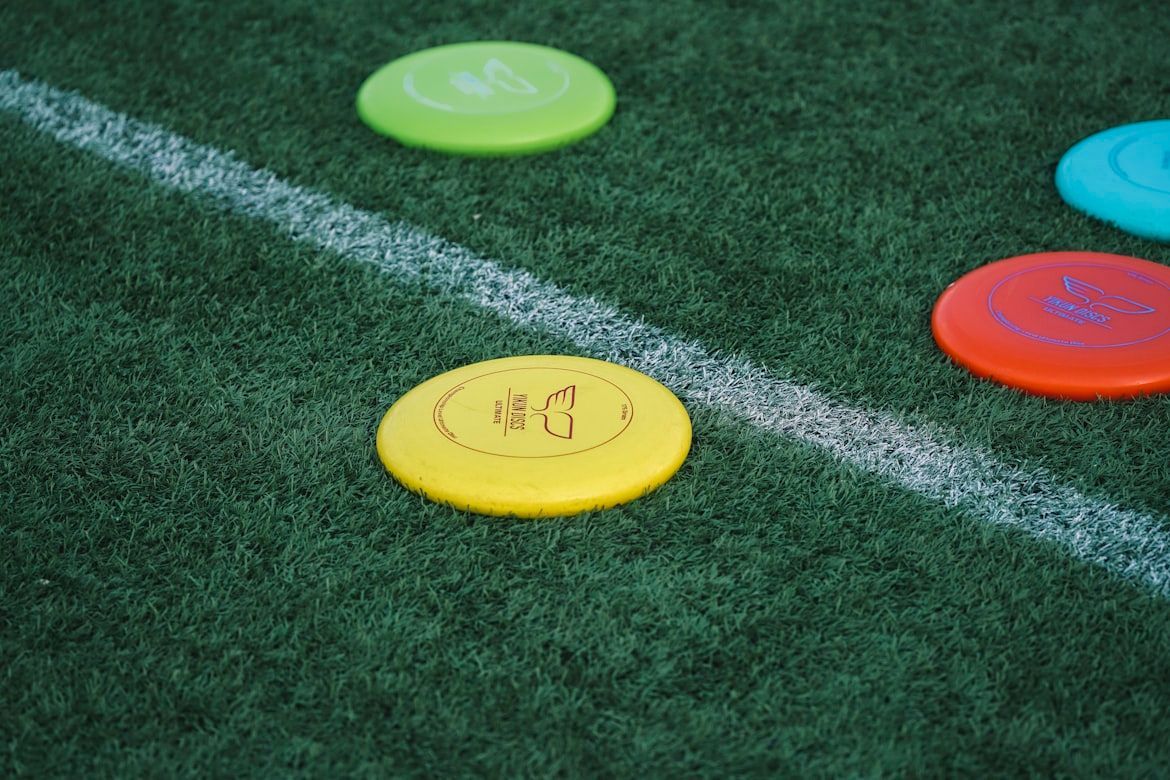
Believe it or not, it all started with pie. The Frisbie Pie Company of Connecticut was one of the most successful bakeries on the East Coast by the mid-1900s. College students began tossing empty pie tins, shouting "Frisbie!" to warn each other, and the name stuck as the game spread across campuses.

On the other side of the country, Walter Frederick Morrison was experimenting with flying discs. Inspired by the growing fascination with UFO sightings, he designed a plastic version called the "Pluto Platter," which he was selling in Los Angeles by 1951. In 1955, Wham-O, a renowned toy brand, spotted him and brought him on board. After hearing the word "Frisbee" used by college students, the company officially adopted the name in 1957. Today, flying disc sports are played around the globe by millions of people.

5

Kleenex

Image: Kelly Sikkema

During World War I, Kimberly-Clark developed crepe paper for gas mask filters. After the war, with less demand for military supplies, the company needed new uses for the material. In the 1920s, it was adapted into Kotex, offering a more hygienic option for women. It was later marketed as a "marvelous new way to remove cold cream," but, in 1927, the company suggested another use: disposable "absorbent handkerchiefs." By 1930, it was promoted as "the handkerchief you can throw away," reflecting a growing focus on hygiene and convenience. Today, it’s hard to think of tissues without calling them Kleenex.

6

Q-Tips

Image: Etactics Inc

In 1923, after seeing his wife wrap small pieces of cotton around toothpicks, Leo Gerstenzang founded the Leo Gerstenzang Infant Novelty Co. and began producing a ready-to-use cotton swab.

The product was first called "Baby Gays," then renamed "Q-Tips Baby Gays" in 1926, before being shortened to simply Q-tips. The "Q" stands for quality. It became widely popular in the 1920s–30s as a baby care product, and in 1987 was acquired by Unilever, helping expand it worldwide. Over time, the name "Q-tips" became so common that many people use it to refer to any cotton swab, not just the brand.

7

Scotch Tape

Image: Alan Aprilio

How did a young banjo player in Minnesota end up creating Scotch Tape? Richard Drew, who practiced the banjo in his free time, joined 3M Company (Minnesota Mining and Manufacturing Company) in 1923 and began working with materials in auto body shops. There, he noticed painters struggled to get clean lines because existing tape damaged fresh paint. He solved this by inventing masking tape in 1925. An early version didn’t have enough adhesive, and painters joked the company was being "scotch," or cheap; a nickname that stuck.

In 1930, Drew adapted the idea to cellophane, creating the first transparent Scotch Tape for sealing and everyday use. The product became especially popular during the Great Depression, when people used it to fix and reuse items instead of replacing them because they were rather expensive or scarce in markets.

8

Jell-O

Image: Girl with red hat

In 1845, Peter Cooper created a powdered gelatin, but it wasn’t yet a ready-to-use dessert. Decades later, in 1897, Pearle Bixby Wait and his wife, May, added sugar and fruit flavor, turning it into what would become Jell-O. In 1899, the couple sold their flavored gelatin product and business to their neighbor, Orator Francis Woodward, for $450 because it wasn't growing.

Until Woodward then built a strong marketing campaign, using free recipe booklets and traveling salesmen to show how easy it was to make, helping Jell-O grow in popularity. By the early 1900s, it was already a household name, and today, it’s known as one of America’s most famous desserts.

9

ChapStick

Image: OhTilly

Dr. Feet was a pharmacist in Lynchburg, Virginia, who opened his family-run pharmacy in 1869. He was known for creating remedies and experimenting with ingredients to help customers.

In the 1890s, he developed an early version of ChapStick. However, it wasn’t until his friends, Mr. and Mrs. Morton, who had already bought the product, refined the idea that the product took shape. Mrs. Morton melted the mixture and poured it into brass tubes to form sticks, making it easier to use and ready for wider distribution, turning the product into America’s easy-to-carry favorite for lip care to this day.

10

Xerox

Image: engin akyurt

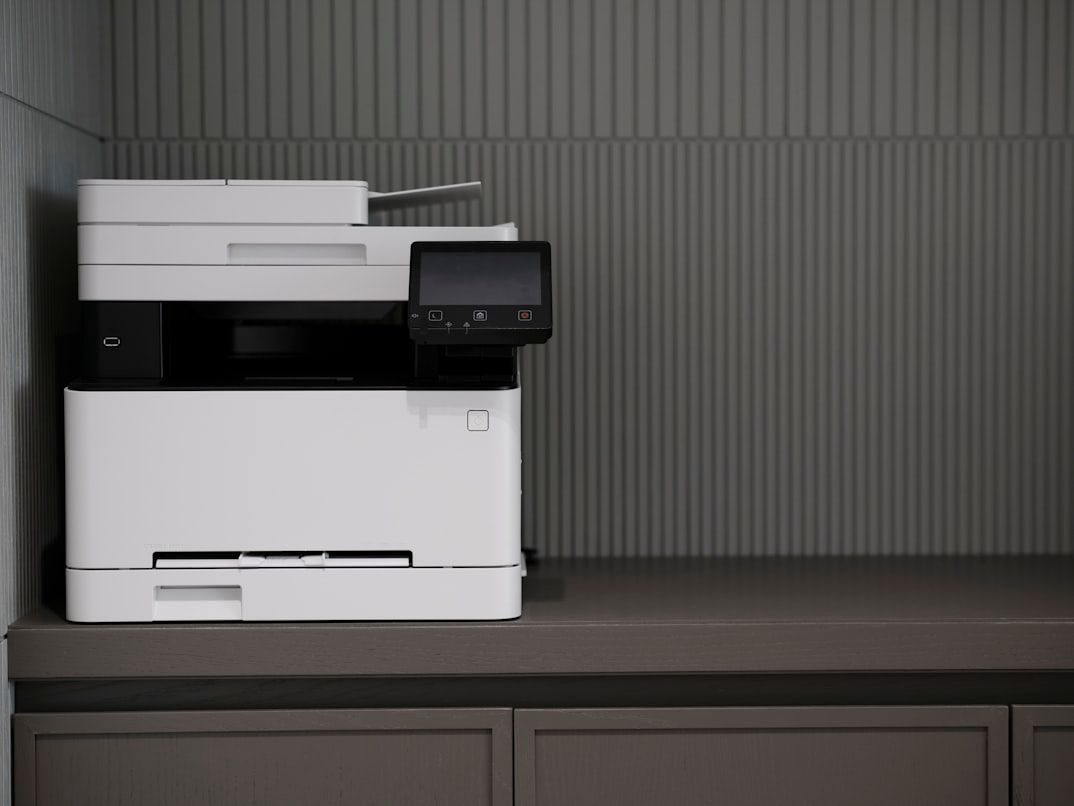
In 1959, the Xerox 914 copier was introduced, allowing people to make plain-paper copies quickly, changing office work for good. How did it all start? Patent attorney Chester Carlson created the first xerographic image in 1938. He needed a simpler way to copy documents after studying imaging processes at the public library. At first, he called his method "electrophotography," because it used light and static electricity. After being rejected by more than twenty companies, his idea was finally picked up by the Haloid Company, when a consultant suggested the name "xerography," meaning "dry writing," to replace the original term.

After the success of the Xerox 914, Haloid Company renamed itself Xerox in 1961, turning the invention into a global business. The copier quickly became essential in offices, making document duplication faster and more accessible than ever before. As the technology spread, the brand name became so widely used that "to xerox" started to mean "to photocopy," until these days.

10 weird historical events that no one has been able to explain (yet)


Published on May 7, 2026


Image: Walters Art Museum, Public domain, via Wikimedia Commons

Who doesn't like a good mystery? And if the mystery isn’t a work of fiction but the result of a true story, even better! The great unsolved enigmas of history are absolutely fascinating. Some have been solved over time, but there are still many old secrets for which neither scientists nor historians have found an explanation—yet. Time-travel with us as we uncover 10 of the biggest historical mysteries that will probably never be cracked!

1

A ghost island

Image: Tanner, Henry S., Public domain, via Wikimedia Commons

Bermeja Island is mentioned in navigation texts written by European travelers and appears in cartography from the 16th to 19th centuries. Old maps place it off the north coast of the Yucatán Peninsula; however, multiple searches over the years have yielded no concrete evidence of its existence.

So, what happened to Isla Bermeja? Was it a cartographic error? Did it sink due to a tidal wave? Because of its geopolitical significance, some have even suggested that it was blown up by the CIA! A 2009 study by the Autonomous University of Mexico concluded that Isla Bermeja does not exist today, nor were any traces found at its supposed coordinates. Yet, it will forever remain a mystery that will surely keep many entertained.

2

The longest alien signal ever

Image: Credit: Big Ear Radio Observatory and North American AstroPhysical Observatory (NAAPO)., Public domain, via Wikimedia Commons

In 1977, Ohio State University’s Big Ear radio telescope, used in the search for extraterrestrial intelligence, detected a signal now known as the Wow! signal. While reviewing the data, astronomer Jerry R. Ehman noticed a sequence represented as "6EQUJ5." Baffled by the anomaly, he circled it and wrote "Wow!" in the margins.

The signal lasted 72 seconds and, unfortunately, has never been repeated. To this day, no one can fully explain the phenomenon, although some suggest it may have come from a man-made source. Still, the Wow! signal remains one of the strongest candidates for potential extraterrestrial contact ever detected.

3

The disappearance of an entire Inuit village

Image: Edward S. Curtis, Public domain, via Wikimedia Commons

How is it possible for an entire village to vanish without a trace? Believe it or not, this is said to have happened nearly a century ago. According to lore, a small Inuit village in Canada was well known among fur trappers who visited regularly to trade. But in 1930, something very strange supposedly occurred.

A hunter named Joe Labelle claimed he visited the village one day and couldn’t find a single person. Reports said there were guns and food left behind, and even claims that the graves in the cemetery were empty. A thorough investigation, however, found no conclusive evidence of what happened to the villagers. Some witnesses from nearby towns even reported seeing a huge green light. Theories ranged from mass migration to extraterrestrial abductions. The Royal Canadian Mounted Police has since dismissed the case as an urban legend. Some still believe the story to be true.

4

The Joyita Mystery

Image: bbb

We know thousands of shipwreck stories, but this one is quite unique. The MV Joyita, designed to be nearly unsinkable, was found adrift in the South Pacific, practically unharmed, but the crew had disappeared completely.

In October 1955, the American merchant vessel left the port of Apia in Samoa with 16 crew members and 9 passengers bound for the Tokelau Islands. After days without news, a rescue mission was launched. Five weeks later, the Joyita was spotted more than 600 miles west of its intended route. The vessel was partially submerged, and there was no sign of the passengers or crew. Four tons of cargo and all three life rafts were missing. They were never seen again.

5

A mummy and a mysterious fluid

Image: Gary Todd from Xinzheng, China, CC0, via Wikimedia Commons

Do you know where one of the best-preserved mummies was found? Hint: not in Egypt. Xin Zhui, the Marquise of Dai during the Western Han Dynasty in China, was discovered in her tomb at Mawangdui 2,000 years after her death, along with hundreds of valuable documents and artifacts.

What makes this mummy so extraordinary is how well-preserved her body is. Her organs and veins remain intact, and she still has hair and even eyelashes. Scientists analyzed the fluid present in the coffin and discovered it was acidic and contained salt and magnesium. They believe this mysterious liquid may have been responsible for preserving Xin Zhui so well. What they don’t know is whether it was intentionally poured into the coffin or came from the body itself.

6

A missing prime minister

Image: Yoichi Okamoto, Public domain, via Wikimedia Commons

The United States has its fair share of presidents who died while in office, but none of our 45 presidents have ever disappeared without a trace. Did you know that this actually happened in The Land Down Under?

Harold Edward Holt was the Prime Minister of Australia from 1966 until his presumed death in 1967. He loved the ocean and spearfishing. During a weekend trip with friends, Holt visited the remote Cheviot Beach to take a swim. Rough sea conditions that day caused him to be swept away by the waves, and he never reappeared. Despite an intensive search, his body was never found, which has given rise to numerous conspiracy theories. Ironically, Australians built the Harold Holt Memorial Swimming Centre in Melbourne in his honor.

7

The anonymous hijacker

Image: FBI, Public domain, via Wikimedia Commons

Many famous criminals have managed to remain unidentified for decades, but the D.B. Cooper case is something else entirely. In 1971, Cooper boarded a flight from Portland to Seattle. Shortly after takeoff, he showed a flight attendant a device he claimed was a bomb and demanded four parachutes and $200,000 in cash.

The crew landed to meet Cooper’s demands in exchange for the passengers and then took off again. As the plane flew over southwestern Washington, Cooper jumped into the cold, rainy night carrying his haul. His whereabouts and true identity were never discovered, although it is likely he didn’t survive the jump. In 1980, some of the ransom money was found near the Columbia River. Although the FBI officially closed the case in 2016, amateur sleuths continue to try to crack it.

8

Dancing to death

Image: Pieter Brueghel the Elder, Public domain, via Wikimedia Commons

Can you imagine an epidemic where the main symptom is uncontrollable dancing? Sounds like science fiction, doesn’t it? Yet this really happened during the Middle Ages. In 1518, a dancing plague struck Strasbourg, Alsace, in what is now France. This strange condition affected up to 400 people, making them dance frantically for weeks. It is said that some even died of heart attacks, exhaustion, or strokes.

Doctors and authorities tried all kinds of measures to stop the spread. They even banned music for a while! To this day, scientists are not certain what caused this bizarre condition: it may have been food poisoning from toxins in the ergot fungus, or perhaps a case of stress-induced mass hysteria.

9

A manuscript no one understands

Image: Public domain, via Wikimedia Commons

The Voynich manuscript is a codex written roughly 500 years ago in an unknown language and writing system by an anonymous author. Known as Voynichese, the manuscript was named after Wilfrid Voynich, a Polish bibliophile and antiquarian who purchased it in 1912.

Radiocarbon testing has shown that it dates to the early 15th century. Many cryptographers and codebreakers have attempted to decipher its roughly 240 pages without success. The manuscript contains diagrams and illustrations of unknown plants and astrological symbols. Some believe it may be a made-up language, a secret code, a work of fiction, or even a hoax. If you think you can solve this mystery, the Voynich manuscript is available for viewing at Yale University’s Beinecke Rare Book and Manuscript Library.

10

An ancestor of movable-type printing

Image: Bernhard

Similar to the Voynich manuscript, the Phaistos Disc is a fired clay disc believed to have been created during the Bronze Age. It was discovered by an Italian archaeologist in the basement of a palace in Crete, Greece, in 1908.

What makes this disc fascinating is that it contains a mysterious message. Stamped into the clay is a set of signs, forming a text that many scientists have tried to decipher—without success. It is considered an early attempt at printing, a technological innovation that would not become widespread for several centuries. While enthusiasts still hope the enigma can be solved, this is unlikely unless other documents are discovered to provide context.

Looking for an extra scoop of literary fun?

Learn more with our Word of the day

begrudge

/bəˈɡrədʒ/