Heartbreaking truths ahead

Most people think they know what these abbreviations mean, but they don’t


Published on July 8, 2026


Image: Volha Barysevich

Most abbreviations really do stand for something. Others only seem to. That's where backronyms come in: phrases invented after a word or name already exists, making it look like the letters always had a hidden meaning. You have probably heard of many of the following examples. Some are official, some are humorous, and some have become so popular that many people mistake them for genuine origins.

1

S.O.S. "Save Our Ship" / "Save Our Souls"

Image: Natali _ Mis

Nearly everyone has heard that SOS means "Save Our Ship" or "Save Our Souls." The phrases sound so fitting that they've appeared in books, films, and everyday conversation for more than a century.

The truth is simpler. SOS was never an abbreviation. It became the international Morse-code distress signal in 1906 because its pattern—three dots, three dashes, three dots—was unmistakable. The famous phrases were invented afterward as memory aids, making them classic backronyms. The signal became world-famous during the Titanic disaster in 1912.

2

POSH "Port Out, Starboard Home"

Image: Jacob Lund

One of the best-known language myths claims wealthy passengers sailing between Britain and India booked cabins marked P.O.S.H., meaning "Port Out, Starboard Home," to stay on the cooler side of the ship.

It's an entertaining story, indeed, but historians have never found evidence that shipping companies used those markings. The Oxford English Dictionary rejects the explanation, and linguists consider it a false acronym. The real origin of posh remains uncertain, proving that a good story can sometimes outlive the facts.

3

NEWS "North, East, West, South"

Image: NicoElNino

This explanation feels almost too perfect, right? Since news comes from every direction, many people assume the word must have been built from the initials of the four compass points.

In reality, news existed centuries before acronyms became common. The word developed from the plural of new, referring to recent events or fresh information. The compass-direction version was invented much later, making it another clever backronym rather than the word's true origin.

4

CHIPS Act "Creating Helpful Incentives to Produce Semiconductors"

Image: RaffMaster

Congress was still creating memorable backronyms decades later. The CHIPS and Science Act, signed into law in 2022, was named to emphasize its focus on rebuilding semiconductor manufacturing in the United States.

The word CHIPS was deliberately expanded to Creating Helpful Incentives to Produce Semiconductors, matching the legislation's primary goal. The act provides tens of billions of dollars in incentives for chip production and scientific research, making it one of the largest industrial policy initiatives in recent U.S. history.

5

YAHOO "Yet Another Hierarchical Officious Oracle"

Image: Mehaniq

Computer enthusiasts have long joked that Yahoo! stands for "Yet Another Hierarchical Officious Oracle," a name that certainly sounds technical enough for an early internet company. Except it's not real.

The real story is literary instead of technological. Founded in 1994 by Jerry Yang and David Filo, Yahoo! borrowed its name from the unruly Yahoos in Jonathan Swift's Gulliver's Travels. The elaborate expansion came later as a humorous backronym embraced by programmers and web users alike.

6

AMBER Alert "America’s Missing: Broadcast Emergency Response"

Image: Rix Pix Photography

The AMBER Alert system honors Amber Hagerman, the 9-year-old girl abducted and murdered in Arlington, Texas, in 1996. Her case inspired a faster way to notify the public when children go missing.

The program's name came first, as a tribute to Amber. Officials later created the official expansion America's Missing: Broadcast Emergency Response, giving the system an easy-to-remember backronym. Since then, AMBER Alerts have helped law enforcement safely recover hundreds of abducted children across North America.

7

WIKI "What I Know Is"

Image: Mehaniq

"What I Know Is" sounds like the perfect explanation for a website anyone can edit. It's short, memorable, and neatly matches the idea of people sharing knowledge online.

But Wiki has a completely different origin. Programmer Ward Cunningham borrowed the Hawaiian phrase wiki wiki, meaning "quick," when he created the first wiki in 1995. The idea reportedly came from Honolulu Airport's Wiki Wiki Shuttle. The English phrase appeared later as a playful backronym after the technology became popular.

8

DREAM Act "Development, Relief, and Education for Alien Minors"

Image: Nalaphotos

The DREAM Act was introduced in Congress in 2001. It was designed to provide a pathway to legal status for certain undocumented immigrants brought to the United States as children.

Its title was intentionally crafted to produce the hopeful word DREAM, making it another official legislative backronym. Although the original bill has never become law, it gave rise to the widely used term "Dreamers," which remains central to discussions about U.S. immigration policy.

9

ADIDAS "All Day I Dream About Sport"

Image: Manuel Esteban

Few brands have inspired more fake acronym stories than Adidas. Variations like "All Day I Dream About Sport" have circulated for years, while others replace "Sport" with "Soccer" or even "Success."

None of them is true. The company, founded in Germany in 1949, was named after its founder, Adolf "Adi" Dassler. The brand name simply combines his nickname with the beginning of his surname: Adi + Das(sler). Every catchy expansion came afterward, making them textbook examples of backronyms.

10

APGAR "Appearance, Pulse, Grimace, Activity, Respiration"

Image: illustrissima

Unlike most entries on this list, this is an official backronym that serves a practical purpose. Medical students around the world still learn it during their training.

The Apgar Score was introduced in 1952 by anesthesiologist Dr. Virginia Apgar to quickly evaluate newborn babies after birth. The test was originally named after her surname. Later, educators created the mnemonic Appearance, Pulse, Grimace, Activity, Respiration, turning the doctor's name into a memorable teaching tool.

11

PATRIOT Act "Providing Appropriate Tools Required to Intercept and Obstruct Terrorism"
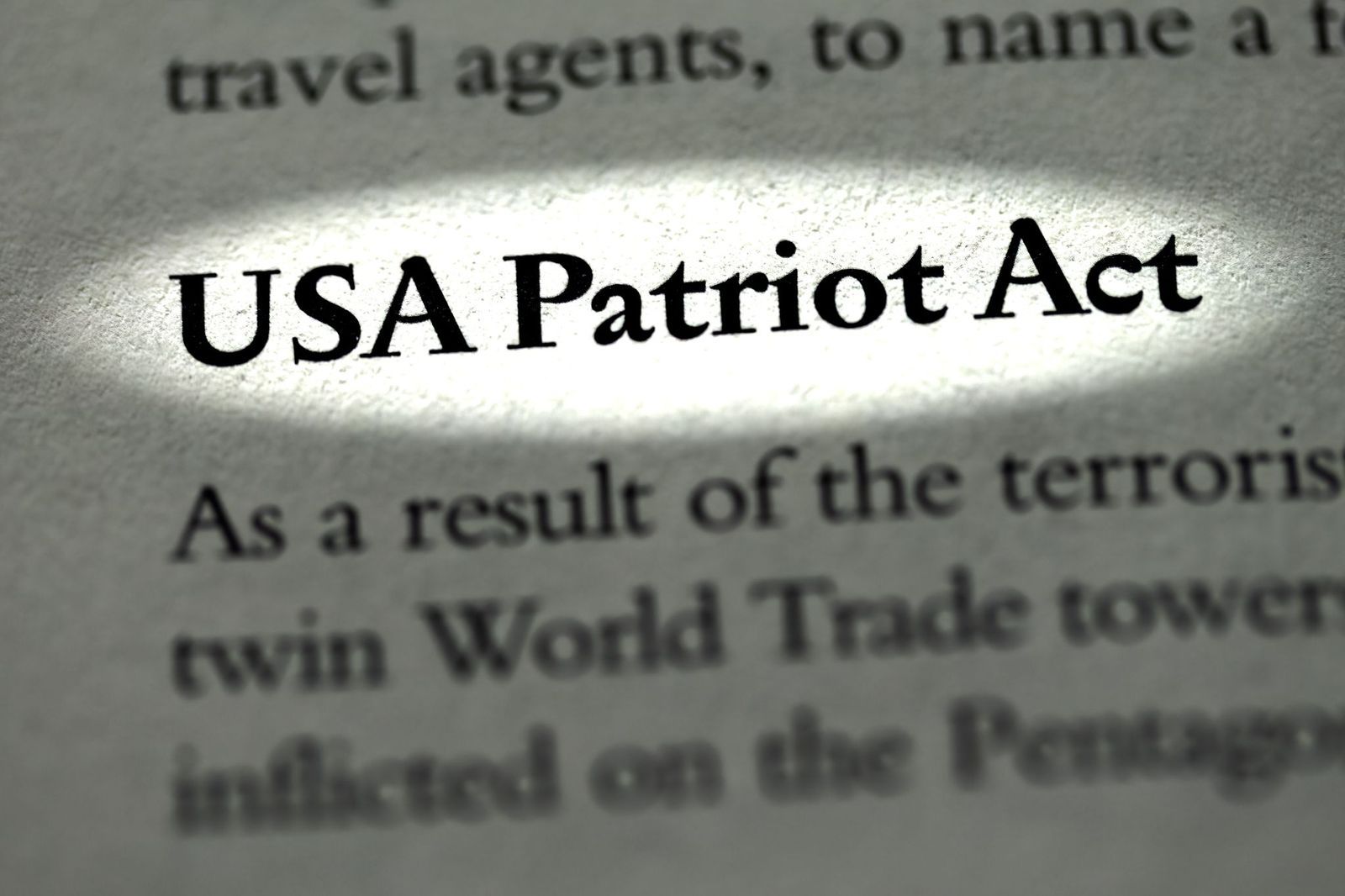
Image: Wirestock Creators

Some backronyms are created not by accident, but by design. The USA PATRIOT Act became one of the best-known examples after the September 11, 2001, terrorist attacks.

Signed into law by President George W. Bush on October 26, 2001, the legislation's lengthy official title was deliberately written so its initials would spell PATRIOT. The memorable name helped define the law's public image, even as its expanded surveillance powers sparked years of debate over security and civil liberties.

12

STEVE "Strong Thermal Emission Velocity Enhancement"
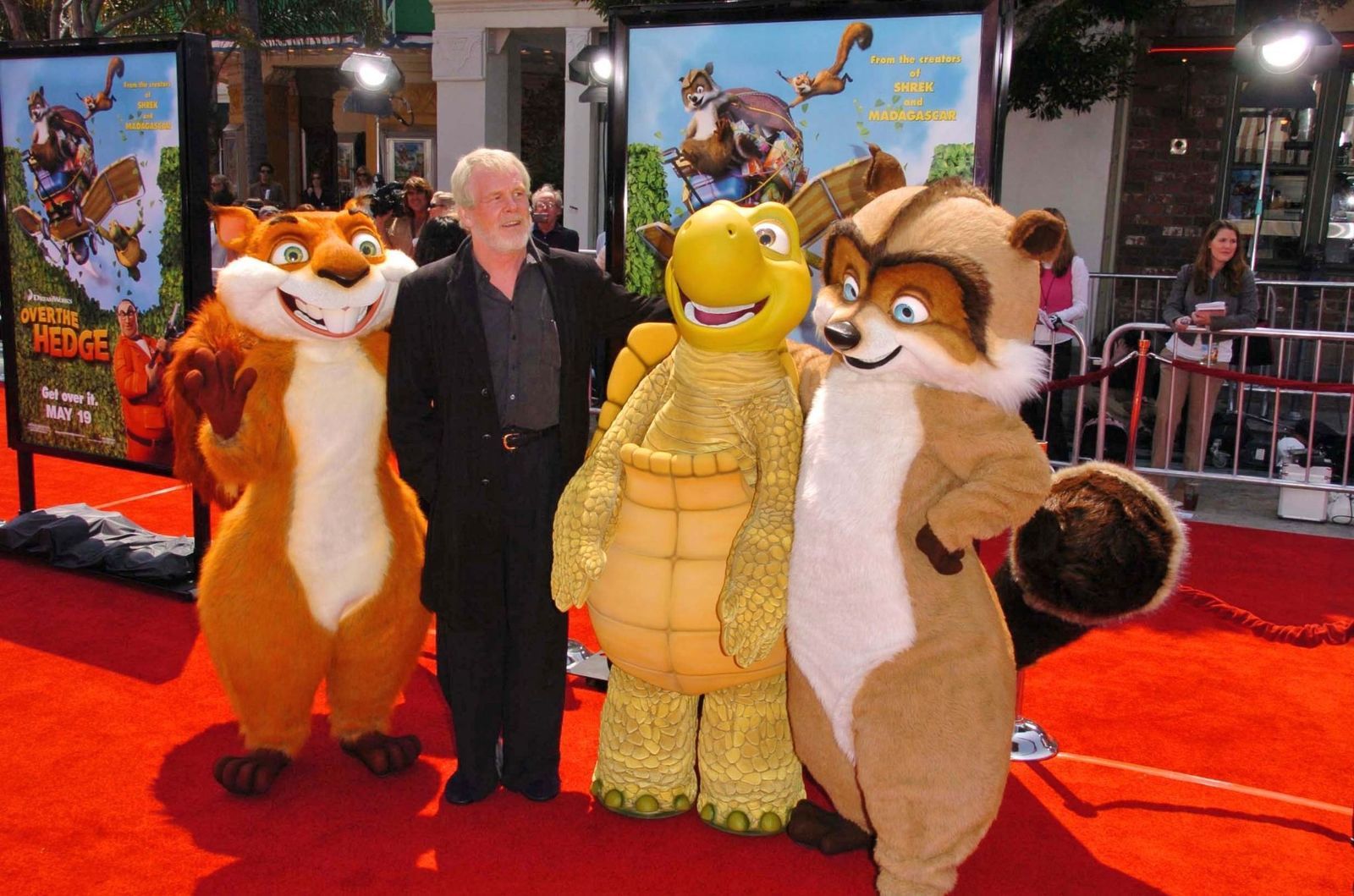
Image: s_bukley

Not every backronym begins in a government office. One of the newest started with a joke. Aurora enthusiasts spotted a mysterious purple ribbon in the night sky and jokingly nicknamed it STEVE, borrowing the gag from the animated film Over the Hedge.

As scientists began studying the phenomenon, they later created the technical expansion Strong Thermal Emission Velocity Enhancement to match the already popular nickname. Today, STEVE is recognized as a distinct atmospheric phenomenon related to, but different from, traditional auroras—proof that even serious science sometimes enjoys a little humor.


Deathbed statements

Beyond the grave: Take a look at the last words of 12 famous people


Published on July 8, 2026


Image: Daderot, CC0, via Wikimedia Commons

Throughout history, hundreds of historical figures have left their mark on the world through their marvelous achievements. When their lives came to an end, their last words were often a reflection of their lives and ideals. From George Washington and Mark Twain to Frank Sinatra and Leonardo Da Vinci, in this article, we will reveal 12 final words of memorable personalities.

1

George Washington

Image: The New York Public Library

After serving two terms as the United State's first president, George Washington retired to his Virginia plantation. In mid-December 1799, he developed a cold and a severe sore throat. Despite doctors' efforts to cure him, the end was imminent.

His long-time secretary, Tobias Lear, was at his side during his last days and documented all the events that transpired, including the former president's last words. According to his account, shortly before he took his last breath George Washington said "Tis well" —an old-fashioned way of saying "everything is okay."

2

Humphrey Bogart

Image: Signal Corps Archive from United States, Public domain, via Wikimedia Commons

Noir icon of perpetual elegance and rebellious charisma, Humphrey Bogart is an undisputed legend in cinema history. A Hollywood Golden Age star, Bogart is still remembered today for his scar on his upper lip, his everlasting cigarette, and his perfect portrayal of gangsters and detectives.

At the age of 57 Bogart was diagnosed with esophageal cancer, for which he was hospitalized for several months. According to lore, the legendary star's last words were "I should never have switched from scotch to martinis." However, his wife Lauren Bacall confirmed that the last thing he actually said was "Goodbye Kid. Hurry back," before she left his bedside to get their children.

3

Mark Twain

Image: Miscellaneous Items in High Demand, PPOC, Library of Congress, Public domain, via Wikimedia Commons

As one of the greatest American writers of all time, Mark Twain is usually credited with all sorts of great quotes that he often didn't say. For that reason, there are different versions of what his last words were before he died in 1910 at the age of 74.

The most plausible theory can be found in an article published one day after his death. According to this chronicle, Samuel Langhorne Clemens' last words were not spoken aloud but written. The famous humorist and essayist reportedly wrote to his daughter Clara, who accompanied him on his bedside, "Give me my glasses."

4

Joan Crawford

Image: MGM, Public domain, via Wikimedia Commons

Joan Crawford, the Oscar winner for Mildred Pierce and one of the greatest stars of Hollywood's golden age, died in 1977 of a heart attack.

The actress, who had a complicated personality, was true to her nature until her last breath. She was so ill that her doctor felt it wasn’t worth taking her to the hospital. One of her nurses began to pray aloud in desperation. Losing her patience, Crawford snapped for the last time and said, "Damn it... Don't you dare ask God to help me."

5

Marco Polo

Image: Municipal Library of Trento, CC0, via Wikimedia Commons

The year 2024 marked the 700th anniversary of the death of the man who better described remote lands. Marco Polo was a merchant who spent more than 20 years of his life traveling through the Orient and wrote about his adventures in a book that became a bestseller when the printing press wasn’t even invented.

Marco Polo was, and still is, a legend. When, on his deathbed, his wife and friends begged the brave explorer to confess if what he had told in the book was true, he barely whispered: "I have not told the half of what I saw and did."

6

Groucho Marx

Image: MGM, Public domain, via Wikimedia Commons

Julius Henry Marx, better known as Groucho Marx, is considered one of the most influential comedians of all time. The man with the bushy black mustache was one of the Marx Brothers. Together they made 13 films, including the classic Duck Soup. After a long and prominent career, Groucho passed away in Los Angeles in 1977 at the age of 86.

His brilliant one-liners are still remembered and replayed to this day, so it is not surprising that not one but several final words are attributed to him. A few close friends have suggested that his last line was "This is no way to live!", while most suggest that his last words were in fact dedicated to his wife: "Die, my dear? Why, that's the last thing I'll do!"

7

Voltaire

Image: Nicolas de Largillière, Public domain, via Wikimedia Commons

Voltaire, the French writer, philosopher, historian, and lawyer, one of the major figures of the Enlightenment, died in 1778 at the age of 83. Different accounts of his deathbed make it impossible to determine exactly what his last days were like.

One of these stories, however, is consistent with his ideas about God and his well-known criticism of the Church. According to this version, when the priest asked him if he wanted to renounce Satan before he died, Voltaire replied, "This is no time to make new enemies."

8

L. Frank Baum

Image: William Wallace Denslow, Public domain, via Wikimedia Commons

L. Frank Baum was a prolific American author. He wrote 55 novels, 82 short stories, and more than 200 poems. However, his most memorable work is his series of children's fantasy books The Wonderful Wizard of Oz.

On May 5, 1919, Baum suffered a heart attack. He died the next day, shortly before his 63rd birthday. Disturbed by the imminence of death, he whispered to his wife: "Now we can cross the Shifting Sands," a clear reference to the Land of Oz.

9

Augustus

Image: National Archaeological Museum of Athens, CC0, via Wikimedia Commons

Augustus, the first Roman emperor, is often attributed with the phrase: "Behold, I found Rome of clay, and leave her to you of marble," alluding to the great infrastructural works carried out during his prosperous 40 years of rule.

However, according to other historical accounts, his last words were addressed to the friends who stayed with him on his deathbed: "Have I played the part well? Then applaud, as I exit."

10

Frank Sinatra

Image: English: Distributed by NBC. Photographer unknown., Public domain, via Wikimedia Commons

"Darling, you've gone through worse and you can beat this too. You have to fight," implored Barbara Marx, Frank Sinatra's fourth wife, to her beloved on his deathbed. "I'm losing," The Voice whispered through teary eyes.

Barbara recounted the last hours of the singer of such hits as My Way and New York, New York in her memoir Lady Blue Eyes: My Life With Frank. Frank Sinatra, one of the most popular entertainers of the mid-20th century, pronounced his last words in 1998 at the age of 82.

11

Leonardo Da Vinci

Image: Jean-Auguste-Dominique Ingres, CC0, via Wikimedia Commons

Despite being one of the most famous artists of the Renaissance, Leonardo da Vinci was very hard on himself. All his life he challenged his own limits, evident in his paintings and sculptures as well as in his inventions, some of which were truly revolutionary.

Even after a lifetime of success, he wasn’t quite satisfied. When he suffered a stroke at the age of 67, he sent for a priest to receive the Holy Sacrament and, according to historians, his greatest regret was that he hadn’t achieved excellence with his work. In that sense, it is said that his last words were: "I have offended God and mankind because my work did not reach the quality it should have."

12

Joe DiMaggio

Image: National Museum of Health and Medicine, Public domain, via Wikimedia Commons

The Yankee Clipper was one of the greatest baseball players of all time but he is also known for having been married to the iconic American actress Marilyn Monroe. Joe and Marilyn were together for less than three years. In 1955 the actress left him for American playwright Arthur Miller.

DiMaggio was devastated. He never married again, and never got over his one true love. His last words before he died in 1999 at the age of 84 were: "I'll finally get to see Marilyn."

Looking for an extra scoop of literary fun?

Learn more with our Word of the day

absence

/ˈæbsən(t)s/