Fantasy worlds

From Oz to Wonderland: 10 of the strangest worlds authors ever dreamed up


Published on March 27, 2026

Image: Artem Sapegin

Fiction has given us worlds beyond comprehension—realms where logic collapses, physics defies expectation, and imagination reigns supreme. From cities in the sky to entire worlds beneath our own, some of these fictional places have captivated us since their creation. Join us on a fantastical journey through some of the quirkiest and most head-scratching of these imagined worlds.

1

Wonderland

Image: Alex Muromtsev

Lewis Carroll’s 1865 Alice’s Adventures in Wonderland conjured a world where words, rules, and even size lose all meaning. Time halts at tea parties, cats vanish mid-sentence, and logic itself becomes nonsense.

Carroll, a mathematician and Oxford don, infused what at first glance seems like just a children’s story with riddles, puns, and complex paradoxes. The book’s wordplay critiques Victorian social norms while subtly introducing mathematical and logical concepts.

2


The Land of Oz

Image: ActionVance

A technicolor realm of talking animals, magical shoes, and wicked witches, L. Frank Baum’s 1900 classic The Wonderful Wizard of Oz reshaped children’s literature forever. Baum’s storytelling introduced a vivid fantasy world filled with unique characters, whimsical landscapes, and moral lessons that appealed to both children and adults.

Characters like the Tin Man and the Cowardly Lion have become iconic figures in American popular culture for generations. The 1939 MGM film starring Judy Garland cemented the book’s imagery, leaving an enduring influence on film, theater, and the broader cultural imagination.

3

Neverland

Image: Andrew Sharples

An island where no one grows up and pirates battle endlessly, J.M. Barrie’s Peter Pan debuted in 1904 and quickly became a lasting symbol of escapism. Barrie first introduced the character in a 1902 play before expanding the story into his 1911 novel, embedding themes of adventure, imagination, and the tension between childhood and adulthood.

Psychologists and literary scholars often reference Neverland as an allegory for arrested development, representing the desire to remain permanently in a state of innocence and freedom.

4

Narnia

Image: Hari Nandakumar

A wardrobe that opens to another world, talking lions, and epic battles of good versus evil—C.S. Lewis’s The Chronicles of Narnia (first published in 1950) created a richly imagined fantasy universe.

Drawing on Christian allegory, classical mythology, and his own experiences in World War I, Lewis crafted seven novels that explore courage, faith, and moral growth through fantastical adventures. The series has had a profound cultural impact, inspiring stage adaptations, radio dramas, films, and countless illustrated editions.

5

Laputa

Image: Etienne Desclides

A floating island of science, invention, and eccentric rulers, Laputa appears in Jonathan Swift’s 1726 Gulliver’s Travels. The island hovers in the sky, controlled by magnets, and is inhabited by scholars obsessed with abstract mathematics, music, and astronomy—often to the detriment of practical life below.

Swift, a master of satire, used Laputa to lampoon the scientific and political elite of his time, highlighting their detachment from practical, everyday concerns. Its striking imagery has also had a lasting impact on the depiction of futuristic societies and utopian civilizations.

6

The Shire

Image: Andres Iga

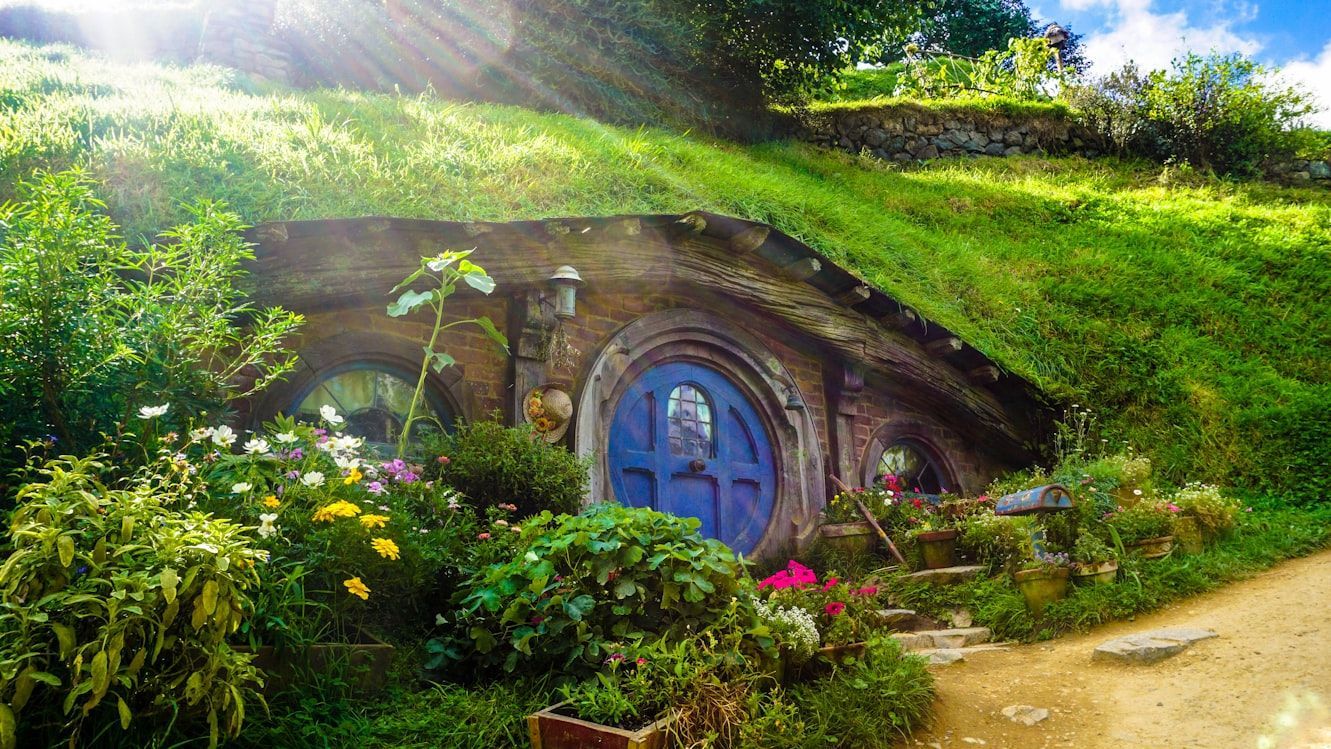
Rolling hills, cozy hobbit holes, and a peaceful, pastoral life—J.R.R. Tolkien’s Shire, introduced in The Hobbit (1937) and The Lord of the Rings (1954–55), embodies an idyllic, pre-industrial England beneath the veneer of a fantasy world.

Tolkien, a scholar of languages and mythology, infused the Shire with intricate customs, poetry, and festivals, aiming to create a mythology for England that he felt was missing—one that celebrated simplicity, community, and harmony with nature.

7

The Lost World

Image: Derek Owens

A hidden plateau where dinosaurs and prehistoric creatures survive, Arthur Conan Doyle’s 1912 novel The Lost World introduced readers to a thrilling world untouched by time. Doyle’s story follows Professor Challenger and his expedition as they encounter giant reptiles, ape-men, and other wonders on a remote South American plateau, blending adventure with early paleontological speculation.

Doyle was likely inspired by Mount Roraima, a flat-topped plateau in South America’s Guiana Highlands. Its sheer cliffs, isolated ecosystem, and mysterious cloud-covered summit provided a tangible model for the novel’s prehistoric world.

8

Atlantis

Image: Mikhail Preobrazhenskiy

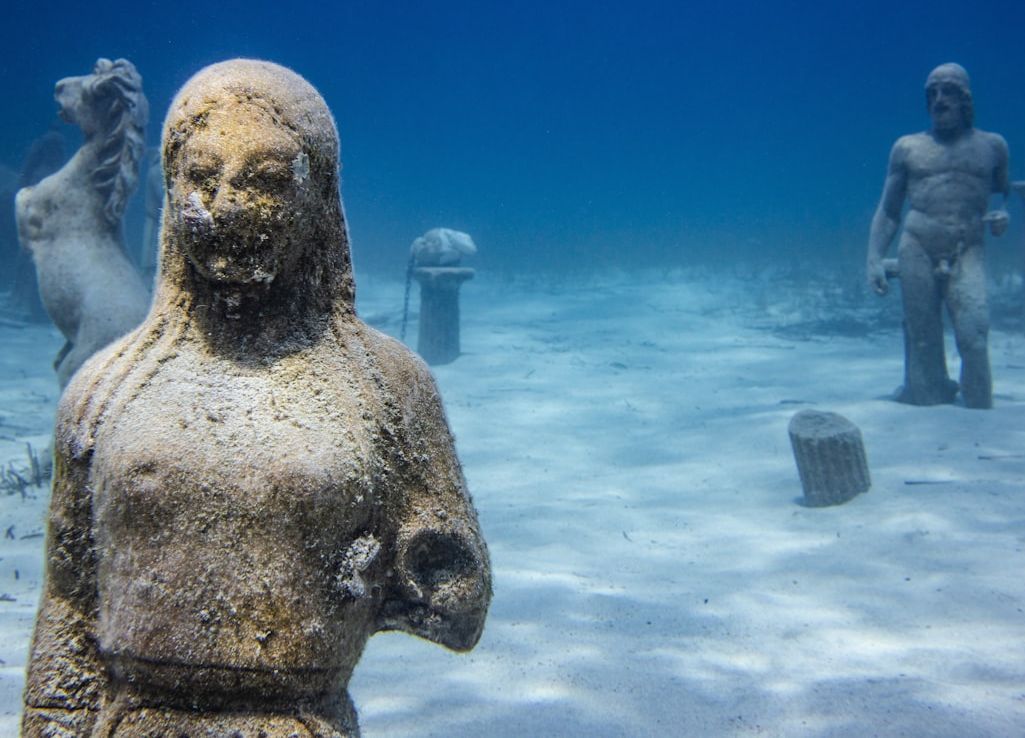
A legendary sunken city, Atlantis was first described by Plato in his dialogues around 360 BCE. According to Plato, Atlantis was a powerful and advanced civilization that sank beneath the ocean in a single day and night of catastrophic events, serving as a cautionary tale about hubris and moral decline.

Despite its origin as a philosophical example, many scholars believe Atlantis was inspired by the real-life Minoan civilization on Crete. The Minoans were an advanced maritime society whose cities, such as Knossos, were eventually devastated by natural disasters, including the volcanic eruption of Thera (Santorini) and subsequent tsunamis.

9

Pellucidar

Image: Yoshihiro

A hollow Earth filled with prehistoric creatures and lost civilizations, Edgar Rice Burroughs’s Pellucidar (1914) imagines a world at the center of the planet, lit by an eternal inner sun. The series follows David Innes and his adventures among tribes of humans, dinosaurs, and other strange beings, blending swashbuckling action with imaginative geography.

Burroughs drew inspiration from the era’s fascination with unexplored frontiers and the Hollow Earth theories popular in the 19th century. Pellucidar has influenced later science fiction and adventure literature, inspiring works that explore hidden worlds and isolated ecosystems.

10

Brigadoon

Image: martin bennie

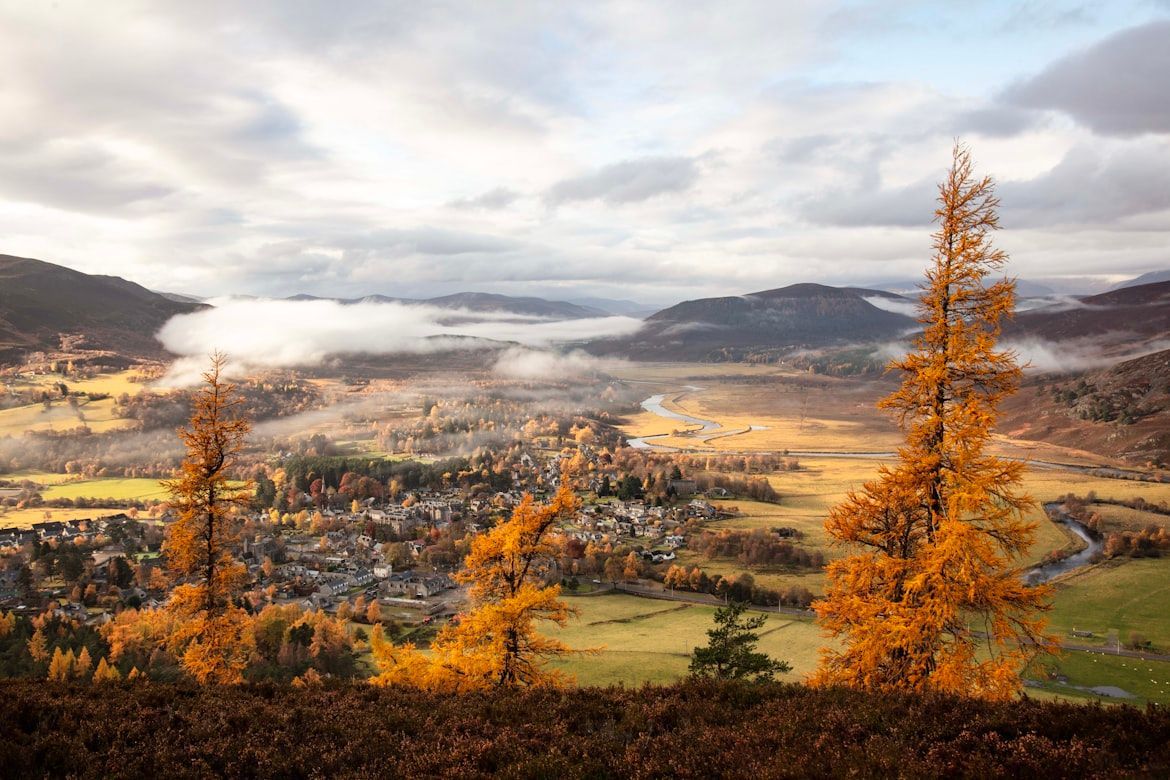
A mysterious Scottish village that appears for only one day every hundred years, the legend of Brigadoon draws on deep-rooted folklore from the Scottish Highlands. The tale likely originates from myths of fairy-haunted glens and hidden villages, where magic protected communities from outsiders and the passage of time.

Such stories often emphasized the danger and allure of the supernatural, reflecting local beliefs about enchanted landscapes and the thin boundary between the human and fairy worlds.


Deathbed statements

Beyond the grave: Take a look at the last words of 12 famous people


Published on March 27, 2026


Image: Daderot, CC0, via Wikimedia Commons

Throughout history, hundreds of historical figures have left their mark on the world through their marvelous achievements. When their lives came to an end, their last words were often a reflection of their lives and ideals. From George Washington and Mark Twain to Frank Sinatra and Leonardo Da Vinci, in this article, we will reveal 12 final words of memorable personalities.

1

George Washington

Image: The New York Public Library

After serving two terms as the United State's first president, George Washington retired to his Virginia plantation. In mid-December 1799, he developed a cold and a severe sore throat. Despite doctors' efforts to cure him, the end was imminent.

His long-time secretary, Tobias Lear, was at his side during his last days and documented all the events that transpired, including the former president's last words. According to his account, shortly before he took his last breath George Washington said "Tis well" —an old-fashioned way of saying "everything is okay."

2

Humphrey Bogart

Image: Signal Corps Archive from United States, Public domain, via Wikimedia Commons

Noir icon of perpetual elegance and rebellious charisma, Humphrey Bogart is an undisputed legend in cinema history. A Hollywood Golden Age star, Bogart is still remembered today for his scar on his upper lip, his everlasting cigarette, and his perfect portrayal of gangsters and detectives.

At the age of 57 Bogart was diagnosed with esophageal cancer, for which he was hospitalized for several months. According to lore, the legendary star's last words were "I should never have switched from scotch to martinis." However, his wife Lauren Bacall confirmed that the last thing he actually said was "Goodbye Kid. Hurry back," before she left his bedside to get their children.

3

Mark Twain

Image: Miscellaneous Items in High Demand, PPOC, Library of Congress, Public domain, via Wikimedia Commons

As one of the greatest American writers of all time, Mark Twain is usually credited with all sorts of great quotes that he often didn't say. For that reason, there are different versions of what his last words were before he died in 1910 at the age of 74.

The most plausible theory can be found in an article published one day after his death. According to this chronicle, Samuel Langhorne Clemens' last words were not spoken aloud but written. The famous humorist and essayist reportedly wrote to his daughter Clara, who accompanied him on his bedside, "Give me my glasses."

4

Joan Crawford

Image: MGM, Public domain, via Wikimedia Commons

Joan Crawford, the Oscar winner for Mildred Pierce and one of the greatest stars of Hollywood's golden age, died in 1977 of a heart attack.

The actress, who had a complicated personality, was true to her nature until her last breath. She was so ill that her doctor felt it wasn’t worth taking her to the hospital. One of her nurses began to pray aloud in desperation. Losing her patience, Crawford snapped for the last time and said, "Damn it... Don't you dare ask God to help me."

5

Marco Polo

Image: Municipal Library of Trento, CC0, via Wikimedia Commons

The year 2024 marked the 700th anniversary of the death of the man who better described remote lands. Marco Polo was a merchant who spent more than 20 years of his life traveling through the Orient and wrote about his adventures in a book that became a bestseller when the printing press wasn’t even invented.

Marco Polo was, and still is, a legend. When, on his deathbed, his wife and friends begged the brave explorer to confess if what he had told in the book was true, he barely whispered: "I have not told the half of what I saw and did."

6

Groucho Marx

Image: MGM, Public domain, via Wikimedia Commons

Julius Henry Marx, better known as Groucho Marx, is considered one of the most influential comedians of all time. The man with the bushy black mustache was one of the Marx Brothers. Together they made 13 films, including the classic Duck Soup. After a long and prominent career, Groucho passed away in Los Angeles in 1977 at the age of 86.

His brilliant one-liners are still remembered and replayed to this day, so it is not surprising that not one but several final words are attributed to him. A few close friends have suggested that his last line was "This is no way to live!", while most suggest that his last words were in fact dedicated to his wife: "Die, my dear? Why, that's the last thing I'll do!"

7

Voltaire

Image: Nicolas de Largillière, Public domain, via Wikimedia Commons

Voltaire, the French writer, philosopher, historian, and lawyer, one of the major figures of the Enlightenment, died in 1778 at the age of 83. Different accounts of his deathbed make it impossible to determine exactly what his last days were like.

One of these stories, however, is consistent with his ideas about God and his well-known criticism of the Church. According to this version, when the priest asked him if he wanted to renounce Satan before he died, Voltaire replied, "This is no time to make new enemies."

8

L. Frank Baum

Image: William Wallace Denslow, Public domain, via Wikimedia Commons

L. Frank Baum was a prolific American author. He wrote 55 novels, 82 short stories, and more than 200 poems. However, his most memorable work is his series of children's fantasy books The Wonderful Wizard of Oz.

On May 5, 1919, Baum suffered a heart attack. He died the next day, shortly before his 63rd birthday. Disturbed by the imminence of death, he whispered to his wife: "Now we can cross the Shifting Sands," a clear reference to the Land of Oz.

9

Augustus

Image: National Archaeological Museum of Athens, CC0, via Wikimedia Commons

Augustus, the first Roman emperor, is often attributed with the phrase: "Behold, I found Rome of clay, and leave her to you of marble," alluding to the great infrastructural works carried out during his prosperous 40 years of rule.

However, according to other historical accounts, his last words were addressed to the friends who stayed with him on his deathbed: "Have I played the part well? Then applaud, as I exit."

10

Frank Sinatra

Image: English: Distributed by NBC. Photographer unknown., Public domain, via Wikimedia Commons

"Darling, you've gone through worse and you can beat this too. You have to fight," implored Barbara Marx, Frank Sinatra's fourth wife, to her beloved on his deathbed. "I'm losing," The Voice whispered through teary eyes.

Barbara recounted the last hours of the singer of such hits as My Way and New York, New York in her memoir Lady Blue Eyes: My Life With Frank. Frank Sinatra, one of the most popular entertainers of the mid-20th century, pronounced his last words in 1998 at the age of 82.

11

Leonardo Da Vinci

Image: Jean-Auguste-Dominique Ingres, CC0, via Wikimedia Commons

Despite being one of the most famous artists of the Renaissance, Leonardo da Vinci was very hard on himself. All his life he challenged his own limits, evident in his paintings and sculptures as well as in his inventions, some of which were truly revolutionary.

Even after a lifetime of success, he wasn’t quite satisfied. When he suffered a stroke at the age of 67, he sent for a priest to receive the Holy Sacrament and, according to historians, his greatest regret was that he hadn’t achieved excellence with his work. In that sense, it is said that his last words were: "I have offended God and mankind because my work did not reach the quality it should have."

12

Joe DiMaggio

Image: National Museum of Health and Medicine, Public domain, via Wikimedia Commons

The Yankee Clipper was one of the greatest baseball players of all time but he is also known for having been married to the iconic American actress Marilyn Monroe. Joe and Marilyn were together for less than three years. In 1955 the actress left him for American playwright Arthur Miller.

DiMaggio was devastated. He never married again, and never got over his one true love. His last words before he died in 1999 at the age of 84 were: "I'll finally get to see Marilyn."

Looking for an extra scoop of literary fun?

Learn more with our Word of the day

ebullient

/ɪˈbʊljənt/