Decoding the experts

You’ve heard your doctor use these words. Here’s what they really mean


Published on June 15, 2026


Image: Vitaly Gariev

Medical jargon can be somewhat confusing to the untrained ear. How can something negative or unremarkable be reassuring? If you’ve ever felt like you needed a translator during a medical appointment, you’re not alone. Curious about what your physician is really saying? Let’s break it down.

1

Artery vs. vein

Image: Robina Weermeijer

During a routine visit, your doctor might talk about keeping your arteries healthy. And later, when you get your blood draw, the technician mentions your veins. It’s easy to wonder how these two are related.

Arteries carry oxygen-rich blood from the heart to the body. They handle higher pressure and have thicker walls. They are in charge of delivering blood to every other organ.

Veins, instead, return blood to the heart after oxygen has been delivered. They work under lower pressure than the arteries. Conditions affecting them vary greatly, and knowing the difference allows any patient to understand what is really going on behind that lab result.

2

Electrocardiogram vs. echocardiogram

Image: Joachim Schnürle

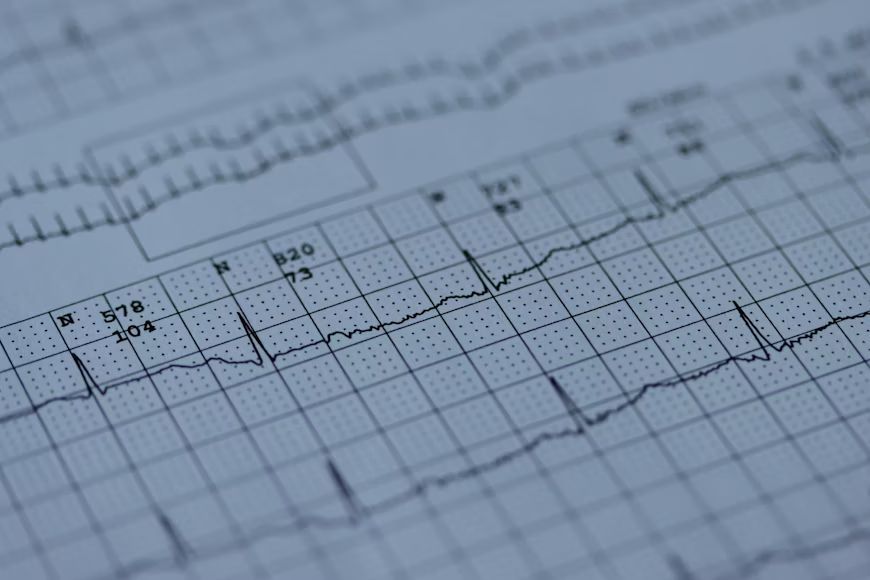
Heart testing can involve several procedures, and the names don’t always make it clear what each one does. An electrocardiogram, or EKG, records the electrical activity of the heart. It helps detect irregular rhythms and signs of past damage. For instance, if someone feels palpitations, an EKG might be the first test ordered.

An echocardiogram uses ultrasound to create images of the heart’s structure and movement. It’s helpful to see blood flow through the heart and heart valves. Both tests look at the heart, but they focus on different aspects.

3

Hypothyroidism vs. hyperthyroidism

Image: El S

When it comes to thyroid conditions, a small prefix makes a big difference. Hypothyroidism means the thyroid is underactive and produces too little hormone, leading to symptoms like fatigue or feeling cold more often.

Hyperthyroidism, on the other hand, means it is overactive and produces too much hormone, causing the opposite effect and speeding up your system. This can lead to weight loss or rapid heartbeats. Because the symptoms and treatments differ, it’s important to know which condition is being described, even though the terms sound similar.

4

​Dose vs. dosage

Image: Olga DeLawrence

Prescription labels often include both of these terms, and their writing is very similar, but that doesn’t mean they are interchangeable.

A "dose" is the specific amount taken at one time, like a pill or 10 milligrams. "Dosage" is the overall plan. It includes how much to take, how often, and for how long. Following both correctly helps ensure the treatment works as intended.

5

Positive vs. negative

Image: Brett Jordan

Imagine opening your lab results and seeing the word "negative." In everyday language, that sounds like bad news, but in medicine, it often means the opposite.

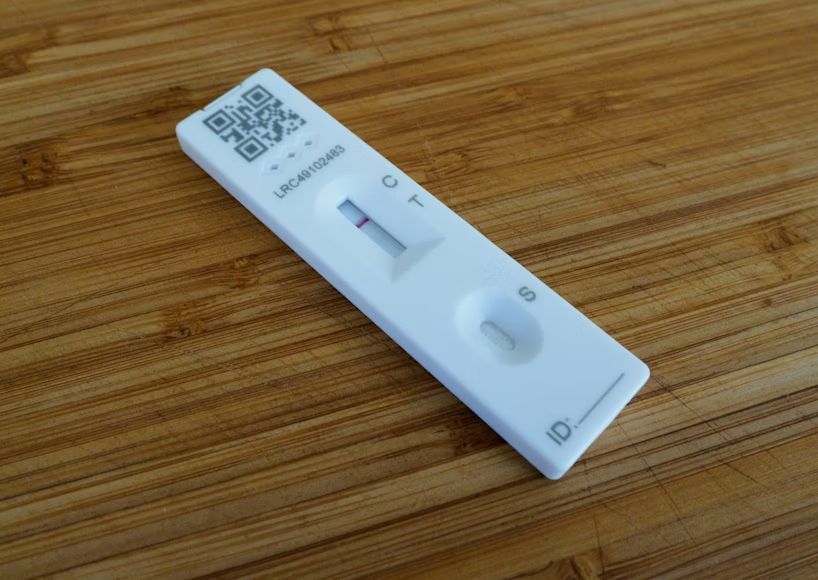
In medical testing, "negative" usually means no sign of the condition was found. For example, a negative strep test means you don’t have a strep infection. A "positive," however, means something was detected, and it confirms the presence of the condition. It’s a simple switch in meaning, but it can feel confusing at first.

6

Normal vs. ​unremarkable

Image: National Cancer Institute

When reading test results, many people look for the word "normal." If they don’t see it, they may feel uneasy. But "normal" is not the only word that can describe healthy scenarios.

In medicine, "normal" means everything appears exactly as expected. No unusual findings, nothing to worry about. "Unremarkable," another word you might find in test results, is not necessarily a bad word. In general, it means whatever findings there may be, there’s nothing that requires follow-up. Despite how it sounds, "unremarkable" can be just as reassuring as "normal."

7

Aural vs. oral

Image: National Cancer Institute

You pick up a prescription labeled "for aural use." It looks familiar, but something feels off. Is it the same as oral? This mix-up happens because, in English, the words sound identical, but they refer to different parts of the body.

"Aural" relates to the ears and is used for treatments like ear drops. On the other side, "oral" refers to the mouth, including medication you swallow or let dissolve.

A medication labeled for aural use is designed specifically for the ear canal and should not be taken by mouth. When instructions aren’t clear, it’s always worth double-checking before using the medication.

8

Physiologic vs. pathologic

Image: Vitaly Gariev

Medical reports often include terms that sound technical and unfamiliar. Take "physiologic," it sounds pretty similar to "pathologic," so should one worry? Let’s see the difference.

"Physiologic" refers to normal body functions. It describes processes that occur as part of a healthy system. "Pathologic" is the opposite; it refers to changes caused by disease or abnormal conditions. Doctors use these terms to separate what is expected from what may require treatment. But even if both sound equally serious at first, your physician is the only one who can actually tell you if your hunch is right or not.

9

​​Chronic vs. acute

Image: National Cancer Institute

The word "chronic" often carries a heavy tone, even though its meaning is more straightforward than it seems. Funny enough, the opposite, "acute," seems light, but it generally isn’t.

"Chronic" refers to a condition that lasts for a long period, usually one year or longer. It doesn’t refer to severity, but duration. "Acute," instead, refers to a condition that develops suddenly and requires immediate attention. These terms describe timing, not seriousness, which is an important distinction when discussing a diagnosis.

10

Hypertension vs. hypotension

Image: National Cancer Institute

Similar to the thyroid, blood pressure discussions often include terms that sound nearly identical, which can make them easy to confuse.

"Hypertension" means high blood pressure, and it’s linked to long-term health concerns if not managed. "Hypotension" means low blood pressure, which may cause symptoms like dizziness, but it’s often less worrying. Understanding the difference helps make sense of your readings and what your doctor is monitoring over time.


Tango, Bravo

Codewords decoded: How many did you know?


Published on June 15, 2026


Image: orso bianco

In situations where clear communication is paramount, especially when lives are at stake, professionals often rely on standardized codewords and phonetic alphabets designed to prevent confusion. Either from movies or from personal experience, it's probable that you've heard at least some of these before, and many have found their way into everyday conversation. Let's find out how many of these code expressions you can recognize.

1

Mayday

Image: Zhuravlev Andrey

Mayday is the international distress call used when the sender is in immediate, life-threatening danger. Pilots and mariners use it to signal that they require urgent assistance due to situations such as engine failure, fire, flooding, or medical emergencies.

The word was introduced in 1923 by British radio officer Frederick Stanley Mockford, who based it on the French phrase m'aider, meaning "help me," in an attempt to make it internationally recognizable. Hearing this transmission immediately alerts emergency responders that every second counts.

2

Pan-Pan

Image: DenisProduction.com

Not every emergency is severe enough to warrant a mayday call. When a crew faces a problem that is urgent but not immediately life-threatening, the appropriate codeword is Pan-Pan.

Like mayday, it comes from French: it derives from panne, meaning a breakdown or mechanical failure. A Pan-Pan call might be used if an aircraft loses an engine but can still fly safely, or if a ship experiences equipment problems while remaining under control. It tells responders that assistance is needed, but that the situation has not yet become critical.

3

SOS

Image: Grisha Bruev

Few emergency signals are as universally recognizable as SOS. Contrary to popular belief, the letters do not officially stand for "Save Our Ship" or "Save Our Souls." It was adopted in 1906 because SOS is an extremely simple, easy-to-transmit, and unmistakable pattern in Morse code.

SOS remains one of the world's most enduring distress signals, and it's still recognized by rescue organizations all around the globe.

4

NATO Alphabet

Image: Alexandros Michailidis

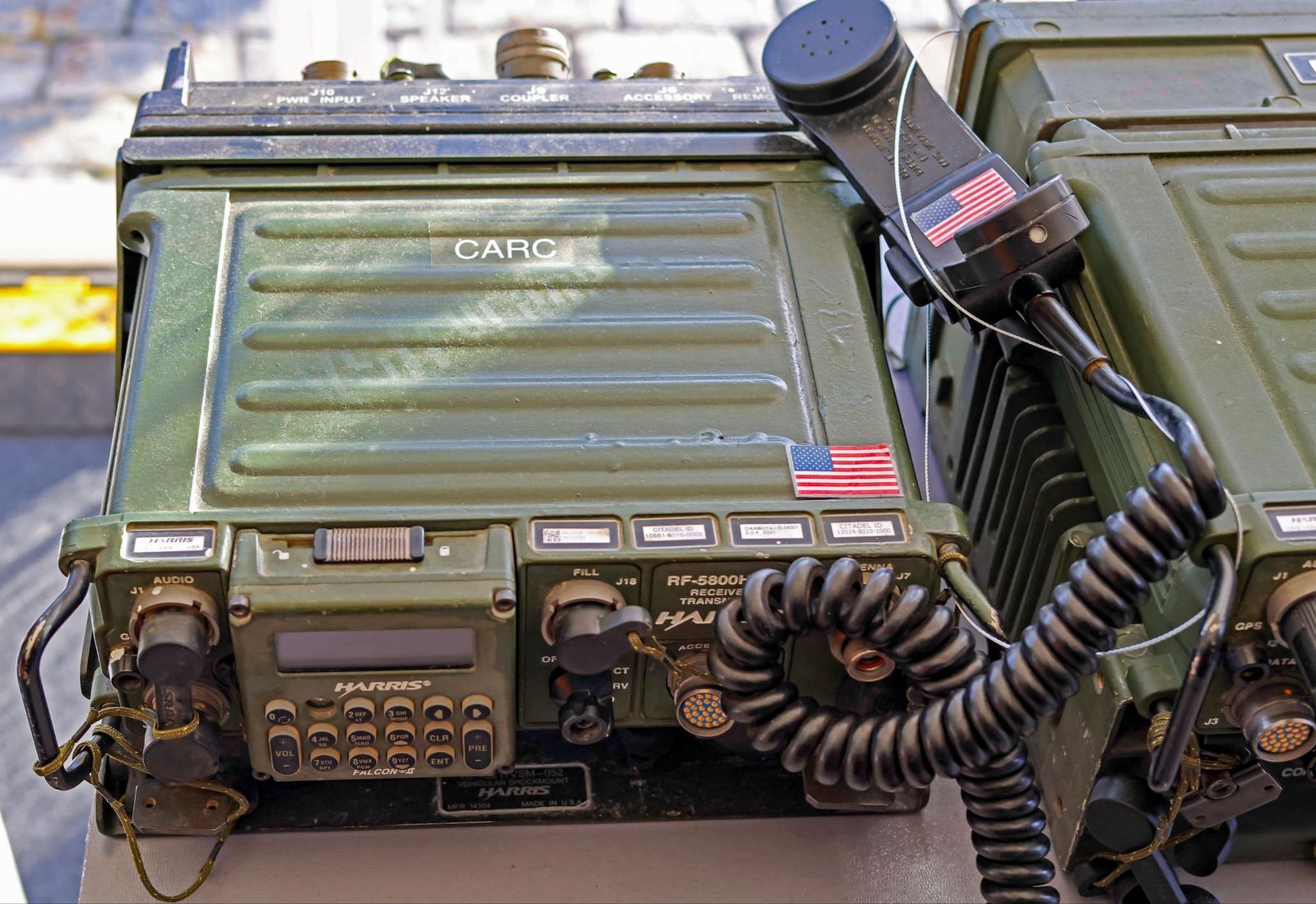
In the NATO phonetic alphabet, each letter is assigned a unique word to eliminate confusion when radio transmissions are distorted by noise or poor reception. If you've ever heard someone spell a name as "Mike Alpha Romeo Yankee," you've encountered the NATO phonetic alphabet.

The system was officially adopted by NATO in the 1950s and is now widely used by militaries, airlines, emergency responders, and many police departments worldwide. Using it greatly reduces the chance of misunderstanding important information over radio.

5

Roger

Image: nelikdulatov

Roger dates back to the early days of radio communication, when the letter R stood for "received." Before the adoption of the NATO alphabet, the US military used Roger instead of Romeo to represent that letter_._

Although modern communications systems have changed and the US military has fully embraced the use of the NATO alphabet, Roger remains standard aviation terminology, and it's one of the best-known radio acknowledgments in the world. It conveys a very simple but important meaning: "I have received and understood your message."

6

Wilco

Image: alleks19760526

Although many people assume Roger and Wilco mean the same thing, they actually convey different messages. Wilco is short for "will comply." In other words, it tells the sender not only that the message was received and understood, but that the instruction will be carried out.

Saying both Roger and Wilco is technically redundant in proper radio communication, since complying necessarily implies understanding, but the combination is often heard in movies and television.

7

Tango

Image: Quality Stock Arts

In the NATO phonetic alphabet, Tango simply represents the letter T. However, US military personnel have also adopted it as a shorthand when referring to a target or a hostile.

This secondary meaning became widely known through military operations in the twentieth century and has since appeared in countless books, films, and video games in phrases like "We've got one Tango moving north."

8

Oscar Mike

Image: Dragos Asaftei

Oscar Mike, NATO for the letters O and M, is military shorthand for "On the Move." It's a quick way of reporting that a unit has begun moving toward its objective.

The expression is especially common in the US military and has become more familiar to the general public through documentaries, memoirs, and films. It's finding its way into civilian life, meaning simply "I'm heading out."

9

10-4

Image: Elliott Cowand Jr

Ten-codes were developed during the 1930s to allow for brevity and standardization of message traffic in radio communications. They were widely adopted by US public safety departments and by radio enthusiasts.

While the system is being slowly phased out in favor of plain language communications, many local police, fire, and sheriff departments keep using it, and it is still strongly associated with radio culture by the general public. One of the most famous ten-codes is 10-4, meaning "received and understood."

10

Code Blue

Image: PeopleImages

Hospitals around the world use color-coded announcements to communicate emergencies without causing unnecessary panic among patients and visitors. Perhaps the best known is Code Blue, indicating that a patient is experiencing cardiac or respiratory arrest and requires immediate medical assistance.

While some hospitals use their own custom color codes, Code Blue has become so widely recognized that it now appears frequently in television dramas and everyday conversation whenever someone refers to a life-threatening medical emergency.

Looking for an extra scoop of literary fun?

Learn more with our Word of the day

maul

/mɔl/