National melodies

Why is the King of Spain mentioned in the Netherlands' national anthem?


Published on April 26, 2026


Image: Colin Lloyd

The purpose of a national anthem is to foster a sense of patriotism and unity among the citizens of a nation, but there are as many ways to achieve this as there are nations. While some anthems reflect on glorious deeds of the past, others express a shared desire for peace and prosperity, or celebrate love for their country, its lands, its leaders, and, at times, even the leaders of another nation. Let’s take a look at 10 national anthems with curious stories.

1

"The Star-Spangled Banner" (United States of America)

Image: Marcus istrfry

We all know the story of how The Star-Spangled Banner was written after a battle, but did you know it was not officially adopted as the national anthem for over a century? Composed during the War of 1812 under the title Defence of Fort M’Henry, it quickly became popular as a patriotic song and was officially adopted by the U.S. Navy in 1889. It was not declared the national anthem until 1931.

Some critics point to references in the third stanza—particularly language interpreted as relating to slavery—as well as the documented views of its author, Francis Scott Key. However, opposition to the song’s adoption at the time was more often based on its difficult vocal range and competition from other popular patriotic songs. Despite these debates, the poem—especially its first stanza—has long been regarded as a symbol of national unity.

2

"Wilhelmus" (The Netherlands)

Image: Hendrik Kuterman

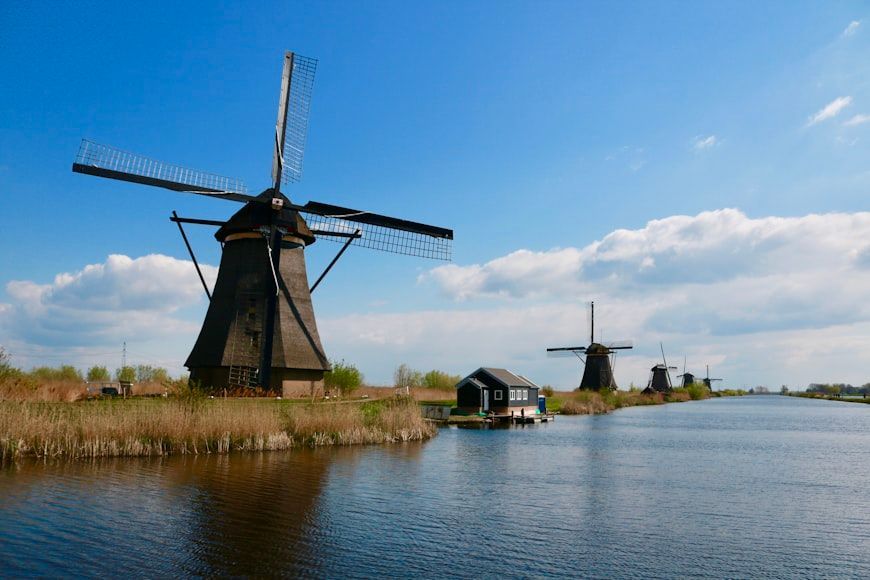
Composed in 1572, it is one of the oldest national anthems still in use. The lyrics are written from the perspective of William of Orange—the leader of the Dutch revolt against the Spanish Empire—and reflect his inner struggles between his loyalty to the Spanish King and his duty to his people.

Though the original text has at least 15 stanzas, only the first stanza and sometimes the sixth are sung today, which can be confusing for those unfamiliar with the historical context, as the first stanza ends by declaring undying loyalty to the king of Spain.

3

"State Anthem of the Russian Federation" (Russia)

Image: Tamara Malaniy

After the 1917 Russian Revolution, the newly formed Soviet Union adopted the socialist anthem The Internationale as its national anthem. In 1944, the Soviet government replaced it with a new anthem centered on Soviet Russia, with lyrics that emphasized the Soviet fatherland and Joseph Stalin’s leadership, though it was often performed without lyrics after Stalin’s death.

Following the collapse of the Soviet Union in 1991, the Russian Federation adopted an instrumental piece known as The Patriotic Song, composed in 1833 by Mikhail Glinka. After a decade of debates, and citing the need for an anthem that people could sing, the government decided to restore the former Soviet melody, this time with newly written lyrics.

4

"My Country, Malaysia" (Malaysia)

Image: Putra Mahirudin

How many countries can say that they owe their national anthem to a moment of panic? At least one. Malaysia’s national anthem was adopted after its independence from the United Kingdom, using the melody of the anthem of the state of Perak. But where does that melody come from?

When the Sultan of Perak attended the coronation of King Edward VII in 1902, his delegation was asked to provide their state anthem. Not having one, he improvised and adapted the melody of a popular tune from the Seychelles. This melody was later adopted as the official anthem of Perak and eventually became the basis for Malaysia’s national anthem.

5

"Argentine National Anthem" (Argentina)

Image: Fernando Távora

Composed and adopted as the national anthem during the Argentine War of Independence, but before the formal declaration of independence from Spain, this song was initially called the Patriotic March. It was much longer than the current anthem, and its lyrics were controversial, as they portrayed Spain as a tyrannical and bloodthirsty nation.

The anthem originally contained nine stanzas—including accusations towards Spain—which were used until 1924, when improved diplomatic relations with Spain and the arrival of thousands of Spanish immigrants led the government to shorten the lyrics and omit the more controversial parts.

6

"National Anthem of South Africa" (South Africa)

Image: Lina Loos

Famed for having lyrics in five of the twelve official languages of the country —Xhosa, Zulu, Sesotho, Afrikaans, and English— this anthem was officially adopted after the end of apartheid, and reflects a broader desire for national unity.

The post-apartheid government initially retained the former Afrikaans anthem, while also adopting the Xhosa hymn Nkosi Sikelel' iAfrika (God Bless Africa), which had long been used as a song of resistance. Maintaining two anthems proved impractical, so their lyrics were combined and translated into other majority languages to create a single national anthem that could represent all South Africans.

7

"Kde domov můj" + "Nad Tatrou sa blýska" (Czechia and Slovakia)
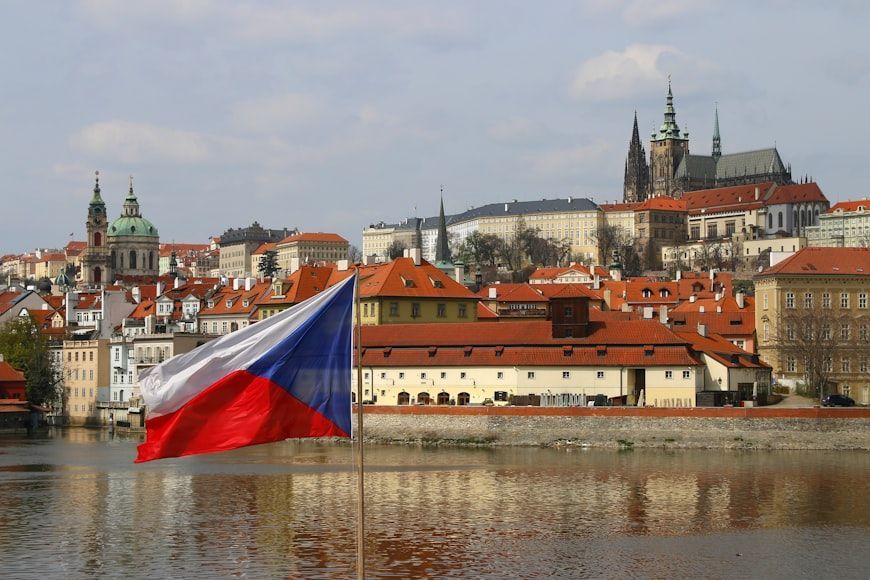
Image: Radek Kozák

When Czechoslovakia existed as a single state, it adopted a combined national anthem consisting of the first stanza of the Czech song Kde domov můj ("Where Is My Home?"), followed by the first stanza of the Slovak song Nad Tatrou sa blýska ("Lightning over the Tatras").

After the country’s peaceful dissolution in the Velvet Divorce (1992), Czechia retained Kde domov můj as its national anthem, while Slovakia retained Nad Tatrou sa blýska, which is typically performed with two stanzas and in its traditional form.

8

"Kimigayo" (Japan)

Image: Joshua Tsu

Though its lyrics come from a poem dating to the 8th-10th centuries, Kimigayo was not adopted as Japan's national anthem until 1888, and it's one of the world’s shortest anthems. After World War II, it was not officially designated as the national anthem due to its imperial associations, though it continued to be used. It regained formal legal status in 1999.

Often translated into English as His Majesty's Reign, its initial verse is commonly rendered as "may your reign [continue]." The word kimi has historically been used for the emperor, and the song's brief lyrics express a desire for the Imperial reign to endure for thousands of years, "until the tiny pebbles grow into massive boulders."

9

"El Gran Carlemany" (Andorra)

Image: Jossuha Théophile

In a similar fashion to the Wilhelmus, the Netherlands anthem, Andorra’s anthem is also written from a first-person perspective, this time not from an individual but the country itself, remembering its glorious past.

Composed in the early 20th century, it was adopted as the national anthem in 1921. In the lyrics, Andorra presents itself as a princess, daughter of Charlemagne, and describes itself as the "only remaining daughter of the Carolingian Empire."

10

"Woven from Hundreds of Flowers" (Nepal)

Image: Sebastian Pena Lambarri

A relatively new anthem, _Sayaun Thunga Phool Ka_—adopted in 2007—replaced the Shriman Gambhir following the abolition of the monarchy in Nepal. It’s notable for its distinctive melody, upbeat and joyful, quite different from other solemn or martial tone anthems.

The lyrics describe Nepal as a garland woven from hundreds of flowers, stretching from one corner of the country to the other, and emphasize the diversity of its people and landscapes.


Names that lie

Mountain chickens are frogs? 10 animals with misleading names


Published on April 26, 2026


Image: Jo Taylor

Some animals have commonly been given names that might lead you to believe false things about them. For example, as we all know, guinea pigs are not pigs, sea horses are not horses, and starfish are neither stars nor fish. So, how did these names come to be? While lookalike allegations may justify some, others are simply far-fetched. Is there any truth or reason behind these inaccurate nicknames—like "firefly"? Let’s explore 10 animal names that are, arguably, misnomers.

1

Mountain Chicken

Image: Yaroslav Savateikin

Let’s start with one of the most far-fetched names on this list. Mountain chickens aren’t birds at all—they’re large frogs. And they don’t live in mountains, either. These frogs are found mostly in the Caribbean, inhabiting lowland rainforests and swamps. A more accurate and realistic name for them is "giant ditch frogs," which refers to their large size and their tendency to dwell near water bodies.

So, how did they get this name? The story goes that locals found the frog’s meat similar in taste and texture to chicken. Yes, this now critically endangered species was once considered a delicacy in local cuisines.

2

Red panda

Image: Flickr

You would think that the red panda is just a smaller, red version of the giant panda. After all, they share cute faces, patches around their eyes, and similar snouts and ears. But you’d be wrong—red pandas are not bears.

Here’s the explanation: The word "panda" is believed to derive from the Nepali word ponya, which refers to animals with claws adapted for eating bamboo. This is the biggest trait red and giant pandas have in common: their heavily bamboo-based diets. Red pandas, sometimes nicknamed "firefoxes," belong to a mammal family of their own and are more closely related to skunks than to giant pandas.

3

Titmouse

Image: Matthew Goeckner

Titmouses aren’t rodents—did you know? Instead, they are songbirds known for their gray or bluish-gray feathers. One of the most common species is the tufted titmouse, and you’ll be pleased to know that the plural form is, indeed, "titmice."

The name "titmouse" comes from Old English, where tit referred to a small creature, and mase was a general term for a bird. Over time, mase became obsolete, and "titmase" was transformed into "titmouse" due to the similarity between the words. Arguably, there’s also some physical resemblance between the gray color and beady, round eyes of both titmice and mice.

4

Electric eel

Image: k10legs

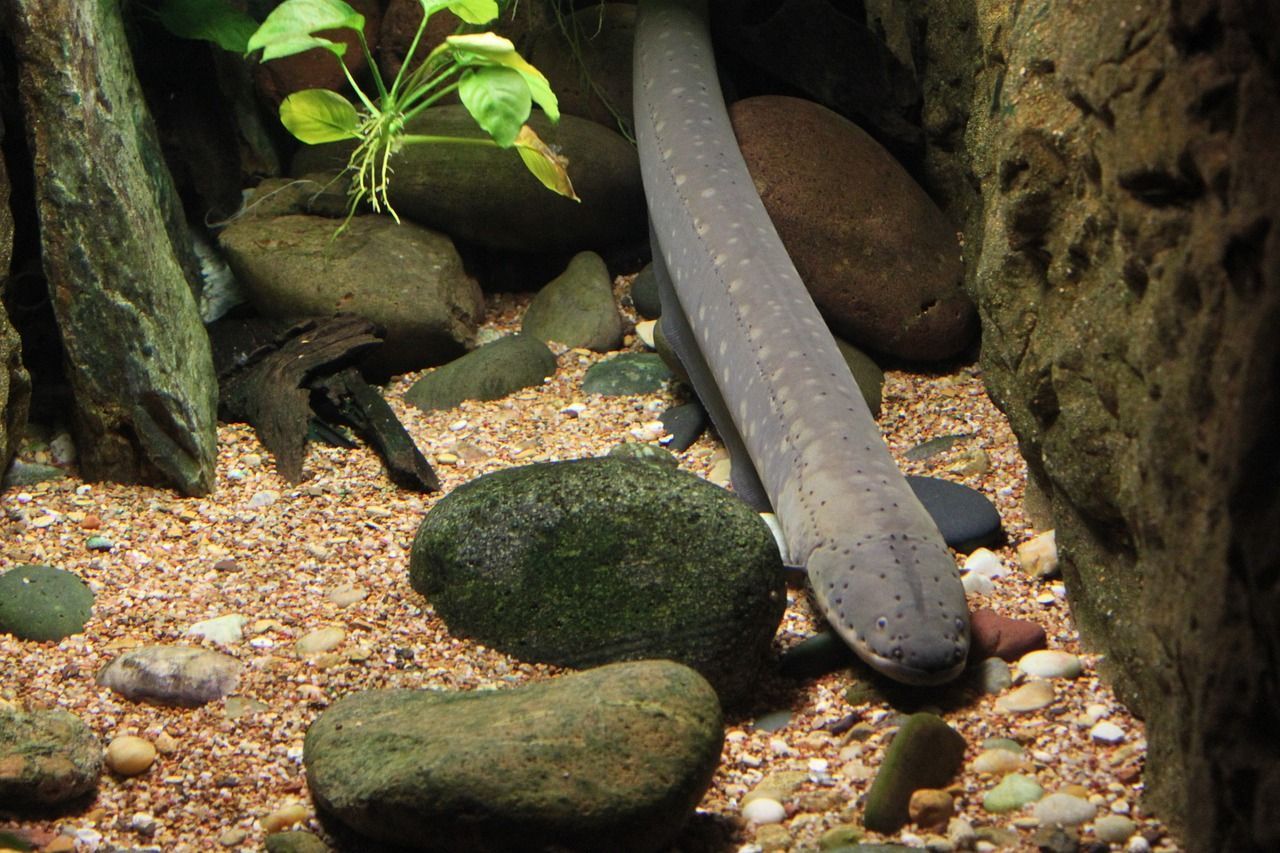
Yes, the name "electric eel" is misleading—but not for the reasons you might think. These aquatic animals are indeed capable of generating shocks of electricity, up to ​​860 volts, which they use to stun their prey or defend themselves. However, strictly speaking, they are not eels.

Unlike true eels, which belong to the family Anguillidae, electric eels are part of the knifefish family and are more closely related to catfish. Early European explorers misnamed them based on their elongated, eel-like bodies.

5

Seahorse

Image: Sergiu Iacob

Seahorses are fish, just like salmon or clownfish. Arguably, they look nothing like those species. Instead, for centuries, humans have noticed their resemblance to horses. Seahorses have a distinctive upright swimming posture, elongated heads and necks, and a caudal fin that even resembles a horse’s mane.

Their scientific name, Hippocampus, is borrowed from the Ancient Greek word hippókampos. Interestingly, the term didn’t originally refer to this animal but to a mythological marine creature. In Greek, hippos means "horse," and kampos means "sea monster."

6

Guinea pig

Image: Jack Catalano

Guinea pigs aren’t pigs—nor are they from Guinea, the West African country. Instead, they are rodents native to South America. By now their name has become synonymous with "experiment subject" because of how frequently they were used in scientific research.

There are a couple of theories behind their misleading name. The "pig" part likely comes from the squealing noises they make, which resemble those of piglets. As for "guinea," it might derive from the British coin of the same name, implying they were sold for its equivalent value. Another theory is that European sailors, associating distant Guinea with anything exotic, mistakenly applied the name to these South American rodents.

7

Koala bear

Image: Valeriia Miller

The koala is often called a "koala bear," but it’s not a bear at all. European settlers in Australia gave it this name because its round face and fluffy ears reminded them of bear cubs.

Koalas are, in fact, marsupials. Like kangaroos, they carry their young in pouches. The word koala comes from the Dharug language (an Aboriginal language of Australia) and is believed to mean "no water," referring to the koala's ability to survive on eucalyptus leaves with minimal water intake. Did you know? Eucalyptus leaves are low in nutrients and mildly toxic. As a result, koalas have a slow metabolism and sleep up to 20 hours a day.

8

Firefly

Image: Tony Phan

Fireflies don’t handle fire. They do, however, possess the ability to produce light, a phenomenon called bioluminescence. This light creates the illusion of tiny flames flying through the night. No wonder they have been associated with magic and fascination for centuries.

Despite their name, fireflies aren’t flies—they’re beetles. They produce light through a chemical reaction in their abdomens, which they use to attract mates or communicate. In fact, ​​different firefly species flash in distinct rhythms to help them identify each other.

9

Prairie Dogs

Image: Werner Hilversum

The first time you hear the term "prairie dogs," you might picture packs of dogs roaming freely across the prairies. In reality, these animals are rodents and belong to the ground squirrel family.

The name is believed to have been given by early European settlers due to their high-pitched sounds. Prairie dogs are capable of producing sophisticated and varied calls to communicate with one another, sometimes sounding like man’s best friend. The "prairie" part of their name comes from their habitat—vast grasslands and prairies across North America. These rodents are expert burrowers and typically live in small family groups called "coteries," where members groom and protect each other.

10

Ladybug

Image: Pixabay

It’s not only that ladybugs aren’t all female—they aren’t truly bugs, either. Instead, they are a type of beetle. These round and colorful insects have been widely associated with good luck and fortune for centuries. The reason for this has to do with the story behind their nickname.

The name "ladybug" originated in the Middle Ages, when farmers prayed to the Virgin Mary for help with pests in their crops. The beetles, which helped control aphid populations, were called "Our Lady's birds" or "Our Lady's beetles," later shortened to "ladybirds" or "ladybeetles." Over time, much to the frustration of entomologists, this evolved into the popular term "ladybugs."

Looking for an extra scoop of literary fun?

Learn more with our Word of the day

cozen

/ˈkəz(ə)n/