Potato, potahto

It is English, but is it American English? 10 unique terms


Published on March 28, 2026


Image: Waldemar Brandt

English is the official language of more than 50 nations across the world, so it’s not surprising that English speakers from different parts of the world have developed dialectal variations with unique vocabulary. But, being English —especially American English— used as an international common language, one would think that American vocabulary would have spread to foreign English speakers. While it has in some cases, certain terms are still unique to American English. Let’s have a look at some of them!

1

Soccer

Image: Emilio Garcia

This might be the best example of a uniquely American term, though it is technically derived from the original name of the sport. Internationally known as football, soccer was originally called ‘association football’ to distinguish it from ‘Gaelic football’. With time, the popularity of the sport became associated with the term football, except in the U.S., where Gridiron or American football was more popular. So, for Americans, American football became just ‘football’, and association football became ‘soccer’.

2

Over easy

Image: Freddy G

Eggs are an integral element of American diners, where a specific vocabulary was developed to quickly explain the type of egg desired in the least amount of time. Where other English speakers would simply ask for a fried egg, Americans know that there are several ways to fry an egg: over easy is just one of them.

3

ZIP code

Image: Joanna Kosinska

Have you ever wondered why the U.S. has a Postal Service but not postal codes? It’s not that they don’t exist; they just have a different name. The ‘Zone Improvement Plan’, or ZIP, was created to make mail services more efficient, but nowadays it’s key for analyzing demographics, sales, and the types of data. While the name ‘Zone Improvement Plan’ might sound strange, it was chosen with the ZIP acronym in mind to suggest that mail would zip along using the system.

4

Condo

Image: Agustin Lara

Whether you use condo to mean an owned apartment of any kind or as a certain type of building, both are terms mainly used in America. Other English speakers would just say flat or apartment, and would use the term commonhold (UK), strata (Australia and parts of Canada), or divided co-ownership (Francophone Canada) for a building with common areas and services.

5

Bodega

Image: Robinson Greig

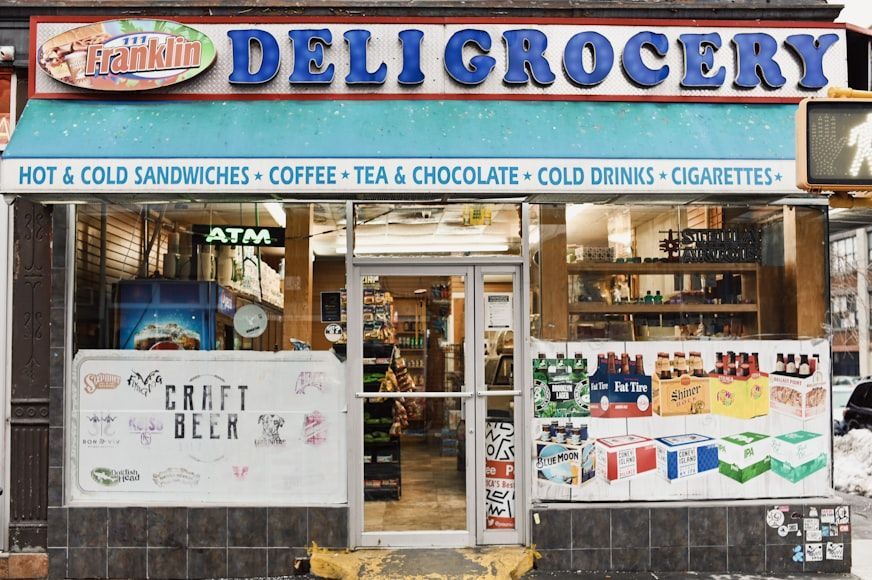
Let’s address the obvious first: yes, bodega is a Spanish word. However, it has a unique meaning in American English. While for Spanish speakers it means a winery, in the U.S., it refers to a specific type of convenience store or deli, traditionally owned by Hispanics.

6

Silverware

Image: Mika Baumeister

If you hear the word ‘silverware’ in the UK, it won’t mean what you think it means. Kind of. For Americans, the term ‘silverware’ encompasses all eating utensils, including forks, knives, spoons, and even chopsticks. Outside of the U.S., it is more common to say ‘cutlery’, while silverware is used for cutlery actually made from silver.

7

College

Image: Pang Yuhao

While words such as ‘university’ or ‘school’ are typical when discussing higher education, ‘college’ is the more commonly used term in the U.S., even present in the names of famous institutions. In other English variants, ‘college’ can be used to talk about trade schools, vocational training, or a university’s residential hall.

8

Period

Image: Unseen Studio

If we consider that Canadians also use the term ‘period’ for the punctuation mark, we could say that this term is uniquely North American, but it’s a term other English speakers commonly associate with the U.S. In other parts of the world, ‘full stop’ is the preferred name. What a mouthful!

9

Mailman

Image: Joel Moysuh

Again, why do we have a Postal Service but prefer the term ‘mailman’? It’s just a matter of use. Originally, ‘post’ was used for domestic letters, while ‘mail’ was used for letters sent abroad. While the term ‘postal service’ is common to all English variants, mail and its derivatives, such as mailman, are now the norm in American English, while other English dialects tend to use post.

10

Nightstand

Image: Christopher Jolly

Although Canadians might sometimes use ‘nightstand’ to talk about this piece of furniture, outside of American English, it is common to use the term ‘bedside table’. Originally, the word nightstand implied a furniture piece with built-in storage, while a bedside table was simpler, but nowadays they are equivalent terms.



Deep roots

11 everyday words with indigenous roots


Published on March 28, 2026


Image: Zoshua Colah

English is a very welcoming language in the sense that it incorporates terms from many other languages from all over the world. And, as it couldn’t be otherwise, Native American languages have lent many of their words and terms to English speakers. Some traveled through Spanish or French before settling into English, and others arrived directly through early contact and trade, helping shape the way we speak today. Did you know about these 11 terms?

1

Canoe

Image: Michael Niessl

The word "canoe" comes from the Taino term canoa, which was first used by Caribbean islanders long before Europeans arrived. Early explorers adopted it to describe the slim, sturdy boats they saw.

Over time, "canoe" became the standard English word for a small paddled craft. Today it still carries that sense of simplicity and closeness to nature.

2

Barbecue

Image: Philipp Kämmerer

The word "barbecue" comes from barbacoa, another Taino term for a wooden frame used for cooking meat over fire. Europeans adopted it and applied it to both the method and the gathering itself.

Today, "barbecue" means everything from a backyard cookout to a regional cooking style. Its origins highlight the deep culinary influence of Native Americans in the nation's current culture.

3

Skunk

Image: Elisa Stone

"Skunk" comes from the Algonquian word squnk, which means "urinating fox" (quite a fitting term, indeed). This was an obvious reference to the animal’s strong defensive spray. Early settlers adopted the term directly.

Since English had no better name for the creature, the Native word stuck. Today, the word skunks is also used as playful slang.

4

Moose

Image: Shivam Kumar

The word "moose" originates from Eastern Abenaki, a part of the Algonquian family, where it meant "he strips off bark." Yes, it described the animal’s habit of tearing bark from trees.

The name entered English quickly because settlers relied on Native knowledge of local fauna. The word remains unchanged because of its accuracy and usefulness.

5

Raccoon

Image: Gary Bendig

"Raccoon" comes from the Powhatan word arakun, meaning "he scratches with his hands." It described the animal’s clever, humanlike front paws.

Settlers adopted the term because it captured the creature’s behavior beautifully. Today, the raccoon is used as a household symbol of curiosity, not unlike the animal itself.

6

Chipmunk

Image: Annegret Kammer

The term "chipmunk" most probably comes from the Ojibwe word ajidamoo, which means "one who descends trees headfirst." Early English settlers adapted the sound into today’s form.

Though the spelling changed over time, the lively image of a chipmunk racing down a tree face-first stayed.

7

Caribou

Image: JD-Photos

The word "caribou" comes from the Mi’kmaq term qalipu, which means "snow shoveler," referring to the animal’s habit of digging through snow for food.

French settlers brought the word into English, keeping its descriptive nature. The name still connects the modern animal to the winter landscapes it belongs to.

8

Totem

Image: Stéfano Girardelli

"Totem" comes from the Ojibwe word ototeman, which means "kinship group." It described symbols representing clans and shared roots.

English adopted it to describe carved poles and symbolic elements. Though broader in modern usage, it still hints at the original sense of community, identity, and heritage.

9

Coyote

Image: Dylan Ferreira

"Coyote" comes from the Nahuatl word coyōtl, which was used by Indigenous tribes of central Mexico. Spanish speakers adopted it, and English borrowed later.

The word kept its meaning, and it remains one of the most direct links between the English language and Nahuatl.

10

Avocado

Image: Gil Ndjouwou

The tasty avocado’s name traces to the Nahuatl word ahacatl, which refers to the fruit and to a body part as well. Spanish speakers transformed it into aguacate.

Later on, English speakers adapted it to avocado. While the name sounds contemporary and culinary, it has ancient Native roots.

11

Chocolate

Image: amirali mirhashemian

The last Nahuatl word and also the last word on the list comes from the term xocolātl, which describes a bitter cacao drink that was consumed long before Europeans arrived in America. The name traveled from Spanish to English.

Though the product changed dramatically, the word survived. Today, chocolate is a universal symbol of sweetness, with rich and deeply indigenous roots.

Looking for an extra scoop of literary fun?

Learn more with our Word of the day

felicitous

/fəˈlɪsədəs/