Jobs nearly gone

These 10 jobs are almost gone. Do you remember them?


Published on September 14, 2026


Image: Renato Murolo 68

When businesses are forced to shut down or completely change the way they operate as technology moves forward, pieces of everyday life are left behind. Not only does this affect old traditions that were attached to those businesses, but also the people who were linked to these industries. There was a time when your milk was delivered by the milkman, or when, to make a call, you had to speak to a telephone operator. Let’s take a trip to the past and see some jobs that had to adapt, and others that simply disappeared over time.

1

Milkman

Image: Dragon Images

Going to the supermarket or the convenience store when you need dairy products is what most of us do, but life was a little different throughout much of the 20th century, when refrigerators weren’t as common, and grocery stores weren't as big. If you wanted milk, you had to call the milkman.

The milkman was a trusted member of every community, and his job was to deliver fresh milk directly to customers early in the morning several days a week. People would leave their empty bottles at their doorstep, and sometime in the morning, after some familiar glass bottles clinking, the milkman would have replaced them.

2

Newspaper delivery boy

Image: Paul Vlaar

Many people would remember the delivery boy on his bike and his canvas bag full of newspapers. If you were a teenager looking to make some extra cash during most of the 20th century, being a part-time newspaper delivery boy was a great choice.

Getting the newspaper at your doorstep used to be essential, so these kids carried a lot of responsibility. The newspaper was, for the vast majority of people, the primary source of reliable information. But the job, as it is traditionally remembered, is almost completely gone due to the rise of the digital era.

3

Telephone operator

Image: Chris Jenner

In a world where cell phones can do everything from calling your kids and texting to streaming a movie anywhere, thinking about the important role telephone operators played feels so far away in time. Making a call in the late 19th century and most of the 20th century was nothing like today.

Telephone operators were responsible for manually connecting different calls by plugging cables into switchboards in order to help callers reach whoever they were trying to speak to. They were the human link that made the entire system work and enabled communication across cities, states, and countries.

4

Video store clerk

Image: mangostock

When, in order to watch a movie we didn’t physically own, we had to rent it, video store clerks were necessary. But their job was much more than just ringing you up. They would recommend movies for the family and always keep you up to date about new releases. Sometimes you could even show up and tell them what type of film you liked, and they would give you some advice on what to rent. With the downfall of video rental stores, most of these positions disappeared.

5

Toll booth collector

Image: PradeepGaurs

Before E-ZPass and cashless tolling, we would have to fully stop at highway toll plazas, roll down the window, have a little chat with the toll collector, and hand him cash to continue traveling. But besides charging you, toll collectors were very helpful when GPS and the internet weren’t a thing, as they often served as the first point of contact when you needed directions or some sort of assistance.

Once states modernized their highways, these jobs were gradually removed.

6

Travel agent (traditional storefront)

Image: New Africa

Planning your vacations looked very different a few decades ago. Typically, you would meet up with your travel agent, and they would help you with almost every detail of your trip. People didn’t have the internet and websites where they could handle all of this themselves as easily as it is today, so the travel agents booked flights, hotels, cruises, rental cars, everything you can think of.

They were essential for a well-organized trip and helped make things much simpler. You can still find some traditional travel agents, though it is not nearly as common as it used to be.

7

Elevator operator

Image: Ned Snowman

Operating an elevator now involves simply walking into it and pressing a button. But until the 1950s and part of the 1960s, elevators were a lot more complicated, and you needed specific skills to use them. Part of the common experience of using an elevator was greeting the operator and telling them where you were going, so they could make sure you had a safe ride to your floor. They would often wear smart uniforms and be very courteous with passengers.

8

Projectionist (film reels)

Image: Tattoboo

How good or bad your experience at the movies was depended a lot on the projectionist. When there were no digital files, the projectionists were the ones responsible for operating the film projectors — but this involved many more tasks than just hitting "play."

Projectionists loaded large reels of film and had to constantly monitor the equipment, swap reels when necessary, make sure the movie was focused, the sound synchronized, and that it played smoothly from beginning to end. After theatres moved away from 35mm film projectors to digital ones, the need for specialized projectionists declined significantly.

9

Typesetter

Image: Daniel Besic

Without typesetters, the printing industry couldn’t function. When computers hadn’t yet revolutionized the communications business, typesetters were the ones arranging individual metal letters in order to prepare text for printing: newspapers, magazines, books, advertisements, etc.

Typesetters had to be skilled to know how to organize the entire layout of a page to make it accurate and appealing for readers. And even the smallest typo could mean a lot of extra work to fix it by hand.

10

Human computer

Image: New Africa

The term "human computer" may sound a little odd, but before we had computers as we know them now, companies would hire very smart mathematicians to perform complex calculations by hand — using pencil and paper!

The tasks they carried out were essential to science, playing a crucial role in many of the 20th century’s greatest achievements, like the Space Race. Human computers working for NASA were responsible for calculating everything from rocket trajectories to spacecraft orbits.

The real origins

A house divided against itself: 10 famous phrases with biblical roots


Published on September 14, 2026


Image: Everett Collection

We use a lot of set phrases every day without giving much thought to where they came from. But you might be surprised to learn that many of them, even the ones you’d least expect, have biblical roots. Some have survived for centuries with barely a change, while others have taken on surprising new meanings. How does a saying last that long? From "A house divided against itself cannot stand" to "by the skin of your teeth," here are 10 everyday expressions that came straight from the Bible.

1

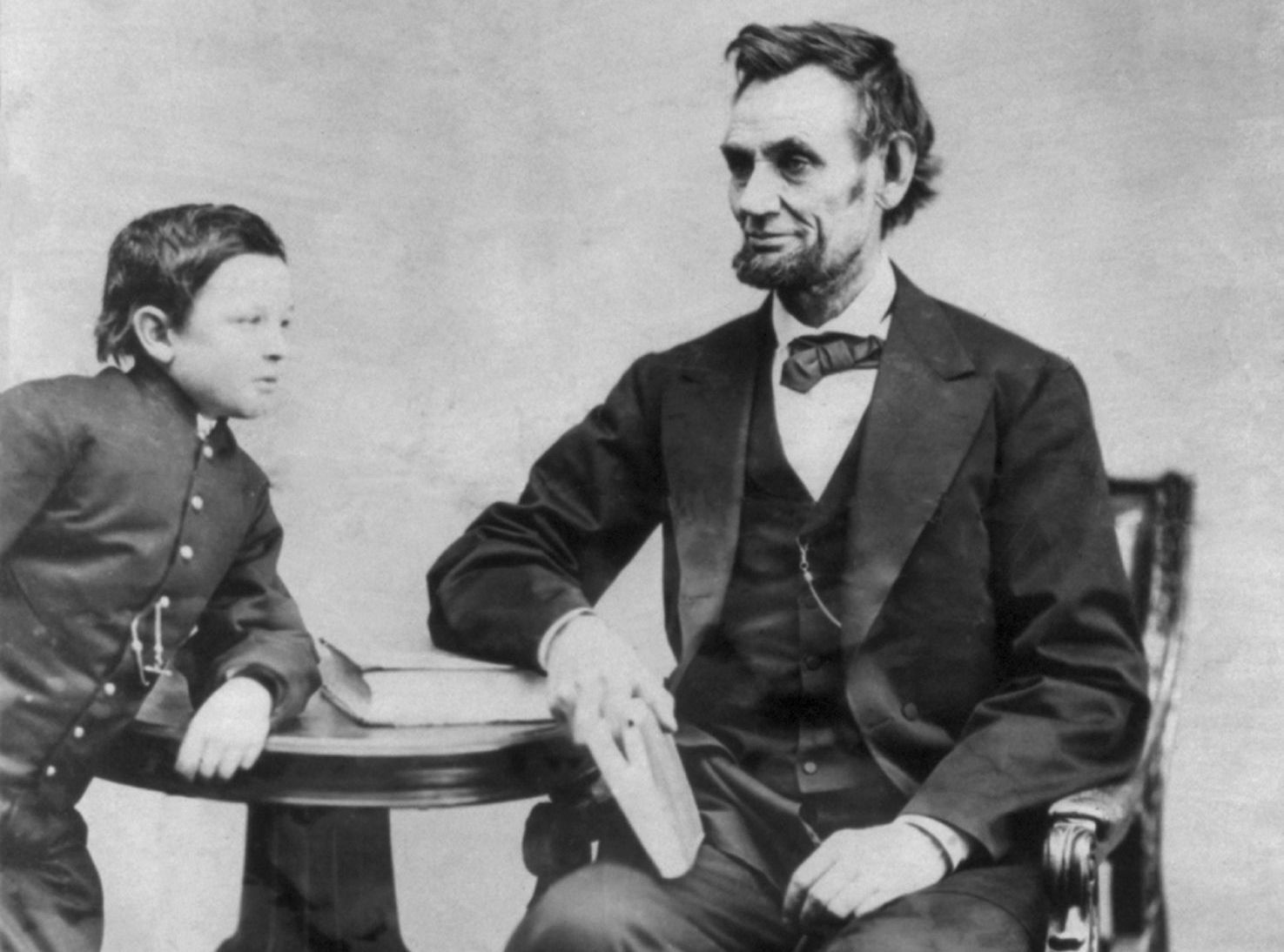
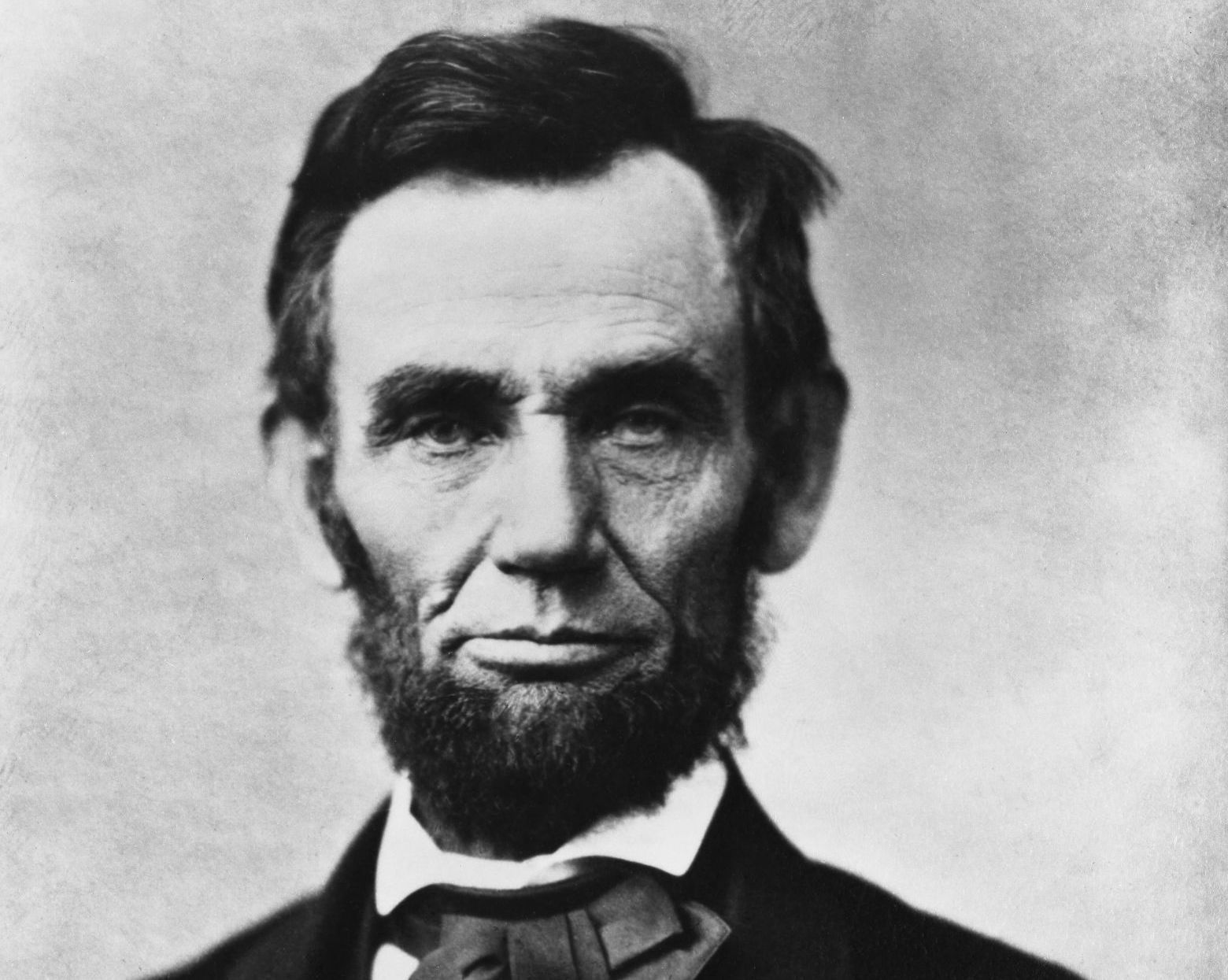
"A house divided against itself cannot stand" (Matthew 12:25, Mark 3:25, and Luke 11:17)

Image: Alexander Gardner, Public domain, via Wikimedia Commons

Most people associate "A house divided against itself cannot stand" with Abraham Lincoln, who used it in a famous 1858 speech while accepting the Republican nomination for US Senate. But the phrase is much older, with roots in the Bible.

It appears three times in the New Testament, used by Jesus to make a point during a dispute. According to the narrative, after he healed a man possessed by a demon, some leaders accused him of using Satan’s power. Jesus turned their argument against them: why would Satan fight his own forces? A kingdom or household divided against itself cannot survive. As English Bible translations spread, biblical expressions entered everyday speech. By the 1700s, this phrase was being used to describe feuding families, struggling businesses, and divided political groups, even before Lincoln made it famous in American history.

2

"Good Samaritan" (Luke 10:25–37)

Image: Brett Jordan

When someone stops to help a stranger in trouble, we call them a "Good Samaritan." It’s an everyday expression, but few know it comes from a biblical story.

In the Gospel of Luke, Jesus tells of a Jewish traveler who is robbed and beaten, left barely alive by the roadside. Several people pass him without stopping, but a Samaritan, a member of a community that had a long-standing rivalry with the Jews, stops to help and tends to his wounds. The message is clear: kindness can come from and be given to someone you least expect, even someone your own community regards as an outsider. As the story spread through Christian teaching and English Bible translations, "Good Samaritan" gradually entered everyday language. By the mid 1600s, it was becoming an established expression for anyone who goes out of their way to help someone in need.

3

"An eye for an eye" (Exodus 21:24, Leviticus 24:20, Deuteronomy 19:21, and Matthew 5:38–39)

Image: v2osk

Today, "an eye for an eye" often sounds like a license to get even, but its original purpose was almost the opposite.

The principle appears in several Old Testament passages and in much older legal codes, including the Code of Hammurabi. Known as lex talionis, it established punishment to match the offense, limiting the kind of endless blood feuds in which one injury could trigger another, and another. Rather than permitting people to take revenge, it set a boundary: no more than the offense deserved. In fact, in the New Testament (Matthew 5:38–39), Jesus criticizes the use of this rule as a justification for personal vengeance. William Tyndale used the wording "an eye for an eye" in his 1526 New Testament version, and the King James Bible helped popularize it. As Bible translations spread, the phrase entered everyday English. Over time, the expression moved from the language of law into everyday speech, where it now reflects an all-too-human urge.

4

"The writing is on the wall" (Daniel 5)

Image: Randy Tarampi

When someone says "the writing is on the wall," they’re warning you that trouble is coming and that it looks hard to avoid, but this everyday expression began with a scene straight out of the Bible.

In the Old Testament, King Belshazzar of Babylon throws a lavish feast and drinks from sacred vessels taken from the Jewish temple. Suddenly, a mysterious hand appears and writes four Aramaic words on the palace wall: Mene, Mene, Tekel, Upharsin. The prophet Daniel interprets the message as a warning that the king’s reign is about to end, and that very night, Babylon falls. In the 1500s, early English writers and theologians used the story as a divine warning to corrupt rulers. By 1720, Jonathan Swift, author of Gulliver's Travels (1726), was using "the handwriting on the wall" as a broader warning of trouble, without relying on the original religious meaning. By the 1800s, the expression had become part of everyday English as a way of saying that the signs are there; you just have to be willing to read them.

5

"Wolf in sheep’s clothing" (Matthew 7:15)

Image: photomaster

A "wolf in sheep’s clothing" is someone who seems harmless or trustworthy but is hiding bad intentions. The expression has kept much of its original meaning for centuries, though it began as a warning about a very specific kind of deceivers.

In Matthew 7:15, Jesus warns his followers about false prophets, saying, "They come to you in sheep’s clothing, but inwardly they are ferocious wolves." The image was strong: a dangerous predator disguised as something gentle. The King James Bible, published in 1611, helped spread the phrase throughout the English-speaking world. During the 1700s and 1800s, writers began applying it to dishonest politicians or deceptive lawyers. By the 19th century, the wolf in sheep’s clothing had moved away from its strictly religious meaning and entered everyday speech as a label for anyone whose friendly appearance hides a less nice side.

6

"Blind leading the blind" (Matthew 15:14)

Image: Standret

Ever had a coworker try to teach you a computer program they barely understand themselves? That’s a perfect example of "the blind leading the blind", and this familiar expression has a long history behind it.

It comes from Matthew 15:14, where Jesus warns about religious leaders who actually don’t follow God: "If the blind lead the blind, both will fall into a pit." The image stuck, and in 1500, Dutch scholar Desiderius Erasmus included the saying in Adagia, his widely read collection of proverbs. By the 1700s, as English Bible translations became more widely read, the biblical expression found its way into everyday language. Writers and playwrights began using it to criticize incompetent politicians, bad doctors, or clueless artists. Over time, its meaning broadened into the phrase we know today: people who don’t know what they’re doing trying to lead others who are just as lost.

7

"The love of money is a root of all kinds of evil" (1 Timothy 6:10)

Image: Artem Svystun

"Money is the root of all evil" is a saying many people attribute to the Bible, but the thing is that’s not quite what the Bible says. The original warning is about the love of money, not money itself; a small change that makes a big difference.

In 1 Timothy 6:10, the apostle Paul says, "The love of money is a root of all kinds of evil," to warn a young pastor named Timothy that the pursuit of wealth could lead people away from their faith and bring them trouble. The target was greed, not the contents of your wallet. By the 14th century, the saying had become a familiar warning against avarice in Catholic preaching and also appeared in Geoffrey Chaucer’s famous The Canterbury Tales (1476-1477). Then, the King James Bible (1611) helped cement the wording in English. As biblical language spread into everyday speech, the original warning gradually lost a few words and some of its nuance. Today, "money is the root of all evil" is often used to criticize not just greed, but money itself and even capitalism.

8

"By the skin of your teeth" (Job 19:20)

Image: Ozkan Guner

Ever made it to the airport just as the gate was closing, or escaped a serious mistake at the very last second? You might say you got away "by the skin of your teeth." It’s a strange expression, though, so where did it come from?

The phrase traces back to the biblical Book of Job, where Job describes his terrible suffering and says in the King James Version, "I have escaped by the skin of my teeth" (Job 19:20). Although scholars still debate the use of "teeth" in this translation, Job, worn down by pain and illness, was describing survival at the very edge of endurance, not a last-second getaway. Over time, writers such as John Milton in Paradise Lost (1667), Charles Dickens in David Copperfield (1849-1850), and Victor Hugo in Les Misérables (1862) helped carry the expression into literature and consequently into everyday speech. By the 19th and 20th centuries, its religious context had faded, leaving us with the meaning we know today: escaping danger or succeeding by the narrowest margin.

9

"The last shall be first" (Matthew 19:30; Matthew 20:16)

Image: Aaron Burden

Imagine a struggling football team pulling off a stunning upset against a longtime champion. When the underdogs are on top, the saying "the last shall be first" seems to fit perfectly. But this familiar expression began with a much more complex idea than an unexpected win.

The phrase comes from the Gospel of Matthew, where Jesus declares, "The last shall be first, and the first shall be last." In an ancient world where wealth, power, and high social standing were often viewed as signs of God's favor, he turned that order upside down. In the Kingdom of God, he taught, the humble and overlooked could be honored above the powerful and privileged. By the 17th century, the saying had also become a familiar way to encourage people facing hard times. And in the 19th and 20th centuries, it took on broader social and political meaning, inspiring people fighting for equality and liberation.

10

"Salt of the earth" (Matthew 5:13)

Image: Royce Fonseca

Got neighbors who are always ready to lend a hand and never expect anything in return? You might call them "the salt of the earth". Today, it’s a warm compliment, but its roots go back directly to the Bible.

In Matthew 5:13, Jesus tells his followers, "You are the salt of the earth: but if the salt have lost his savour, wherewith shall it be salted?" In the first century, salt was highly prized, used to preserve food, treat wounds, mark sacred agreements, and in some places, it even served as a form of payment. So the comparison carried a powerful message: just as salt kept food from spoiling, people should help preserve goodness and integrity in the world. The expression later spread into everyday English, appearing in Geoffrey Chaucer’s The Canterbury Tales in the 14th century. Over time, its religious meaning faded, and by the 19th century, the phrase shifted from urging people to live with integrity to describing those who do.

Looking for an extra scoop of literary fun?

Learn more with our Word of the day

nugatory

/ˈnuɡəˌtɔri/