National melodies

Why is the King of Spain mentioned in the Netherlands' national anthem?


Published on April 26, 2026

Image: Colin Lloyd

The purpose of a national anthem is to foster a sense of patriotism and unity among the citizens of a nation, but there are as many ways to achieve this as there are nations. While some anthems reflect on glorious deeds of the past, others express a shared desire for peace and prosperity, or celebrate love for their country, its lands, its leaders, and, at times, even the leaders of another nation. Let’s take a look at 10 national anthems with curious stories.

1

"The Star-Spangled Banner" (United States of America)

Image: Marcus istrfry

We all know the story of how The Star-Spangled Banner was written after a battle, but did you know it was not officially adopted as the national anthem for over a century? Composed during the War of 1812 under the title Defence of Fort M’Henry, it quickly became popular as a patriotic song and was officially adopted by the U.S. Navy in 1889. It was not declared the national anthem until 1931.

Some critics point to references in the third stanza—particularly language interpreted as relating to slavery—as well as the documented views of its author, Francis Scott Key. However, opposition to the song’s adoption at the time was more often based on its difficult vocal range and competition from other popular patriotic songs. Despite these debates, the poem—especially its first stanza—has long been regarded as a symbol of national unity.

2

"Wilhelmus" (The Netherlands)

Image: Hendrik Kuterman

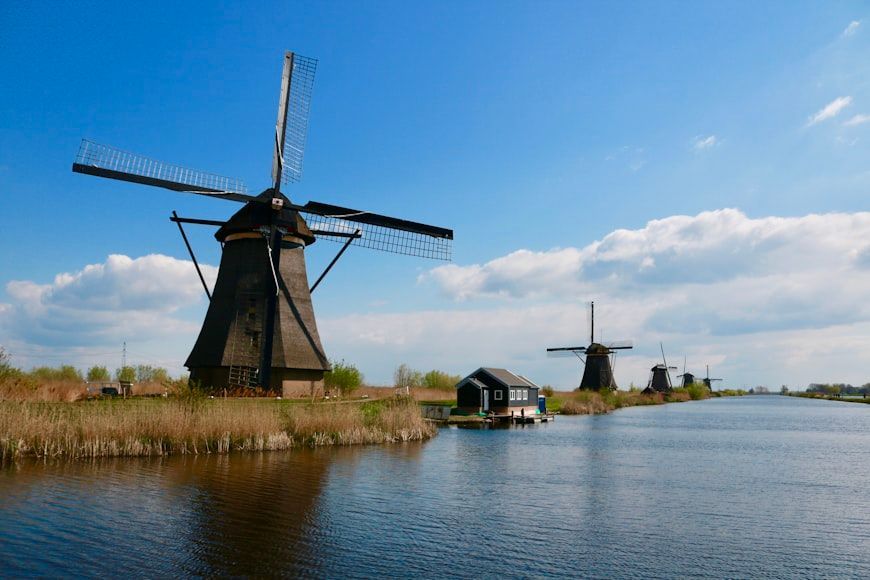
Composed in 1572, it is one of the oldest national anthems still in use. The lyrics are written from the perspective of William of Orange—the leader of the Dutch revolt against the Spanish Empire—and reflect his inner struggles between his loyalty to the Spanish King and his duty to his people.

Though the original text has at least 15 stanzas, only the first stanza and sometimes the sixth are sung today, which can be confusing for those unfamiliar with the historical context, as the first stanza ends by declaring undying loyalty to the king of Spain.

3

"State Anthem of the Russian Federation" (Russia)
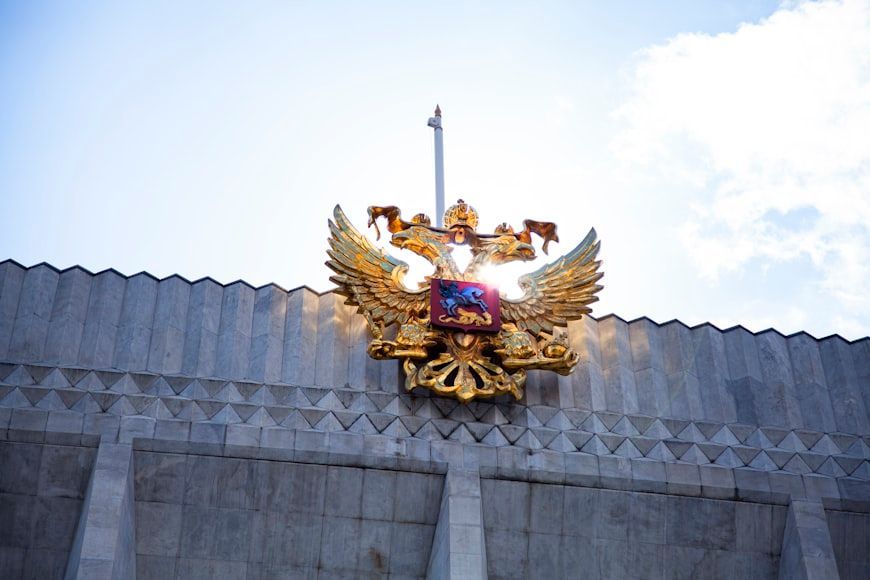
Image: Tamara Malaniy

After the 1917 Russian Revolution, the newly formed Soviet Union adopted the socialist anthem The Internationale as its national anthem. In 1944, the Soviet government replaced it with a new anthem centered on Soviet Russia, with lyrics that emphasized the Soviet fatherland and Joseph Stalin’s leadership, though it was often performed without lyrics after Stalin’s death.

Following the collapse of the Soviet Union in 1991, the Russian Federation adopted an instrumental piece known as The Patriotic Song, composed in 1833 by Mikhail Glinka. After a decade of debates, and citing the need for an anthem that people could sing, the government decided to restore the former Soviet melody, this time with newly written lyrics.

4

"My Country, Malaysia" (Malaysia)

Image: Putra Mahirudin

How many countries can say that they owe their national anthem to a moment of panic? At least one. Malaysia’s national anthem was adopted after its independence from the United Kingdom, using the melody of the anthem of the state of Perak. But where does that melody come from?

When the Sultan of Perak attended the coronation of King Edward VII in 1902, his delegation was asked to provide their state anthem. Not having one, he improvised and adapted the melody of a popular tune from the Seychelles. This melody was later adopted as the official anthem of Perak and eventually became the basis for Malaysia’s national anthem.

5

"Argentine National Anthem" (Argentina)
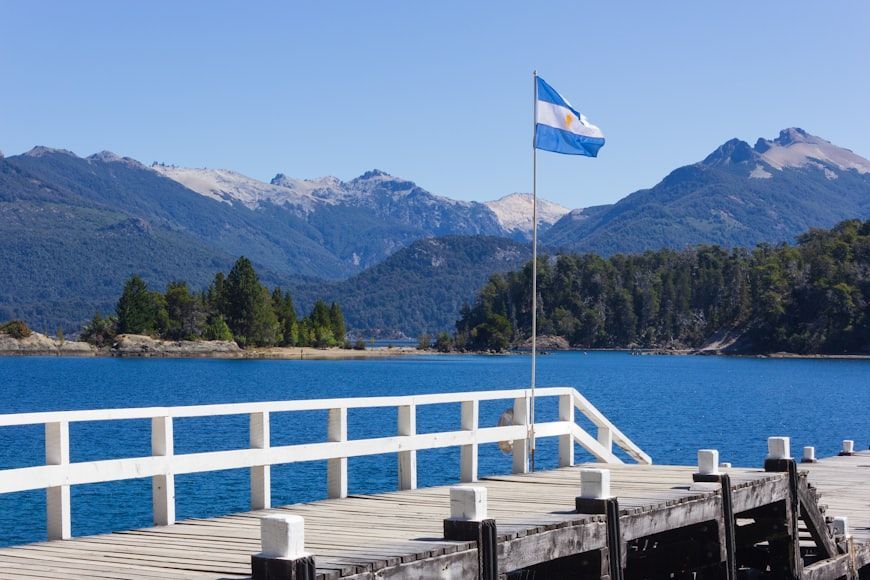
Image: Fernando Távora

Composed and adopted as the national anthem during the Argentine War of Independence, but before the formal declaration of independence from Spain, this song was initially called the Patriotic March. It was much longer than the current anthem, and its lyrics were controversial, as they portrayed Spain as a tyrannical and bloodthirsty nation.

The anthem originally contained nine stanzas—including accusations towards Spain—which were used until 1924, when improved diplomatic relations with Spain and the arrival of thousands of Spanish immigrants led the government to shorten the lyrics and omit the more controversial parts.

6

"National Anthem of South Africa" (South Africa)

Image: Lina Loos

Famed for having lyrics in five of the twelve official languages of the country —Xhosa, Zulu, Sesotho, Afrikaans, and English— this anthem was officially adopted after the end of apartheid, and reflects a broader desire for national unity.

The post-apartheid government initially retained the former Afrikaans anthem, while also adopting the Xhosa hymn Nkosi Sikelel' iAfrika (God Bless Africa), which had long been used as a song of resistance. Maintaining two anthems proved impractical, so their lyrics were combined and translated into other majority languages to create a single national anthem that could represent all South Africans.

7

"Kde domov můj" + "Nad Tatrou sa blýska" (Czechia and Slovakia)
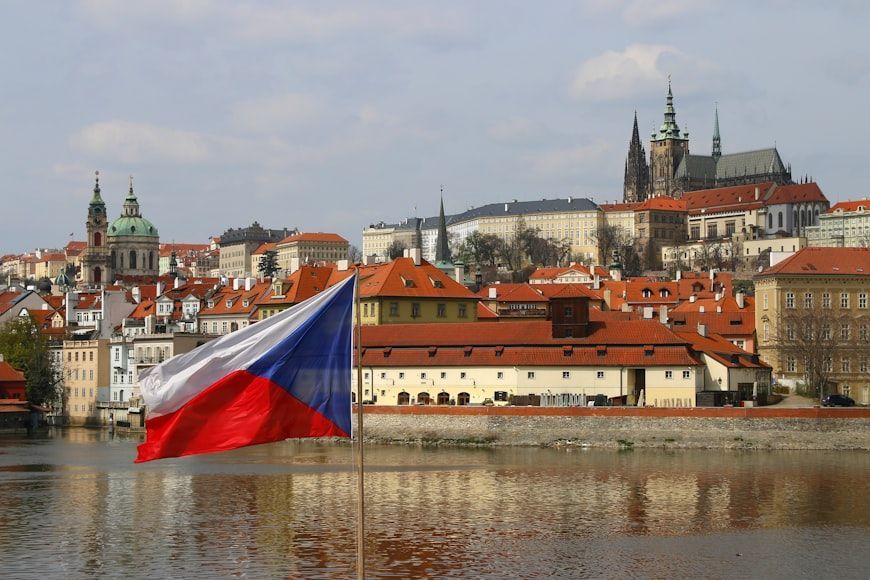
Image: Radek Kozák

When Czechoslovakia existed as a single state, it adopted a combined national anthem consisting of the first stanza of the Czech song Kde domov můj ("Where Is My Home?"), followed by the first stanza of the Slovak song Nad Tatrou sa blýska ("Lightning over the Tatras").

After the country’s peaceful dissolution in the Velvet Divorce (1992), Czechia retained Kde domov můj as its national anthem, while Slovakia retained Nad Tatrou sa blýska, which is typically performed with two stanzas and in its traditional form.

8

"Kimigayo" (Japan)

Image: Joshua Tsu

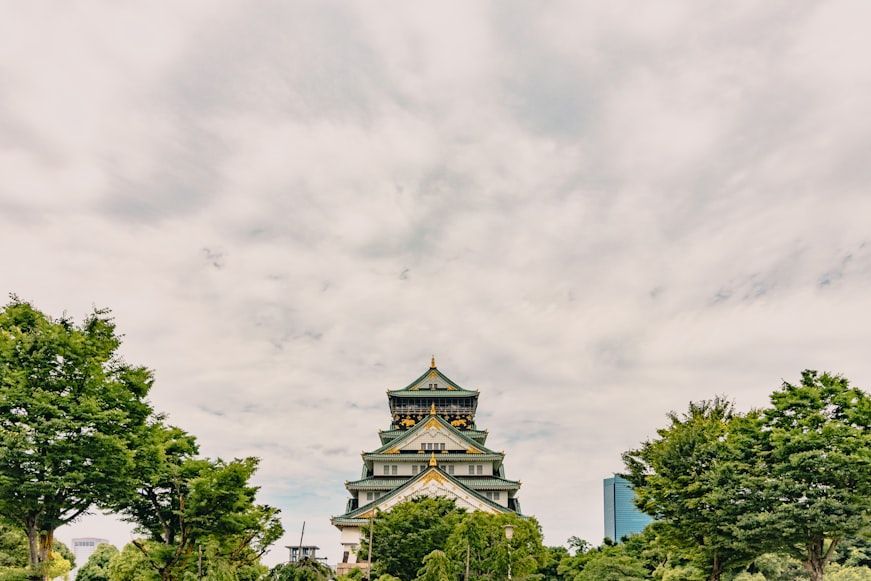
Though its lyrics come from a poem dating to the 8th-10th centuries, Kimigayo was not adopted as Japan's national anthem until 1888, and it's one of the world’s shortest anthems. After World War II, it was not officially designated as the national anthem due to its imperial associations, though it continued to be used. It regained formal legal status in 1999.

Often translated into English as His Majesty's Reign, its initial verse is commonly rendered as "may your reign [continue]." The word kimi has historically been used for the emperor, and the song's brief lyrics express a desire for the Imperial reign to endure for thousands of years, "until the tiny pebbles grow into massive boulders."

9

"El Gran Carlemany" (Andorra)

Image: Jossuha Théophile

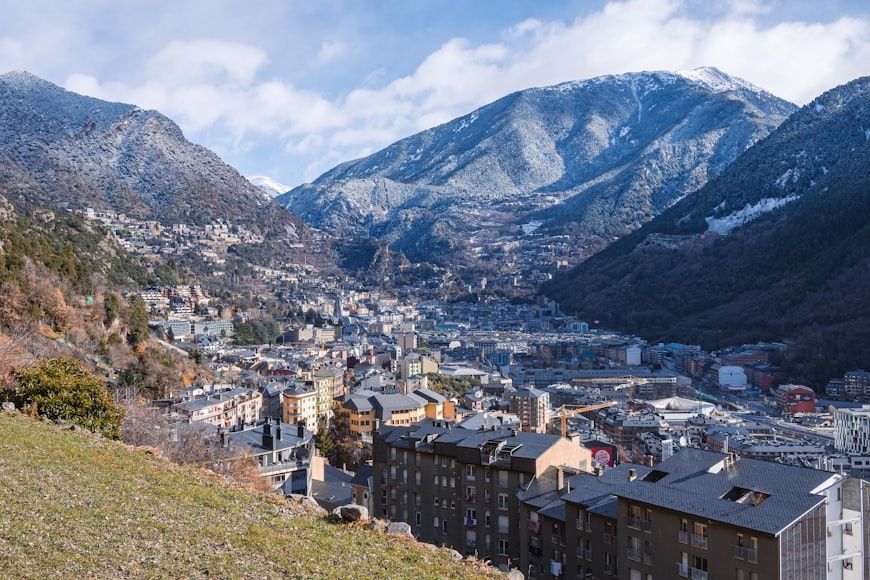
In a similar fashion to the Wilhelmus, the Netherlands anthem, Andorra’s anthem is also written from a first-person perspective, this time not from an individual but the country itself, remembering its glorious past.

Composed in the early 20th century, it was adopted as the national anthem in 1921. In the lyrics, Andorra presents itself as a princess, daughter of Charlemagne, and describes itself as the "only remaining daughter of the Carolingian Empire."

10

"Woven from Hundreds of Flowers" (Nepal)
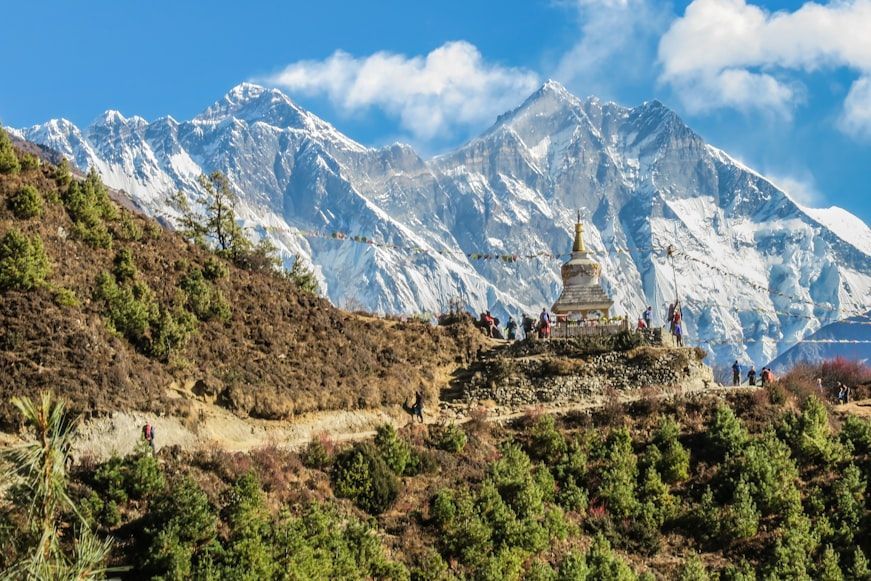
Image: Sebastian Pena Lambarri

A relatively new anthem, _Sayaun Thunga Phool Ka_—adopted in 2007—replaced the Shriman Gambhir following the abolition of the monarchy in Nepal. It’s notable for its distinctive melody, upbeat and joyful, quite different from other solemn or martial tone anthems.

The lyrics describe Nepal as a garland woven from hundreds of flowers, stretching from one corner of the country to the other, and emphasize the diversity of its people and landscapes.


10 weird historical events that no one has been able to explain (yet)


Published on April 26, 2026


Image: Walters Art Museum, Public domain, via Wikimedia Commons

Who doesn't like a good mystery? And if the mystery isn’t a work of fiction but the result of a true story, even better! The great unsolved enigmas of history are absolutely fascinating. Some have been solved over time, but there are still many old secrets for which neither scientists nor historians have found an explanation—yet. Time-travel with us as we uncover 10 of the biggest historical mysteries that will probably never be cracked!

1

A ghost island

Image: Tanner, Henry S., Public domain, via Wikimedia Commons

Bermeja Island is mentioned in navigation texts written by European travelers and appears in cartography from the 16th to 19th centuries. Old maps place it off the north coast of the Yucatán Peninsula; however, multiple searches over the years have yielded no concrete evidence of its existence.

So, what happened to Isla Bermeja? Was it a cartographic error? Did it sink due to a tidal wave? Because of its geopolitical significance, some have even suggested that it was blown up by the CIA! A 2009 study by the Autonomous University of Mexico concluded that Isla Bermeja does not exist today, nor were any traces found at its supposed coordinates. Yet, it will forever remain a mystery that will surely keep many entertained.

2

The longest alien signal ever

Image: Credit: Big Ear Radio Observatory and North American AstroPhysical Observatory (NAAPO)., Public domain, via Wikimedia Commons

In 1977, Ohio State University’s Big Ear radio telescope, used in the search for extraterrestrial intelligence, detected a signal now known as the Wow! signal. While reviewing the data, astronomer Jerry R. Ehman noticed a sequence represented as "6EQUJ5." Baffled by the anomaly, he circled it and wrote "Wow!" in the margins.

The signal lasted 72 seconds and, unfortunately, has never been repeated. To this day, no one can fully explain the phenomenon, although some suggest it may have come from a man-made source. Still, the Wow! signal remains one of the strongest candidates for potential extraterrestrial contact ever detected.

3

The disappearance of an entire Inuit village

Image: Edward S. Curtis, Public domain, via Wikimedia Commons

How is it possible for an entire village to vanish without a trace? Believe it or not, this is said to have happened nearly a century ago. According to lore, a small Inuit village in Canada was well known among fur trappers who visited regularly to trade. But in 1930, something very strange supposedly occurred.

A hunter named Joe Labelle claimed he visited the village one day and couldn’t find a single person. Reports said there were guns and food left behind, and even claims that the graves in the cemetery were empty. A thorough investigation, however, found no conclusive evidence of what happened to the villagers. Some witnesses from nearby towns even reported seeing a huge green light. Theories ranged from mass migration to extraterrestrial abductions. The Royal Canadian Mounted Police has since dismissed the case as an urban legend. Some still believe the story to be true.

4

The Joyita Mystery

Image: bbb

We know thousands of shipwreck stories, but this one is quite unique. The MV Joyita, designed to be nearly unsinkable, was found adrift in the South Pacific, practically unharmed, but the crew had disappeared completely.

In October 1955, the American merchant vessel left the port of Apia in Samoa with 16 crew members and 9 passengers bound for the Tokelau Islands. After days without news, a rescue mission was launched. Five weeks later, the Joyita was spotted more than 600 miles west of its intended route. The vessel was partially submerged, and there was no sign of the passengers or crew. Four tons of cargo and all three life rafts were missing. They were never seen again.

5

A mummy and a mysterious fluid

Image: Gary Todd from Xinzheng, China, CC0, via Wikimedia Commons

Do you know where one of the best-preserved mummies was found? Hint: not in Egypt. Xin Zhui, the Marquise of Dai during the Western Han Dynasty in China, was discovered in her tomb at Mawangdui 2,000 years after her death, along with hundreds of valuable documents and artifacts.

What makes this mummy so extraordinary is how well-preserved her body is. Her organs and veins remain intact, and she still has hair and even eyelashes. Scientists analyzed the fluid present in the coffin and discovered it was acidic and contained salt and magnesium. They believe this mysterious liquid may have been responsible for preserving Xin Zhui so well. What they don’t know is whether it was intentionally poured into the coffin or came from the body itself.

6

A missing prime minister

Image: Yoichi Okamoto, Public domain, via Wikimedia Commons

The United States has its fair share of presidents who died while in office, but none of our 45 presidents have ever disappeared without a trace. Did you know that this actually happened in The Land Down Under?

Harold Edward Holt was the Prime Minister of Australia from 1966 until his presumed death in 1967. He loved the ocean and spearfishing. During a weekend trip with friends, Holt visited the remote Cheviot Beach to take a swim. Rough sea conditions that day caused him to be swept away by the waves, and he never reappeared. Despite an intensive search, his body was never found, which has given rise to numerous conspiracy theories. Ironically, Australians built the Harold Holt Memorial Swimming Centre in Melbourne in his honor.

7

The anonymous hijacker

Image: FBI, Public domain, via Wikimedia Commons

Many famous criminals have managed to remain unidentified for decades, but the D.B. Cooper case is something else entirely. In 1971, Cooper boarded a flight from Portland to Seattle. Shortly after takeoff, he showed a flight attendant a device he claimed was a bomb and demanded four parachutes and $200,000 in cash.

The crew landed to meet Cooper’s demands in exchange for the passengers and then took off again. As the plane flew over southwestern Washington, Cooper jumped into the cold, rainy night carrying his haul. His whereabouts and true identity were never discovered, although it is likely he didn’t survive the jump. In 1980, some of the ransom money was found near the Columbia River. Although the FBI officially closed the case in 2016, amateur sleuths continue to try to crack it.

8

Dancing to death

Image: Pieter Brueghel the Elder, Public domain, via Wikimedia Commons

Can you imagine an epidemic where the main symptom is uncontrollable dancing? Sounds like science fiction, doesn’t it? Yet this really happened during the Middle Ages. In 1518, a dancing plague struck Strasbourg, Alsace, in what is now France. This strange condition affected up to 400 people, making them dance frantically for weeks. It is said that some even died of heart attacks, exhaustion, or strokes.

Doctors and authorities tried all kinds of measures to stop the spread. They even banned music for a while! To this day, scientists are not certain what caused this bizarre condition: it may have been food poisoning from toxins in the ergot fungus, or perhaps a case of stress-induced mass hysteria.

9

A manuscript no one understands

Image: Public domain, via Wikimedia Commons

The Voynich manuscript is a codex written roughly 500 years ago in an unknown language and writing system by an anonymous author. Known as Voynichese, the manuscript was named after Wilfrid Voynich, a Polish bibliophile and antiquarian who purchased it in 1912.

Radiocarbon testing has shown that it dates to the early 15th century. Many cryptographers and codebreakers have attempted to decipher its roughly 240 pages without success. The manuscript contains diagrams and illustrations of unknown plants and astrological symbols. Some believe it may be a made-up language, a secret code, a work of fiction, or even a hoax. If you think you can solve this mystery, the Voynich manuscript is available for viewing at Yale University’s Beinecke Rare Book and Manuscript Library.

10

An ancestor of movable-type printing

Image: Bernhard

Similar to the Voynich manuscript, the Phaistos Disc is a fired clay disc believed to have been created during the Bronze Age. It was discovered by an Italian archaeologist in the basement of a palace in Crete, Greece, in 1908.

What makes this disc fascinating is that it contains a mysterious message. Stamped into the clay is a set of signs, forming a text that many scientists have tried to decipher—without success. It is considered an early attempt at printing, a technological innovation that would not become widespread for several centuries. While enthusiasts still hope the enigma can be solved, this is unlikely unless other documents are discovered to provide context.

Looking for an extra scoop of literary fun?

Learn more with our Word of the day

askew

/əˈskju/