Tech, decoded

What does "bandwidth" mean? Tech terms finally explained


Published on June 5, 2026


Image: Marvin meyer

Picture this: you're at dinner with family, and someone says, "Oh, it's slow because of the bandwidth—you should really set up 2FA on that account." Everyone nods. You nod too, mostly to avoid follow-up questions. Sound familiar? Here's the thing: this stuff is actually useful in today's modern life, and you do not need to be a tech expert to get it. Stick with us through these explanations, and you'll walk away with the kind of knowledge that comes in handy more often than you'd think.

1

Bandwidth

Image: Scott Rodgerson

Think of bandwidth like a highway. A two-lane road can only handle so many cars at once—but a twelve-lane highway? Traffic flows freely. Bandwidth works the same way: the higher your bandwidth, the more data your internet connection can handle at the same time, and the faster everything feels. It's why streaming a movie, video-calling the grandkids, and checking email all at once can slow things down.

The average American household now uses about 500 GB of data per month: roughly equal to streaming 166 full-length movies.

2

Encryption

Image: Christopher Gower

Encryption is the process of scrambling data into a secret code that only the intended recipient can decode. Think of it like sending a letter written in a language only you and the receiver know; even if someone intercepts it, it's gibberish to them.

Every time you shop online or log into your bank, encryption is working quietly in the background to protect your information. Military-grade encryption used for online banking would take a regular computer longer than the age of the universe to crack by brute force.

3

Cache

Image: Richy Great

A cache is like your browser's memory for things it's seen before: When you visit a website, your device quietly saves pieces of it—images, buttons, layout—so the next time you go back, it doesn't have to download everything again from scratch. It's the digital equivalent of leaving your reading glasses on the nightstand instead of searching the whole house every morning.

If a website looks funny or outdated, someone might tell you to "clear your cache." That just means wiping that saved memory so your browser fetches a fresh version.

4

Latency

Image: Christin Hume

Latency is the tiny gap between when you do something, like saying a word on a video call, and when the other side hears it. Low latency means things feel instant and snappy. High latency means you're talking over someone on Zoom, and it takes a couple of seconds for the other person to hear it.

The human brain detects audio delay at around 20 milliseconds: about the same time it takes to blink.

5

API

Image: Sweet Life

An API—Application Programming Interface—sounds terrifying, but the concept is simple. Imagine you're at a restaurant. You don't go into the kitchen and cook your food; you tell the waiter what you want, and the waiter brings it back. An API does the same thing between software programs: it carries requests from one app to another and brings back the answer.

Your weather app doesn't collect its own weather data; it asks a weather service through an API.

6

Cloud computing

Image: Growtika

"The cloud" sounds mysterious, but it's really just someone else's computer: a very big, very powerful one in a data center somewhere. When you save a photo to iCloud or open a Google Doc, that file isn't sitting on your device. It's stored on a server far away, and your internet connection is the bridge that lets you reach it.

The practical benefit? If you drop your phone in a lake, your photos are still safe. Fun fact: The world's cloud data centers use more electricity than the entire United Kingdom—every single day.

7

Phishing

Image: Kaptured by Kasia

Phishing is when a bad actor sends you an email, text, or fake website pretending to be someone you trust, like your bank, Amazon, or the IRS, to trick you into handing over your password or credit card number. It's the digital version of a con man in a suit showing up at your door claiming to be from the gas company. The disguise looks real; the intentions are not.

If something feels off—a weird sender address, urgent scary language, a link that doesn't quite match—trust your gut and don't click.

8

Malware

Image: Markus Spiske

Malware is short for "malicious software": basically, any program that sneaks onto your device to cause trouble. Some malware spies on what you type. Some lock your files and demand money to release them.

However, a reputable antivirus program and a healthy dose of caution go a long way. Don't click suspicious links. Don't plug in a random USB drive you found. Don't install software from websites you've never heard of.

9

Algorithm

Image: Daniil Komov

An algorithm is just a set of instructions that a computer follows to make decisions or solve problems. When Facebook shows you certain posts first, or YouTube suggests a video, an algorithm made that choice. It's studying what you click, what you pause on, what you like, and using all of that to serve up more of the same. It's worth knowing this because it means your feed is a reflection of your behavior.

Want different results? Change your habits: like, comment, or search for different things, and the algorithm quietly shifts.

10

Two-factor authentication (2FA)

Image: FlyD

Two-factor authentication is like having a deadbolt in addition to your regular door lock. Even if someone gets your password, they still can't get in without a second piece of proof, usually a code sent to your phone.

Most apps make it very easy to set up, and the inconvenience is minimal compared to what it protects. Microsoft reports that accounts with 2FA enabled are over 99% less likely to be compromised.

11

VPN

Image: Privecstasy

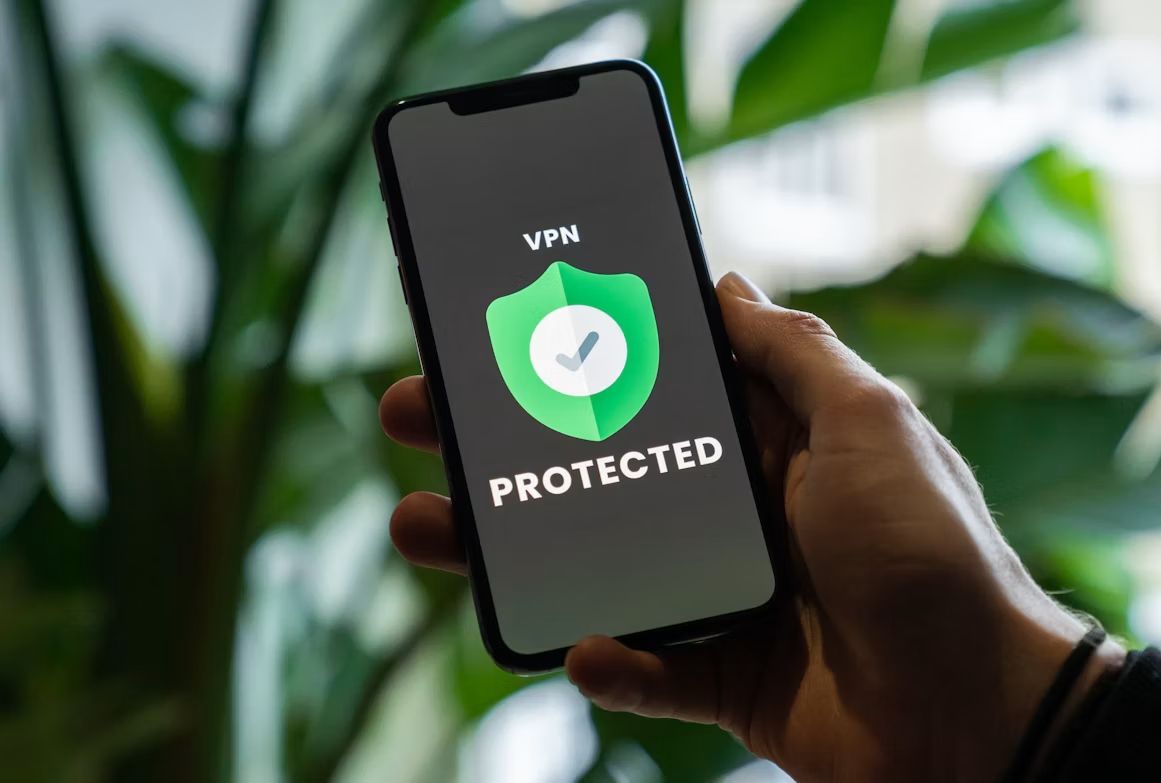
A VPN—Virtual Private Network—is like a secret tunnel your internet traffic travels through instead of the open road. When you use one, your data is encrypted and routed through a server somewhere else, hiding your real location and making it much harder for anyone to snoop on what you're doing online.

VPNs are especially useful on public Wi-Fi, like at the airport or a coffee shop, where your connection could otherwise be visible to strangers on the same network. It's not magic, it just makes your device look like it's somewhere it isn't.

12

Software update

Image: Cllint Patterson

A software update is a new, improved version of a program or operating system. Updates don't just add new features; they often patch security holes that hackers have already discovered and are actively trying to exploit. Ignoring them is a bit like knowing your back door lock is broken and deciding you'll fix it next weekend.

Updating your phone or computer software takes a few minutes, and it's one of the simplest things you can do to protect yourself online.


10 weird historical events that no one has been able to explain (yet)


Published on June 5, 2026


Image: Walters Art Museum, Public domain, via Wikimedia Commons

Who doesn't like a good mystery? And if the mystery isn’t a work of fiction but the result of a true story, even better! The great unsolved enigmas of history are absolutely fascinating. Some have been solved over time, but there are still many old secrets for which neither scientists nor historians have found an explanation—yet. Time-travel with us as we uncover 10 of the biggest historical mysteries that will probably never be cracked!

1

A ghost island

Image: Tanner, Henry S., Public domain, via Wikimedia Commons

Bermeja Island is mentioned in navigation texts written by European travelers and appears in cartography from the 16th to 19th centuries. Old maps place it off the north coast of the Yucatán Peninsula; however, multiple searches over the years have yielded no concrete evidence of its existence.

So, what happened to Isla Bermeja? Was it a cartographic error? Did it sink due to a tidal wave? Because of its geopolitical significance, some have even suggested that it was blown up by the CIA! A 2009 study by the Autonomous University of Mexico concluded that Isla Bermeja does not exist today, nor were any traces found at its supposed coordinates. Yet, it will forever remain a mystery that will surely keep many entertained.

2

The longest alien signal ever

Image: Credit: Big Ear Radio Observatory and North American AstroPhysical Observatory (NAAPO)., Public domain, via Wikimedia Commons

In 1977, Ohio State University’s Big Ear radio telescope, used in the search for extraterrestrial intelligence, detected a signal now known as the Wow! signal. While reviewing the data, astronomer Jerry R. Ehman noticed a sequence represented as "6EQUJ5." Baffled by the anomaly, he circled it and wrote "Wow!" in the margins.

The signal lasted 72 seconds and, unfortunately, has never been repeated. To this day, no one can fully explain the phenomenon, although some suggest it may have come from a man-made source. Still, the Wow! signal remains one of the strongest candidates for potential extraterrestrial contact ever detected.

3

The disappearance of an entire Inuit village

Image: Edward S. Curtis, Public domain, via Wikimedia Commons

How is it possible for an entire village to vanish without a trace? Believe it or not, this is said to have happened nearly a century ago. According to lore, a small Inuit village in Canada was well known among fur trappers who visited regularly to trade. But in 1930, something very strange supposedly occurred.

A hunter named Joe Labelle claimed he visited the village one day and couldn’t find a single person. Reports said there were guns and food left behind, and even claims that the graves in the cemetery were empty. A thorough investigation, however, found no conclusive evidence of what happened to the villagers. Some witnesses from nearby towns even reported seeing a huge green light. Theories ranged from mass migration to extraterrestrial abductions. The Royal Canadian Mounted Police has since dismissed the case as an urban legend. Some still believe the story to be true.

4

The Joyita Mystery

Image: bbb

We know thousands of shipwreck stories, but this one is quite unique. The MV Joyita, designed to be nearly unsinkable, was found adrift in the South Pacific, practically unharmed, but the crew had disappeared completely.

In October 1955, the American merchant vessel left the port of Apia in Samoa with 16 crew members and 9 passengers bound for the Tokelau Islands. After days without news, a rescue mission was launched. Five weeks later, the Joyita was spotted more than 600 miles west of its intended route. The vessel was partially submerged, and there was no sign of the passengers or crew. Four tons of cargo and all three life rafts were missing. They were never seen again.

5

A mummy and a mysterious fluid

Image: Gary Todd from Xinzheng, China, CC0, via Wikimedia Commons

Do you know where one of the best-preserved mummies was found? Hint: not in Egypt. Xin Zhui, the Marquise of Dai during the Western Han Dynasty in China, was discovered in her tomb at Mawangdui 2,000 years after her death, along with hundreds of valuable documents and artifacts.

What makes this mummy so extraordinary is how well-preserved her body is. Her organs and veins remain intact, and she still has hair and even eyelashes. Scientists analyzed the fluid present in the coffin and discovered it was acidic and contained salt and magnesium. They believe this mysterious liquid may have been responsible for preserving Xin Zhui so well. What they don’t know is whether it was intentionally poured into the coffin or came from the body itself.

6

A missing prime minister

Image: Yoichi Okamoto, Public domain, via Wikimedia Commons

The United States has its fair share of presidents who died while in office, but none of our 45 presidents have ever disappeared without a trace. Did you know that this actually happened in The Land Down Under?

Harold Edward Holt was the Prime Minister of Australia from 1966 until his presumed death in 1967. He loved the ocean and spearfishing. During a weekend trip with friends, Holt visited the remote Cheviot Beach to take a swim. Rough sea conditions that day caused him to be swept away by the waves, and he never reappeared. Despite an intensive search, his body was never found, which has given rise to numerous conspiracy theories. Ironically, Australians built the Harold Holt Memorial Swimming Centre in Melbourne in his honor.

7

The anonymous hijacker

Image: FBI, Public domain, via Wikimedia Commons

Many famous criminals have managed to remain unidentified for decades, but the D.B. Cooper case is something else entirely. In 1971, Cooper boarded a flight from Portland to Seattle. Shortly after takeoff, he showed a flight attendant a device he claimed was a bomb and demanded four parachutes and $200,000 in cash.

The crew landed to meet Cooper’s demands in exchange for the passengers and then took off again. As the plane flew over southwestern Washington, Cooper jumped into the cold, rainy night carrying his haul. His whereabouts and true identity were never discovered, although it is likely he didn’t survive the jump. In 1980, some of the ransom money was found near the Columbia River. Although the FBI officially closed the case in 2016, amateur sleuths continue to try to crack it.

8

Dancing to death

Image: Pieter Brueghel the Elder, Public domain, via Wikimedia Commons

Can you imagine an epidemic where the main symptom is uncontrollable dancing? Sounds like science fiction, doesn’t it? Yet this really happened during the Middle Ages. In 1518, a dancing plague struck Strasbourg, Alsace, in what is now France. This strange condition affected up to 400 people, making them dance frantically for weeks. It is said that some even died of heart attacks, exhaustion, or strokes.

Doctors and authorities tried all kinds of measures to stop the spread. They even banned music for a while! To this day, scientists are not certain what caused this bizarre condition: it may have been food poisoning from toxins in the ergot fungus, or perhaps a case of stress-induced mass hysteria.

9

A manuscript no one understands

Image: Public domain, via Wikimedia Commons

The Voynich manuscript is a codex written roughly 500 years ago in an unknown language and writing system by an anonymous author. Known as Voynichese, the manuscript was named after Wilfrid Voynich, a Polish bibliophile and antiquarian who purchased it in 1912.

Radiocarbon testing has shown that it dates to the early 15th century. Many cryptographers and codebreakers have attempted to decipher its roughly 240 pages without success. The manuscript contains diagrams and illustrations of unknown plants and astrological symbols. Some believe it may be a made-up language, a secret code, a work of fiction, or even a hoax. If you think you can solve this mystery, the Voynich manuscript is available for viewing at Yale University’s Beinecke Rare Book and Manuscript Library.

10

An ancestor of movable-type printing

Image: Bernhard

Similar to the Voynich manuscript, the Phaistos Disc is a fired clay disc believed to have been created during the Bronze Age. It was discovered by an Italian archaeologist in the basement of a palace in Crete, Greece, in 1908.

What makes this disc fascinating is that it contains a mysterious message. Stamped into the clay is a set of signs, forming a text that many scientists have tried to decipher—without success. It is considered an early attempt at printing, a technological innovation that would not become widespread for several centuries. While enthusiasts still hope the enigma can be solved, this is unlikely unless other documents are discovered to provide context.

Looking for an extra scoop of literary fun?

Learn more with our Word of the day

elicit

/əˈlɪsət/