Not so happy originally

The tragic ending of Cinderella's stepsisters that Disney changed


Published on June 9, 2026

Image: Natalia Y.

Disney movies have adapted several beloved fairy tales and stories, which means that, for those who experienced these stories as movies for the first time, coming across the original tales can be shocking, as they are quite different, and sometimes even scary and gory.

Most of Disney's movies are intended for children, so these stories had to be adapted and often softened for the audience. Let’s see how Disney changed famous stories when making them into movies.

1

The Little Mermaid

Image: Anjali Shrivastava

This 1837 story by Hans Christian Andersen is, at first sight, similar to its movie adaptation. Yes, in the original, the Little Mermaid feels sharp pains each time she walks, but other elements remain. However, the main difference is in the ending: before the prince’s wedding, the sea witch tasks the Little Mermaid with killing the prince in order to live, but she prefers to die herself and turn into sea foam.

2

Cinderella

Image: The Now Time

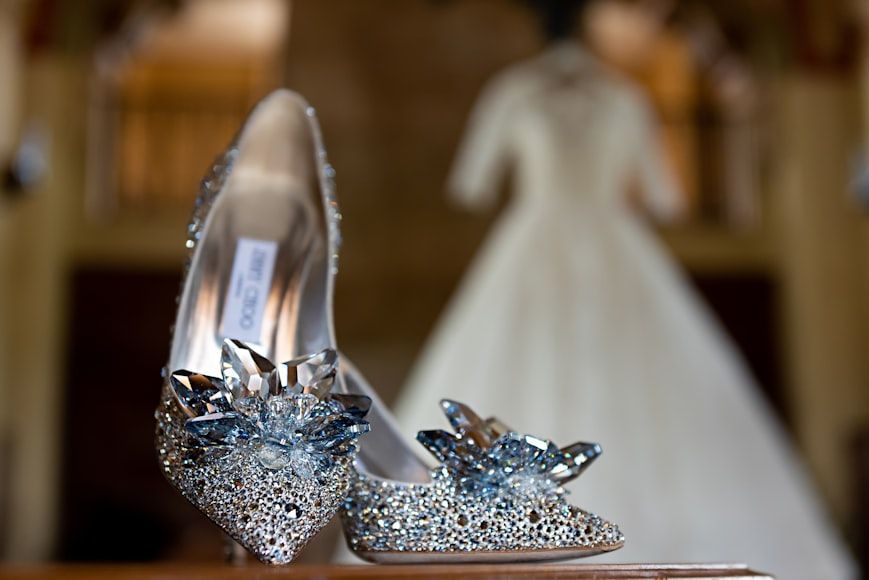
The 1950 version of Cinderella also follows most of the original story. Most of the differences with the Brothers Grimm’s version come from elements added by Disney, such as the Fairy Godmother and the singing mice. But there is one gory element that needed to be changed before making a children’s movie: in the tale, Cinderella’s stepsisters, trying to fit into the crystal slipper, resort to cutting parts of their feet.

3

Snow White

Image: Priscilla Du Preez 🇨🇦

The first full-length Disney animated movie, Snow White and the Seven Dwarves was a resounding success. However, the story has some differences when compared to the original story by the Brothers Grimm. When the Queen gives Snow white the poisoned apple, it is not a true love’s kiss that wakes her. The prince sees her lying in her crystal coffin and wants to take her with him. When he moves the coffin, the piece of apple that’s still in her throat moves, and she wakes up. As punishment, the Queen is made to dance in shoes made from hot iron until she falls dead.

4

The hunchback of Notre Dame

Image: Marcel Strauß

When watching this lovely musical, it is difficult to imagine that it comes from a lengthy novel filled with tales of vengeance, obsession, social disparities, and a tragic ending. In Notre-Dame de Paris by Victor Hugo, Quasimodo is deaf and nearly mute, and he is isolated from the world. Frollo, an archdeacon inamoured by the young Esmeralda, accuses her of witchcraft and ultimately succeeds in killing her, while Frollo, instead of the chivalrous young man portrayed by Disney, takes advantage of Esmeralda but abandons her in her time of need.

5

Tangled

Image: Taylor Smith

A reimagination of the 19th-century Rapunzel by the Brothers Grimm, the Disney version adds many elements to the story, such as the magical properties of the hair or Rapunzel being a stolen princess. In the original, Rapunzel’s parents give her away as payment for a stolen lettuce. When a prince comes across her tower, they fall in love, but they are tricked by the witch, with the prince falling into a thorny bush and hurting his eyes. Luckily, there is a happy ending where they are reunited, and Rapunzel’s tears restore the prince’s sight.

6

The princess and the frog

Image: Adam Currie

This 2009 version, set in New Orleans, is only loosely based on several classic tales featuring a prince-turned-frog. While in the Disney version, the kiss turns Tiana into a frog, in the classic fairy tale, the princess, disgusted by the idea of kissing the frog prince, throws him violently against the wall. Luckily for him, it works just as well as a kiss, and he returns to his original form.

7

Beauty and the Beast

Image: jerry klein

The main fairytale behind this Disney classic is of French origin. In it, the reason for Belle’s arrival at the castle is quite different: her father steals a rose from the Beast’s garden and is imprisoned. Belle’s sisters blame her for their father’s misfortunes and demand that she stay in his place. She goes to the castle, filled with invisible servants, where the Beast tries to make her fall in love with him. After being allowed to visit her family, she returns to find the Beast dying. After professing her love, the Beast turns into a prince, and they live happily ever after.

8

Frozen

Image: Carmen Keuper

Loosely based on Hans Christian Andersen’s The Snow Queen, Disney’s Frozen turns a dark story featuring a villainous Queen into a tale of sisterly love. In the original story, Gerda (the inspiration behind the character of Anna) goes on a quest to rescue her friend Kai from the clutches of the evil Snow Queen. Ultimately, her tears are able to melt the ice shards in Kai’s heart and save him.

9

Pinocchio

Image: Rhamely

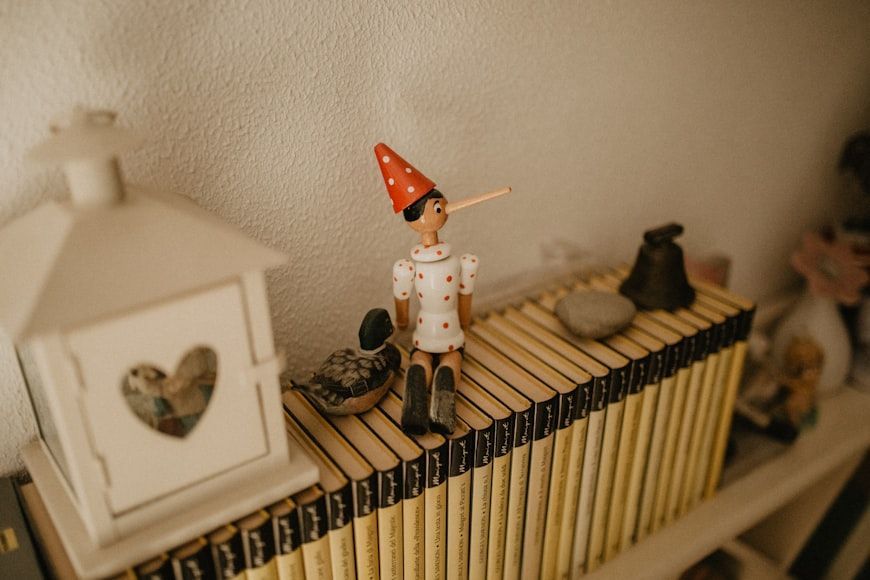
Inspired by the 1883 Italian novel The Adventures of Pinocchio by Carlo Collodi, the Disney movie gives us a much more tame version of the story. In the original, Pinocchio is rude and cruel. Often chastised by Jiminy Cricket, he ends up killing him and is punished in consequence. A moral tale about disobedience and laziness, the original Pinocchio is only able to turn into a human boy after working hard and learning to care for others.

10

Hercules

Image: Simone Pellegrini

As with most mythological stories, the original tale of Hercules is quite tragic, and not the happy ending story presented by Disney. A product of the affair of Zeus with a mortal woman, Hercules is hated by Hera, Zeus’ wife, who drives him mad. While out of his mind, he murders his wife, Megara, and their children. To atone for this crime, he performs 12 seemingly impossible labours. In the end, Hercules dies after being poisoned, but he is eventually turned into a god by Zeus.



Hospital secrets

What is a "Code Gray" and what you should know if you hear it at the E.R.


Published on June 9, 2026


Image: voronaman

A trip to the emergency room can be stressful enough without hearing doctors and nurses speak a language that sounds like a secret code. One minute, someone is asking for medication "STAT," the next there’s a "Code Gray," and another patient is suddenly "NPO." What do those words really mean? Some are official medical terms, others are insider slang, but they all help hospital staff communicate quickly when every second counts. Here are 10 of those codes explained.

1

Code Gray

Image: PeopleImages

The E.R. can be hectic and unpredictable. Most patients are frightened or uncomfortable, but now and then someone becomes aggressive because of pain, confusion, mental illness, or the effects of alcohol or other substances. That’s when you can hear "Code Gray" announced over the speakers.

The code is used to summon security officers to help manage a violent or combative situation. While color codes vary from one hospital to another, Code Gray commonly signals that staff needs extra assistance to protect patients, visitors, and healthcare workers. Even if you know it now, most people in the waiting room never know what happened, and that’s exactly the point.

2

NPO

Image: PeopleImages

You have a scheduled surgery, you’re in your bed waiting to be taken to the surgery room, and you ask for a cup of coffee to make the wait lighter. The nurse will probably tell you you’re an NPO. You may think it’s serious, but it’s simply a procedure.

"NPO" is an abbreviation that comes from the Latin phrase Nil Per Os, which means "nothing by mouth." It tells patients they cannot eat, drink, or sometimes even take medication until doctors say it’s safe. The rule is most common before surgery or certain medical tests, when food or liquids could increase the risk of complications or alter the results. It may be frustrating, but it’s an important part of keeping patients safe.

3

STAT!

Image: PeopleImages

You’ve probably been through the experience of visiting an emergency room, either to get checked or to visit a loved one. In that part of the hospital where everyone is rushing to save lives, you’ve probably heard a doctor asking for the R.C.P. cart or medication "STAT!" It sounds urgent, and that's because it is.

The expression comes from the Latin statim, which means "immediately" or "without delay." Hospitals have used Latin medical terms for centuries, but STAT is one of the few that remains part of everyday conversation. When a doctor says it, the request jumps to the top of the priority list. It doesn’t always refer to a life-or-death situation, but it does mean the medical team needs something done as quickly as possible.

4

Code Pink

Image: Vladimir Tretyakov

Newborns are always a reason to celebrate at the hospital. Parents usually rest happily next to their child as they receive congratulations from close relatives. However, the hospital is always prepared to handle extremely rare emergencies under "code pink."

If you hear a "Code Pink," it usually means a baby or young child is suspected of being abducted from the hospital. Within seconds, security officers respond, exits may be monitored or blocked, and staff begins following carefully rehearsed procedures. Although different hospitals sometimes use different color codes, Code Pink has become widely recognized across North America as one of the most serious alerts a hospital can issue.

5

Walkie-talkie

Image: Arunporn Thanapotivirat

If you’ve ever spent a few days in the hospital, you’ve probably noticed that some patients are walking up and down the halls, while others need help just getting out of bed. When a nurse refers to someone as a "walkie-talkie," it’s actually good news.

This informal expression refers to patients who can walk on their own, use the bathroom without assistance, and handle most basic tasks independently. It’s not an official medical term, of course, but it’s commonly used among healthcare workers because it quickly tells the next shift that the patient requires less hands-on care than many others.

6

Total

Image: sebra

As nurses change shifts, you’ll often hear them give a quick report about each patient. One person may only need medication, while another is described as a "total."

The term is short for a patient who requires total care. They may need help eating, bathing, getting dressed, turning in bed, or moving from one place to another. Although the expression sounds impersonal, it’s simply a practical way for caregivers to communicate how much assistance someone needs.

7

Frequent flyer

Image: Studio Romantic

Most people hear "frequent flyer" and think of an airline reward program. And that’s correct, but in an emergency room, the phrase has a very different meaning.

A frequent flyer is an informal nickname for patients who repeatedly return to the hospital, often due to chronic illness, recurring medical conditions, or other ongoing health issues. Behind the light-hearted nickname is often a difficult reality. Many of these patients are simply dealing with medical problems that require regular emergency care, and the expression is just a way to make the experience a bit lighter among the familiar faces of doctors and nurses.

8

WOW

Image: Studio Romantic

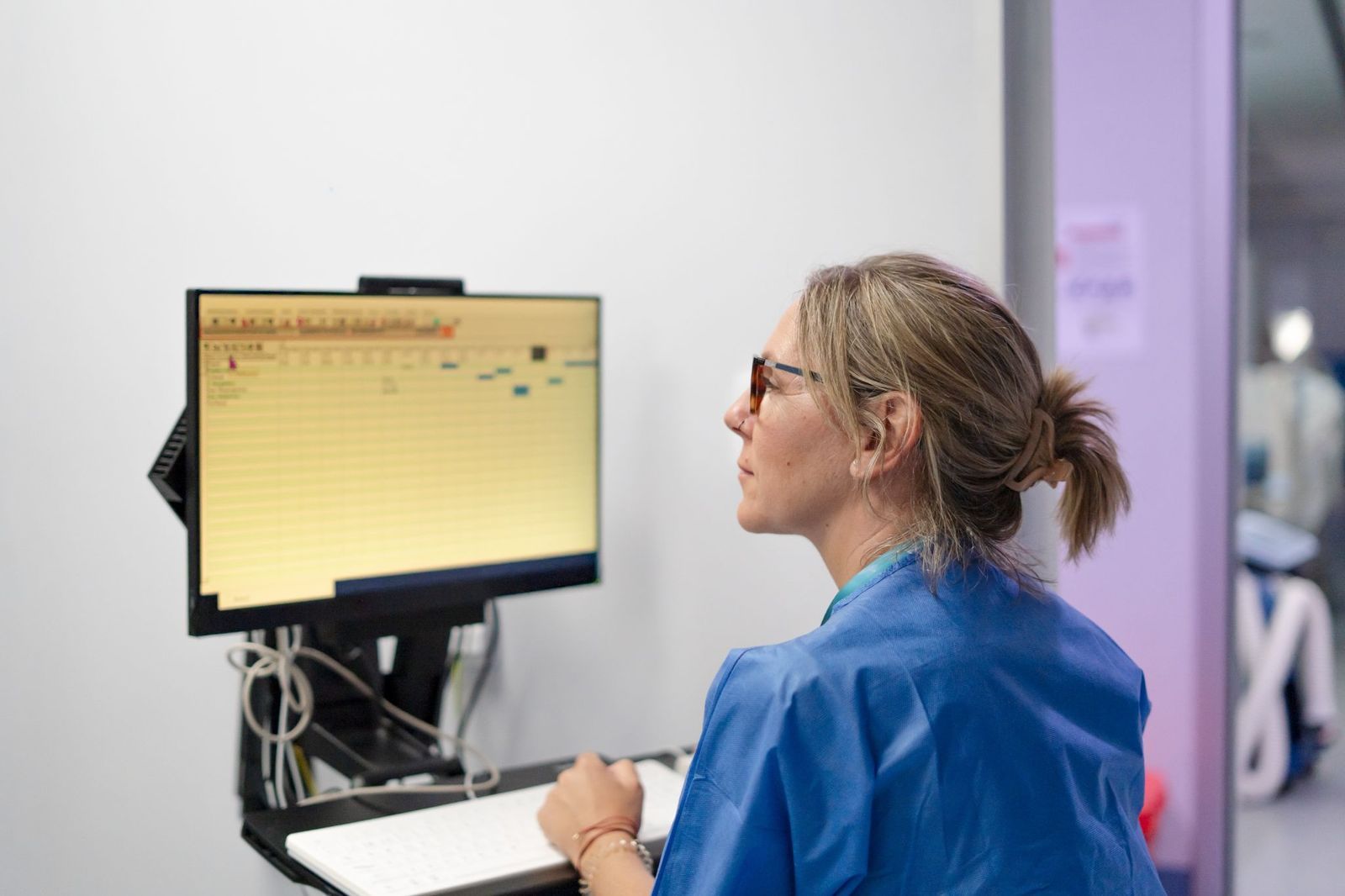
Not all codes are for patients. The next time you’re in a hospital, look closely at what the nurse is pushing from room to room. It may look like a small rolling desk with a computer on top. Staff often call it a "WOW," short for "workstation on wheels."

As hospitals switched from paper charts to electronic medical records, these mobile computers became essential. Nurses use them to review test results, scan medications, update patient charts, and check doctors’ orders without leaving the bedside. The name sounds funny, but the technology helps caregivers spend more time with patients instead of walking back and forth to a nursing station.

9

Sharp container

Image: NMK-Studio

After getting a shot or having blood drawn, most patients never think about where the used needle ends up. It certainly doesn't go into an ordinary trash can.

Hospitals place needles, scalpels, and other sharp medical instruments into special containers designed to prevent accidental injuries. These sturdy, puncture-resistant boxes are sealed when full and safely disposed of in accordance with strict health regulations. This not only protects nurses, but it also protects cleaning crews, waste handlers, and even the public from dangerous needle sticks. It’s one of the most important safety measures in every hospital, even though most patients never notice it.

10

B-52

Image: Photoroyalty

If you’ve ever watched a medical drama, you've probably seen a patient become so agitated that several staff members rush into the room. In situations like that, a doctor or nurse may ask for a "B-52." But the name has nothing to do with numbers themselves; it actually comes from a medicine.

B-52 is hospital slang for a fast-acting injection used to calm down patients who are severely combative or at risk of harming themselves or others. The nickname comes from a commonly used combination of medications that usually include diphenhydramine, haloperidol, and lorazepam. It’s strictly reserved for when other methods of calming the patient haven’t worked.

Looking for an extra scoop of literary fun?

Learn more with our Word of the day

spasmodic

/spæzˈmɑdɪk/