Do you know the fancy word for burping? 10 strange body terms


Published on June 12, 2026


Image: Natalya Bardushka

Some raw, blunt words dominate how we talk about yawning, burping, or throwing up. But if you dive into the historical archives of the English language, you’ll find that scholars and medical professionals have used other alternative, fancy terms derived from Latin and Greek. If you are looking to elevate your everyday vocabulary, these ten words for body functions will completely change the way you talk about your reflexes.

1

Ingurgitate

Image: Renata Photography

We are all familiar with regurgitate, the clinical term for bringing up swallowed food. But fewer people are aware of its linguistic sibling: ingurgitate. To ingurgitate means to swallow greedily or in massive quantities; in short, to drink or eat fast.

Both words, along with gorge, can be traced back to the Latin word gurges, meaning "whirlpool". Ingurgitate is occasionally used literally (like "ingurgitating a glass of wine") and figuratively (like "ingurgitating artwork at a museum").

2

Sternutation

Image: Mix and Match Studio

Bless you! Or rather, congratulations on your magnificent sternuation. Yes, you guessed it, this is the formal, scientific noun for the act or noise of sneezing. Emerging from the Latin verb sternuere (to sneeze), sternuation has been recorded in English medical texts since at least the 16th century, originally appearing in early guides on midwifery to describe infants suffering from frequent sneezes.

3

Micturate

Image: Yevhen Roshchyn

Let’s be honest, when nature calls, most of the words at our disposal are short and crass. If you’re looking for a linguistic upgrade that lets you handle your business with more dignity, try micturate, which simply means "to urinate".

The word had a memorable pop culture renaissance in Joel and Ethan Coen’s 1998 classic film The Big Lebowski, where a wealthy character demands to know, "Every time a rug is micturated upon in this fair city, I have to compensate the person?"

4

Singultus

Image: Nicoleta Ionescu

The next time you get a stubborn case of the hiccups after drinking a carbonated drink too quickly, know you’re suffering from singultus. In the medical community, this is the official term for the involuntary spasm of the diaphragm that snaps your vocal cords shut, creating that classic "hic" sound. The term comes directly from Latin, where it originally meant "a sob or speech interrupted by heavy weeping". The more common word hiccup is, obviously, a helpful onomatopoeic term.

5

Emesis

Image: Kmpzzz

Nobody enjoys the physical act of throwing up, but referring to it as emesis somehow makes the whole ordeal feel slightly more manageable. Derived directly from the Greek word for vomiting, the term emesis is easily found in the healthcare world. If you’ve ever taken an "antiemetic" medication to help you with motion sickness or stomach flu nausea, you’ve used a drug specifically designed to stop vomiting in its tracks.

6

Eructation

Image: leungchopan

Don’t be embarrassed if you suddenly let go of a loud burp; medically, you’ve only experienced an eructation. Meaning "the act or instance of belching", this word derives from the Latin verb eructate, which in turn means "to belch forth or violently emit".

Did you know? Historically, this word hasn’t just applied to human digestion; geologists and historians have frequently used variations of it to describe active volcanoes spewing ash and lava into the sky.

7

Megrim

Image: Studio Romantic

Have you ever experienced that splitting, one-sided head pain? Before we called it a migraine, English speakers suffered from megrim. This word actually shares an exact etymological lineage with migraine. Latin and Greek scholars called this localized head agony hemicrania (literally translating to "half-cranium," from hemi- meaning half and kranion meaning skull). Today, while megrim and migraine can be used interchangeably for a headache, megrim has evolved to also describe vertigo, dizziness, a sudden whim, or a state of low spirits.

8

Deglutition

Image: HenadziPechan

Every single day, the average human swallows hundreds of times without giving it a single thought. The formal name for this essential digestive process is deglutition. This term comes to us from the Latin verb deglutire, meaning "to swallow down."

The process involves a synchronized, complex sequence of muscular movements that shuts off your airway and safely moves food, liquid, or saliva from your mouth down into your esophagus. In that sense, deglutition is an elegant word for a physical function we completely take for granted.

9

Mastication

Image: Happy monkey

Before deglutition can safely occur, your mouth has to execute some serious mastication. In short, this is the clinical term for chewing. Coming from the late Latin masticatio, it defines the mechanical process by which food is crushed and ground by your teeth.

Mastication is technically the very first phase of human digestion, because chewing food into smaller pieces allows enzymes and bile to efficiently break down the nutrients. The next time someone tells you to chew before you swallow, they are just advocating for proper mastication.

10

Osculate

Image: Dragana Gordic

We end our biological vocabulary journey on a more affectionate note. While most of the entries on this list deal with basic survival mechanisms, osculate describes a much sweeter physical connection: to kiss.

Traced back to the Latin noun osculum, which literally translates to "little mouth" or "kiss", the word found its way into English dictionaries as early as 1656. While mathematicians and scientists sometimes use it to describe two curves or surfaces coming into close contact, using osculate in a romantic context today will add a bit of old-school humor to your conversations.



Have an apple

11 Common medical misconceptions you probably once believed


Published on June 12, 2026


Image: Nikolai Chernichenko

Medicine is complicated, and it's easy for folklore, memes, and half-remembered advice to creep their way into our collective subconscious. Some of these myths are harmless, others are misleading, and many are downright dangerous. Let's take a look at 11 medical misconceptions that have endured over time, and that you've probably believed at one time or another.

1

An apple a day…

Image: Isabella Fischer

..keeps the doctor away, right? Apples are healthy. They are full of fiber, vitamins, and antioxidants. But, as you probably know, they aren't enough to ward off disease on their own. The phrase originated in 19th-century Wales as "Eat an apple on going to bed, and you’ll keep the doctor from earning his bread." The rhyme is charming, but fortunately, doctors still get plenty of bread.

2

Cracking your knuckles gives you arthritis

Image: Kotagauni Srinivas

That satisfying pop comes from collapsing gas bubbles in the fluid of your joints, not from your bones grinding to dust. Decades of peer-reviewed research show no link between knuckle-cracking and arthritis or bone deterioration. It might be irritating for those around you, but not bad for your joints.

3

Shaving makes your hair grow back thicker

Image: Guus Baggermans

It does feel that way, but it's only an optical illusion: the new growth feels blunt and coarse when compared to a tapered hair tip. However, the follicles themselves are unaffected by shaving. Your hair’s growth rate and thickness are determined by genetics.

4

Swallowed gum stays in your stomach for 7 years

Image: Andra C Taylor Jr

This one is nothing more than a parental scare-tactic propaganda. Gum is indeed indigestible, but it doesn’t remain trapped inside you forever. It passes through your digestive tract quite efficiently, just like corn or sunflower seeds. Certainly in days, not 7 years.

5

Carrots will give you night vision

Image: Angelo Casto

Although carrots are good for overall eye health, the myth that they have the power to give you night vision stems from a little bit of British World War II propaganda. The British Royal Air Force claimed that their pilots had uncannily good night accuracy because of their carrot-heavy diets. In reality, it was a cover story to conceal their use of radar technology.

6

An ice bath will sober you up

Image: Tobias Oetiker

Neither black coffee nor cold showers can accelerate the rate at which your body metabolizes alcohol. Ask any doctor for a recipe to sober up quickly, and they will tell you the sad, sad truth: it's impossible.

Plenty of people claim to have found a trick to solve this problem. However, no matter how many freezing showers you take, they will only make you cold, wet, and awake, but still drunk.

7

Hiccups can be cured if you…

Image: engin akyurt

Well, it depends on who you ask. There’s a long list of home remedies: hold your breath, drink water upside down, have a friend scare you, and so on. While some of these techniques might help by resetting your diaphragm, the truth is that most hiccups fade on their own within minutes. And if they don’t, you’re better off seeing a doctor than cycling through an endless number of folk cures.

8

Arsenic in apple seeds can kill you

Image: Alfred Quartey

In reality, apple seeds contain amygdalin, which the body can convert into toxic cyanide (not arsenic). However, the amount of amygdalin in apple seeds is tiny: you would need to crush and eat over 150 apple seeds to get anything close to a dangerous dose. Or you could simply avoid eating the seeds altogether.

In any case, apples are far better at keeping the doctor away than they are at poisoning you.

9

Don't go outside with wet hair!

Image: Chris Slupski

If you do, you'll catch a cold. Or that's what this myth would have us believe. In fact, wet hair in chilly weather will just make you uncomfortable.

As we know, colds are caused by viruses that get into our systems. Being cold or damp doesn't conjure viruses out of thin air. That being said, lowering your body's temperature might weaken your immune defenses slightly, but the real culprits are still unequivocally the germs.

10

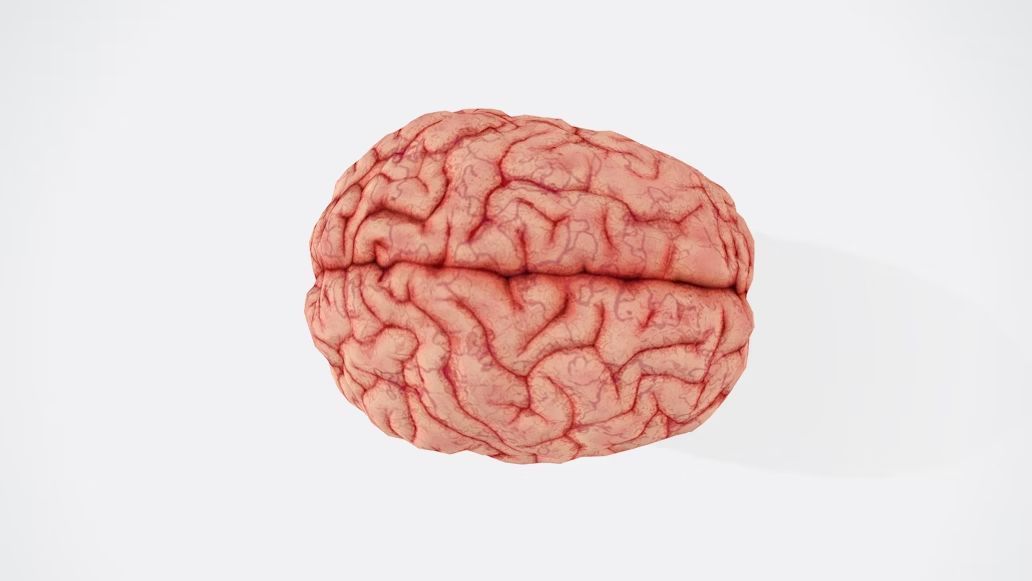
You only use 10% of your brain

Image: Shubham Dhage

A Hollywood myth that has crawled deep into our collective imagination. While the exact origin of the phrase is unclear, it is often associated with the lectures of Harvard psychologist William James, who told audiences that we only tap a fraction of our full potential during the 1890s. The idea then evolved and spread through self-help and motivational literature, eventually becoming the widely believed claim we know today.

Scientific research has thoroughly debunked this notion. While the inner workings of much of our brain are still unknown to us, we do know that virtually all of it has a function, and we use 100% of it.

11

Eating turkey makes you sleepy

Image: Megan Watson

A Thanksgiving classic, people like to blame their festive drowsiness on the turkey. There is some scientific basis for this: turkey does contain tryptophan, an amino acid that promotes sleep.

However, the amount in turkey is minimal and no greater than that found in chicken or beef. The real culprits behind your post-dinner nap are the carb overload, extra drinks, and day-long festivities—not the turkey itself.

Looking for an extra scoop of literary fun?

Learn more with our Word of the day

cushion

/ˈkʊʃən/