Ye olde!

Do you know what the Old English word for love is? Not what you'd expect!


Published on March 26, 2026
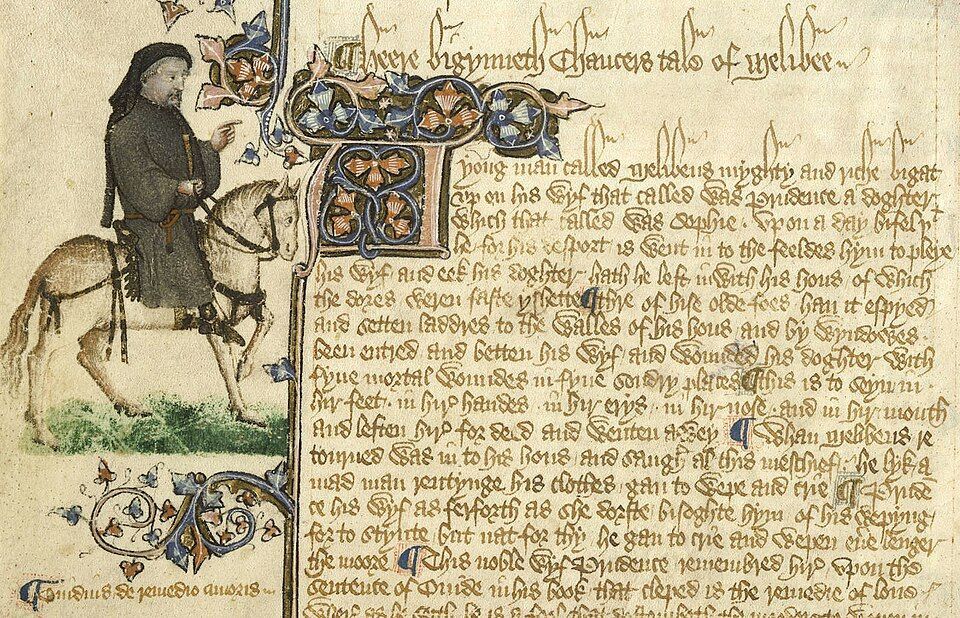

Image: unknown artist, 1400-1410, England, Public domain, via Wikimedia Commons

When people think about "Old English," they usually picture Shakespeare—all those thees, thous, and haths. But in reality, Shakespeare wrote in Early Modern English, which is practically current compared to the real thing. True Old English (or Anglo-Saxon) was spoken more than a millennium ago. It’s the language of Beowulf, filled with vivid, metaphorical words that describe the world in ways we’ve almost entirely forgotten. To understand the DNA of our modern vocabulary, we have to look back past the Renaissance to a time when the body could be described as a "bone-locker" and destiny was an inescapable force. Here are 10 Old English terms that reveal the epic, haunting roots of some of the words we use today.

1

Wyrd

Image: Darius Bashar

In Old English, wyrd wasn't an adjective for something "strange"; it was a powerful noun representing the inescapable force of destiny. The Anglo-Saxons believed that while a person had some agency, the ultimate weaving of their life was handled by forces beyond their control. In that sense, wyrd could be translated as "the way things are meant to be." This is where Shakespeare got the "Weird Sisters" in Macbeth—they weren't just odd; they were the "Fates."

2

Banloca

Image: dada_design

The Anglo-Saxons were masters of the "kenning," a compound expression with metaphorical meaning. Banloca literally translates to "bone-locker." It paints the human body not as a temple, but as a sturdy enclosure designed to keep your skeleton and spirit from wandering off. Interesting, don’t you think?

3

Úhtcearu

Image: cottonbro studio

If you’ve ever woken up at 4:00 a.m. and immediately started stressing about every mistake you’ve made since the third grade, you’ve experienced úhtcearu. Úht refers to the hour just before dawn, and cearu means "care" or "sorrow." In other words, it describes pre-dawn anxiety or what we might jokingly call the "3:00 a.m. scaries."

4

Beadurof

Image: svklimkin

This is a word you might find in an epic like Beowulf and would have been the ultimate Anglo-Saxon compliment. Beadu means "battle," and rof means "strong" or "valiant." It describes a very specific type of courage, the kind that flourishes only when the swords are drawn. To make it easier for modern readers, today it would translate into "battle-brave." Back then, it was the highest form of social currency.

5

Lufu

Image: RDNE Stock project

This is the direct ancestor of our modern word "love." While it sounds cute and fluffy now, the Old English lufu carried a weight of duty, affection, or religious devotion (such as the love of God). It shared roots with the Old High German lubo, emphasizing a deep, enduring bond rather than just a fleeting crush. It really took centuries to evolve into the lighthearted "love" we use today, even for pizza or hobbies.

6

Heofon-candel

Image: Timo Volz

Another brilliant kenning, heofon-candel, is a very poetic compound word. Heofon means "heaven" and candel, "candle." The Anglo-Saxons saw the sun as a guiding light placed in the sky by a higher power. The phrase suggests that the sun is a gift, a light set out in the house of the world by a divine creator.

7

Swefn

Image: Bruce Christianson

Did you ever have a dream that felt ominous or strangely significant? While we use the word "dream" today, the Anglo-Saxons had a more accurate term for those prophetic kinds of dreams, swefn. The word is related to other Germanic terms associated with sleep, such as Old English swefan ("to sleep"). Yet, to them, a swefn wasn't just a random brain-firing; it was often seen as a vision or an omen.

8

Maegth

Image: Kevin Delvecchio

The simple way to translate this term is with the word "family." But back in the Middle Ages, a family wasn’t just your mom, dad, and siblings. In a tribal society, your maegth was everything. It refers to your clan, your bloodline, and your extended family. If you didn't have a maegth, you were essentially a ghost in the eyes of the law. The maegth was actually responsible for paying wergild (blood money) if you committed a crime.

9

Andsaca

Image: maks_d

Literally, andsaca translates as "one who speaks against," meaning someone who denies, accuses, or opposes. In other words, it referred to an enemy, an adversary. But it wasn't just someone you disliked; an andsaca was someone who stood in direct opposition to your truth or your faith. In Old English literature, andsaca could describe spiritual enemies as well as literal monsters. In Christian texts, it was even used as a term for Satan, the ultimate adversary.

10

Wuldor

Image: Carlos N. Cuatzo Meza

Wuldor was a word used to express glory, splendor, or honor. It often referred to the radiance of God or the celebrated fame of a great king. In Old English, wuldor was the term for "celestial splendor." The word conveys more than simple praise—it suggests a brilliance of reputation or divine glory so powerful that it seems almost to shine.



Deep roots

11 everyday words with indigenous roots


Published on March 26, 2026


Image: Zoshua Colah

English is a very welcoming language in the sense that it incorporates terms from many other languages from all over the world. And, as it couldn’t be otherwise, Native American languages have lent many of their words and terms to English speakers. Some traveled through Spanish or French before settling into English, and others arrived directly through early contact and trade, helping shape the way we speak today. Did you know about these 11 terms?

1

Canoe

Image: Michael Niessl

The word "canoe" comes from the Taino term canoa, which was first used by Caribbean islanders long before Europeans arrived. Early explorers adopted it to describe the slim, sturdy boats they saw.

Over time, "canoe" became the standard English word for a small paddled craft. Today it still carries that sense of simplicity and closeness to nature.

2

Barbecue

Image: Philipp Kämmerer

The word "barbecue" comes from barbacoa, another Taino term for a wooden frame used for cooking meat over fire. Europeans adopted it and applied it to both the method and the gathering itself.

Today, "barbecue" means everything from a backyard cookout to a regional cooking style. Its origins highlight the deep culinary influence of Native Americans in the nation's current culture.

3

Skunk

Image: Elisa Stone

"Skunk" comes from the Algonquian word squnk, which means "urinating fox" (quite a fitting term, indeed). This was an obvious reference to the animal’s strong defensive spray. Early settlers adopted the term directly.

Since English had no better name for the creature, the Native word stuck. Today, the word skunks is also used as playful slang.

4

Moose

Image: Shivam Kumar

The word "moose" originates from Eastern Abenaki, a part of the Algonquian family, where it meant "he strips off bark." Yes, it described the animal’s habit of tearing bark from trees.

The name entered English quickly because settlers relied on Native knowledge of local fauna. The word remains unchanged because of its accuracy and usefulness.

5

Raccoon

Image: Gary Bendig

"Raccoon" comes from the Powhatan word arakun, meaning "he scratches with his hands." It described the animal’s clever, humanlike front paws.

Settlers adopted the term because it captured the creature’s behavior beautifully. Today, the raccoon is used as a household symbol of curiosity, not unlike the animal itself.

6

Chipmunk

Image: Annegret Kammer

The term "chipmunk" most probably comes from the Ojibwe word ajidamoo, which means "one who descends trees headfirst." Early English settlers adapted the sound into today’s form.

Though the spelling changed over time, the lively image of a chipmunk racing down a tree face-first stayed.

7

Caribou

Image: JD-Photos

The word "caribou" comes from the Mi’kmaq term qalipu, which means "snow shoveler," referring to the animal’s habit of digging through snow for food.

French settlers brought the word into English, keeping its descriptive nature. The name still connects the modern animal to the winter landscapes it belongs to.

8

Totem

Image: Stéfano Girardelli

"Totem" comes from the Ojibwe word ototeman, which means "kinship group." It described symbols representing clans and shared roots.

English adopted it to describe carved poles and symbolic elements. Though broader in modern usage, it still hints at the original sense of community, identity, and heritage.

9

Coyote

Image: Dylan Ferreira

"Coyote" comes from the Nahuatl word coyōtl, which was used by Indigenous tribes of central Mexico. Spanish speakers adopted it, and English borrowed later.

The word kept its meaning, and it remains one of the most direct links between the English language and Nahuatl.

10

Avocado

Image: Gil Ndjouwou

The tasty avocado’s name traces to the Nahuatl word ahacatl, which refers to the fruit and to a body part as well. Spanish speakers transformed it into aguacate.

Later on, English speakers adapted it to avocado. While the name sounds contemporary and culinary, it has ancient Native roots.

11

Chocolate

Image: amirali mirhashemian

The last Nahuatl word and also the last word on the list comes from the term xocolātl, which describes a bitter cacao drink that was consumed long before Europeans arrived in America. The name traveled from Spanish to English.

Though the product changed dramatically, the word survived. Today, chocolate is a universal symbol of sweetness, with rich and deeply indigenous roots.

Looking for an extra scoop of literary fun?

Learn more with our Word of the day

comely

/ˈkəmli/