Names matter
The proper name for your big toe also means 'big toe'
Published on August 16, 2026

Would you be able to confidently point at your pinna if asked? Or could you say how many canthi a person has? Each part of our body has a specific name—sometimes more than one—but we don’t always use them or even know them, especially if a popular version exists. The big toe, the bit of flesh between the index and the thumb, the space between the brows, all these have a proper name that is rarely used. Let’s discover the proper way to refer to some parts of our body.
Axilla

We typically refer to the space beneath the shoulder as the armpit or underarm, but the technical name for it is axilla. The name comes from a diminutive form of the Latin ala, meaning ‘wing’ or ‘upper arm’, which would make the armpit the ‘little wing’.
This ‘little wing’ serves as a passageway for important nerves, blood vessels, and lymph nodes that supply our upper arm, making it a vulnerable spot but also very sensitive and ticklish, as our body instinctively tries to protect the area.
Philtrum

There is a reason why we call the top of the upper lip the "Cupid’s bow". The philtrum, or the vertical groove that goes from the button of the nose to the lip, is named after the Greek word phíltron, meaning ‘love spell or charm’.
This area was once considered to possess a special beauty, and the philtrum was the path where Cupid’s love arrows would land. Anatomically, the philtrum in humans is vestigial, but for other mammals it’s related to the sense of smell.
Glabella

How do you refer to the space between your eyebrows? While most of us say "the space between the eyebrows", the correct name is glabella, a Latin word meaning ‘smooth’ or ‘hairless’.
The origin of the name is quite straightforward: while many mammals have "eyebrows", their brow bones are protruding and are often completely covered in fur. In humans, the brow bone is flat and smooth, and the area between the brows is typically hairless.
Purlicue

No one really knows how the bit of skin between the thumb and the index finger came to be called purlicue. Some say that it is a combination of the Scots pirlie (‘curl’) and the French cue (‘tail’)
This term was first used for squiggly writing or for the decorative flourish at the end of a word, but etymologists still can’t explain how it came to be used for the curve of the hand.
Pinna
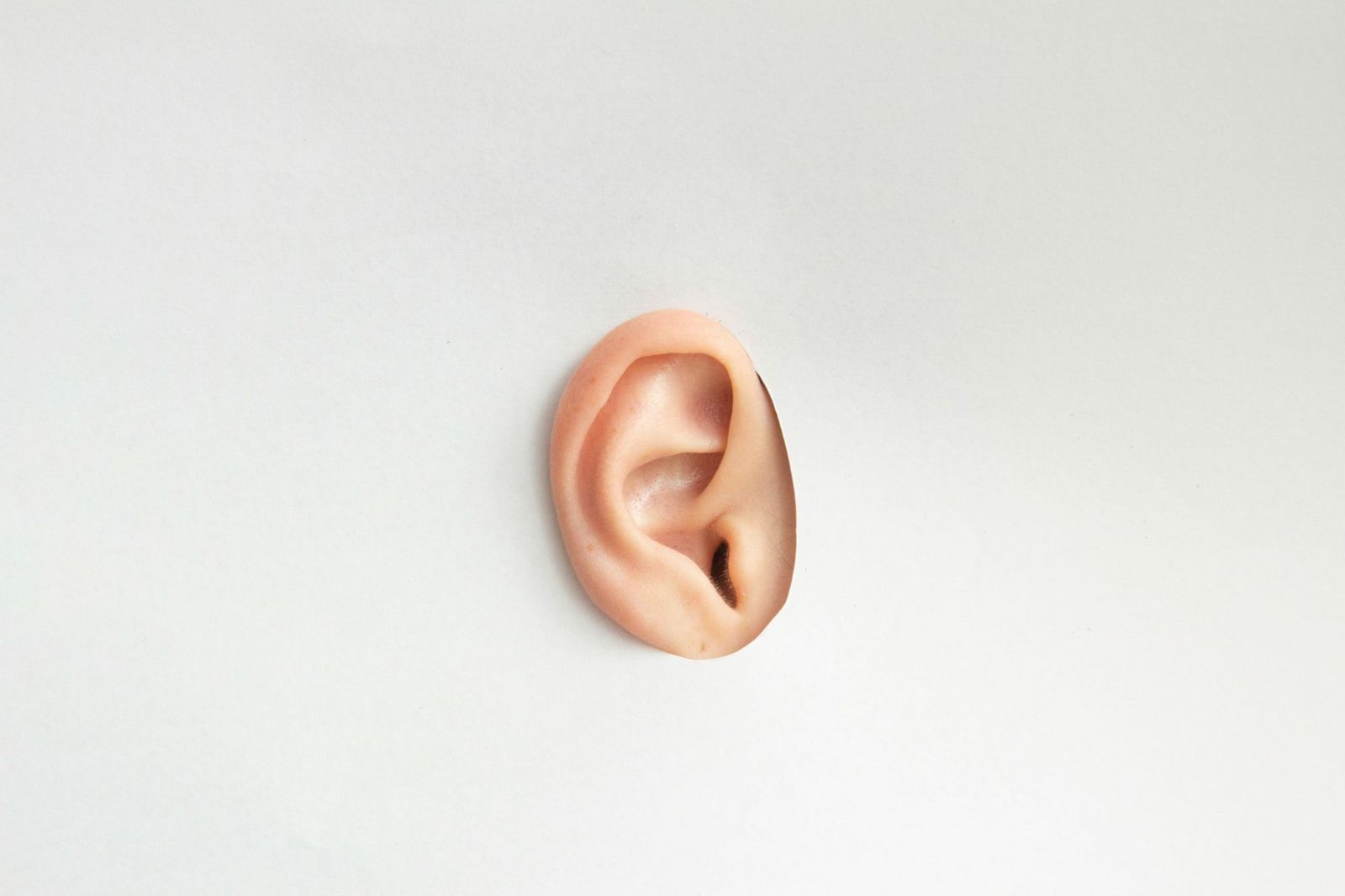
The term ‘ear’ encompasses both the outer and inner parts of the ear, but each component has its own name. Pinna, meaning ‘wing’, is the proper name of the visible ear, sometimes also called auricle, including both the cartilaginous and the fleshy part.
Although the inner ear is mainly responsible for converting sound into electrical signals and sending them to our brain, the pinna acts like a funnel that amplifies the sound vibrations and directs them into the ear canal.
Halux

We have specific names for every finger, but what about the toes? The names for the toes mirror those of the fingers (index, middle, ring, pinky), except the big toe, which is called the hallux, after the Medieval Latin hallex, meaning ‘great toe’.
However, this scientific name still has a connection with the thumb, as linguists believe that the spelling of hallux was influenced by the Latin word pollex, meaning ‘thumb’.
Frenum

Several parts of the human body have a frenum (or frenulum), or a small band of tissue that restricts a mobile organ, such as the one connecting the underside of the tongue with the mouth.
This name comes from the Latin frenum, meaning ‘rein’ or ‘bridle’, equating the way tissue anchors and restricts the movement of the organ to how a rein directs and controls an animal.
Canthus

If you thought that the corners of our eyes didn’t have a proper name, you are in for a surprise. The spot where the upper and lower lids meet —both inner and outer— is called canthus (canthi in plural), after the Greek kanthós, meaning ‘angle’ or ‘corner’.
Over the inner canthus, some people have a skin fold, called epicanthus (‘above the canthus’) or epicanthic fold. The shape of this fold —influenced by genetics, age, or medical conditions— often results in the upper lid being partially or completely hidden when the eye is open.
Zygoma

We often call it the cheekbone, but the proper name for it is zygoma, meaning ‘yoke’ or ‘bolt’ in Greek. Why was this name chosen? This bone acts like a bridge or yoke that connects the facial bones with the skull.
The scientific name for this bone is quite old, dating back to the 2nd century and to famous physicians such as Galen, who were the first to compare the cheekbone with a yoke. However, the term entered the English language only in the late 17th century.
Columella
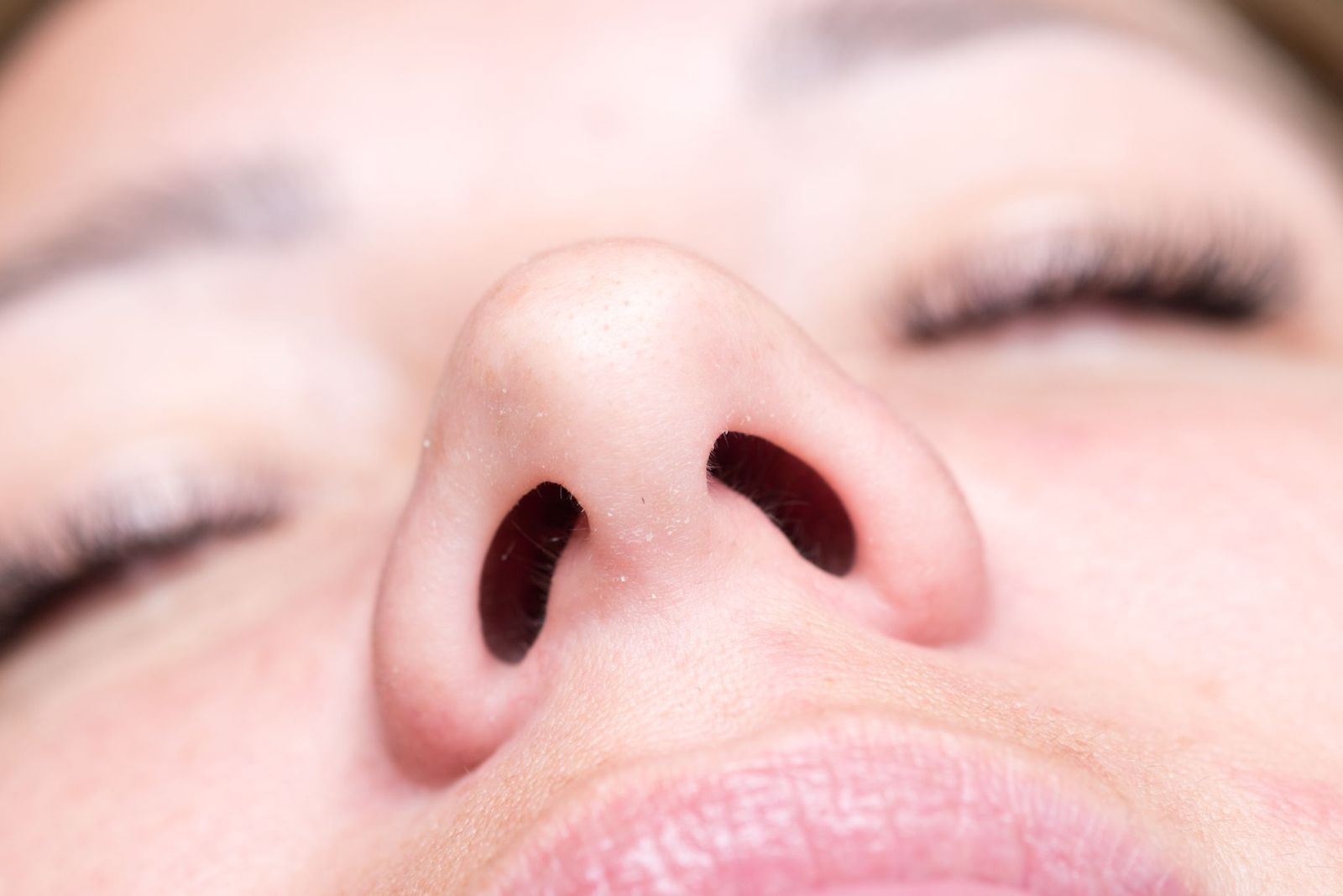
Our nose has two nares or nostrils, separated by a strip of skin. Have you ever wondered if that small piece had a name? Well, it does, and it’s called columella, a diminutive form of the Latin columna (‘column’ or ‘pillar '), reflecting how the strip of nasal tissue stands like a column between the nostrils.
This word entered English in the 16th century, but it wasn’t only used to describe the human nose. Instead, it was adopted by many scientific fields to describe different structures that resembled a column.
Gnathion

Is there a clear distinction between the chin and the point of the chin? We often call the point of the chin just ‘chin’, but it's actually called the gnathion, derived from the Greek gnathos (‘jaw’ or ‘mouth’).
Gnathion is the diminutive form of gnathos, and could be translated as ‘little chin’. While anatomically, ‘chin’ describes the entire forward part of the lower jaw, the term gnathion refers to the pointiest part of it.