Dust to dust…

Discover 12 of the strangest Last Will requests ever


Published on July 26, 2025
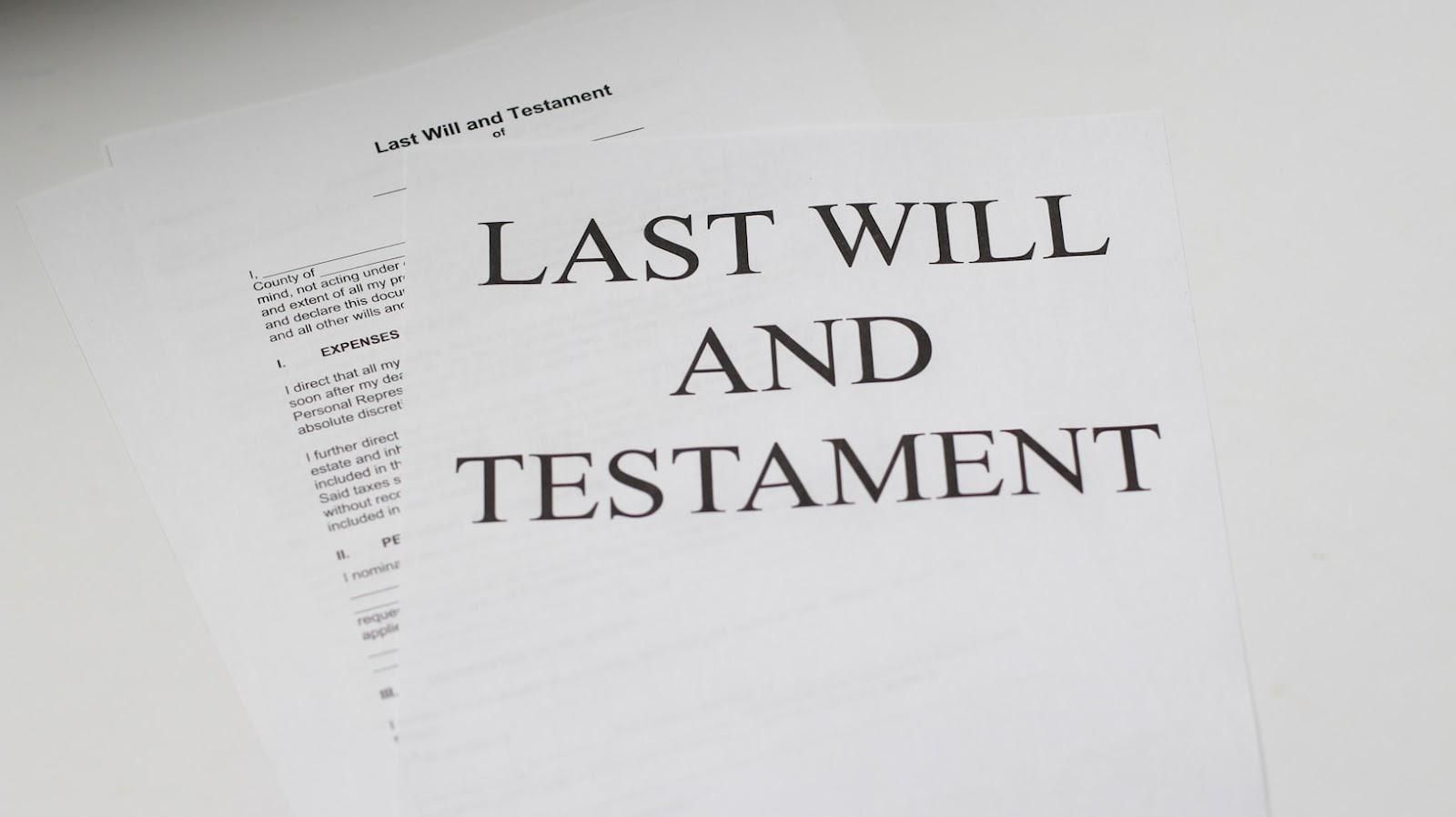

Image: Melinda Gimpel

Thinking about one’s own demise is not a pleasant task for most of us. Still, it’s wise to make preparations in case the worst happens, to ensure your material possessions are handled according to your wishes. The same goes for any plans you might have for your funeral. Last wills are fairly common, but as it happens, in some cases, people go beyond the usual, leading to the 12 extraordinary examples that follow.

1

Code for the afterlife

Image: Vitaliy Shevchenko

The first name on the list belongs to one of the greatest magicians of all time—Harry Houdini, who died in 1926 from a ruptured appendix.

Houdini’s library of books on magic and the occult was offered to the American Society for Psychical Research on the condition that J. Malcolm Bird, the society’s research officer and editor of its journal, resign. Bird refused, and the collection instead went to the Library of Congress.

Houdini also left his wife a secret code—ten random words they had agreed upon—that he would use to contact her from the afterlife.

2

One dollar

Image: Kenny Eliason

When news billionaire William Randolph Hearst died in 1951, he included a clause in his will addressing rumors that he had children out of wedlock. Anyone claiming to be his illegitimate child, the will stated, would receive "the sum of one dollar." He added, "I hereby declare that any such asserted claim... would be utterly false."

No one ever came forward.

3

Drumskin

Image: Paweł Bulwan

When hatmaker S. Sanborn died in 1871, he stipulated in his will that two drums be made from his skin and given to a friend, on the condition that every June 17 at dawn, the friend would play "Yankee Doodle" at Bunker Hill to commemorate the anniversary of the famous Revolutionary War battle.

The rest of his body was to be composted into fertilizer to nourish an American elm tree, to be planted along a rural roadside.

4

Ghost dinner

Image: Libby Penner

John Bowman, a wealthy tanner from Vermont, believed he would be reincarnated along with his deceased wife and two daughters. To prepare for their return, his will established a $50,000 trust fund to maintain his mansion and mausoleum.

The will required that dinner be served every night, just in case the Bowmans were hungry upon returning from the dead. This ritual continued from his death in 1891 until 1950, when the trust fund was finally depleted.

5

150 rich dogs

Image: Chewy

Eleanor E. Ritchey, heiress to the Quaker State Refining Corporation, left her $4.5 million fortune to her 150 dogs when she died in Florida in 1968. The will was contested, and by 1973, the dogs were awarded $9 million.

By the time the estate was finally settled, its value had grown to $14 million—but only 73 of the original 150 dogs were still alive. When the last dog died in 1984, the remaining estate passed to the Auburn University Research Foundation to fund research into animal diseases.

6

A final round of drinks

Image: Sérgio Alves Santos

Janis Joplin, the legendary singer known for her soulful voice and hard-living lifestyle, died of a drug overdose in 1970. Her will included a $2,500 provision to fund an all-night, posthumous party for 200 guests at her favorite pub in San Anselmo, California—"so my friends can get blasted after I'm gone."

7

Phone directory will

Image: Quino Al

Portuguese aristocrat Luis Carlos de Noronha Cabral da Camara made headlines when he randomly selected 70 names from the Lisbon phone directory and named them as beneficiaries in his will.

Understandably, many of the recipients initially thought it was a scam—most had never even heard of him before learning they had inherited part of his estate.

8

One more lucky dog

Image: Sophie Shankey

Billionaire hotelier Leona Helmsley left the majority of her estimated $8 billion estate in charitable trusts for "purposes related to the care of dogs." She specifically set aside a $12 million trust fund for her Maltese dog, Trouble, and disinherited two of her grandchildren "for reasons known to them."

The disinherited grandchildren contested the will, claiming that Helmsley lacked mental capacity when she made it. The dispute was settled with half of Trouble’s trust—$6 million—being awarded to the grandchildren.

9

The spite clause

Image: Jay Kettle-Williams

Billionaire Wellington Burt ensured that his fortune would remain inaccessible to his heirs for nearly a century. He died in 1919 and included a "spite clause" in his will, which stipulated that his wealth would be distributed only 21 years after the death of his last surviving grandchild. That grandchild died in 1989, meaning the 21-year countdown ended in 2010.

10

A rose every day

Image: Carlos Quintero

Comedian Jack Benny’s widow, Mary Livingstone, wrote in a magazine shortly after his death in 1974: "Every day since Jack died, the florist has delivered one long-stemmed red rose to my home. I learned Jack had actually included a provision in his will for the flowers—one red rose to be delivered to me every day for the rest of my life."

11

A birthday

Image: Nick Stephenson

People leave all kinds of things in their wills, and dates are no exception. In 1891, about three years before his death, novelist Robert Louis Stevenson learned that the 12-year-old daughter of the U.S. Commissioner to Samoa, where he was living at the time, was unhappy because her birthday fell on Christmas Day.

Stevenson left his birthday, November 13th, to little Annie to adopt as her own, provided she took care of it with "moderation and humanity… the said birthday not being so young as it once was."

12

Ashes to ink

Image: Totte Annerbrink

Mark Gruenwald, a comic book writer best known for his work on Captain America, requested that when he died in 1996, his ashes be mixed into the ink used to print the first trade paperback anthology of Squadron Supreme, another of his landmark creations.


10 weird historical events that no one has been able to explain (yet)


Published on July 26, 2025


Image: Walters Art Museum, Public domain, via Wikimedia Commons

Who doesn't like a good mystery? And if the mystery isn’t a work of fiction but the result of a true story, even better! The great unsolved enigmas of history are absolutely fascinating. Some have been solved over time, but there are still many old secrets for which neither scientists nor historians have found an explanation—yet. Time-travel with us as we uncover 10 of the biggest historical mysteries that will probably never be cracked!

1

A ghost island

Image: Tanner, Henry S., Public domain, via Wikimedia Commons

Bermeja Island is mentioned in navigation texts written by European travelers and appears in cartography from the 16th to 19th centuries. Old maps place it off the north coast of the Yucatán Peninsula; however, multiple searches over the years have yielded no concrete evidence of its existence.

So, what happened to Isla Bermeja? Was it a cartographic error? Did it sink due to a tidal wave? Because of its geopolitical significance, some have even suggested that it was blown up by the CIA! A 2009 study by the Autonomous University of Mexico concluded that Isla Bermeja does not exist today, nor were any traces found at its supposed coordinates. Yet, it will forever remain a mystery that will surely keep many entertained.

2

The longest alien signal ever

Image: Credit: Big Ear Radio Observatory and North American AstroPhysical Observatory (NAAPO)., Public domain, via Wikimedia Commons

In 1977, Ohio State University’s Big Ear radio telescope, used in the search for extraterrestrial intelligence, detected a signal now known as the Wow! signal. While reviewing the data, astronomer Jerry R. Ehman noticed a sequence represented as "6EQUJ5." Baffled by the anomaly, he circled it and wrote "Wow!" in the margins.

The signal lasted 72 seconds and, unfortunately, has never been repeated. To this day, no one can fully explain the phenomenon, although some suggest it may have come from a man-made source. Still, the Wow! signal remains one of the strongest candidates for potential extraterrestrial contact ever detected.

3

The disappearance of an entire Inuit village

Image: Edward S. Curtis, Public domain, via Wikimedia Commons

How is it possible for an entire village to vanish without a trace? Believe it or not, this is said to have happened nearly a century ago. According to lore, a small Inuit village in Canada was well known among fur trappers who visited regularly to trade. But in 1930, something very strange supposedly occurred.

A hunter named Joe Labelle claimed he visited the village one day and couldn’t find a single person. Reports said there were guns and food left behind, and even claims that the graves in the cemetery were empty. A thorough investigation, however, found no conclusive evidence of what happened to the villagers. Some witnesses from nearby towns even reported seeing a huge green light. Theories ranged from mass migration to extraterrestrial abductions. The Royal Canadian Mounted Police has since dismissed the case as an urban legend. Some still believe the story to be true.

4

The Joyita Mystery

Image: bbb

We know thousands of shipwreck stories, but this one is quite unique. The MV Joyita, designed to be nearly unsinkable, was found adrift in the South Pacific, practically unharmed, but the crew had disappeared completely.

In October 1955, the American merchant vessel left the port of Apia in Samoa with 16 crew members and 9 passengers bound for the Tokelau Islands. After days without news, a rescue mission was launched. Five weeks later, the Joyita was spotted more than 600 miles west of its intended route. The vessel was partially submerged, and there was no sign of the passengers or crew. Four tons of cargo and all three life rafts were missing. They were never seen again.

5

A mummy and a mysterious fluid

Image: Gary Todd from Xinzheng, China, CC0, via Wikimedia Commons

Do you know where one of the best-preserved mummies was found? Hint: not in Egypt. Xin Zhui, the Marquise of Dai during the Western Han Dynasty in China, was discovered in her tomb at Mawangdui 2,000 years after her death, along with hundreds of valuable documents and artifacts.

What makes this mummy so extraordinary is how well-preserved her body is. Her organs and veins remain intact, and she still has hair and even eyelashes. Scientists analyzed the fluid present in the coffin and discovered it was acidic and contained salt and magnesium. They believe this mysterious liquid may have been responsible for preserving Xin Zhui so well. What they don’t know is whether it was intentionally poured into the coffin or came from the body itself.

6

A missing prime minister

Image: Yoichi Okamoto, Public domain, via Wikimedia Commons

The United States has its fair share of presidents who died while in office, but none of our 45 presidents have ever disappeared without a trace. Did you know that this actually happened in The Land Down Under?

Harold Edward Holt was the Prime Minister of Australia from 1966 until his presumed death in 1967. He loved the ocean and spearfishing. During a weekend trip with friends, Holt visited the remote Cheviot Beach to take a swim. Rough sea conditions that day caused him to be swept away by the waves, and he never reappeared. Despite an intensive search, his body was never found, which has given rise to numerous conspiracy theories. Ironically, Australians built the Harold Holt Memorial Swimming Centre in Melbourne in his honor.

7

The anonymous hijacker

Image: FBI, Public domain, via Wikimedia Commons

Many famous criminals have managed to remain unidentified for decades, but the D.B. Cooper case is something else entirely. In 1971, Cooper boarded a flight from Portland to Seattle. Shortly after takeoff, he showed a flight attendant a device he claimed was a bomb and demanded four parachutes and $200,000 in cash.

The crew landed to meet Cooper’s demands in exchange for the passengers and then took off again. As the plane flew over southwestern Washington, Cooper jumped into the cold, rainy night carrying his haul. His whereabouts and true identity were never discovered, although it is likely he didn’t survive the jump. In 1980, some of the ransom money was found near the Columbia River. Although the FBI officially closed the case in 2016, amateur sleuths continue to try to crack it.

8

Dancing to death

Image: Pieter Brueghel the Elder, Public domain, via Wikimedia Commons

Can you imagine an epidemic where the main symptom is uncontrollable dancing? Sounds like science fiction, doesn’t it? Yet this really happened during the Middle Ages. In 1518, a dancing plague struck Strasbourg, Alsace, in what is now France. This strange condition affected up to 400 people, making them dance frantically for weeks. It is said that some even died of heart attacks, exhaustion, or strokes.

Doctors and authorities tried all kinds of measures to stop the spread. They even banned music for a while! To this day, scientists are not certain what caused this bizarre condition: it may have been food poisoning from toxins in the ergot fungus, or perhaps a case of stress-induced mass hysteria.

9

A manuscript no one understands

Image: Public domain, via Wikimedia Commons

The Voynich manuscript is a codex written roughly 500 years ago in an unknown language and writing system by an anonymous author. Known as Voynichese, the manuscript was named after Wilfrid Voynich, a Polish bibliophile and antiquarian who purchased it in 1912.

Radiocarbon testing has shown that it dates to the early 15th century. Many cryptographers and codebreakers have attempted to decipher its roughly 240 pages without success. The manuscript contains diagrams and illustrations of unknown plants and astrological symbols. Some believe it may be a made-up language, a secret code, a work of fiction, or even a hoax. If you think you can solve this mystery, the Voynich manuscript is available for viewing at Yale University’s Beinecke Rare Book and Manuscript Library.

10

An ancestor of movable-type printing

Image: Bernhard

Similar to the Voynich manuscript, the Phaistos Disc is a fired clay disc believed to have been created during the Bronze Age. It was discovered by an Italian archaeologist in the basement of a palace in Crete, Greece, in 1908.

What makes this disc fascinating is that it contains a mysterious message. Stamped into the clay is a set of signs, forming a text that many scientists have tried to decipher—without success. It is considered an early attempt at printing, a technological innovation that would not become widespread for several centuries. While enthusiasts still hope the enigma can be solved, this is unlikely unless other documents are discovered to provide context.

Looking for an extra scoop of literary fun?

Learn more with our Word of the day

invidious

/ɪnˈvɪdiəs/