Ten bizarre inventions from the past that never caught on

People once caged babies several stories above the street


Published on March 1, 2026


Ever wonder what happened to all those "revolutionary" gadgets that promised to change our lives? Some ideas were just too weird, too early, or too wonderfully impractical to survive. Let's take a nostalgic trip through the patent office's hall of shame.

1

The baby cage (1930s)

Image: Beth Jnr

Back when fresh air was considered a cure-all, London parents who lived in apartments faced a dilemma: how to give their babies outdoor time without a yard? The solution was a wire cage that hung outside the window, suspending Junior several stories above the street. Parents would just pop the baby in the cage and go about their day.

Shockingly, this didn't catch on. Perhaps it was the image of infants dangling precariously over busy sidewalks.

2

The isolator helmet (1925)

Image: Mert Yüce

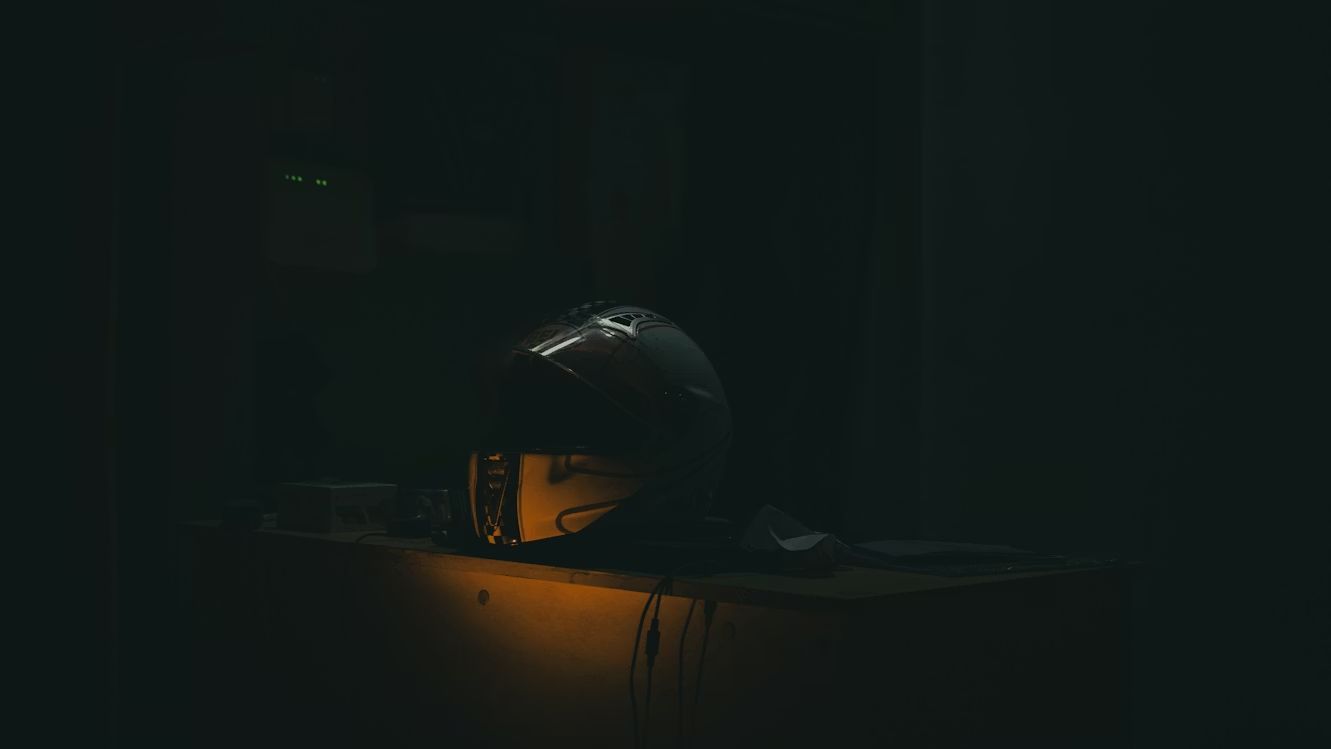
Imagine a giant goldfish bowl on your head, lined with cork, with only a thin slit to see through. That was the Isolator, designed to help people concentrate by blocking out all distractions. The inventor, Hugo Gernsback, thought sensory deprivation was the key to productivity. An attached oxygen tank let you breathe while you worked.

The problem? Looking like a deep-sea diver at your desk isn't exactly conducive to office camaraderie. Plus, trying to type while essentially wearing a fish tank proved impractical.

3

Motorized ice cream cone (1990s)

Image: Zach Camp

This battery-powered cone featured a small motor that rotated the ice cream for you, so you could just stick out your tongue and let technology do the rest. It was supposed to prevent drips and ensure even licking coverage.

The invention raised an important question: had we become so lazy that rotating our wrist was now an insurmountable challenge? Apparently, the answer was no. The motorized cone disappeared faster than ice cream on a summer day.

4

The Cyclomer (1930s)

Image: Suraj Chilamkruthi

This amphibious bicycle promised to let you pedal across lakes and rivers just as easily as riding down Main Street. It featured a boat-like hull and paddle wheels instead of regular tires. The inventor envisioned commuters cycling across waterways, avoiding bridge traffic entirely.

Unfortunately, the Cyclomer was heavy, slow on both land and water, and required the leg strength of an Olympic athlete to move at anything faster than a crawl.

5

Rejuvenation by goat gland transplants (1920s)

Image: engin akyurt

Dr. John Brinkley convinced thousands of men that transplanting goat testicles into humans would restore youth and vigor. For the bargain price of $750 (about $12,000 today), you could have surgery in his Kansas clinic and supposedly regain the vitality of your younger days.

Unsurprisingly, the procedure didn't work—goat glands don't function in human bodies. Brinkley eventually lost his medical license, but not before making millions.

6

The pedestrian catcher (1920s)

Image: Susan Gold

When cars first became common, someone invented a net-like contraption that attached to the front bumper to scoop up pedestrians before running them over. The idea was that the person would land safely in the net instead of under the wheels. It looked like an industrial-sized butterfly net.

The fatal flaw? Getting hit by a car and caught in a net is still getting hit by a car. Plus, the contraption made vehicles longer and harder to maneuver, probably causing more accidents than it prevented.

7

The piano for bedridden patients (1935)

Image: Beth Jnr

Picture this: you're stuck in bed recovering from illness, and what you really need is a full-size piano suspended over your body. That's what one inventor thought, anyway. The piano hung horizontally above the patient, who could supposedly play while lying flat on their back.

Beyond the obvious safety concerns of dangling a heavy musical instrument over sick people, there was the question of who actually wants to play piano while confined to bed.

8

Dimple-making machine (1936)

Image: bearinthenorth

In an era when dimples were considered irresistibly charming, someone invented a face-shaping device that promised to create them artificially. The contraption used springs and knobs to press into your cheeks for 15 minutes daily until dimples supposedly formed permanently.

It didn't work, of course—dimples are genetic, caused by variations in facial muscle structure. But that didn't stop people from trying.

9

The Hubbard Electrometer (1960s)

Image: Afif Ramdhasuma

L. Ron Hubbard claimed this modified lie detector could measure the electrical characteristics of your thoughts and help achieve spiritual enlightenment. Users held two tin cans connected to a meter while being asked questions. A needle supposedly revealed deep psychological truths.

Scientifically, it was just a simple ohmmeter measuring skin resistance—the same principle behind mood rings. But it cost considerably more and came with significantly more baggage.

10

The radio hat (1949)

Image: Nirmal Chaudhari

Why carry a portable radio when you could wear one on your head? This invention looked like a regular pint-sized baseball cap but contained a tiny AM radio with an antenna poking out the top. Earphones ran down to your ears, letting you listen to broadcasts while keeping your hands free.

The problem was that you looked absolutely ridiculous, like an alien trying to blend in at a baseball game. The reception was terrible, the batteries died quickly, and the whole contraption was uncomfortable.



The 12 longest-living animals on Earth (and how they cheat time)


Published on March 1, 2026


Image: David Clode

Nature doesn’t just create beauty, it crafts survival miracles. While most animals have short lives, a rare few have mastered the art of staying alive for centuries, even millennia. These aren’t just long-lived creatures; they’re nature’s ultimate time travelers. From the frozen depths of the oceans to the darkest corners underground, they’ve developed bizarre, brilliant strategies to cheat death. Get ready to meet 12 animals whose lifespans will absolutely blow your mind.

1

Antarctic Sponge (Anoxycalyx joubini)

Image: NOAA

Record age: up to 15,000 years

This unassuming sea sponge thrives in the freezing waters of Antarctica, where temperatures hover around 28.6 °F—so cold that biological processes hit the brakes. In such icy conditions, metabolism slows to a crawl, allowing these sponges to live for thousands of years.

Some have reached impressive sizes of over 3 feet tall and have been around since mammoths were still thundering across the tundra. They don’t move, they don’t stress, and they barely change, just quietly existing while centuries pass them by. Their secret to extreme longevity? Glacial patience, deep-sea stillness, and a lifestyle that redefines "low-maintenance".

2

Immortal Jellyfish (Turritopsis dohrnii)

Image: Dr. Karen J. Osborn, CC0, via Wikimedia Commons

Age: technically… infinite

This tiny jellyfish, no bigger than a fingernail—less than 0.2 inches—is like the ocean’s very own Benjamin Button. What makes it truly extraordinary is its ability to rewind its life story, flipping back to a youthful, juvenile stage whenever it wants. While it’s not completely invincible (predators and other threats are still very real), if left undisturbed, it can keep hitting the reset button on aging indefinitely, making it one of the most fascinating "time-benders" in nature.

3

Ocean Quahog Clam (Arctica islandica)

Image: Norbert Braun

Record age: 507 years

In 2006, a special clam was discovered buried deep in the seabeds of the North Atlantic. Scientists were able to determine that it had been there since at least 1499—that’s centuries before the United States was even a thought! This ancient marvel, nicknamed "Ming", was able to perfect a slow-and-steady approach to life. Growing at a snail’s pace and barely budging, Ming’s sedentary lifestyle turned out to be a brilliant strategy for beating the clock. Who knew doing almost nothing could be the ultimate secret to longevity?

4

Greenland Shark (Somniosus microcephalus)

Image: https://upload.wikimedia.org/wikipedia/commons/3/39/Greenland_shark_profile.jpg

Record age: estimated 392 years

These sharks aren’t your average ocean cruisers—they can stretch over 20 feet long and weigh up to 2,200 pounds. But what’s really mindblowing is how slowly they move, like they’re in a permanent state of deep relaxation. Living in the icy Arctic waters, these giants don’t hit adulthood until they’re about 150 years old, and some can glide through the depths for nearly 400 years. Imagine that! These ancient swimmers were already around before America declared independence... and they are still out there, silently roaming the seas!

5

Bowhead Whale (Balaena mysticetus)

Image: Vicki Beaver, Alaska Fisheries Science Center, NOAA FIsheries, Marine Mammal Permit#14245, Public domain, via Wikimedia Commons

Record age: over 211 years

This whale is a true ocean giant, stretching up to 60 feet long and weighing a staggering 200,000 pounds. But what makes it stand out isn’t just its size but its age. Some of these majestic creatures carry harpoons from the 1800s still lodged in their skin, like walking history books. Just picture living so long that you’re literally carrying outdated technology embedded in your body—talk about being a time traveler of the seas!

6

Red Sea Urchin (Mesocentrotus franciscanus)

Image: National Marine Sanctuaries, Public domain, via Wikimedia Commons

Record age: 200 years

Spanning the chilly Pacific coastline from California all the way up to Alaska, this spiky little ball—about 7 inches across—is full of surprises. It munches on algae and calls the deep, dark ocean its home, thriving at depths of up to 300 feet. Don’t let its size fool you: this prickly creature is a true elder of the cold seas, quietly outliving many ocean neighbors while keeping a low profile. A tough, slow-living veteran wrapped in spikes!

7

Koi Carp (Cyprinus rubrofuscus)

Image: Daniel Dan

Record age: 226 years

Meet Hanako, a legendary Japanese koi who swam through life for an astonishing 226 years. Scientists discovered how old she was by studying the rings on her scales, much like counting the growth rings of a tree. These colorful, ornamental fish aren’t just symbols of good fortune; they’re also secret long-lifers with the potential to celebrate over two centuries of birthdays, as long as they get the right care and a peaceful pond to call home.

8

Seychelles Giant Tortoise (Aldabrachelys gigantea)

Image: Ryan Grewell

Record age: 190 years

Jonathan is a male tortoise living on the remote island of Saint Helena in the South Atlantic Ocean. He was born back in 1832, and he’s still happily chomping lettuce and soaking up the sun today. Weighing in at more than 400 pounds and measuring around 3 feet long, Jonathan holds the title of the oldest known living land animal on the planet. If he could share tales, they’d span nearly two centuries of history. Imagine that!

9

Lake Sturgeon (Acipenser fulvescens)

Image: See page for author, Public domain, via Wikimedia Commons

Record age: 152 years

This ancient-looking fish, with its whisker-like barbels, looking like a tiny underwater submarine, prowls the lakes of North America. It can reach an impressive length of up to 7 feet and weigh around 200 pounds. These slow-living creatures don’t rush into adulthood—they start breeding only around age 20—and then take their time cruising through life at a leisurely pace. Believe it or not, one legendary catch in Wisconsin was estimated to be over 150 years old!

10

Kakapo Parrot (Strigops habroptilus)

Image: Andreas Sjövall

Record age: over 90 years

This chunky, night-loving parrot from New Zealand is a true oddball—it can’t fly, snores like a grumpy grandpa, and smells like fresh flowers. Despite its quirks, this bird boasts an impressively long lifespan. Sadly, it teeters on the edge of extinction. The oldest known kakapo, affectionately named Richard Henry, lived 90 years, earning him the title of the charmingly eccentric elder statesman of the avian world.

11

Naked Mole Rat (Heterocephalus glaber)

Image: Daderot, CC0, via Wikimedia Commons

Record age: 37 years

This tiny, kooky rodent—barely 3 inches long and just over an ounce in weight—could’ve been cast straight from a sci-fi apocalypse flick. Dwelling in vast underground colonies across Africa, it’s practically invincible to cancer, pain, and the usual effects of aging. Scientists are fascinated by this little marvel, even if it’s not winning beauty contests anytime soon. Its superpowers make it a star in longevity research!

12

American Lobster (Homarus americanus)

Image: OAR/National Undersea Research Program (NURP)., Public domain, via Wikimedia Commons

Record age: estimated 100+ years

Lobsters have a totally different rulebook than us when it comes to aging. They don’t really grow old; they just keep getting bigger and bigger. Some giant lobsters weigh over 40 pounds and stretch beyond 3 feet long. Their biggest threats? Not old age, but predators or the risky process of shedding their shells. In theory, they could live forever if left alone—but let’s be honest, not many get to enjoy a peaceful, lobster-sized retirement!

Looking for an extra scoop of literary fun?

Learn more with our Word of the day

obscure

/əbˈskjʊr/