The mysteries of Scripture

This phrase appears more than 70 times in Scripture


Published on June 8, 2026
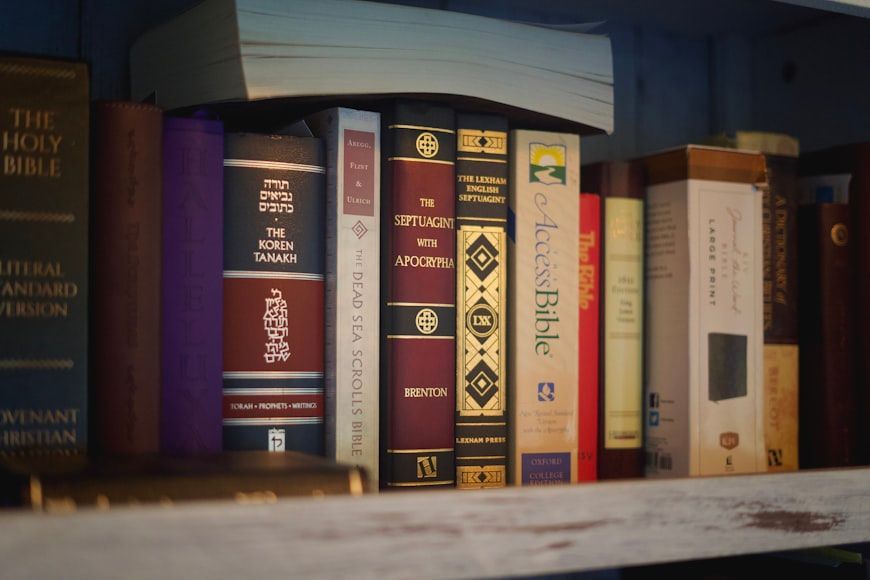

Image: Brad

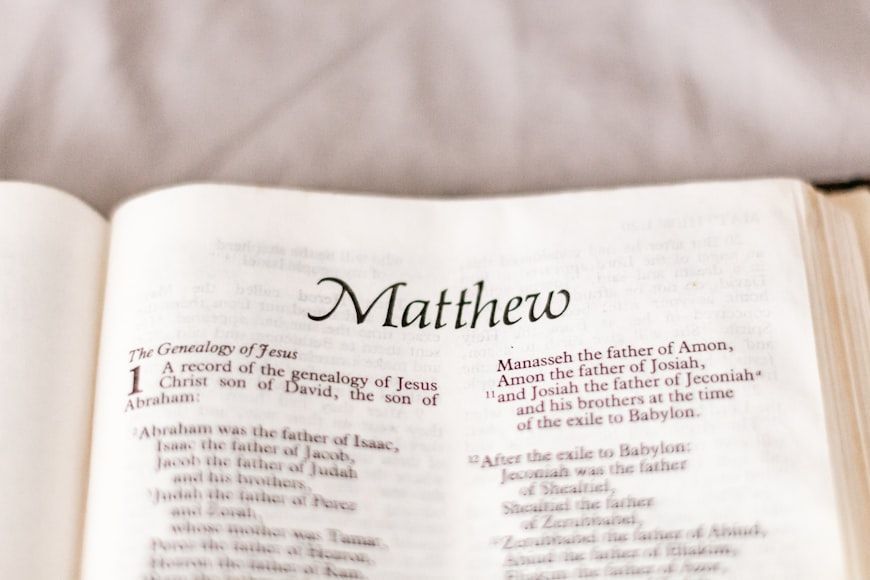
The Bible, the Tanakh, the Holy Scriptures, the Word of God: there are many names for this millennial text, but do they all refer to the same thing? Under the name ‘Bible’ —from the Greek biblia, ‘books’— we find different texts, some longer than others, connected to different faiths and traditions. What makes up the Bible? How does it vary from tradition to tradition? What was its original language? Keep on reading to find out the answer to these questions and other interesting facts about this sacred text.

1

The Bible and the Tanakh

Image: Tanner Mardis

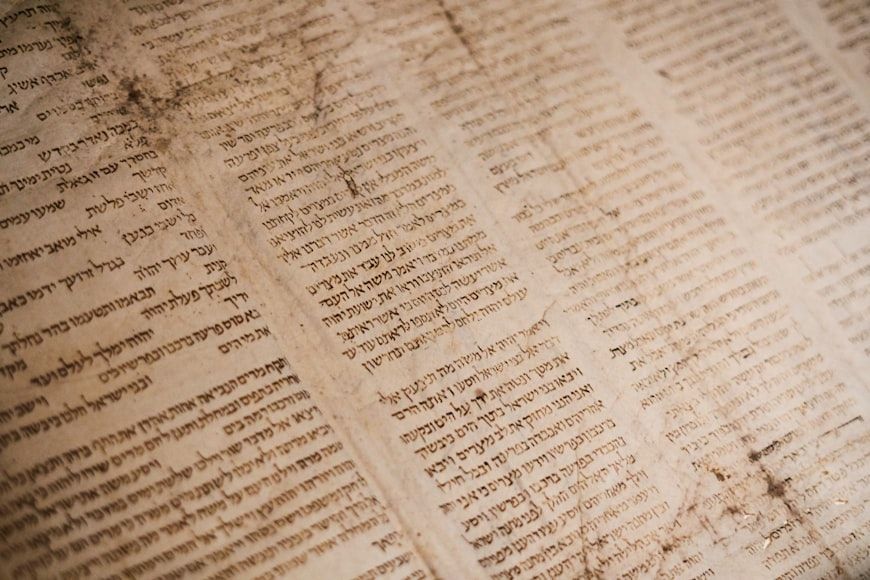
While many people mistakenly refer to the Torah as the "Jewish Bible", it actually includes only the first five books of Moses—what, in Christian tradition, is sometimes called the Pentateuch. The complete collection of sacred Jewish texts is actually called Tanakh, an acronym of the sections included: Torah —the narrations and law written in the books of Moses—, Nevi’im —the Prophets—, and Ketuvim —writings of wisdom and poetic literature.

Are the Jewish Tanakh and the Christian Old Testament the same text? Not quite. Most of the text coincides, but is organized in a different way and translated from different sources. Additionally, books that are not part of the Jewish tradition—for example, Tobit or Judith—are not included in all Christian Bibles.

2

What is in the Christian Bible?

Image: Anthony Garand

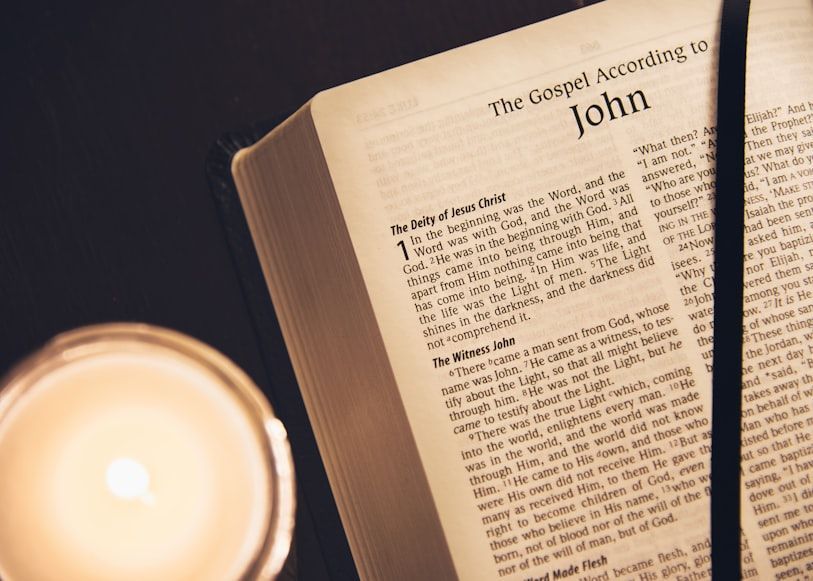
You might be surprised to learn that not all Christians read the same Bible. While the New Testament is the same, there are differences in what books are included in the Old Testament. Seven books—Tobit, Judith, Wisdom, Sirach, Baruch, and 1 & 2 Maccabees, plus some sections in Daniel and Esther— are considered part of the canon by Catholics and Orthodox traditions, but are not accepted by denominations of Protestant tradition.

Why are these books questioned? They were written at a later time than the rest of the Old Testament, around the 3rd century BCE, and were often only accessible through Greek translations. While Catholics and Orthodox have traditionally accepted them, the Protestant denominations do not, on account of their not being accepted as canonical by the Jewish tradition. However, these texts are often read as historical documents, even if they are not considered to be inspired by God.

3

A multilingual text

Image: Mick Haupt

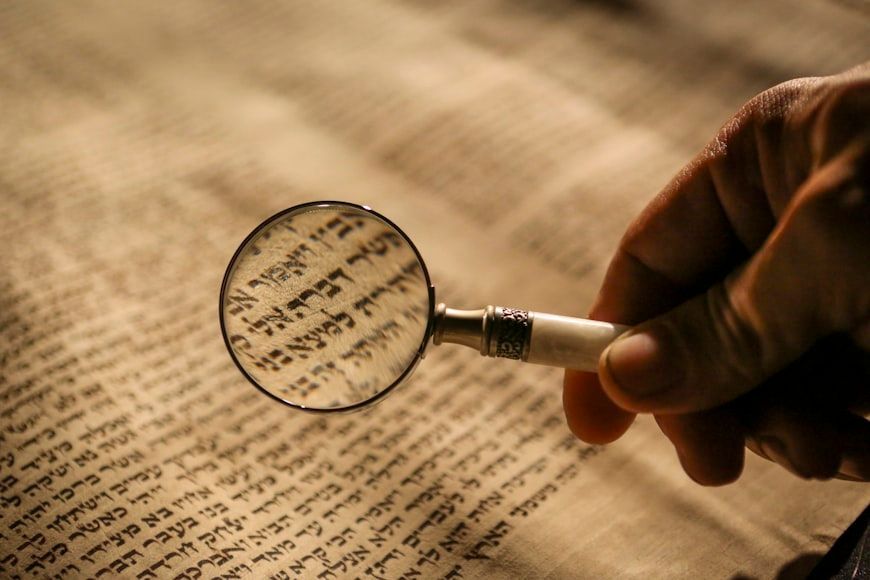
The Bible was written across many centuries in different places, so the original text is not in a single language. The majority of the Tanakh and the Old Testament was originally written in Biblical Hebrew (which is different, although related, from Modern Hebrew), while some sections were written in Aramaic.

What about the New Testament? While most writers spoke Aramaic, the text is written in Koine Greek, a colloquial version of Greek used as a common tongue at the time. However, the text still includes words and phrases in Hebrew and Aramaic, such as amen, Abba, or hosanna.

4

A text across three continents

Image: Constantinos Kollias

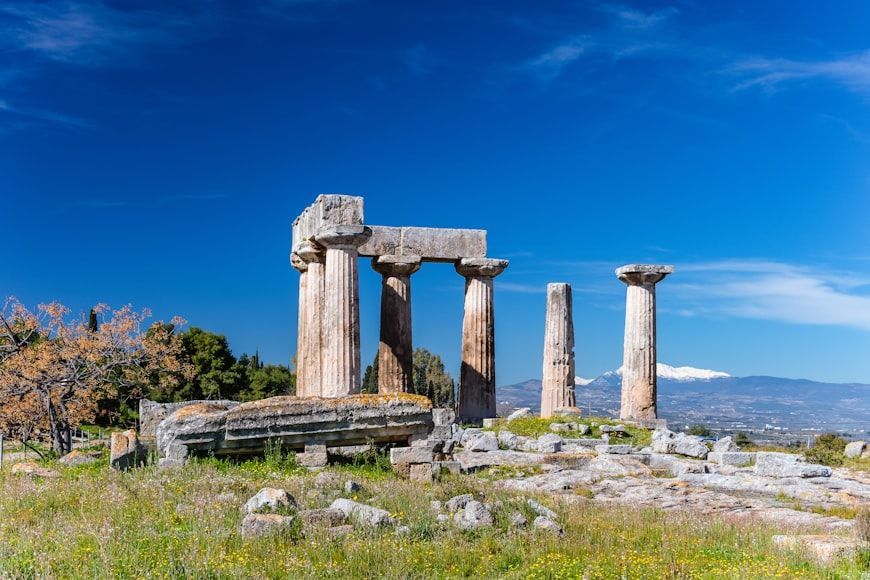
As a text composed by many people across many centuries, the Bible was not penned in a single location, but across three different continents and several countries. The majority of the Tanakh/Old Testament was written in the ancient kingdoms of Israel and Judah, with some parts written during the Israelite exile in Babylon (modern-day Iraq). Additionally, some traditions believe that the books of Moses were written in modern-day Egypt.

What about the New Testament? Though closer in time, its sections were written in places all around the Mediterranean, mainly in ancient Judea, Greece, Macedonia, modern-day Turkey, and Rome.

5

The Biblical genres

Image: Kelly Sikkema

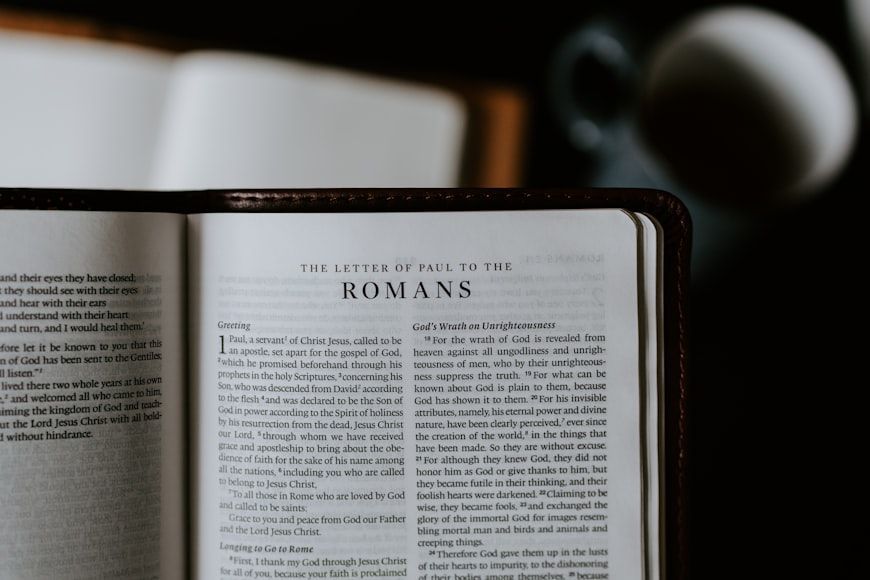
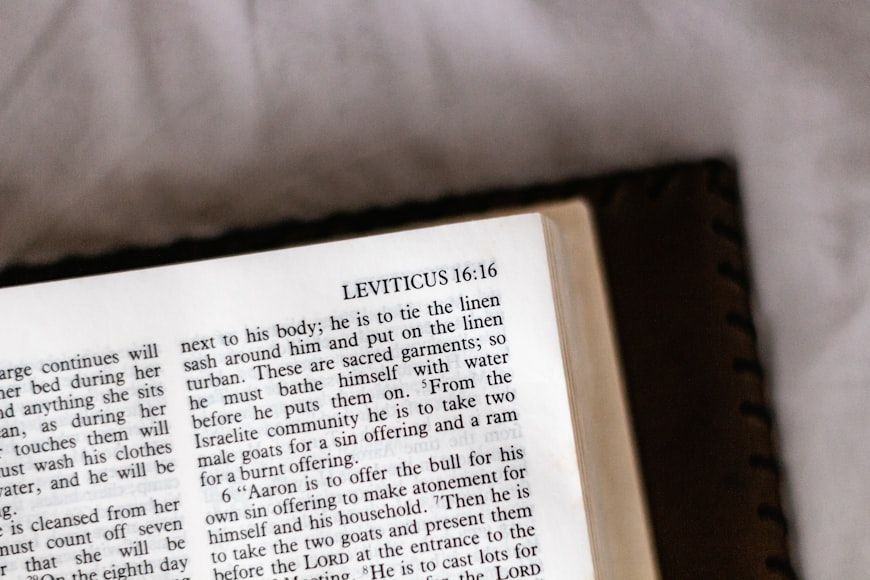
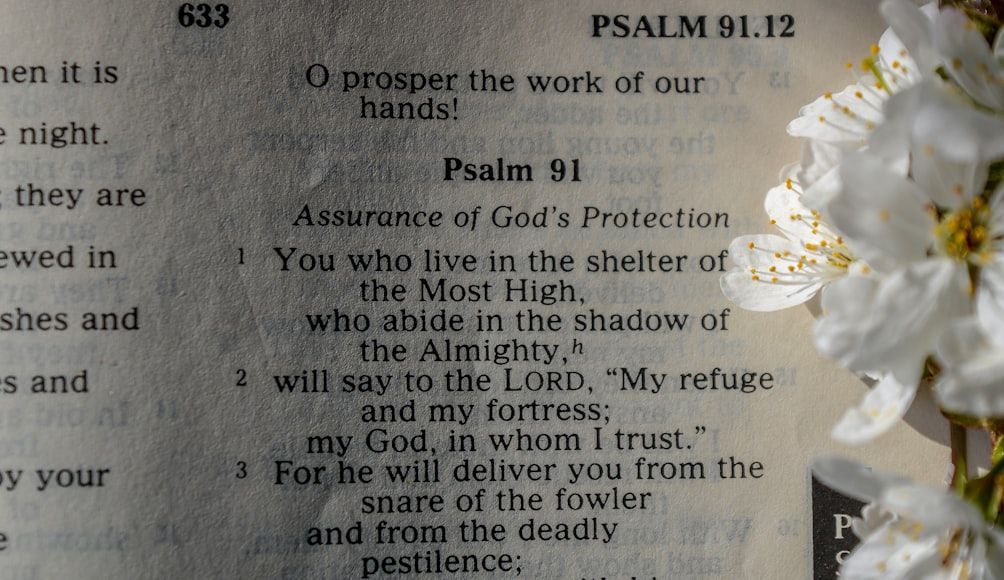
The Bible is an anthology, written and compiled over several centuries and under different circumstances. As such, it includes a variety of known literary genres, such as historical narratives —for example, Genesis or Acts—, compendiums of law —Leviticus or Deuteronomy—, wisdom literature —Proverbs—, poetry —Psalms or Song of Solomon—, prophetic and apocalyptic texts —Isaiah, Jeremiah, or Revelations—, and letters —Romans or Corinthians.

In addition to all these genres, already established when the sections of the Bible were written, some books include the first recorded examples of a literary genre, such as the Gospels —a unique mix of narrative, biography, and theology—, or the Parables, which, unlike fables, convey complex moral and religious teachings alongside their interpretation.

6

The Biblical gaps

Image: Sincerely Media

All Bibles start in the same moment, the beginning of time, but not all Bibles follow the same chronology. The Tanakh narrates the story of the Israelites up until the construction of the Second Temple (6th century BCE), and the New Testament picks the story up around the years 5 to 1 BCE. What happened in the meantime? It depends on who you ask.

In the Protestant traditions, that gap is known as the "Silent Years", on account of the lack of inspired texts and prophets. In the Catholic and Orthodox traditions, the gap is shortened by Maccabees 1 and 2, which narrate the uprising against the Seleucid Empire in the 2nd Century BCE. There is, however, another biblical gap in the New Testament, known as the "Lost Years", that goes from the last mention of Jesus as a child —his visit to the Temple at 12 years old— to his baptism in the River Jordan at 30 years old.

7

How many commandments?

Image: Sincerely Media

If someone were to ask how many commandments are in the Bible, many would quickly respond that there are 10. However, not all traditions would accept this as a correct answer. The Jewish tradition recognizes 613 divine commandments or mitzvot. The first 10, listed twice in the Torah, are a list of fundamental moral and theological principles, while the remaining 603 regulate different aspects of life, such as society, rituals, ethics, or justice.

Do all Christian traditions follow the same commandments? Yes and no. The text of the Old Testament describes the ten commandments, but does not enumerate them, so each tradition has its own way of assigning numbers to each commandment, which can lead to confusion.

8

Verses and Books

Image: Anuja Tilj

The biblical text is traditionally divided into books, which are divided into verses, but these divisions vary between the Tanakh and the Christian Bibles. The Tanakh contains 24 books divided into 3 sectionsTorah, Nevi’im, and Ketuvim. The longest book is Tehillim or Psalms, while the shortest is the book of Obadiah.

In the Christian tradition, the longest book is Jeremiah, while the shortest book is John 3, with only 13 verses. The longest verse (in English) is Esther 8:9 with more than 70 words, while the shortest is John 11:35, with just two.

9

We don’t know what Jesus looked like

Image: Sincerely Media

Have you ever wondered why there are many different depictions of Jesus around the world, even when they are most likely historically incorrect? The truth is, we can only guess what he looked like, based on the historical time and the geographical location, but we don’t have any physical description of him.

The four Gospels give us all sorts of information about Jesus, from his genealogy to his life, his family, his teachings, and his mission, but he is never described in terms of appearance. Even when different people talk about him, he is described based on his place of origin, his lineage, or his actions.

10

The most repeated phrase

Image: Sincerely Media

If you have ever read any part of the Bible, you might have noticed that many phrases are repeated. This is not a coincidence, but a deliberate literary device, intended to emphasize certain ideas and help to retain their message.

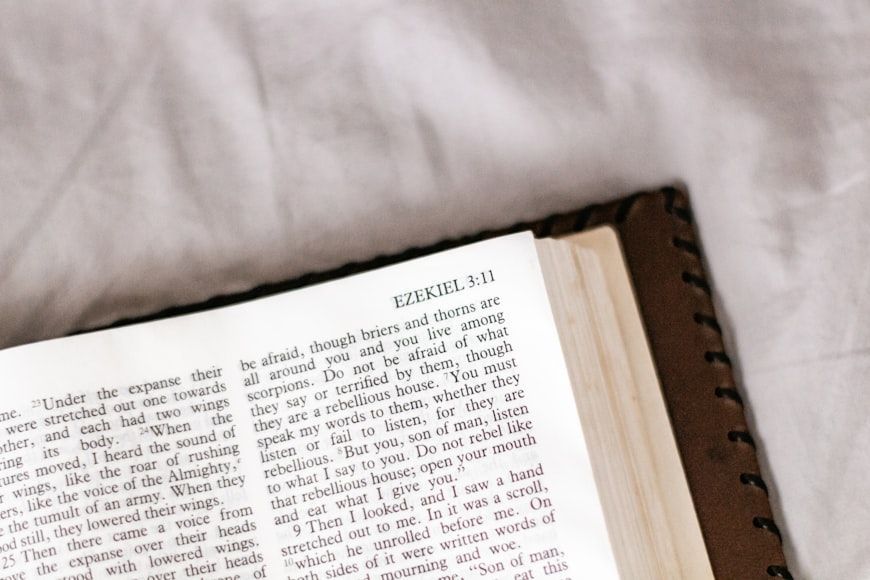
What is the most repeated phrase in the Bible? Both the Tanakh and the Christian Bibles coincide here, with the phrase "Do not fear" —and similar variants such as "Fear not" or "Be not afraid"— repeated more than 70 times in the Tanakh, and more than a hundred times in the Christian Bible.

11

The longest name

Image: Sincerely Media

Names carry a deep meaning in the Bible, often related to historical circumstances, spiritual characteristics, or prophetic messages. In fact, many passages involve the renaming of individuals to reflect a newfound mission or experience, such as God renaming Abram (‘exalted father’) as Abraham (‘father of a multitude’), or Jesus renaming Simon as Peter (in Aramaic, Kepha, "stone") to mean he would be the rock of early Christianity.

Among these names, one stands out due to its length and its ominous message. In the book of Isaiah, God instructs the prophet Isaiah to name his second child Mahershalalhashbaz, a name that means ‘swift are the spoils, speedy is the plunder’, and is interpreted as prophecising the upcoming invasion of Israel by the Assyrian empire. Fun fact: if this name rings a bell for you, it might be due to the actor Mahershala Ali, whose real name is Mahershalalhashbaz Gilmore.


BELIEVE IT OR NOT

Stranger Than Fiction: 10 Unbelievable Events That Actually Happened


Published on June 8, 2026


Image: Diana van Ormondt

They say truth is stranger than fiction, and some of these historical events are living proof of this old adage.

Brace yourself for a rollercoaster ride through history, where the strange and unexpected take center stage in the theater of reality. From absurd battles to mysterious weather phenomena, these 10 astonishing tales will leave you thinking long and hard about the complexities of human history.

1

The Great Emu War

Image: Sharon Co Images

Wars are typically waged between nations, but in 1932, Australia faced an unusual adversary: emus. After large numbers of these flightless birds invaded crucial farmland within Western Australia’s Wheatbelt, the government decided to intervene by sending soldiers armed with machine guns to reduce the emu population in the area. However, most attempts were ineffective at most, killing very few birds and costing thousands of dollars in supplies and ammunition.

As soon as the first shot was fired, the seemingly tame emu dispersed way beyond the range of the machine guns, and apparently switched to guerrilla tactics of sorts, avoiding all further military ambushes and frontal attacks while still feasting on the farmer’s crops. The government’s futile attempts were ridiculed and physical barrier methods to manage wildlife were preferred from then on. Sadly, they give no medals for having endured the Great Emu War.

2

The Dancing Plague

Image: Hannah Skelly

In 1518, the town of Strasbourg, France, was gripped by a strange and inexplicable phenomenon - people suddenly began dancing uncontrollably in the streets. The dancing madness persisted for weeks, with some of the affected succumbing to exhaustion or even death. The authorities at the time did not know how to react, and some people even joined the dancers voluntarily, as they feared it was a punishment from Saint Vitus (and presumably wanted to stay on the safe side).

After many efforts to fight the strange epidemic, the dancing eventually subsided and people in the town could resume their normal lives. While theories range from mass hysteria to hallucinogenic substances and neurological disorders like Sydenham's chorea, the event remains a historical enigma that challenges our understanding of the human mind and collective behavior.

3

The Tunguska Explosion

Image: Nima Sarram

In 1908, a massive explosion flattened over 80 million trees in the remote Tunguska region of Siberia. The cause? A mysterious airburst, likely caused by the explosion of a meteoroid or comet in Earth's atmosphere. It is now estimated that the event had an explosive energy of 3 to 5 megatons, equivalent to over a thousand Hiroshima bombs. The resulting shockwave broke windows, and knocked people down hundreds of miles away, reaching an equivalent of an earthquake of 5.0 on the Richter scale in some areas.

A bright glow was observed in night skies in Asia and Europe for days after the event due to high-altitude ice particles that formed as a result of the explosion. For all its magnitude, the explosion left no visible crater and minimal debris beside the devastated forest. The Tunguska Event serves as a stark reminder of the potential cosmic threats that lurk in the darkness of space.

4

The Battle of Karánsebes

Image: British Library

Miscommunication can often lead to chaos, but rarely on the scale witnessed in the Battle of Karánsebes in 1788. The Austrian army, at the time facing the Ottoman Empire, descended into total anarchy when two different scouting parties mistook one another for the enemy, fired on each other, and raised the alarm.

Making matters worse, the Austrian army was made of men of different nationalities who more often than not could not understand each other. All attempts to end confusion and the ensuing friendly fire on the part of the Austrian emperor himself were in vain, and after a while - deeply demoralized - he was forced to give the order of retreat. When the Ottoman army arrived two days later, they found an empty battlefield and were able to take the city of Karánsebes without any resistance.

5

Napoleon defeated by bunnies

Image: Aswathy N

In 1807, eight years before Waterloo, Napoleon Bonaparte had a humiliating defeat at the hands of a strange opponent - a horde of rabbits. During the celebrations that followed the Treaties of Tilsit - which effectively ended the war between the French and Imperial Russia - Napoleon’s chief of staff Alexandre Berthier had the idea of organizing a rabbit hunt to entertain its guests.

So far, nothing out of the ordinary for the time, but when the rabbits were simultaneously freed along the edges of a grassy field, instead of scattering as expected, all these fluffy beasts began running toward their amused hunters. But the fits of laughter didn’t last long, as the now-hunted hunters realized that there was nothing they could do to stop the relentless animals as they swarmed their positions and had no other choice than to flee. Some accounts state that Berthier had gathered around 3000 rabbits, so not even mighty Napoleon was a match for this unexpected army.

Apparently, the chief of staff's mistake was buying tame rabbits from local farmers, accustomed to being fed by humans, instead of trapping wild hares for the hunt. If we learned anything from the Great Emu War, the lesson is clear: never underestimate animals!

6

The year without a summer

Image: Mitsuo Komoriya

In the aftermath of the eruption of Mount Tambora in Indonesia - the largest in at least 1,300 years - 1816 became known as the "Year Without a Summer." The volcanic ash floating in the atmosphere led to climate abnormalities worldwide, resulting in crop failures and widespread famine in the most affected areas.

In Europe and North America temperatures plummeted, and most crops suffered irreparable damage due to the persistent frost. In the United States, a "dry fog" was observed in the eastern regions, dimming sunlight so much that sunspots were visible to the naked eye. Also, the high level of volcanic particles present in the atmosphere caused strange optical effects in the following years, such as strong red hues during sunsets, which can be observed in many paintings produced at the time.

7

Caligula’s War on Neptune

Image: Tiana Attride

It seems that wars against unusual adversaries are a fashionable trend in human history because the Roman Emperor Caligula declared war in the year 40 AD on no one other than the god Neptune himself, king of the raging seas.

Known for his eccentricity, Caligula allegedly ordered his legionnaires to "attack" the sea with swords and spears, after which he declared victory against the powerful god and told the men to gather seashells as trophies of war. One can only imagine that the soldiers had a fun -albeit puzzling- day.

8

Pepsi’s naval power

Image: Tim Mossholder

In the late 1980s, Pepsi briefly possessed the sixth-largest navy in the world. In exchange for commercializing Pepsi products in the Soviet Union, the company received 17 submarines, a cruiser, a frigate, and a destroyer.

However, the fleet was composed of obsolete and unseaworthy vessels that were destined to be turned into scrap almost immediately. The payment was made in the only resources the USSR could gather easily at the time, and it provided a way to establish profitable international relations - and open up to the world.

9

Followed by the Civil War

Image: Garry T

The American Civil War started and concluded with a curious connection to Wilmer McLean, an American wholesale grocer from Virginia. The conflict's first major battle, the First Battle of Bull Run, took place in McLean's farm in 1861. A cannonball fell directly through the kitchen fireplace of the McLean’s house, which was being used as headquarters for the Confederate Army, destroying the dinner that was being prepared by the stationed officers - something that was noted not without humor by the Brigadier General P. G. T. Beauregard.

The McLean family moved to Appomattox, Virginia trying to escape the war, but just four years later, General Robert E. Lee surrendered to General Ulysses S. Grant in McLean's parlor, marking the conclusion of the Civil War. Unintentionally, McLean was a prime witness of one of America’s most defining conflicts. Later, he said of this: "The war began in my front yard and ended in my front parlor."

10

Genghis Khan fought against global warming

Image: Snowscat

Genghis Khan's vast empire and brutal military campaigns had an unexpected impact on the Earth's climate. A recent study suggests that the Mongol invasions in the 13th century led to a significant reduction in global carbon dioxide levels, as large areas of cultivated land returned to forests.

This had the unintentional effect of scrubbing as much as 700 million tonnes of carbon from the atmosphere, roughly equivalent to the global annual consumption of gasoline today. This drastic ecological shift highlights the effect that land use, and particularly deforestation can have on our planet at a large scale.

Looking for an extra scoop of literary fun?

Learn more with our Word of the day

confidant

/ˈkɑnfəˌdænt/