Big names ahead

Once you see it, you’ll never unsee it: 12 brand logos’ hidden messages


Published on May 4, 2025


Image: Yucel Moran

A good logo has to communicate what the brand it represents is all about. It should do so in the simplest and most elegant way possible, conveying the brand’s spirit and core concept. The following 12 famous brands have managed to create iconic logos that not only represent them successfully but also include a subtle, partially hidden message. Did you know about any of these?

1

Carrefour

Image: James Orr

The name of the French supermarket chain means "intersection" in its native language. This meaning is clearly reflected in its logo, with its two arrows pointing in opposite directions. Additionally, hidden in the space between the arrows you can see the shape of the letter "C."

2

Amazon

Image: BoliviaInteligente

Amazon’s logo has a ubiquitous online presence. It’s simple, and it has been streamlined over the years. If you’ve ever wondered what the arrow beneath the logo means, take a look at its starting and ending points: it goes from A to Z.

3

Cisco

Image: Zozz_

The name Cisco comes from the common abbreviation of San Francisco, its hometown. The logo portrays the two towers of the Golden Gate Bridge, arranged in a shape that also suggests a sound wave.

4

Apple

Image: Bangyu Wang

Why does Apple’s logo have a bite mark on it? The reason is practical: if there was no bite mark, the smaller versions of the logo—used on a variety of gadgets including the iPhone—might look like a cherry.

5

FedEx

Image: jp26jp

The FedEx logo looks quite normal, but it hides a small detail, overlooked by most: between the second "E" and the "x," the negative space forms a small arrow pointing forward, symbolizing speed and precision.

6

Toblerone

Image: Safwan C K

The triangular Swiss chocolate Toblerone uses the Matterhorn—one of Switzerland’s most iconic mountains—as its logo. But, if you look closely, inside the mountain you can spot the shape of a bear, which is the official symbol of the Swiss town of Bern, the original home of Toblerone.

7

Levi’s

Image: Eduardo Pastor

If you’ve ever wondered what the red logo of the Levi’s brand means, then you should take a look at the stitching on the back pocket of any pair of their jeans—the shape matches perfectly.

8

Wendy’s

Image: Jacob McGowin

If you take a closer look at the neckline of the redheaded girl in the Wendy’s logo, you’ll notice that her shirt collar subtly spells out the word "mom." This detail is meant to evoke the feeling of home-cooked meals, just like something made by your mom.

9

NBC

Image: appshunter.io

The NBC logo is formed by the colors of the rainbow, which represent the colors of modern television. But at the center, you can see the shape of a peacock, with its beak pointing to the right. The colorful shapes around it represent the bird’s spread feathers.

10

BMW

Image: Pablo Martinez

While some people suggest that the two-colored BMB circle represents a propeller, based on the airplane manufacturing history of the brand, the truth points elsewhere. The blue and white segments actually represent the flag of Bavaria, the region where the company originated.

11

Baskin-Robbins

Image: Crystal Jo

The world’s largest chain of ice cream shops, Baskin-Robbins, is best known for offering 31 flavors of ice cream. Its logo cleverly features the number "31" highlighted in pink, hidden within the center of the design.

12

Tesla

Image: Alexander Shatov

The stylized logo and lettermark of the electric car brand Tesla is designed to resemble the cross-section of an electric motor. Or, at least, a meaningful part of it.


Names that lie

Mountain chickens are frogs? 10 animals with misleading names


Published on May 4, 2025


Image: Jo Taylor

Some animals have commonly been given names that might lead you to believe false things about them. For example, as we all know, guinea pigs are not pigs, sea horses are not horses, and starfish are neither stars nor fish. So, how did these names come to be? While lookalike allegations may justify some, others are simply far-fetched. Is there any truth or reason behind these inaccurate nicknames—like "firefly"? Let’s explore 10 animal names that are, arguably, misnomers.

1

Mountain Chicken

Image: Yaroslav Savateikin

Let’s start with one of the most far-fetched names on this list. Mountain chickens aren’t birds at all—they’re large frogs. And they don’t live in mountains, either. These frogs are found mostly in the Caribbean, inhabiting lowland rainforests and swamps. A more accurate and realistic name for them is "giant ditch frogs," which refers to their large size and their tendency to dwell near water bodies.

So, how did they get this name? The story goes that locals found the frog’s meat similar in taste and texture to chicken. Yes, this now critically endangered species was once considered a delicacy in local cuisines.

2

Red panda

Image: Flickr

You would think that the red panda is just a smaller, red version of the giant panda. After all, they share cute faces, patches around their eyes, and similar snouts and ears. But you’d be wrong—red pandas are not bears.

Here’s the explanation: The word "panda" is believed to derive from the Nepali word ponya, which refers to animals with claws adapted for eating bamboo. This is the biggest trait red and giant pandas have in common: their heavily bamboo-based diets. Red pandas, sometimes nicknamed "firefoxes," belong to a mammal family of their own and are more closely related to skunks than to giant pandas.

3

Titmouse

Image: Matthew Goeckner

Titmouses aren’t rodents—did you know? Instead, they are songbirds known for their gray or bluish-gray feathers. One of the most common species is the tufted titmouse, and you’ll be pleased to know that the plural form is, indeed, "titmice."

The name "titmouse" comes from Old English, where tit referred to a small creature, and mase was a general term for a bird. Over time, mase became obsolete, and "titmase" was transformed into "titmouse" due to the similarity between the words. Arguably, there’s also some physical resemblance between the gray color and beady, round eyes of both titmice and mice.

4

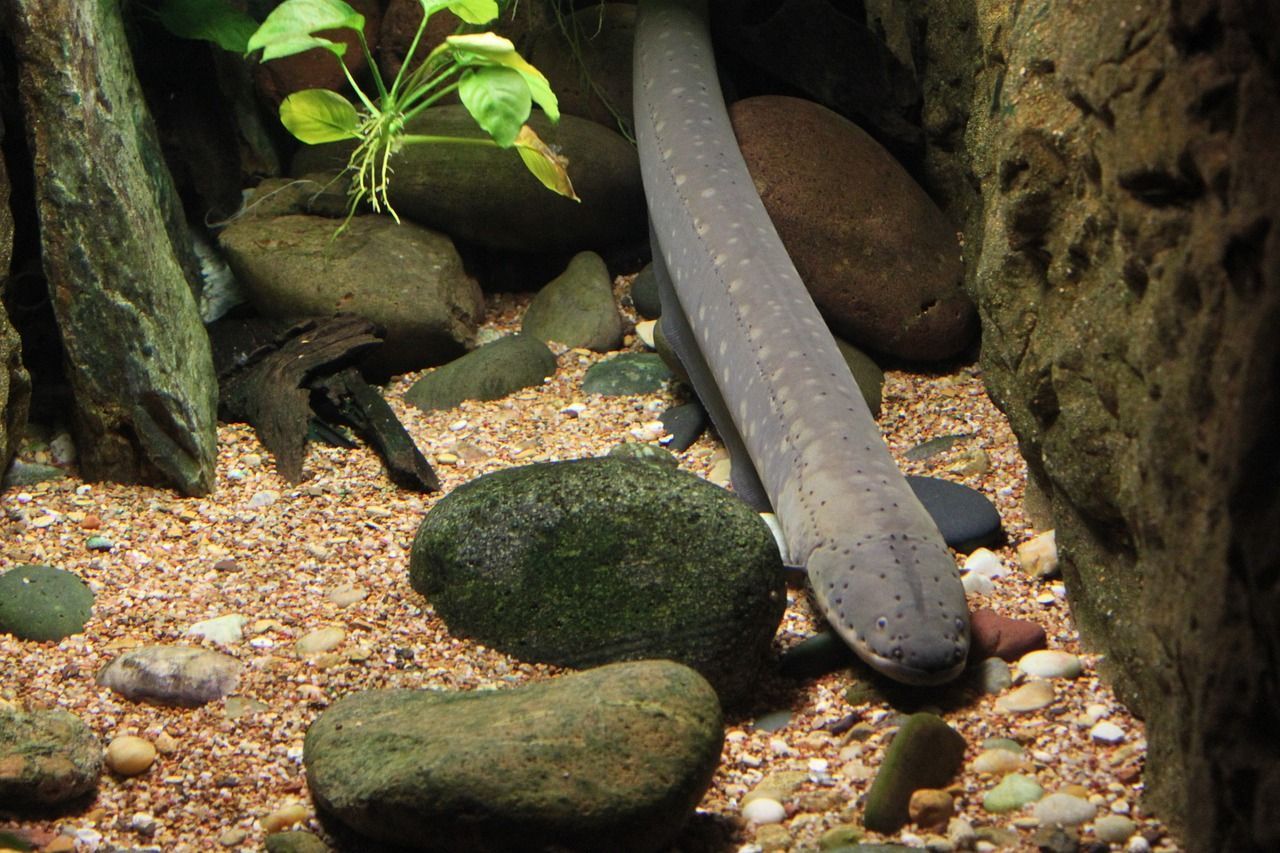
Electric eel

Image: k10legs

Yes, the name "electric eel" is misleading—but not for the reasons you might think. These aquatic animals are indeed capable of generating shocks of electricity, up to ​​860 volts, which they use to stun their prey or defend themselves. However, strictly speaking, they are not eels.

Unlike true eels, which belong to the family Anguillidae, electric eels are part of the knifefish family and are more closely related to catfish. Early European explorers misnamed them based on their elongated, eel-like bodies.

5

Seahorse

Image: Sergiu Iacob

Seahorses are fish, just like salmon or clownfish. Arguably, they look nothing like those species. Instead, for centuries, humans have noticed their resemblance to horses. Seahorses have a distinctive upright swimming posture, elongated heads and necks, and a caudal fin that even resembles a horse’s mane.

Their scientific name, Hippocampus, is borrowed from the Ancient Greek word hippókampos. Interestingly, the term didn’t originally refer to this animal but to a mythological marine creature. In Greek, hippos means "horse," and kampos means "sea monster."

6

Guinea pig

Image: Jack Catalano

Guinea pigs aren’t pigs—nor are they from Guinea, the West African country. Instead, they are rodents native to South America. By now their name has become synonymous with "experiment subject" because of how frequently they were used in scientific research.

There are a couple of theories behind their misleading name. The "pig" part likely comes from the squealing noises they make, which resemble those of piglets. As for "guinea," it might derive from the British coin of the same name, implying they were sold for its equivalent value. Another theory is that European sailors, associating distant Guinea with anything exotic, mistakenly applied the name to these South American rodents.

7

Koala bear

Image: Valeriia Miller

The koala is often called a "koala bear," but it’s not a bear at all. European settlers in Australia gave it this name because its round face and fluffy ears reminded them of bear cubs.

Koalas are, in fact, marsupials. Like kangaroos, they carry their young in pouches. The word koala comes from the Dharug language (an Aboriginal language of Australia) and is believed to mean "no water," referring to the koala's ability to survive on eucalyptus leaves with minimal water intake. Did you know? Eucalyptus leaves are low in nutrients and mildly toxic. As a result, koalas have a slow metabolism and sleep up to 20 hours a day.

8

Firefly

Image: Tony Phan

Fireflies don’t handle fire. They do, however, possess the ability to produce light, a phenomenon called bioluminescence. This light creates the illusion of tiny flames flying through the night. No wonder they have been associated with magic and fascination for centuries.

Despite their name, fireflies aren’t flies—they’re beetles. They produce light through a chemical reaction in their abdomens, which they use to attract mates or communicate. In fact, ​​different firefly species flash in distinct rhythms to help them identify each other.

9

Prairie Dogs

Image: Werner Hilversum

The first time you hear the term "prairie dogs," you might picture packs of dogs roaming freely across the prairies. In reality, these animals are rodents and belong to the ground squirrel family.

The name is believed to have been given by early European settlers due to their high-pitched sounds. Prairie dogs are capable of producing sophisticated and varied calls to communicate with one another, sometimes sounding like man’s best friend. The "prairie" part of their name comes from their habitat—vast grasslands and prairies across North America. These rodents are expert burrowers and typically live in small family groups called "coteries," where members groom and protect each other.

10

Ladybug

Image: Pixabay

It’s not only that ladybugs aren’t all female—they aren’t truly bugs, either. Instead, they are a type of beetle. These round and colorful insects have been widely associated with good luck and fortune for centuries. The reason for this has to do with the story behind their nickname.

The name "ladybug" originated in the Middle Ages, when farmers prayed to the Virgin Mary for help with pests in their crops. The beetles, which helped control aphid populations, were called "Our Lady's birds" or "Our Lady's beetles," later shortened to "ladybirds" or "ladybeetles." Over time, much to the frustration of entomologists, this evolved into the popular term "ladybugs."

Looking for an extra scoop of literary fun?

Learn more with our Word of the day

susceptible

/səˈsɛptəb(ə)l/