Spot the Clues

10 famous spies & detectives who made us love solving mysteries


Published on September 15, 2026


Image: alexkoral

Some wore funny hats, some carried magnifying glasses, and all of them knew how to keep a secret. If you’ve ever dreamt of being an undercover agent, or you’re fascinated with piecing together clues and solving mysteries, then this article is for you. From James Bond to Miss Marple, here are 10 unforgettable fictional spies and detectives who have kept us guessing for decades. Let’s uncover the characters, quirks, and clever tricks that made them impossible to forget.

1

James Bond

Image: Sergii Figurnyi

"My name is Bond, James Bond" is one of the most recognizable introductions in pop culture. With the codename 007, he is the quintessential British fictional secret agent who redefined the spy thriller genre and fueled a global fascination with espionage.

Created by Ian Fleming in 1953, Bond is known for combining high-stakes intelligence operations, the latest technology that seemed almost futuristic, and exotic locations filled with glamour and danger. He has been portrayed by numerous actors over the years, with his larger-than-life persona standing out above all else.

2

Miss Marple

Image: SviatlanaLaza

Miss Marple is one of the most beloved amateur sleuths in literary history, created by the legendary "Queen of Crime," Agatha Christie. Living in the quiet, fictional English village of St. Mary Mead, Jane Marple first appeared in the 1930's novel The Murder at the Vicarage.

One of the most beloved things about Miss Marple is that despite her looking like a sweet, elderly woman who might be more interested in knitting than murder, she has an incredibly sharp intellect and a remarkable understanding of human nature. This allowed her to solve mysteries that baffle professional policemen by drawing brilliant parallels between serious crimes and seemingly insignificant bits of village gossip. Never underestimate the quiet lady in the corner.

3

Charlie’s Angels

Image: Asia Evtyshok

You probably have a favorite. Sabrina, Jill, and Kelly, the Charlie’s Angels, revolutionized the detective genre in the 1970s by proving that crime-fighting could be glamorous, action-packed, and, above all, female-led. Originally portrayed by Farrah Fawcett, Kate Jackson, and Jaclyn Smith, the Angels became instant pop culture icons.

Working for the wealthy, mysterious, and never-seen billionaire Charles "Charlie" Townsend, this trio of private investigators used their sharp wits, martial arts, and high-tech gadgets to crack cases that baffled traditional law enforcement and the public for decades.

4

Jason Bourne

Image: Erman Gunes

David Webb, better known by his alias, Jason Bourne, is a fictional CIA-trained operative and the central protagonist of the Bourne franchise, created by novelist Robert Ludlum in 1980.

He famously suffers from severe memory loss, triggering a desperate quest to discover his true identity while running from the very agency that trained him. He has unmatched hand-to-hand combat skills, is an expert at improvising everyday objects into weapons, and is highly adept at blending into crowds; abilities he doesn’t know he possesses until he needs them.

5

Sherlock Holmes

Image: New Africa

If you love solving mysteries, then there is no doubt you know this character, possibly even better than some of your friends. Holmes is the fictional London detective created by Sir Arthur Conan Doyle who uses logic and observation to solve seemingly impossible cases.

He first appeared in print in 1887 in A Study in Scarlet. Operating out of his famous residence at 221B Baker Street in London, Holmes is the archetypal genius sleuth whose methods helped shape the detective fiction genre forever. Also known for being moody, cold, and aloof, his friend Dr. Watson provided a more humane perspective, both within the stories and for the readers’ comfort.

6

Jessica Fletcher

Image: Albo

Jessica Fletcher is the famous fictional mystery writer and amateur sleuth from the television series Murder, She Wrote. She is a bestselling mystery novelist who lives in the fictional coastal town of Cabot Cove, Maine.

She has some sort of curse, since murder follows her everywhere she goes, whether she visits friends or travels the world. Luckily, she uses sharp observation and logic to solve crimes before the local police do.

7

Austin Powers

Image: Snap Spot

"It’s groovy, baby!" If what you’re looking for is solving crimes while having fun, Austin Powers, famous for saying this catchphrase, is the one. Powers is a comedic British secret agent and a hilarious parody of James Bond, created and played by actor Mike Myers.

Just like Bond, he works as a secret agent for the British government. The incredible twist is that he is frozen in the 1960s and wakes up in the 1990s. When he does, Powers keeps his 1960s clothes, slang, and wild personality, completely surprising everybody with his eccentricities. He may have been a terrible fit for the modern world, but that was precisely the joke.

8

Columbo

Image: Nomad_Soul

Detective Columbo is a famous fictional television detective, played by Peter Falk, known for his old raincoat and brilliant mind. He worked as a Lieutenant in the Los Angeles Police Department.

The show ran from 1968 to 1978, with later television movies airing through 2003, becoming a fan favorite, especially for Columbo’s seemingly clumsy, forgetful, and endlessly polite manners that made suspects underestimate him. In the end, he would always turn back at the door to say, "Just one more thing..." before asking the question that could unravel the entire case.

9

Maxwell Smart (Agent 86)

Image: New Africa

Maxwell Smart, also known as Agent 86, is a fictional, bumbling secret agent from the classic 1960s comedy television series Get Smart, played by Don Adams, who won three Primetime Emmy Awards for his portrayal of Smart.

With unforgettable code names, Smart worked for CONTROL, a secret U.S. government counter-intelligence organization, while constantly fighting KAOS, an international syndicate of evil. Above all, he stood out from the rest because he turned the serious, high-stakes world of 1960s secret agents into a hilarious television comedy.

10

Hercule Poirot

Image: CapturePB

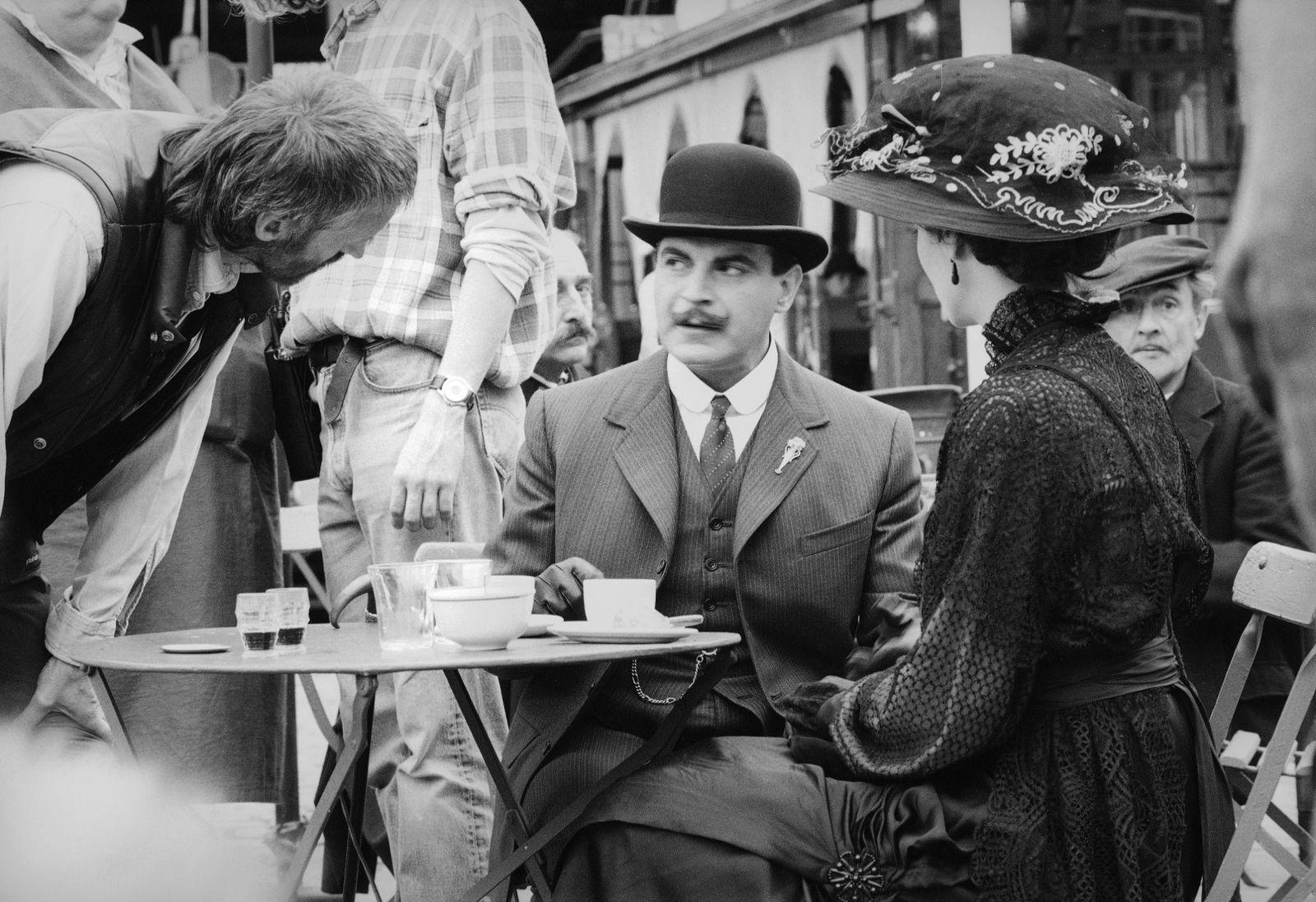
Hercule Poirot, created by writer Agatha Christie in 1920, quickly became a brilliant Belgian detective who relies entirely on his brainpower (his "little grey cells"), solving complex murders using extreme logic and psychology.

He also stood out for being very observant, sitting quietly to process facts rather than chasing clues outdoors. He was meticulous, orderly, and devoted to his routines. His distinctive look also makes him especially memorable, including his egg-shaped head, elegant clothes, and stiff, waxed mustache.


The real origins

A house divided against itself: 10 famous phrases with biblical roots


Published on September 15, 2026


Image: Everett Collection

We use a lot of set phrases every day without giving much thought to where they came from. But you might be surprised to learn that many of them, even the ones you’d least expect, have biblical roots. Some have survived for centuries with barely a change, while others have taken on surprising new meanings. How does a saying last that long? From "A house divided against itself cannot stand" to "by the skin of your teeth," here are 10 everyday expressions that came straight from the Bible.

1

"A house divided against itself cannot stand" (Matthew 12:25, Mark 3:25, and Luke 11:17)

Image: Alexander Gardner, Public domain, via Wikimedia Commons

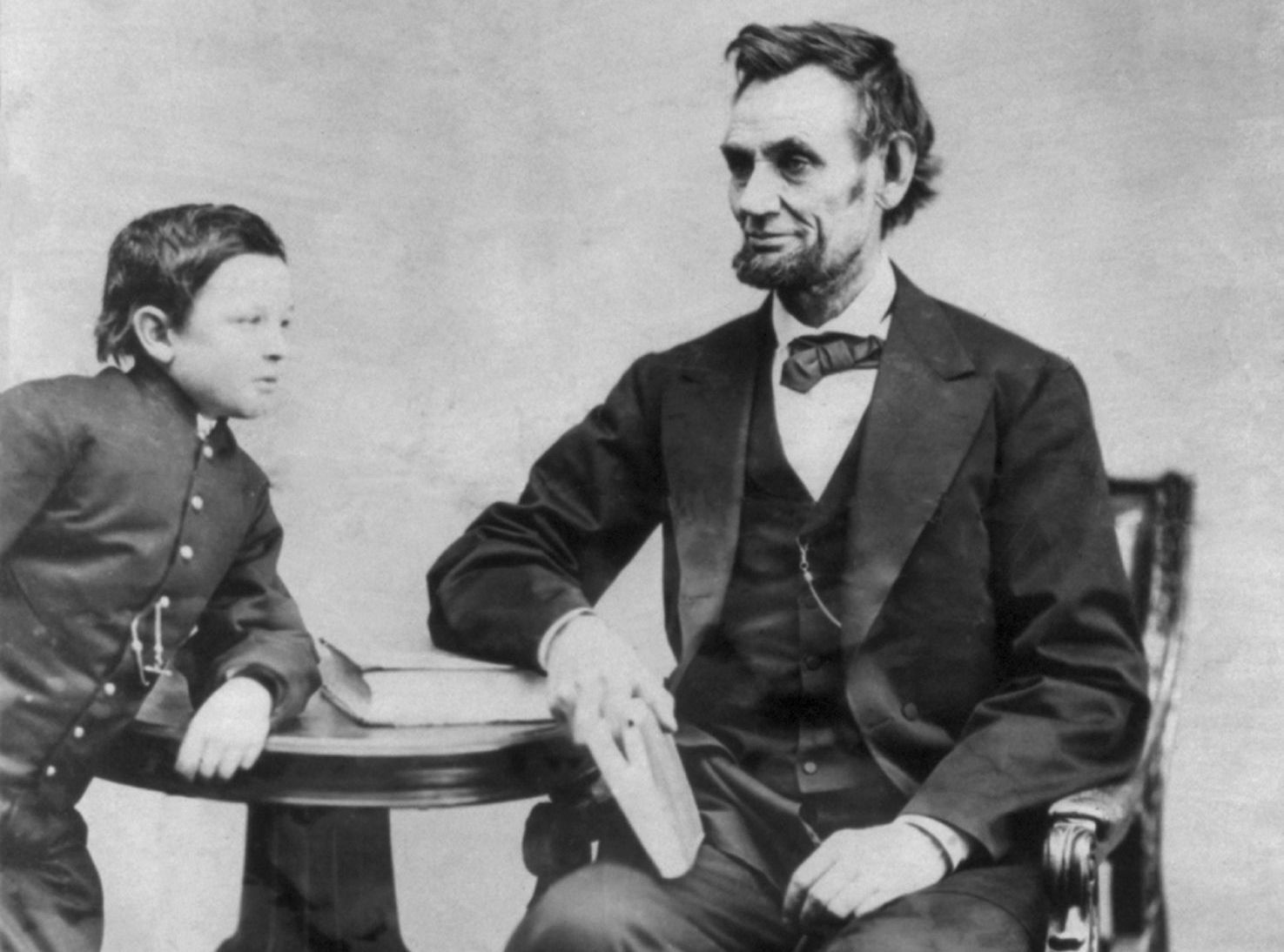
Most people associate "A house divided against itself cannot stand" with Abraham Lincoln, who used it in a famous 1858 speech while accepting the Republican nomination for US Senate. But the phrase is much older, with roots in the Bible.

It appears three times in the New Testament, used by Jesus to make a point during a dispute. According to the narrative, after he healed a man possessed by a demon, some leaders accused him of using Satan’s power. Jesus turned their argument against them: why would Satan fight his own forces? A kingdom or household divided against itself cannot survive. As English Bible translations spread, biblical expressions entered everyday speech. By the 1700s, this phrase was being used to describe feuding families, struggling businesses, and divided political groups, even before Lincoln made it famous in American history.

2

"Good Samaritan" (Luke 10:25–37)

Image: Brett Jordan

When someone stops to help a stranger in trouble, we call them a "Good Samaritan." It’s an everyday expression, but few know it comes from a biblical story.

In the Gospel of Luke, Jesus tells of a Jewish traveler who is robbed and beaten, left barely alive by the roadside. Several people pass him without stopping, but a Samaritan, a member of a community that had a long-standing rivalry with the Jews, stops to help and tends to his wounds. The message is clear: kindness can come from and be given to someone you least expect, even someone your own community regards as an outsider. As the story spread through Christian teaching and English Bible translations, "Good Samaritan" gradually entered everyday language. By the mid 1600s, it was becoming an established expression for anyone who goes out of their way to help someone in need.

3

"An eye for an eye" (Exodus 21:24, Leviticus 24:20, Deuteronomy 19:21, and Matthew 5:38–39)

Image: v2osk

Today, "an eye for an eye" often sounds like a license to get even, but its original purpose was almost the opposite.

The principle appears in several Old Testament passages and in much older legal codes, including the Code of Hammurabi. Known as lex talionis, it established punishment to match the offense, limiting the kind of endless blood feuds in which one injury could trigger another, and another. Rather than permitting people to take revenge, it set a boundary: no more than the offense deserved. In fact, in the New Testament (Matthew 5:38–39), Jesus criticizes the use of this rule as a justification for personal vengeance. William Tyndale used the wording "an eye for an eye" in his 1526 New Testament version, and the King James Bible helped popularize it. As Bible translations spread, the phrase entered everyday English. Over time, the expression moved from the language of law into everyday speech, where it now reflects an all-too-human urge.

4

"The writing is on the wall" (Daniel 5)

Image: Randy Tarampi

When someone says "the writing is on the wall," they’re warning you that trouble is coming and that it looks hard to avoid, but this everyday expression began with a scene straight out of the Bible.

In the Old Testament, King Belshazzar of Babylon throws a lavish feast and drinks from sacred vessels taken from the Jewish temple. Suddenly, a mysterious hand appears and writes four Aramaic words on the palace wall: Mene, Mene, Tekel, Upharsin. The prophet Daniel interprets the message as a warning that the king’s reign is about to end, and that very night, Babylon falls. In the 1500s, early English writers and theologians used the story as a divine warning to corrupt rulers. By 1720, Jonathan Swift, author of Gulliver's Travels (1726), was using "the handwriting on the wall" as a broader warning of trouble, without relying on the original religious meaning. By the 1800s, the expression had become part of everyday English as a way of saying that the signs are there; you just have to be willing to read them.

5

"Wolf in sheep’s clothing" (Matthew 7:15)

Image: photomaster

A "wolf in sheep’s clothing" is someone who seems harmless or trustworthy but is hiding bad intentions. The expression has kept much of its original meaning for centuries, though it began as a warning about a very specific kind of deceivers.

In Matthew 7:15, Jesus warns his followers about false prophets, saying, "They come to you in sheep’s clothing, but inwardly they are ferocious wolves." The image was strong: a dangerous predator disguised as something gentle. The King James Bible, published in 1611, helped spread the phrase throughout the English-speaking world. During the 1700s and 1800s, writers began applying it to dishonest politicians or deceptive lawyers. By the 19th century, the wolf in sheep’s clothing had moved away from its strictly religious meaning and entered everyday speech as a label for anyone whose friendly appearance hides a less nice side.

6

"Blind leading the blind" (Matthew 15:14)

Image: Standret

Ever had a coworker try to teach you a computer program they barely understand themselves? That’s a perfect example of "the blind leading the blind", and this familiar expression has a long history behind it.

It comes from Matthew 15:14, where Jesus warns about religious leaders who actually don’t follow God: "If the blind lead the blind, both will fall into a pit." The image stuck, and in 1500, Dutch scholar Desiderius Erasmus included the saying in Adagia, his widely read collection of proverbs. By the 1700s, as English Bible translations became more widely read, the biblical expression found its way into everyday language. Writers and playwrights began using it to criticize incompetent politicians, bad doctors, or clueless artists. Over time, its meaning broadened into the phrase we know today: people who don’t know what they’re doing trying to lead others who are just as lost.

7

"The love of money is a root of all kinds of evil" (1 Timothy 6:10)

Image: Artem Svystun

"Money is the root of all evil" is a saying many people attribute to the Bible, but the thing is that’s not quite what the Bible says. The original warning is about the love of money, not money itself; a small change that makes a big difference.

In 1 Timothy 6:10, the apostle Paul says, "The love of money is a root of all kinds of evil," to warn a young pastor named Timothy that the pursuit of wealth could lead people away from their faith and bring them trouble. The target was greed, not the contents of your wallet. By the 14th century, the saying had become a familiar warning against avarice in Catholic preaching and also appeared in Geoffrey Chaucer’s famous The Canterbury Tales (1476-1477). Then, the King James Bible (1611) helped cement the wording in English. As biblical language spread into everyday speech, the original warning gradually lost a few words and some of its nuance. Today, "money is the root of all evil" is often used to criticize not just greed, but money itself and even capitalism.

8

"By the skin of your teeth" (Job 19:20)

Image: Ozkan Guner

Ever made it to the airport just as the gate was closing, or escaped a serious mistake at the very last second? You might say you got away "by the skin of your teeth." It’s a strange expression, though, so where did it come from?

The phrase traces back to the biblical Book of Job, where Job describes his terrible suffering and says in the King James Version, "I have escaped by the skin of my teeth" (Job 19:20). Although scholars still debate the use of "teeth" in this translation, Job, worn down by pain and illness, was describing survival at the very edge of endurance, not a last-second getaway. Over time, writers such as John Milton in Paradise Lost (1667), Charles Dickens in David Copperfield (1849-1850), and Victor Hugo in Les Misérables (1862) helped carry the expression into literature and consequently into everyday speech. By the 19th and 20th centuries, its religious context had faded, leaving us with the meaning we know today: escaping danger or succeeding by the narrowest margin.

9

"The last shall be first" (Matthew 19:30; Matthew 20:16)

Image: Aaron Burden

Imagine a struggling football team pulling off a stunning upset against a longtime champion. When the underdogs are on top, the saying "the last shall be first" seems to fit perfectly. But this familiar expression began with a much more complex idea than an unexpected win.

The phrase comes from the Gospel of Matthew, where Jesus declares, "The last shall be first, and the first shall be last." In an ancient world where wealth, power, and high social standing were often viewed as signs of God's favor, he turned that order upside down. In the Kingdom of God, he taught, the humble and overlooked could be honored above the powerful and privileged. By the 17th century, the saying had also become a familiar way to encourage people facing hard times. And in the 19th and 20th centuries, it took on broader social and political meaning, inspiring people fighting for equality and liberation.

10

"Salt of the earth" (Matthew 5:13)

Image: Royce Fonseca

Got neighbors who are always ready to lend a hand and never expect anything in return? You might call them "the salt of the earth". Today, it’s a warm compliment, but its roots go back directly to the Bible.

In Matthew 5:13, Jesus tells his followers, "You are the salt of the earth: but if the salt have lost his savour, wherewith shall it be salted?" In the first century, salt was highly prized, used to preserve food, treat wounds, mark sacred agreements, and in some places, it even served as a form of payment. So the comparison carried a powerful message: just as salt kept food from spoiling, people should help preserve goodness and integrity in the world. The expression later spread into everyday English, appearing in Geoffrey Chaucer’s The Canterbury Tales in the 14th century. Over time, its religious meaning faded, and by the 19th century, the phrase shifted from urging people to live with integrity to describing those who do.

Looking for an extra scoop of literary fun?

Learn more with our Word of the day

thrust

/θrəst/