Corporate jargon rules
What does "circle back" actually mean? 10 office phrases decoded
Published on August 10, 2026

How well can you recognize office jargon? These words pop up in meetings, emails, and in business contexts. They are meant to make work conversations quicker, though sometimes, let's be honest, they make them sound more complicated than their actual meaning. Keep reading and see how familiar you are with office jargon.
Core competency

What is your core competency? It is something you do particularly well at work. If you list customer service as a core competency on your resume, you are saying that it is one of your strongest skills and part of what makes you valuable to an employer.
A core competency often helps you stand out from others because it is difficult to replicate and contributes to a company’s success. It might help the business improve its performance, serve customers more effectively, or expand into new markets.
Touch base

"Let’s touch base about this project tomorrow" usually means, "Let’s briefly discuss it." In business, people use this phrase when they want to reconnect, check in, or get an update on a specific topic.
The expression comes from baseball, where a player must literally touch a base to be safe or score a run. Over the years, people began using it as a metaphor for reconnecting. In the professional world, it often means sharing quick updates and making sure everyone is on the same page.
Circle back

Imagine you bring up a problem during a work meeting, and your supervisor says, "Good point. We’ll circle back to this later." The meeting moves on, and the issue is not forgotten, even though it is not mentioned again.
In corporate language, "circle back" means returning to a topic at another time. It allows people to pause a discussion without dropping it entirely. The phrase comes from moving in a circle and returning to where you started, like completing a lap, becoming common in office jargon during the 1970s.
Think outside the box
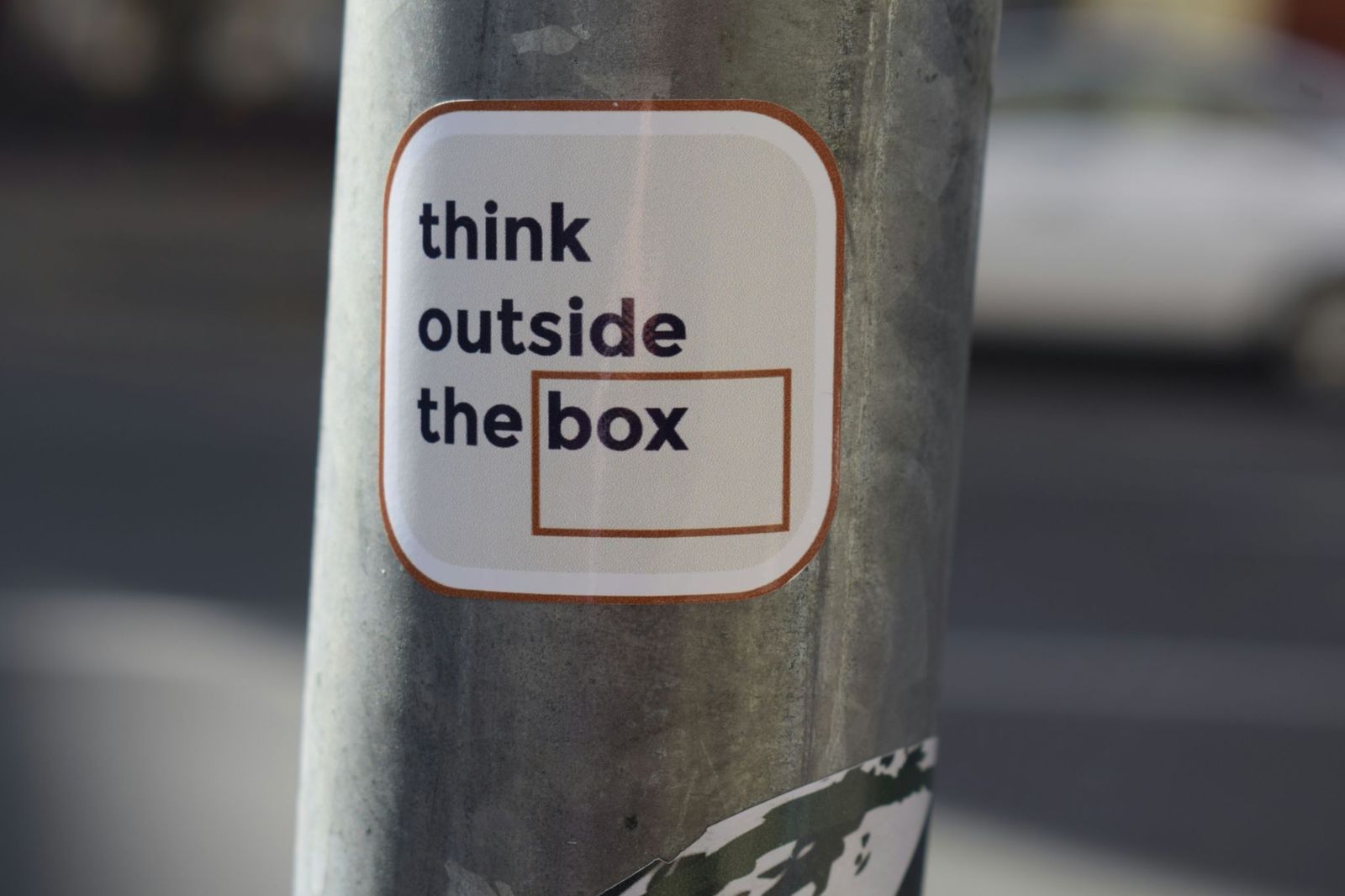
Imagine your team is stuck on the same old solution, and your manager says, "We need to think outside the box." What does he mean? He’s encouraging the team to look for a more creative or unexpected way to solve the problem. Sometimes, ordinary procedures don’t always yield the best results.
The phrase comes from the Nine-Dot Puzzle game, where you must connect all nine dots with four straight lines. The trick is to draw beyond the imaginary box around the dots instead of staying inside it.
Synergy

Synergy happens when two people, teams, or organizations work together and achieve a better result than they could separately. It's usually represented as 1+1 = 3; in other words, the combined effect is greater than the sum of its parts. The word comes from the Greek synergia, meaning "working together." And, in business, it is often used to make teamwork sound more strategic.
Move the needle

When a company tries ten small ideas, but only one actually increases sales, that one idea "moves the needle." The phrase is a way of saying something made a real, noticeable difference, compared to the other ideas trying to cause a similar effect.
The expression comes from old measuring tools, like speedometers and fuel gauges, where the needle moves when the speed, fuel level, or another measurement changes. It entered office slang in the 80s as a corporate shorthand for actions that produce clear, effective results.
Low-hanging fruit
If a team wants quick wins, it may start with the "low-hanging fruit." These are the simple opportunities that require less effort and are usually the easiest tasks to finish first. A "low-hanging fruit" example could be calling back customers who already showed interest compared with finding brand-new customers. Before becoming an everyday term for the office, this expression referred to fruit growing on the lowest branches of a tree, which is the easiest to reach and pick without a ladder or much effort.
Bandwidth

If a coworker says, "I don’t have the bandwidth for that," they are probably not talking about Wi-Fi. In office language, bandwidth means time, energy, or mental capacity. In other words, it’s a polite way of saying, "I’m already too busy; I won't handle that new task." This way, we compare the computer capacity to handle data as a metaphor for the mental capacity humans have.
Deep dive

The phrase is easy to guess once you hear it. If a manager asks for a "deep dive" into falling sales, they are asking for more than a glance. They want a detailed look at the numbers, causes, and possible solutions, a complete analysis of the situation. Such as diving, yes, but without the water fun part.
Take it offline

Ever heard someone say, "Let’s take it offline"? In a meeting, it usually means the topic should wait. The group can move on, and the issue can be discussed later, privately, or outside the main conversation. In computer science, "offline" is used for processing data or tasks separate from the main active network.