Wild nature
Are fire tornadoes a real thing? Yes! And so are these other phenomena!
Published on February 11, 2026
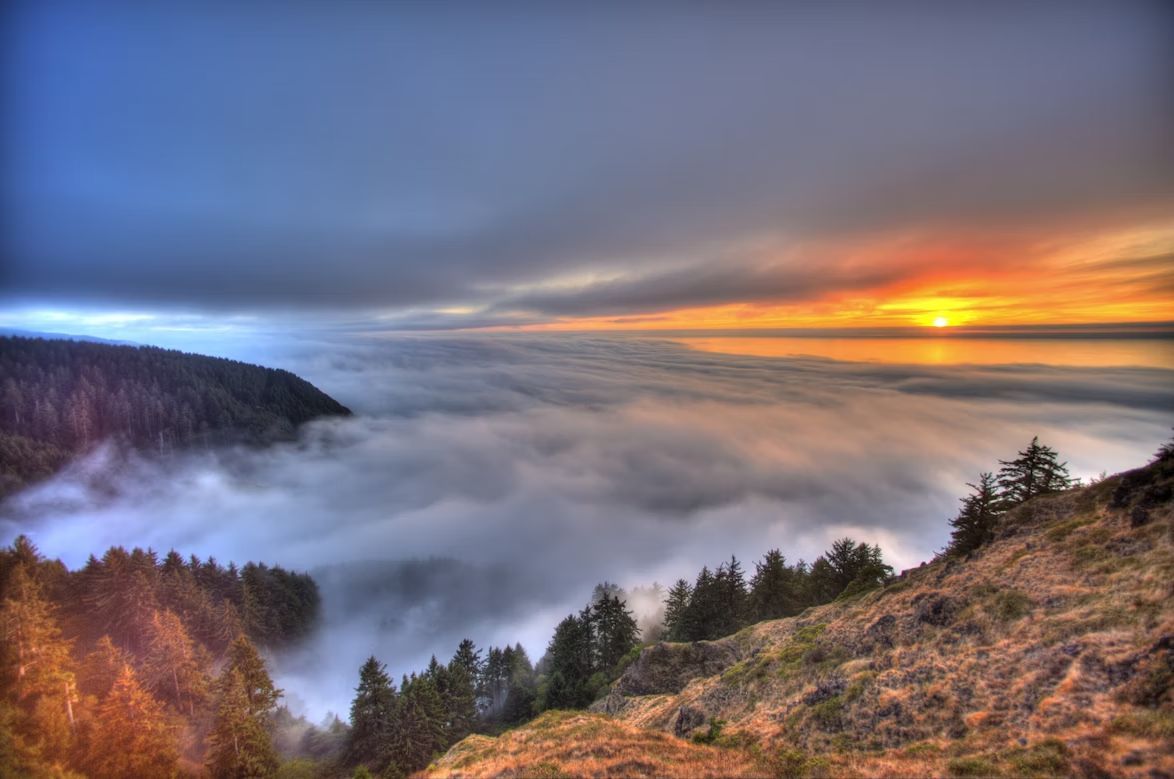 Image: NOAA
You know the rain and the snow. You even know tornadoes, hurricanes, and the green lights in the North. But the weather can be crazier, much crazier than that! Would you believe us if we told you fire can become a tornado or that dust can make cities disappear? When combining the four elements, anything can happen, and we’ve gathered some of the craziest weather phenomena for you here!
Fire power
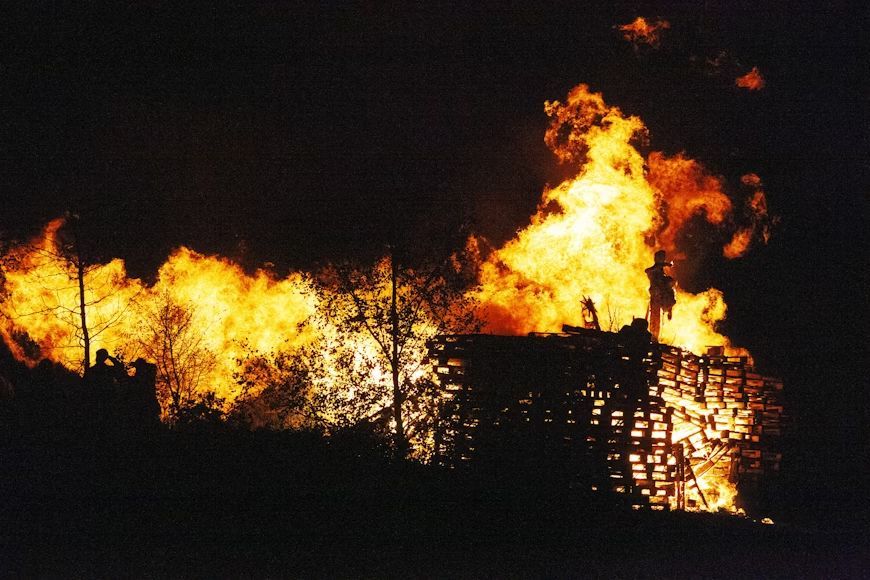 Image: Mark Fletcher-Brown
Imagine a tornado picking up flames instead of debris. That’s a fire whirl, a spinning column of fire that can reach hundreds of feet high during wildfires. It forms when intense heat pulls air upward and the wind twists it into a vortex. Two of the worst and most destructive things together, we don’t need to explain the kind of consequences this unusual phenomenon leaves behind!
Haboob
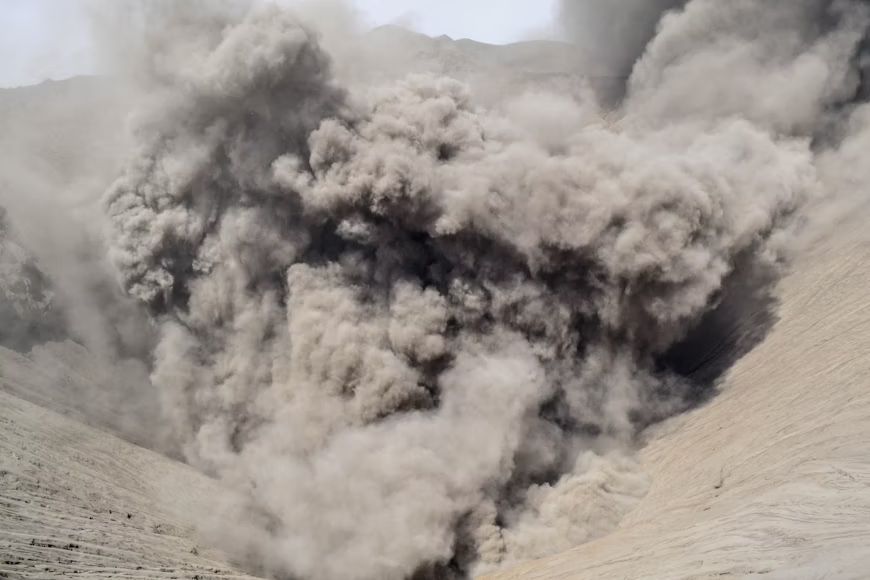 Image: Irham Setyaki
If you’ve ever seen photos of a giant wall of dust swallowing a city, that’s a haboob. You can double-check, but indeed it says "swallow a city"! These massive dust storms often appear in desert regions like Southern America or northern Africa. They happen when cool air from a thunderstorm rushes down and pushes up dirt and sand, creating a thick rolling curtain of dust. The best way to handle one? Head inside and let it pass, but never try running away from it. There’s no outrunning a haboob.
Virga
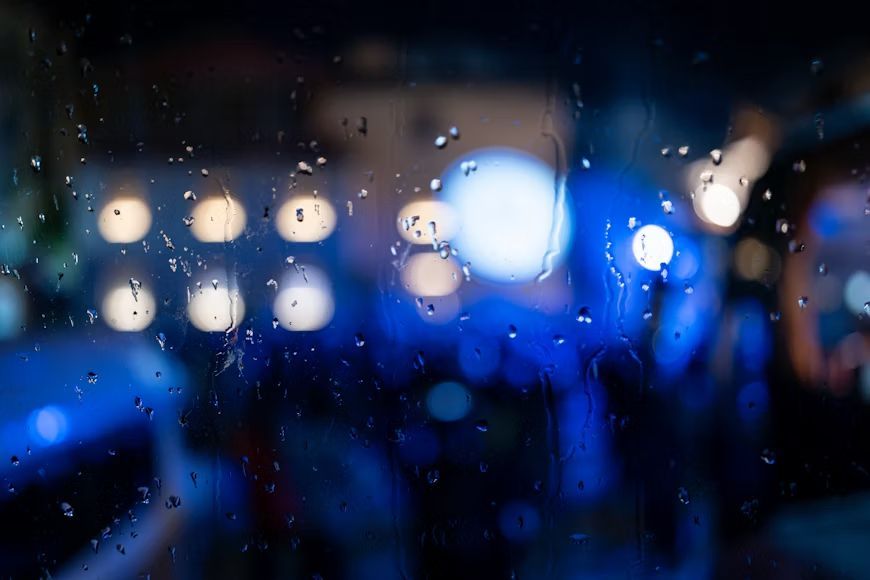 Image: Declan Sun
You feel the tiny drops of water falling from the sky, but you look at the floor and it’s completely dry. What’s going on? That’s virga, a ghostly phenomenon where the raindrops evaporate before they land. It looks like silky streaks hanging from the clouds, a bit like the sky is trying to rain but changes its mind halfway down. This disappearing act happens when the air below the cloud is too dry. Don’t worry, it’s innocent, just a little bit annoying.
Waterspouts
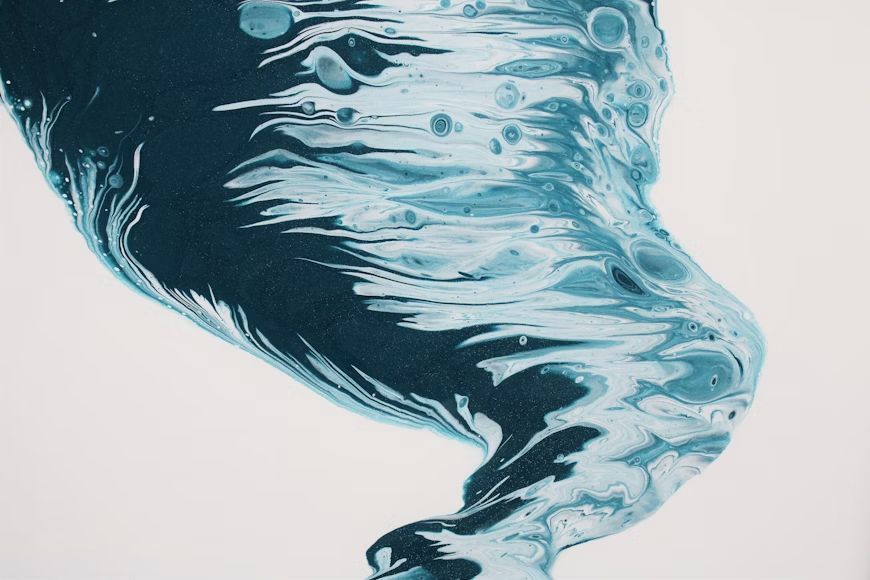 Image: Susan Wilkinson
Tornadoes aren’t just a land thing (or a fire thing for that matter!), they can show up over water too. Waterspouts look like watery funnels rising from the sea, and while they can be dramatic, most are harmless and short-lived. Warm, humid air rising from the surface spins into a twisting column, pulling a bit of water mist with it. Sailors used to think they were sea monsters, but today we know better. Still, it’s not something you’d want to see from your fishing boat.
Volcanic lightning
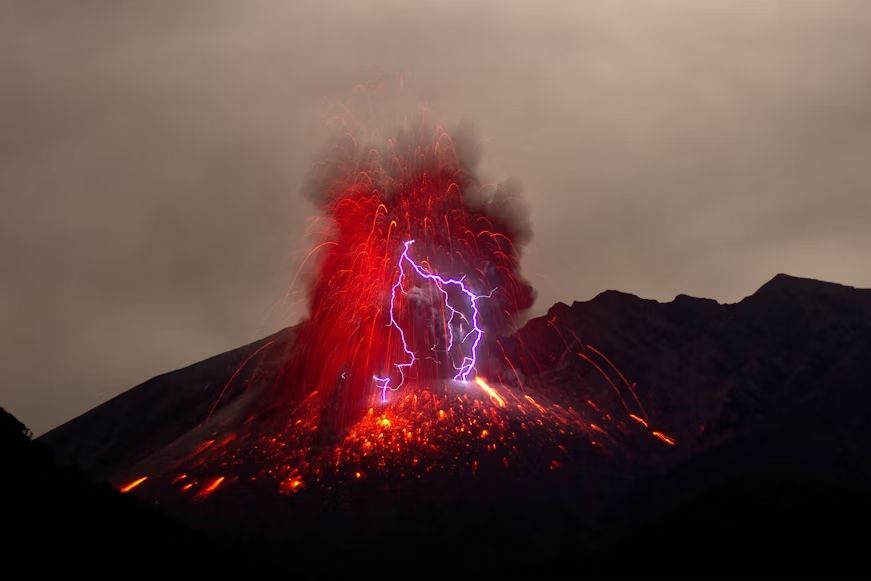 Image: Marc Szeglat
An erupting volcano is already scary enough, but when lightning starts flashing inside the ash cloud, it’s a spectacle. The bursts of electricity come from bits of rock and ash rubbing together and building up charge. Since volcanoes are hard to study up close, scientists are still learning exactly how this works.
Light pillars
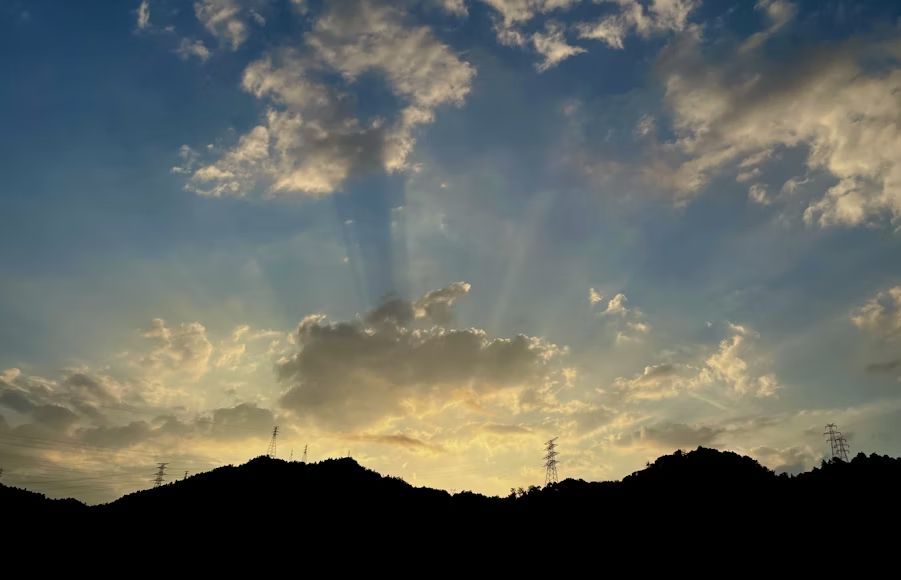 Image: 泽浩 梁
If you’ve ever looked up on a cold night and seen glowing columns stretching toward the sky, you’ve spotted light pillars. They’re not UFOs; they’re ice crystals catching and reflecting light from the ground or the sun. Each tiny crystal acts like a little mirror, turning reflections into tall shimmering towers of color. They’re most common in freezing weather. Have you ever seen this?
Snow rollers
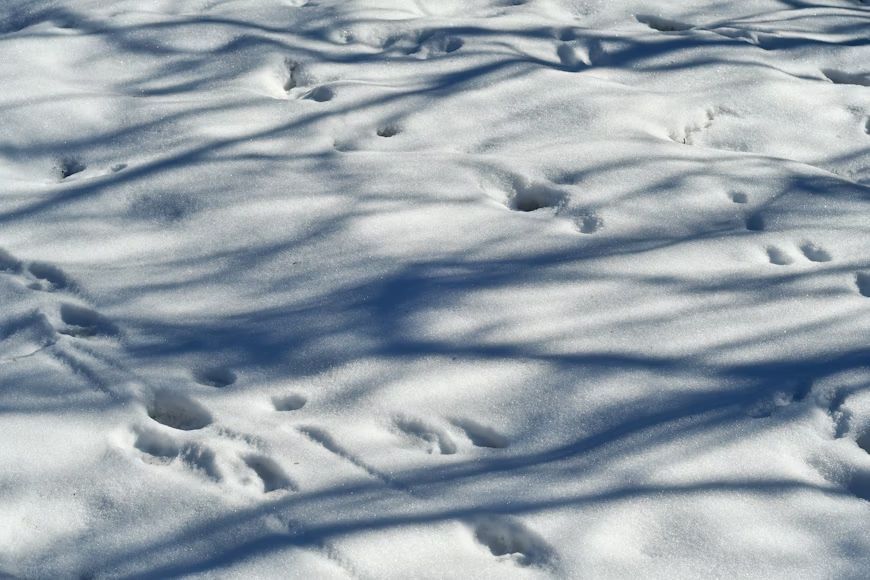 Image: Meg
Every so often, the wind gets artistic and rolls snow into little white doughnuts. These rare creations, called snow rollers, need just the right mix of conditions: Sticky snow, a smooth surface, and a steady breeze. The wind pushes bits of snow along the ground until they curl up into round, hollow shapes.
Hair ice
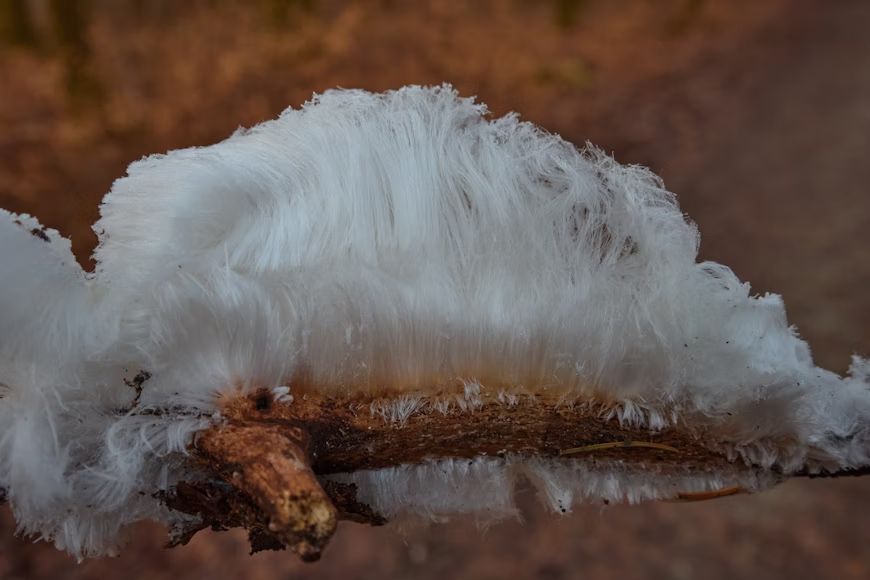 Image: Wolfgang Hasselmann
Deep in the woods on a cold, damp night, you might find what looks like fine white hair growing on dead branches. That’s hair ice, and it forms thanks to a fungus that lives in rotting wood. The fungus releases chemicals that shape ice into thin, silky strands. They are so delicate, they melt at the first touch of sunlight. It’s one of nature’s quietest and most beautiful tricks.
Earth’s shadow
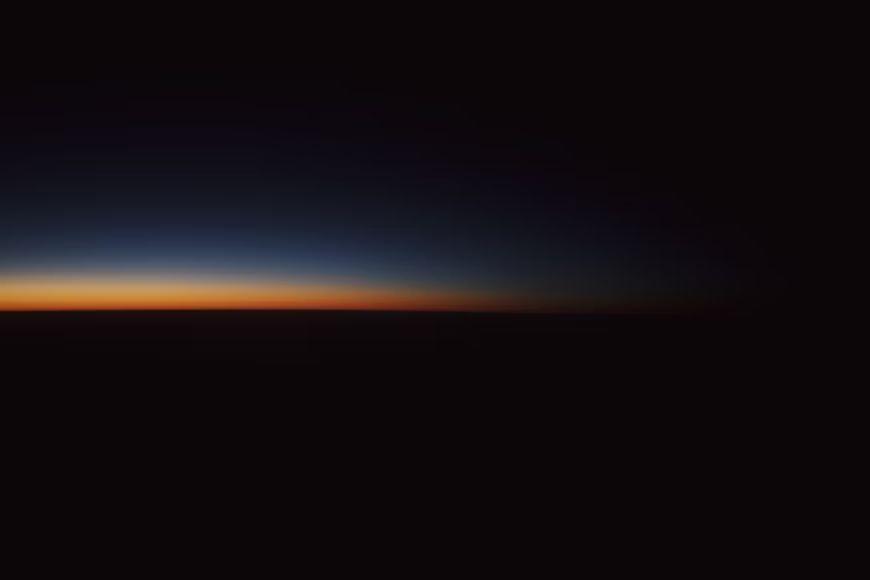 Image: Stijn te Strake
At sunrise or sunset, look opposite the sun and you might spot a dark blue band climbing or sinking along the horizon. That’s Earth’s own shadow. Above it, a pinkish glow called the Belt of Venus often appears, reflecting the last bit of sunlight. Together, they make one of the simplest yet most breathtaking sky shows.
Glory
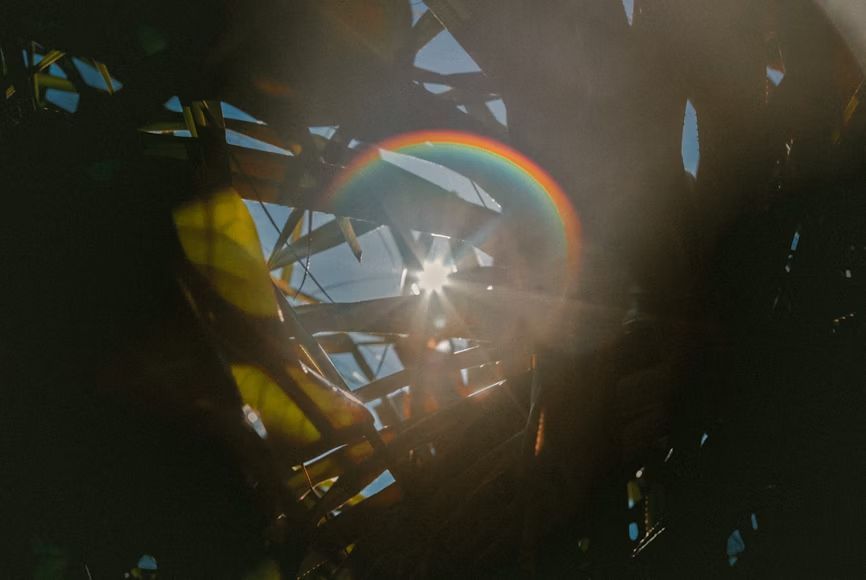 Image: Jakob Owens
If you’ve ever seen a rainbow-like halo around your shadow while standing above the clouds, you’ve witnessed a glory. It happens when sunlight bounces around inside tiny water droplets, splitting into soft rings of color. When that halo surrounds your shadow on mist or fog, it’s called a Brocken spectre, and it can make you look enormous. Early mountaineers used to think they were seeing spirits. Turns out, it was just their own reflection in nature’s mirror.