Decoding

What “Code Adam” means and why stores take it so seriously


Published on June 4, 2026


Image: Hitesh Choudhary

Have you ever heard "Code Adam" while shopping for groceries at Walmart? Or maybe you’ve heard how "Dr. Firestone" was being paged during a routine hospital visit. They sound like harmless announcements. But behind these ordinary words are secret codes staff use to signal emergencies without causing panic. From hospitals and supermarkets to airports and Disney Parks, these phrases quietly warn employees that something is happening. You hope you never hear them, but if you do, it helps to know exactly what they mean.

1

Treasured guest

Image: Helena Lopes

We all love getting special attention at airports or hotel desks, but if you hear the clerk call you a "treasured guest," don’t feel so flattered. You may not be as VIP as one could think.

In the hospitality industry, "treasured guest" has become a humorous bit of industry folklore to describe someone causing trouble. Maybe a customer yelling at staff over expired coupons, demanding impossible accommodations, or throwing a full-blown tantrum at the front desk. Whatever it is, the phrase has become the staff’s secret way to warn co-workers without escalating the situation in front of the customers. Most guests don’t realize the meaning, but once you know it, you may start hearing it more often. We just hope it’s not about you.

2

Code Adam

Image: Karsten Winegeart

Imagine you’re pushing a shopping cart through Walmart when suddenly the overhead speaker announces, "Code Adam." You can easily assume it’s some kind of employee meeting or cleanup request. But when you see them start locking the exits and moving around, you know something’s wrong.

This code was created in 1994 by Walmart in collaboration with the National Center for Missing & Exploited Children (NCMEC), in memory of the tragic case of 6-year-old Adam Walsh. Adam was abducted from a Sears department store in 1981 while shopping with his mother. His father, John Walsh, later became famous for hosting the TV program America’s Most Wanted and advocating for missing children. Even if Adam’s story ended in tragedy, Walmart created the emergency system in Adam’s memory, and other retailers soon adopted it nationwide, intending to have a quick response to missing or abducted children.

3

Code Blue

Image: Günter Valda

You’re sitting in a hospital waiting room during a routine check-up when you suddenly hear "Code Blue, Room 214." Most people immediately know it sounds serious, even if they are not entirely sure why.

The phrase "Code Blue" is used at hospitals to draw the necessary staff and equipment to perform a resuscitation. It was created in the early 1960s at Beathany Medical Center by Dr. Hughes Day. Before then, hospital resuscitations were often chaotic and poorly coordinated. In 1961, Dr. Day received a grant to build one of America’s first cardiac care centers, and he developed both the Code Blue alert system and the modern crash cart to improve survival rates during cardiac emergencies. Today, the system is used in hospitals across the country, sometimes with specialized versions like "Code Blue Pediatric" or "Code Blue Neonate."

4

Dr. Firestone

Image: Cdn Pages

Imagine visiting a loved one in the hospital when the intercom calmly announces, "Paging Dr. Firectone to the third floor." Your head surely goes, "Dr. Firestone’s probably having a busy day up there." He is, but it’s not what you think.

The phrase is actually a discreet fire alert used to warn staff about smoke, flames, or overheating equipment without frightening patients and visitors. Hospitals adopted these coded announcements after realizing that openly yelling "fire" over loudspeakers could create panic, especially among patients who aren’t able to move quickly. "Code Red" is an alternative used by many health centers today, but it also hints at the situation while keeping hallways calm.

5

Code 10

Image: Blake Wisz

You’re standing at a checkout counter when the cashier picks up the phone and quietly says, "I need a Code 10 authorization." If you think that’s just another way to get a supervisor’s approval or technical issue, think again. In reality, the cashier may suspect the credit card is stolen or fraudulent.

Code 10 was developed through a cooperative effort between major credit card companies like Visa and Mastercard, along with international standard organizations. As credit cards became more common in the 1960s and 1970s, stores needed a discreet way to alert banks about suspicious activity without directly accusing customers and potentially putting employees at danger. When a cashier requests a Code 10, the bank’s operator begins asking yes-or-no questions to assess the situation and guide the employee on what to do next.

6

Code Bravo

Image: CDC

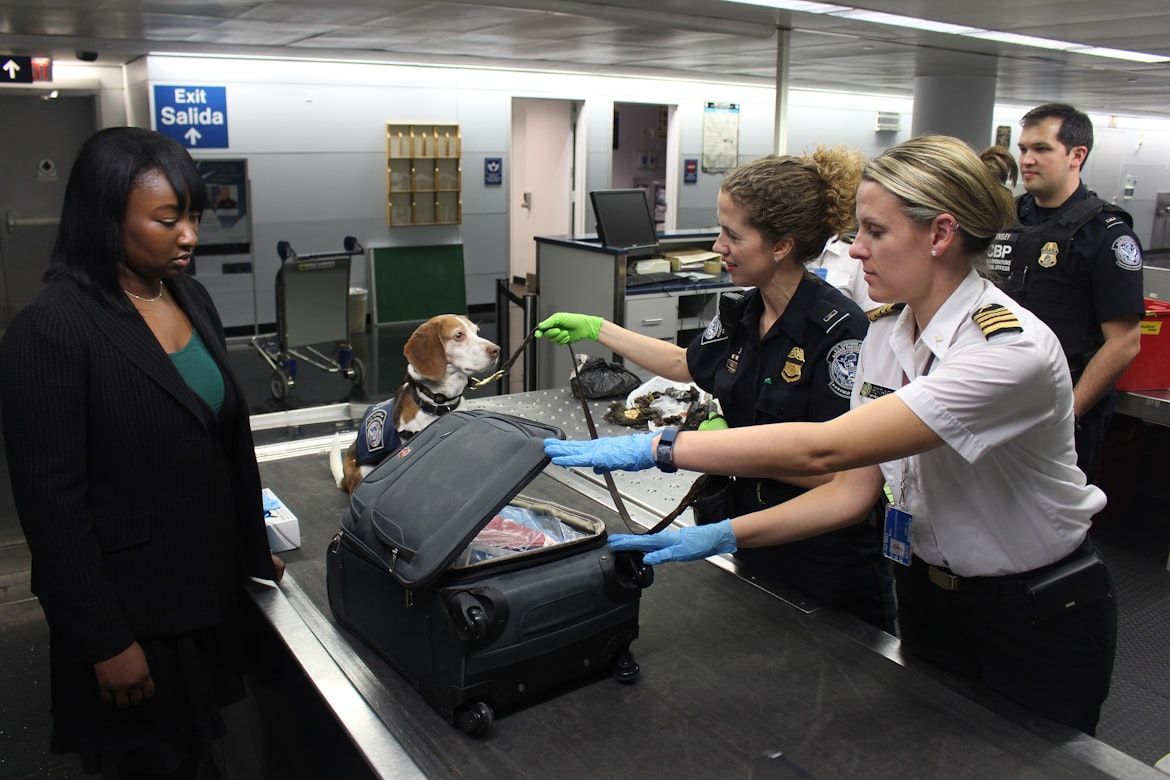
You’ve probably experienced those long airport security lines. The wait is usually uneventful. But sometimes, you can hear "Code Bravo" over the speakers. Maybe it’s a delay, or maybe it’s an issue with luggage. Within seconds, people stop moving, the security line freezes, and exits may even close. It’s something bigger.

Code Bravo is the emergency phrase used by airport security and the Transportation Security Administration to signal a serious security threat, such as an unattended bag, a breach at a checkpoint, or someone slipping into a restricted area. The term comes from the international phonetic alphabet used in aviation and military communications, where "Bravo" represents the letter B. When this is called, security staff immediately lock down affected areas, stop screening lines, and search for the source of the threat. To passengers, it’s sudden and confusing, but to security, it’s a carefully rehearsed response.

7

Code Alpha

Image: Navy Medicine

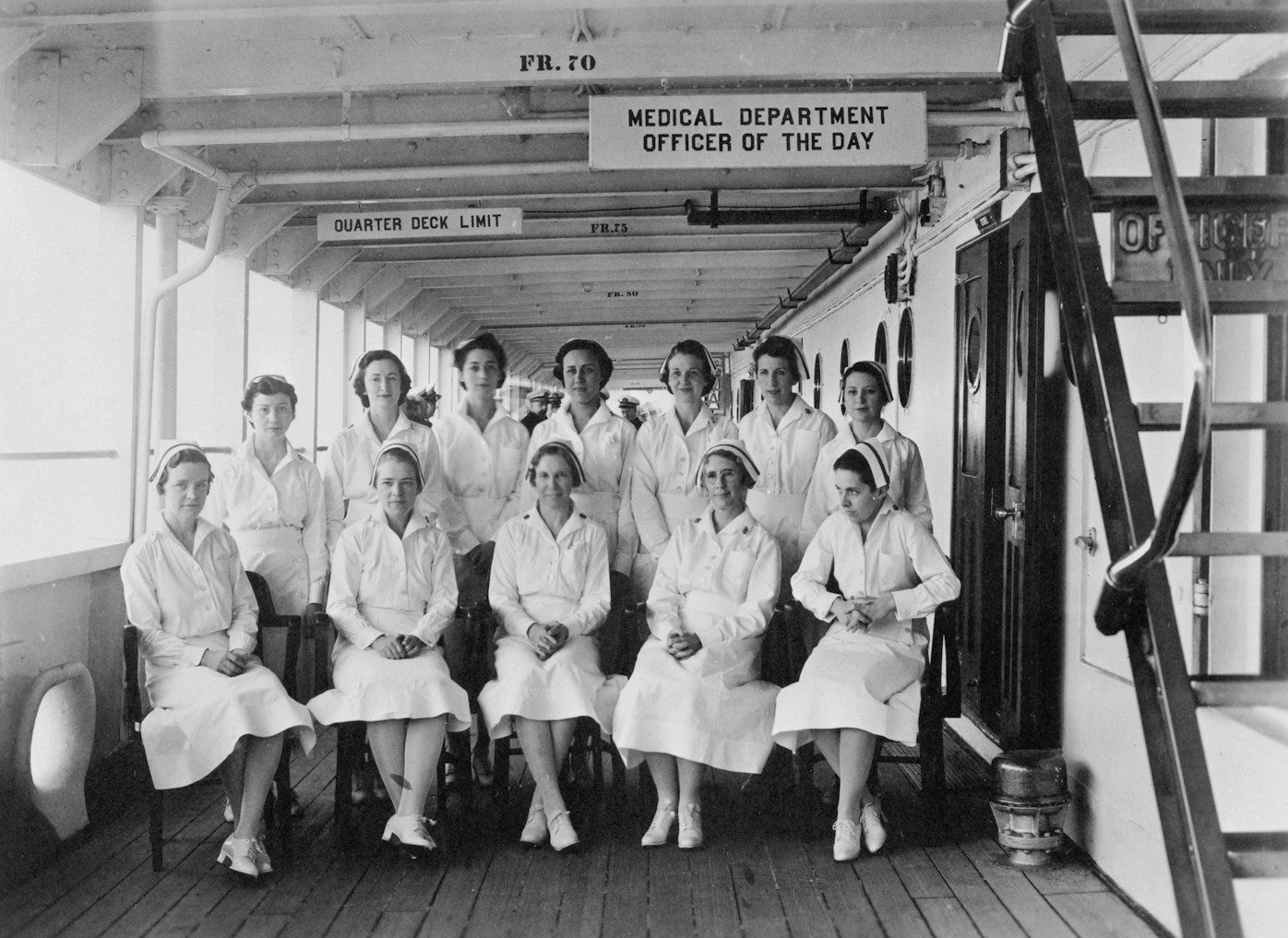
You are heading back to your cabin on a cruise ship when the speakers announce, "Code Alpha, Deck 7." You may think Alpha is related to the captain, but that’s not the case. It means someone on board is suffering a medical emergency.

The phrase comes from the NATO phonetic alphabet, where "Alpha" represents the letter A. In maritime emergency jargon, it became shorthand for a Priority A medical situation requiring immediate response. Cruise lines such as Royal Caribbean and Disney Cruise Line commonly use the term, though some ships use variations like repeating "Alpha" three times. Once the code is announced, onboard medical teams rush toward the specified deck or cabin. If necessary, stretcher crews are mobilized, and in severe cases, the ship may even divert course toward the nearest port for emergency evacuation. Passengers are enjoying the views, but the staff is running to save a life.

8

10-33

Image: chris robert

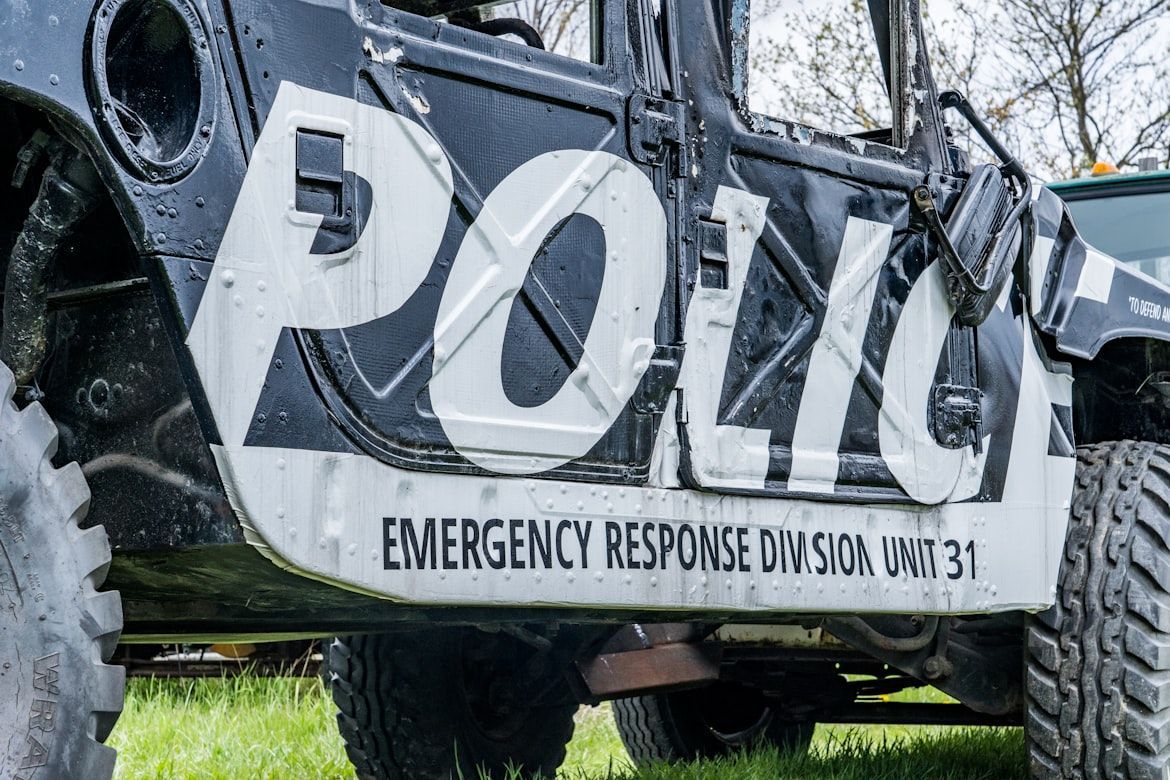
Anyone who remembers the CB radio craze of the 1970s probably smiles when they hear "10-4." Movies, truckers, and radio fans turned those number codes into a part of American culture. So if you overhear "10-33" on a police scanner, you might assume it’s just another routine message. But it’s not as simple as it sounds.

The 10-code system was first created in 1937 by Illinois State Police communications director Charles Hopper and later standardized by the Association of Public Safety Communications Officials, better known as APCO. Officers needed short phrases they could understand clearly over crackling radio signals. The 10-33 code commonly means an officer needs emergency assistance. In some departments, it also signals radio silence so dispatchers can focus on the crisis unfolding in real time.

9

Signal 70

Image: Samuel Lopez Cruz

Disney World is amazing, the parks offer something for everyone, and there are things to see wherever you look. But that’s exactly the kind of place where a child can easily disappear into a sea of strollers, balloons, characters, and crowds. For that reason, Disney has developed the "Signal 70," which alerts cast members and security that a child has become separated from their family.

The number comes from older police and emergency radio systems, where "70" was commonly associated with missing persons. Disney adopted the phrase because it allows employees to communicate discreetly without frightening or alarming nearby guests. If a member finds the child, they gently -and magically- escort them to Baby Care Center, where they coordinate the reunion.

10

Echo, Echo, Echo

Image: Alonso Reyes

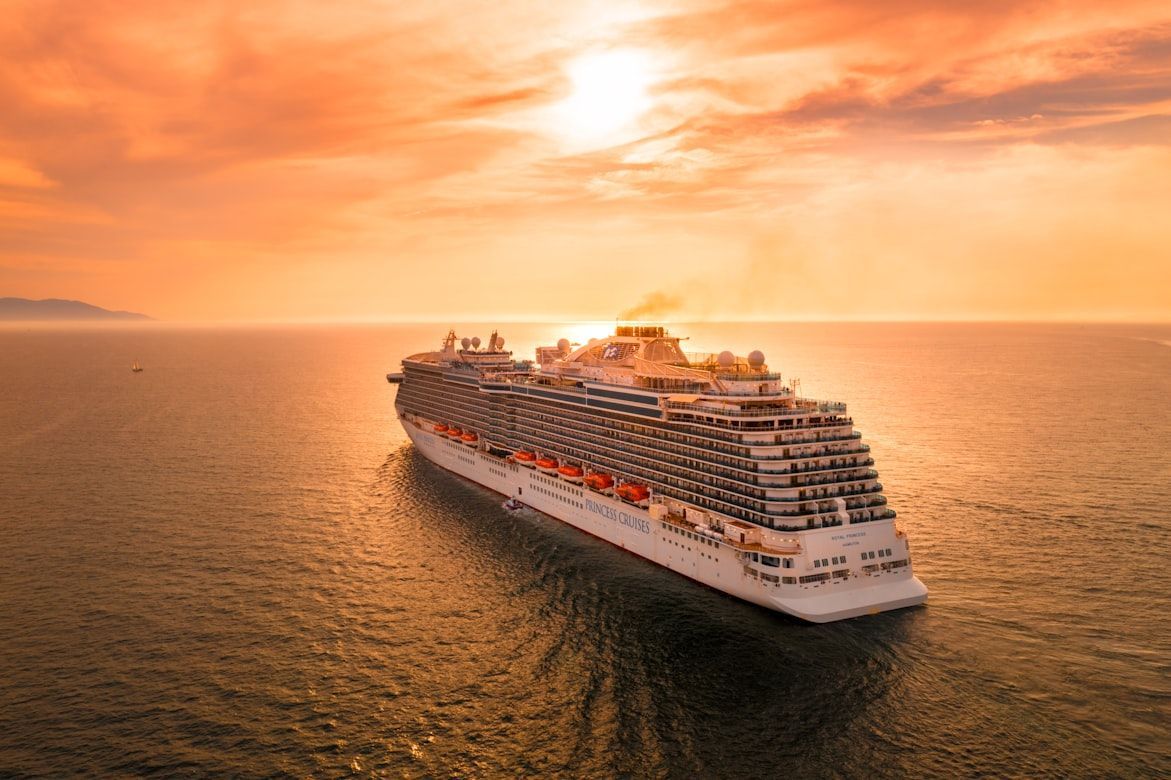
Cruises are great to relax, enjoying a good book under the sun with a nice drink by the side. Until you hear "Echo, echo, echo" on the speakers. If you do, something is happening somewhere else on the ship.

The code is used among cruise employees to signal that dangerous winds or a navigational hazard are affecting the ship. It comes from the international maritime phonetic alphabet, where "Echo" stands for the letter E. In maritime signalling, the letter traditionally means "I am altering my course to starboard." And, in time, the phrase became associated with urgent ship maneuvers and weather-related warnings. However urgent, the repetition of the word by three doesn’t represent life-threatening situations. It alerts the crew of a certain hazard to prepare while avoiding panic among passengers.


10 weird historical events that no one has been able to explain (yet)


Published on June 4, 2026


Image: Walters Art Museum, Public domain, via Wikimedia Commons

Who doesn't like a good mystery? And if the mystery isn’t a work of fiction but the result of a true story, even better! The great unsolved enigmas of history are absolutely fascinating. Some have been solved over time, but there are still many old secrets for which neither scientists nor historians have found an explanation—yet. Time-travel with us as we uncover 10 of the biggest historical mysteries that will probably never be cracked!

1

A ghost island

Image: Tanner, Henry S., Public domain, via Wikimedia Commons

Bermeja Island is mentioned in navigation texts written by European travelers and appears in cartography from the 16th to 19th centuries. Old maps place it off the north coast of the Yucatán Peninsula; however, multiple searches over the years have yielded no concrete evidence of its existence.

So, what happened to Isla Bermeja? Was it a cartographic error? Did it sink due to a tidal wave? Because of its geopolitical significance, some have even suggested that it was blown up by the CIA! A 2009 study by the Autonomous University of Mexico concluded that Isla Bermeja does not exist today, nor were any traces found at its supposed coordinates. Yet, it will forever remain a mystery that will surely keep many entertained.

2

The longest alien signal ever

Image: Credit: Big Ear Radio Observatory and North American AstroPhysical Observatory (NAAPO)., Public domain, via Wikimedia Commons

In 1977, Ohio State University’s Big Ear radio telescope, used in the search for extraterrestrial intelligence, detected a signal now known as the Wow! signal. While reviewing the data, astronomer Jerry R. Ehman noticed a sequence represented as "6EQUJ5." Baffled by the anomaly, he circled it and wrote "Wow!" in the margins.

The signal lasted 72 seconds and, unfortunately, has never been repeated. To this day, no one can fully explain the phenomenon, although some suggest it may have come from a man-made source. Still, the Wow! signal remains one of the strongest candidates for potential extraterrestrial contact ever detected.

3

The disappearance of an entire Inuit village

Image: Edward S. Curtis, Public domain, via Wikimedia Commons

How is it possible for an entire village to vanish without a trace? Believe it or not, this is said to have happened nearly a century ago. According to lore, a small Inuit village in Canada was well known among fur trappers who visited regularly to trade. But in 1930, something very strange supposedly occurred.

A hunter named Joe Labelle claimed he visited the village one day and couldn’t find a single person. Reports said there were guns and food left behind, and even claims that the graves in the cemetery were empty. A thorough investigation, however, found no conclusive evidence of what happened to the villagers. Some witnesses from nearby towns even reported seeing a huge green light. Theories ranged from mass migration to extraterrestrial abductions. The Royal Canadian Mounted Police has since dismissed the case as an urban legend. Some still believe the story to be true.

4

The Joyita Mystery

Image: bbb

We know thousands of shipwreck stories, but this one is quite unique. The MV Joyita, designed to be nearly unsinkable, was found adrift in the South Pacific, practically unharmed, but the crew had disappeared completely.

In October 1955, the American merchant vessel left the port of Apia in Samoa with 16 crew members and 9 passengers bound for the Tokelau Islands. After days without news, a rescue mission was launched. Five weeks later, the Joyita was spotted more than 600 miles west of its intended route. The vessel was partially submerged, and there was no sign of the passengers or crew. Four tons of cargo and all three life rafts were missing. They were never seen again.

5

A mummy and a mysterious fluid

Image: Gary Todd from Xinzheng, China, CC0, via Wikimedia Commons

Do you know where one of the best-preserved mummies was found? Hint: not in Egypt. Xin Zhui, the Marquise of Dai during the Western Han Dynasty in China, was discovered in her tomb at Mawangdui 2,000 years after her death, along with hundreds of valuable documents and artifacts.

What makes this mummy so extraordinary is how well-preserved her body is. Her organs and veins remain intact, and she still has hair and even eyelashes. Scientists analyzed the fluid present in the coffin and discovered it was acidic and contained salt and magnesium. They believe this mysterious liquid may have been responsible for preserving Xin Zhui so well. What they don’t know is whether it was intentionally poured into the coffin or came from the body itself.

6

A missing prime minister

Image: Yoichi Okamoto, Public domain, via Wikimedia Commons

The United States has its fair share of presidents who died while in office, but none of our 45 presidents have ever disappeared without a trace. Did you know that this actually happened in The Land Down Under?

Harold Edward Holt was the Prime Minister of Australia from 1966 until his presumed death in 1967. He loved the ocean and spearfishing. During a weekend trip with friends, Holt visited the remote Cheviot Beach to take a swim. Rough sea conditions that day caused him to be swept away by the waves, and he never reappeared. Despite an intensive search, his body was never found, which has given rise to numerous conspiracy theories. Ironically, Australians built the Harold Holt Memorial Swimming Centre in Melbourne in his honor.

7

The anonymous hijacker

Image: FBI, Public domain, via Wikimedia Commons

Many famous criminals have managed to remain unidentified for decades, but the D.B. Cooper case is something else entirely. In 1971, Cooper boarded a flight from Portland to Seattle. Shortly after takeoff, he showed a flight attendant a device he claimed was a bomb and demanded four parachutes and $200,000 in cash.

The crew landed to meet Cooper’s demands in exchange for the passengers and then took off again. As the plane flew over southwestern Washington, Cooper jumped into the cold, rainy night carrying his haul. His whereabouts and true identity were never discovered, although it is likely he didn’t survive the jump. In 1980, some of the ransom money was found near the Columbia River. Although the FBI officially closed the case in 2016, amateur sleuths continue to try to crack it.

8

Dancing to death

Image: Pieter Brueghel the Elder, Public domain, via Wikimedia Commons

Can you imagine an epidemic where the main symptom is uncontrollable dancing? Sounds like science fiction, doesn’t it? Yet this really happened during the Middle Ages. In 1518, a dancing plague struck Strasbourg, Alsace, in what is now France. This strange condition affected up to 400 people, making them dance frantically for weeks. It is said that some even died of heart attacks, exhaustion, or strokes.

Doctors and authorities tried all kinds of measures to stop the spread. They even banned music for a while! To this day, scientists are not certain what caused this bizarre condition: it may have been food poisoning from toxins in the ergot fungus, or perhaps a case of stress-induced mass hysteria.

9

A manuscript no one understands

Image: Public domain, via Wikimedia Commons

The Voynich manuscript is a codex written roughly 500 years ago in an unknown language and writing system by an anonymous author. Known as Voynichese, the manuscript was named after Wilfrid Voynich, a Polish bibliophile and antiquarian who purchased it in 1912.

Radiocarbon testing has shown that it dates to the early 15th century. Many cryptographers and codebreakers have attempted to decipher its roughly 240 pages without success. The manuscript contains diagrams and illustrations of unknown plants and astrological symbols. Some believe it may be a made-up language, a secret code, a work of fiction, or even a hoax. If you think you can solve this mystery, the Voynich manuscript is available for viewing at Yale University’s Beinecke Rare Book and Manuscript Library.

10

An ancestor of movable-type printing

Image: Bernhard

Similar to the Voynich manuscript, the Phaistos Disc is a fired clay disc believed to have been created during the Bronze Age. It was discovered by an Italian archaeologist in the basement of a palace in Crete, Greece, in 1908.

What makes this disc fascinating is that it contains a mysterious message. Stamped into the clay is a set of signs, forming a text that many scientists have tried to decipher—without success. It is considered an early attempt at printing, a technological innovation that would not become widespread for several centuries. While enthusiasts still hope the enigma can be solved, this is unlikely unless other documents are discovered to provide context.

Looking for an extra scoop of literary fun?

Learn more with our Word of the day

acumen

/əˈkjumən/