The mysteries of Scripture

This phrase appears more than 70 times in Scripture


Published on June 8, 2026
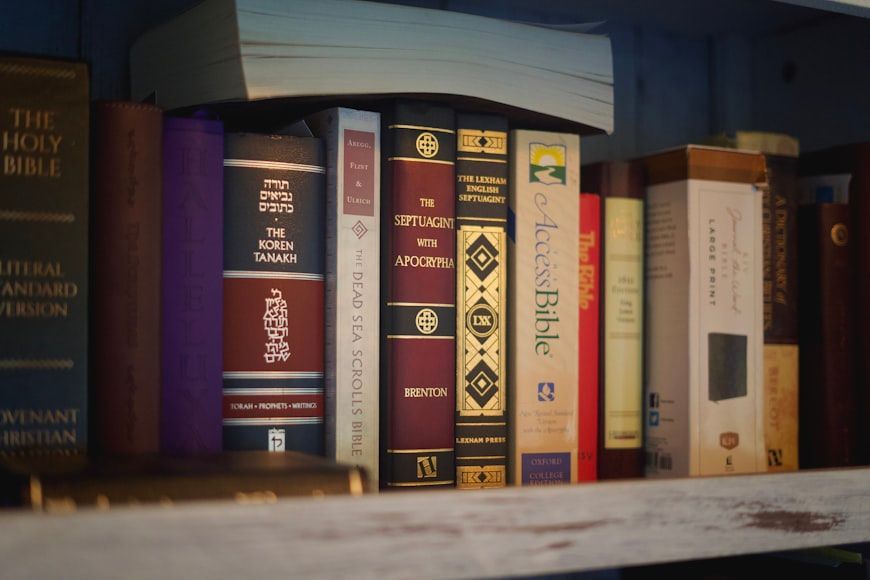

Image: Brad

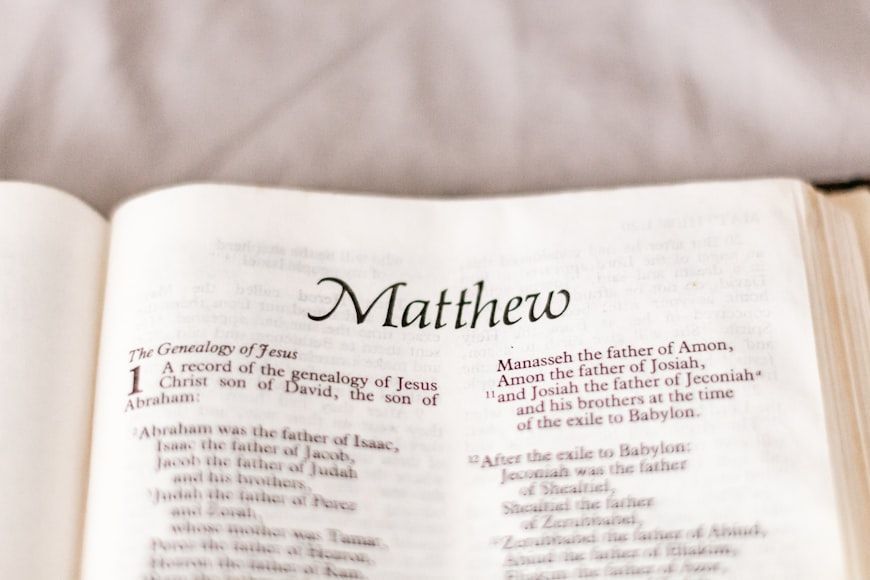
The Bible, the Tanakh, the Holy Scriptures, the Word of God: there are many names for this millennial text, but do they all refer to the same thing? Under the name ‘Bible’ —from the Greek biblia, ‘books’— we find different texts, some longer than others, connected to different faiths and traditions. What makes up the Bible? How does it vary from tradition to tradition? What was its original language? Keep on reading to find out the answer to these questions and other interesting facts about this sacred text.

1

The Bible and the Tanakh

Image: Tanner Mardis

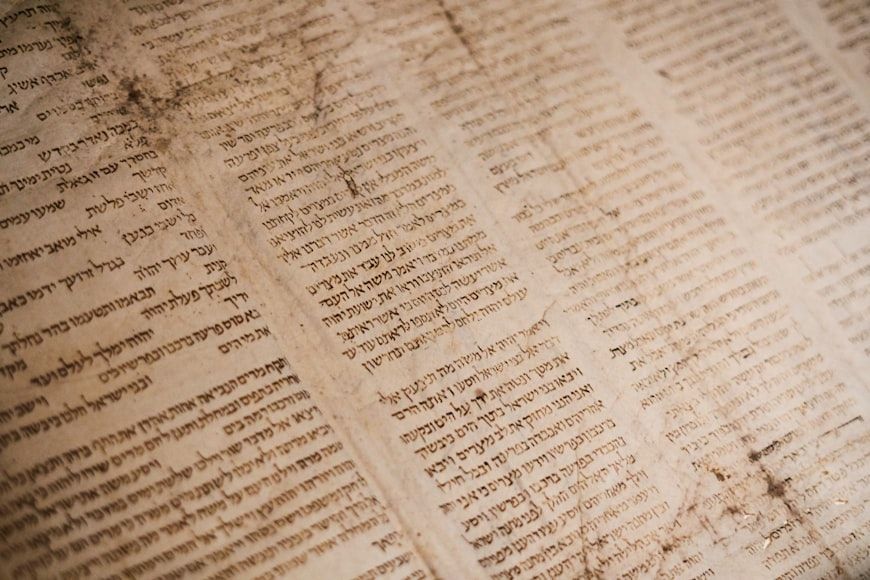
While many people mistakenly refer to the Torah as the "Jewish Bible", it actually includes only the first five books of Moses—what, in Christian tradition, is sometimes called the Pentateuch. The complete collection of sacred Jewish texts is actually called Tanakh, an acronym of the sections included: Torah —the narrations and law written in the books of Moses—, Nevi’im —the Prophets—, and Ketuvim —writings of wisdom and poetic literature.

Are the Jewish Tanakh and the Christian Old Testament the same text? Not quite. Most of the text coincides, but is organized in a different way and translated from different sources. Additionally, books that are not part of the Jewish tradition—for example, Tobit or Judith—are not included in all Christian Bibles.

2

What is in the Christian Bible?

Image: Anthony Garand

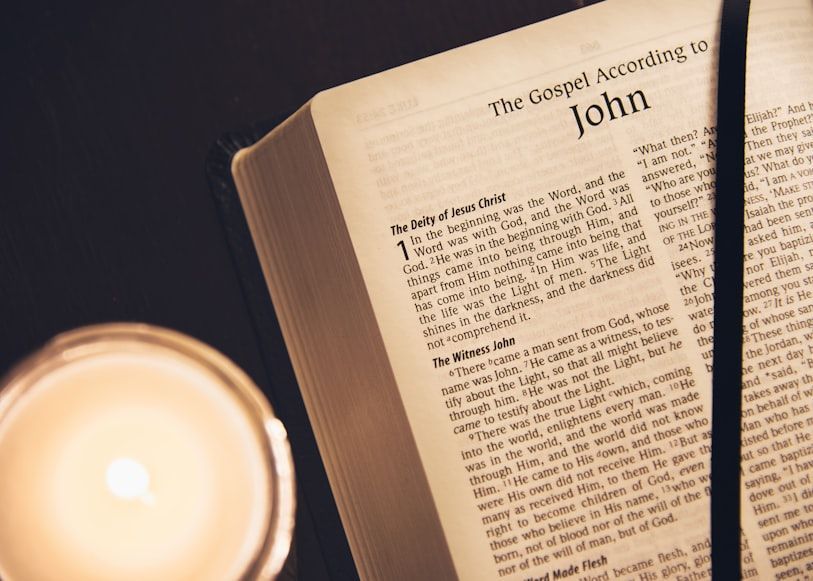
You might be surprised to learn that not all Christians read the same Bible. While the New Testament is the same, there are differences in what books are included in the Old Testament. Seven books—Tobit, Judith, Wisdom, Sirach, Baruch, and 1 & 2 Maccabees, plus some sections in Daniel and Esther— are considered part of the canon by Catholics and Orthodox traditions, but are not accepted by denominations of Protestant tradition.

Why are these books questioned? They were written at a later time than the rest of the Old Testament, around the 3rd century BCE, and were often only accessible through Greek translations. While Catholics and Orthodox have traditionally accepted them, the Protestant denominations do not, on account of their not being accepted as canonical by the Jewish tradition. However, these texts are often read as historical documents, even if they are not considered to be inspired by God.

3

A multilingual text

Image: Mick Haupt

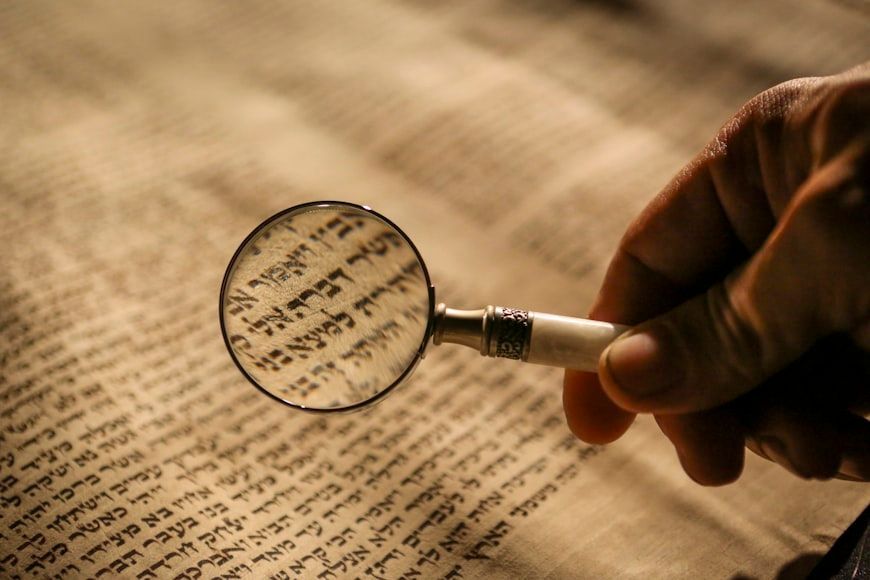
The Bible was written across many centuries in different places, so the original text is not in a single language. The majority of the Tanakh and the Old Testament was originally written in Biblical Hebrew (which is different, although related, from Modern Hebrew), while some sections were written in Aramaic.

What about the New Testament? While most writers spoke Aramaic, the text is written in Koine Greek, a colloquial version of Greek used as a common tongue at the time. However, the text still includes words and phrases in Hebrew and Aramaic, such as amen, Abba, or hosanna.

4

A text across three continents

Image: Constantinos Kollias

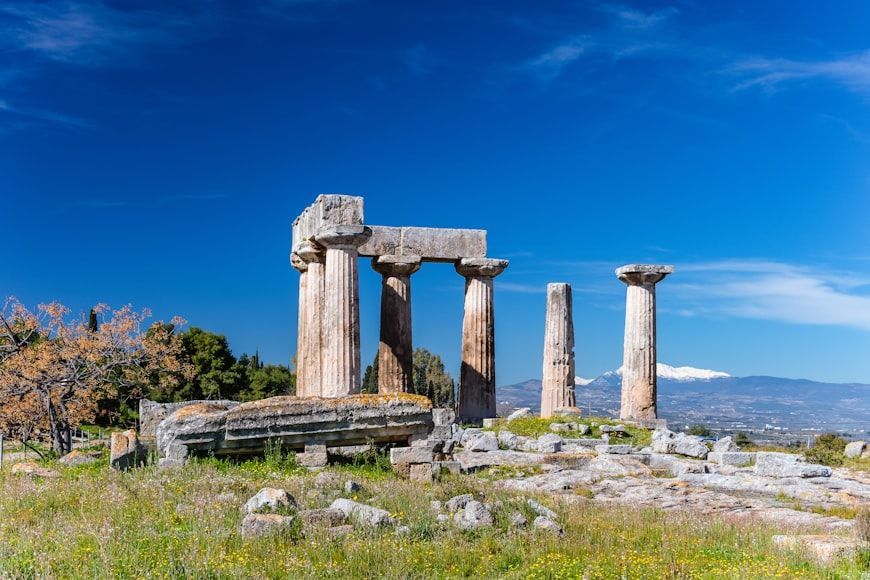
As a text composed by many people across many centuries, the Bible was not penned in a single location, but across three different continents and several countries. The majority of the Tanakh/Old Testament was written in the ancient kingdoms of Israel and Judah, with some parts written during the Israelite exile in Babylon (modern-day Iraq). Additionally, some traditions believe that the books of Moses were written in modern-day Egypt.

What about the New Testament? Though closer in time, its sections were written in places all around the Mediterranean, mainly in ancient Judea, Greece, Macedonia, modern-day Turkey, and Rome.

5

The Biblical genres

Image: Kelly Sikkema

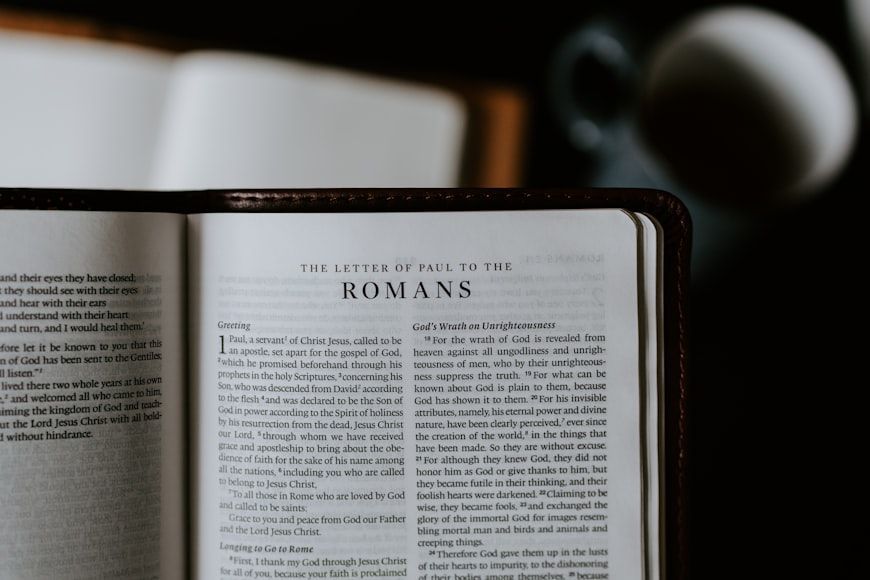
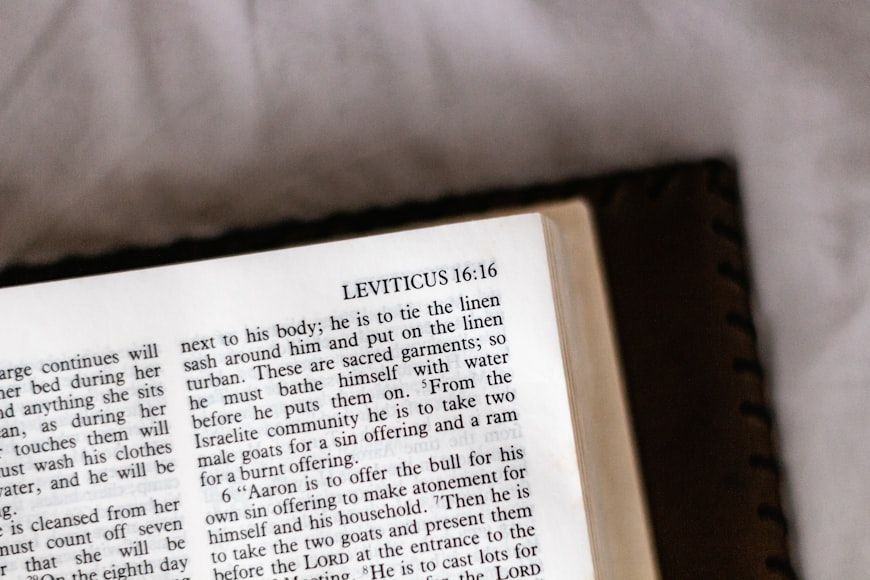
The Bible is an anthology, written and compiled over several centuries and under different circumstances. As such, it includes a variety of known literary genres, such as historical narratives —for example, Genesis or Acts—, compendiums of law —Leviticus or Deuteronomy—, wisdom literature —Proverbs—, poetry —Psalms or Song of Solomon—, prophetic and apocalyptic texts —Isaiah, Jeremiah, or Revelations—, and letters —Romans or Corinthians.

In addition to all these genres, already established when the sections of the Bible were written, some books include the first recorded examples of a literary genre, such as the Gospels —a unique mix of narrative, biography, and theology—, or the Parables, which, unlike fables, convey complex moral and religious teachings alongside their interpretation.

6

The Biblical gaps

Image: Sincerely Media

All Bibles start in the same moment, the beginning of time, but not all Bibles follow the same chronology. The Tanakh narrates the story of the Israelites up until the construction of the Second Temple (6th century BCE), and the New Testament picks the story up around the years 5 to 1 BCE. What happened in the meantime? It depends on who you ask.

In the Protestant traditions, that gap is known as the "Silent Years", on account of the lack of inspired texts and prophets. In the Catholic and Orthodox traditions, the gap is shortened by Maccabees 1 and 2, which narrate the uprising against the Seleucid Empire in the 2nd Century BCE. There is, however, another biblical gap in the New Testament, known as the "Lost Years", that goes from the last mention of Jesus as a child —his visit to the Temple at 12 years old— to his baptism in the River Jordan at 30 years old.

7

How many commandments?

Image: Sincerely Media

If someone were to ask how many commandments are in the Bible, many would quickly respond that there are 10. However, not all traditions would accept this as a correct answer. The Jewish tradition recognizes 613 divine commandments or mitzvot. The first 10, listed twice in the Torah, are a list of fundamental moral and theological principles, while the remaining 603 regulate different aspects of life, such as society, rituals, ethics, or justice.

Do all Christian traditions follow the same commandments? Yes and no. The text of the Old Testament describes the ten commandments, but does not enumerate them, so each tradition has its own way of assigning numbers to each commandment, which can lead to confusion.

8

Verses and Books

Image: Anuja Tilj

The biblical text is traditionally divided into books, which are divided into verses, but these divisions vary between the Tanakh and the Christian Bibles. The Tanakh contains 24 books divided into 3 sectionsTorah, Nevi’im, and Ketuvim. The longest book is Tehillim or Psalms, while the shortest is the book of Obadiah.

In the Christian tradition, the longest book is Jeremiah, while the shortest book is John 3, with only 13 verses. The longest verse (in English) is Esther 8:9 with more than 70 words, while the shortest is John 11:35, with just two.

9

We don’t know what Jesus looked like

Image: Sincerely Media

Have you ever wondered why there are many different depictions of Jesus around the world, even when they are most likely historically incorrect? The truth is, we can only guess what he looked like, based on the historical time and the geographical location, but we don’t have any physical description of him.

The four Gospels give us all sorts of information about Jesus, from his genealogy to his life, his family, his teachings, and his mission, but he is never described in terms of appearance. Even when different people talk about him, he is described based on his place of origin, his lineage, or his actions.

10

The most repeated phrase

Image: Sincerely Media

If you have ever read any part of the Bible, you might have noticed that many phrases are repeated. This is not a coincidence, but a deliberate literary device, intended to emphasize certain ideas and help to retain their message.

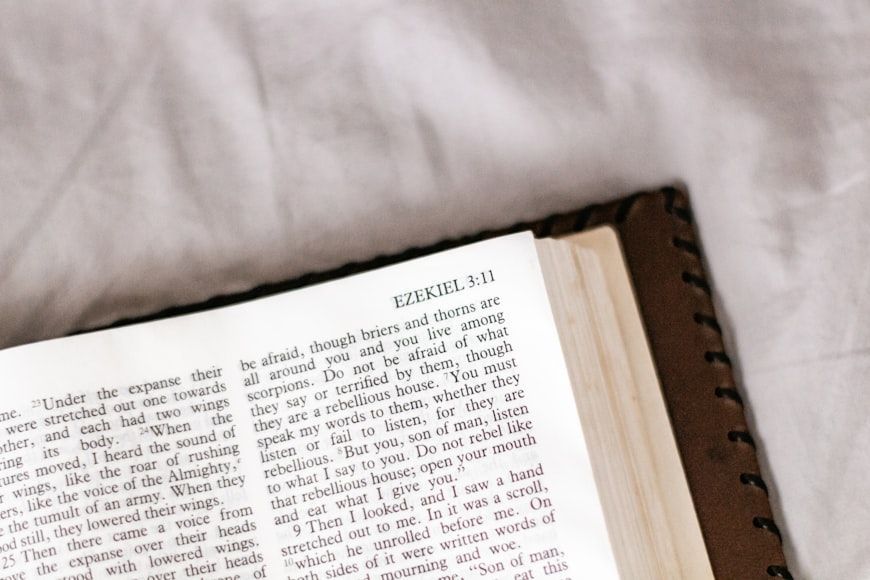
What is the most repeated phrase in the Bible? Both the Tanakh and the Christian Bibles coincide here, with the phrase "Do not fear" —and similar variants such as "Fear not" or "Be not afraid"— repeated more than 70 times in the Tanakh, and more than a hundred times in the Christian Bible.

11

The longest name

Image: Sincerely Media

Names carry a deep meaning in the Bible, often related to historical circumstances, spiritual characteristics, or prophetic messages. In fact, many passages involve the renaming of individuals to reflect a newfound mission or experience, such as God renaming Abram (‘exalted father’) as Abraham (‘father of a multitude’), or Jesus renaming Simon as Peter (in Aramaic, Kepha, "stone") to mean he would be the rock of early Christianity.

Among these names, one stands out due to its length and its ominous message. In the book of Isaiah, God instructs the prophet Isaiah to name his second child Mahershalalhashbaz, a name that means ‘swift are the spoils, speedy is the plunder’, and is interpreted as prophecising the upcoming invasion of Israel by the Assyrian empire. Fun fact: if this name rings a bell for you, it might be due to the actor Mahershala Ali, whose real name is Mahershalalhashbaz Gilmore.



10 weird historical events that no one has been able to explain (yet)


Published on June 8, 2026


Image: Walters Art Museum, Public domain, via Wikimedia Commons

Who doesn't like a good mystery? And if the mystery isn’t a work of fiction but the result of a true story, even better! The great unsolved enigmas of history are absolutely fascinating. Some have been solved over time, but there are still many old secrets for which neither scientists nor historians have found an explanation—yet. Time-travel with us as we uncover 10 of the biggest historical mysteries that will probably never be cracked!

1

A ghost island

Image: Tanner, Henry S., Public domain, via Wikimedia Commons

Bermeja Island is mentioned in navigation texts written by European travelers and appears in cartography from the 16th to 19th centuries. Old maps place it off the north coast of the Yucatán Peninsula; however, multiple searches over the years have yielded no concrete evidence of its existence.

So, what happened to Isla Bermeja? Was it a cartographic error? Did it sink due to a tidal wave? Because of its geopolitical significance, some have even suggested that it was blown up by the CIA! A 2009 study by the Autonomous University of Mexico concluded that Isla Bermeja does not exist today, nor were any traces found at its supposed coordinates. Yet, it will forever remain a mystery that will surely keep many entertained.

2

The longest alien signal ever

Image: Credit: Big Ear Radio Observatory and North American AstroPhysical Observatory (NAAPO)., Public domain, via Wikimedia Commons

In 1977, Ohio State University’s Big Ear radio telescope, used in the search for extraterrestrial intelligence, detected a signal now known as the Wow! signal. While reviewing the data, astronomer Jerry R. Ehman noticed a sequence represented as "6EQUJ5." Baffled by the anomaly, he circled it and wrote "Wow!" in the margins.

The signal lasted 72 seconds and, unfortunately, has never been repeated. To this day, no one can fully explain the phenomenon, although some suggest it may have come from a man-made source. Still, the Wow! signal remains one of the strongest candidates for potential extraterrestrial contact ever detected.

3

The disappearance of an entire Inuit village

Image: Edward S. Curtis, Public domain, via Wikimedia Commons

How is it possible for an entire village to vanish without a trace? Believe it or not, this is said to have happened nearly a century ago. According to lore, a small Inuit village in Canada was well known among fur trappers who visited regularly to trade. But in 1930, something very strange supposedly occurred.

A hunter named Joe Labelle claimed he visited the village one day and couldn’t find a single person. Reports said there were guns and food left behind, and even claims that the graves in the cemetery were empty. A thorough investigation, however, found no conclusive evidence of what happened to the villagers. Some witnesses from nearby towns even reported seeing a huge green light. Theories ranged from mass migration to extraterrestrial abductions. The Royal Canadian Mounted Police has since dismissed the case as an urban legend. Some still believe the story to be true.

4

The Joyita Mystery

Image: bbb

We know thousands of shipwreck stories, but this one is quite unique. The MV Joyita, designed to be nearly unsinkable, was found adrift in the South Pacific, practically unharmed, but the crew had disappeared completely.

In October 1955, the American merchant vessel left the port of Apia in Samoa with 16 crew members and 9 passengers bound for the Tokelau Islands. After days without news, a rescue mission was launched. Five weeks later, the Joyita was spotted more than 600 miles west of its intended route. The vessel was partially submerged, and there was no sign of the passengers or crew. Four tons of cargo and all three life rafts were missing. They were never seen again.

5

A mummy and a mysterious fluid

Image: Gary Todd from Xinzheng, China, CC0, via Wikimedia Commons

Do you know where one of the best-preserved mummies was found? Hint: not in Egypt. Xin Zhui, the Marquise of Dai during the Western Han Dynasty in China, was discovered in her tomb at Mawangdui 2,000 years after her death, along with hundreds of valuable documents and artifacts.

What makes this mummy so extraordinary is how well-preserved her body is. Her organs and veins remain intact, and she still has hair and even eyelashes. Scientists analyzed the fluid present in the coffin and discovered it was acidic and contained salt and magnesium. They believe this mysterious liquid may have been responsible for preserving Xin Zhui so well. What they don’t know is whether it was intentionally poured into the coffin or came from the body itself.

6

A missing prime minister

Image: Yoichi Okamoto, Public domain, via Wikimedia Commons

The United States has its fair share of presidents who died while in office, but none of our 45 presidents have ever disappeared without a trace. Did you know that this actually happened in The Land Down Under?

Harold Edward Holt was the Prime Minister of Australia from 1966 until his presumed death in 1967. He loved the ocean and spearfishing. During a weekend trip with friends, Holt visited the remote Cheviot Beach to take a swim. Rough sea conditions that day caused him to be swept away by the waves, and he never reappeared. Despite an intensive search, his body was never found, which has given rise to numerous conspiracy theories. Ironically, Australians built the Harold Holt Memorial Swimming Centre in Melbourne in his honor.

7

The anonymous hijacker

Image: FBI, Public domain, via Wikimedia Commons

Many famous criminals have managed to remain unidentified for decades, but the D.B. Cooper case is something else entirely. In 1971, Cooper boarded a flight from Portland to Seattle. Shortly after takeoff, he showed a flight attendant a device he claimed was a bomb and demanded four parachutes and $200,000 in cash.

The crew landed to meet Cooper’s demands in exchange for the passengers and then took off again. As the plane flew over southwestern Washington, Cooper jumped into the cold, rainy night carrying his haul. His whereabouts and true identity were never discovered, although it is likely he didn’t survive the jump. In 1980, some of the ransom money was found near the Columbia River. Although the FBI officially closed the case in 2016, amateur sleuths continue to try to crack it.

8

Dancing to death

Image: Pieter Brueghel the Elder, Public domain, via Wikimedia Commons

Can you imagine an epidemic where the main symptom is uncontrollable dancing? Sounds like science fiction, doesn’t it? Yet this really happened during the Middle Ages. In 1518, a dancing plague struck Strasbourg, Alsace, in what is now France. This strange condition affected up to 400 people, making them dance frantically for weeks. It is said that some even died of heart attacks, exhaustion, or strokes.

Doctors and authorities tried all kinds of measures to stop the spread. They even banned music for a while! To this day, scientists are not certain what caused this bizarre condition: it may have been food poisoning from toxins in the ergot fungus, or perhaps a case of stress-induced mass hysteria.

9

A manuscript no one understands

Image: Public domain, via Wikimedia Commons

The Voynich manuscript is a codex written roughly 500 years ago in an unknown language and writing system by an anonymous author. Known as Voynichese, the manuscript was named after Wilfrid Voynich, a Polish bibliophile and antiquarian who purchased it in 1912.

Radiocarbon testing has shown that it dates to the early 15th century. Many cryptographers and codebreakers have attempted to decipher its roughly 240 pages without success. The manuscript contains diagrams and illustrations of unknown plants and astrological symbols. Some believe it may be a made-up language, a secret code, a work of fiction, or even a hoax. If you think you can solve this mystery, the Voynich manuscript is available for viewing at Yale University’s Beinecke Rare Book and Manuscript Library.

10

An ancestor of movable-type printing

Image: Bernhard

Similar to the Voynich manuscript, the Phaistos Disc is a fired clay disc believed to have been created during the Bronze Age. It was discovered by an Italian archaeologist in the basement of a palace in Crete, Greece, in 1908.

What makes this disc fascinating is that it contains a mysterious message. Stamped into the clay is a set of signs, forming a text that many scientists have tried to decipher—without success. It is considered an early attempt at printing, a technological innovation that would not become widespread for several centuries. While enthusiasts still hope the enigma can be solved, this is unlikely unless other documents are discovered to provide context.

Looking for an extra scoop of literary fun?

Learn more with our Word of the day

editorial

/ˌɛdəˈtɔriəl/