Whose line is it, anyway?

No, Churchill never said that: 10 wrongly attributed quotes


Published on January 19, 2026


Image: Crisoforo Gaspar Hernandez

We’ve all seen those inspirational quotes floating around with famous names attached, like Gandhi, Einstein, or Churchill, to name a few, but how many of them are genuine? As it turns out, a lot of the most well-known quotes were never actually said by the people they're credited to. Here are 10 of the most famously misattributed quotes. Did you know about any of these?

1

"Let them eat cake." Not Marie Antoinette

Image: Kaleb Duperre

This infamous line was never said by Marie Antoinette. Actually, it appeared in Rousseau’s writing when the Queen was just a child.

It became a symbol of elite ignorance during the French Revolution, but blaming her directly is unfair historical myth-making.

2

"Be the change you wish to see in the world." Not Gandhi

Image: Ishant Mishra

Gandhi said and did many inspirational things, but he never said it like that. The quote is more of a paraphrase of his broader teachings on self-responsibility.


While it fits his vibe, this line, ubiquitous on Instagram, isn’t something he wrote or said.

3

"I disapprove of what you say, but I will defend to the death your right to say it." Not Voltaire

Image: Nicolas Michot

This quote was written by Evelyn Beatrice Hall, summarizing Voltaire’s attitude, but not quoting him directly.

Still, it sounds very much like something Voltaire would say, which is probably why it has been associated with his name over the years.

4

"The only thing necessary for the triumph of evil is for good men to do nothing." Not Edmund Burke

Image: Kenny Eliason

Just as it happened with the fake quotes attributed to Gandhi and Voltaire, Burke never said this, but it is one of those lines that captures his general views, albeit not in the exact wording.

Despite that, it’s often slapped onto memes and motivational pictures with his name under it. Classic case of too good to fact-check.

5

"Elementary, my dear Watson." Not Sherlock Holmes

Image: Clément Falize

This might come as a shock, but Sherlock Holmes never actually said this in the books. The phrase was invented by screenwriters later on.


It stuck because it's catchy, but Arthur Conan Doyle's Holmes was a bit more verbose and formal in style.

6

"Insanity is doing the same thing over and over and expecting different results." Not Einstein

Image: Taton Moïse

This phrase has been widely attributed to Albert Einstein, but, despite what every motivational poster wants you to believe, the brilliant man didn’t say it.

It supposedly came from a Narcotics Anonymous text or a novel by Rita Mae Brown in the 1980s.

7

"If I had more time, I would have written a shorter letter." Not Mark Twain

Image: Preston A Larimer

Although Mark Twain was as witty as they come, he didn’t say this. Instead, Blaise Pascal did, way back in 1657. The idea is that concise writing takes time.

Others like Churchill and Cicero expressed similar ideas, but Pascal was the first to put it so clearly.

8

"Blood, sweat, and tears." Not originally Churchill

Image: Toby Dagenhart

And while we are on the subject of Churchill, we can mention this line. He said "blood, toil, tears, and sweat," which is slightly clunkier but still powerful.


The simpler version predates him and was used by others, including Theodore Roosevelt and Garibaldi.

9

"I cannot tell a lie." Not George Washington
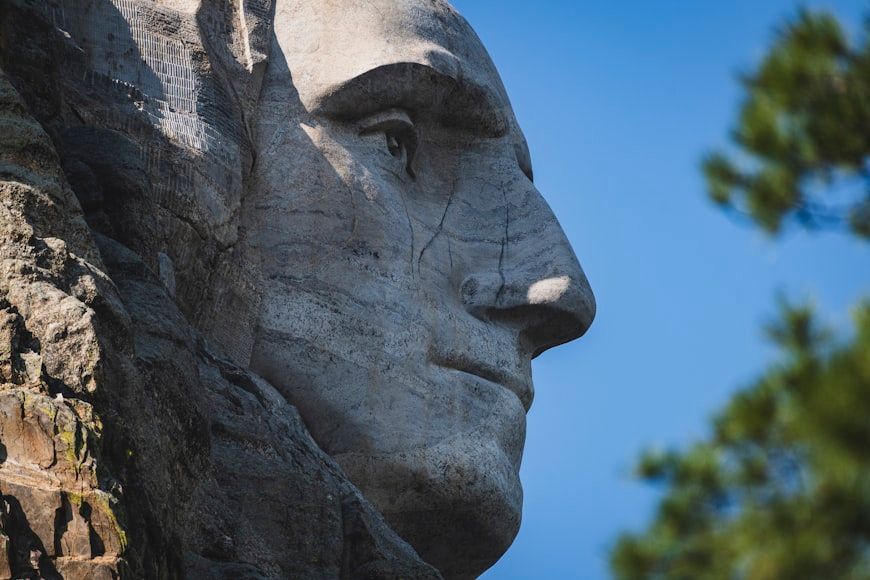
Image: Jon Sailer

Believe it or not, the cherry tree story is fiction. It was made up by Mason Locke Weems to give Washington a moral glow.

There’s no real evidence that the first U.S. president ever said it, but it’s still in textbooks and kids’ stories.

10

"Well-behaved women seldom make history." Not Marilyn or Eleanor

Image: Jarvik Joshi

This famous line wasn’t said by Marilyn Monroe or Eleanor Roosevelt. It was written by historian Laurel Thatcher Ulrich.

The reputed historian meant it as an observation, not a call to rebellion, but the internet memes gave it a whole new meaning.



The 12 longest-living animals on Earth (and how they cheat time)


Published on January 19, 2026


Image: David Clode

Nature doesn’t just create beauty, it crafts survival miracles. While most animals have short lives, a rare few have mastered the art of staying alive for centuries, even millennia. These aren’t just long-lived creatures; they’re nature’s ultimate time travelers. From the frozen depths of the oceans to the darkest corners underground, they’ve developed bizarre, brilliant strategies to cheat death. Get ready to meet 12 animals whose lifespans will absolutely blow your mind.

1

Antarctic Sponge (Anoxycalyx joubini)

Image: NOAA

Record age: up to 15,000 years

This unassuming sea sponge thrives in the freezing waters of Antarctica, where temperatures hover around 28.6 °F—so cold that biological processes hit the brakes. In such icy conditions, metabolism slows to a crawl, allowing these sponges to live for thousands of years.

Some have reached impressive sizes of over 3 feet tall and have been around since mammoths were still thundering across the tundra. They don’t move, they don’t stress, and they barely change, just quietly existing while centuries pass them by. Their secret to extreme longevity? Glacial patience, deep-sea stillness, and a lifestyle that redefines "low-maintenance".

2

Immortal Jellyfish (Turritopsis dohrnii)

Image: Dr. Karen J. Osborn, CC0, via Wikimedia Commons

Age: technically… infinite

This tiny jellyfish, no bigger than a fingernail—less than 0.2 inches—is like the ocean’s very own Benjamin Button. What makes it truly extraordinary is its ability to rewind its life story, flipping back to a youthful, juvenile stage whenever it wants. While it’s not completely invincible (predators and other threats are still very real), if left undisturbed, it can keep hitting the reset button on aging indefinitely, making it one of the most fascinating "time-benders" in nature.

3

Ocean Quahog Clam (Arctica islandica)

Image: Norbert Braun

Record age: 507 years

In 2006, a special clam was discovered buried deep in the seabeds of the North Atlantic. Scientists were able to determine that it had been there since at least 1499—that’s centuries before the United States was even a thought! This ancient marvel, nicknamed "Ming", was able to perfect a slow-and-steady approach to life. Growing at a snail’s pace and barely budging, Ming’s sedentary lifestyle turned out to be a brilliant strategy for beating the clock. Who knew doing almost nothing could be the ultimate secret to longevity?

4

Greenland Shark (Somniosus microcephalus)

Image: https://upload.wikimedia.org/wikipedia/commons/3/39/Greenland_shark_profile.jpg

Record age: estimated 392 years

These sharks aren’t your average ocean cruisers—they can stretch over 20 feet long and weigh up to 2,200 pounds. But what’s really mindblowing is how slowly they move, like they’re in a permanent state of deep relaxation. Living in the icy Arctic waters, these giants don’t hit adulthood until they’re about 150 years old, and some can glide through the depths for nearly 400 years. Imagine that! These ancient swimmers were already around before America declared independence... and they are still out there, silently roaming the seas!

5

Bowhead Whale (Balaena mysticetus)

Image: Vicki Beaver, Alaska Fisheries Science Center, NOAA FIsheries, Marine Mammal Permit#14245, Public domain, via Wikimedia Commons

Record age: over 211 years

This whale is a true ocean giant, stretching up to 60 feet long and weighing a staggering 200,000 pounds. But what makes it stand out isn’t just its size but its age. Some of these majestic creatures carry harpoons from the 1800s still lodged in their skin, like walking history books. Just picture living so long that you’re literally carrying outdated technology embedded in your body—talk about being a time traveler of the seas!

6

Red Sea Urchin (Mesocentrotus franciscanus)

Image: National Marine Sanctuaries, Public domain, via Wikimedia Commons

Record age: 200 years

Spanning the chilly Pacific coastline from California all the way up to Alaska, this spiky little ball—about 7 inches across—is full of surprises. It munches on algae and calls the deep, dark ocean its home, thriving at depths of up to 300 feet. Don’t let its size fool you: this prickly creature is a true elder of the cold seas, quietly outliving many ocean neighbors while keeping a low profile. A tough, slow-living veteran wrapped in spikes!

7

Koi Carp (Cyprinus rubrofuscus)

Image: Daniel Dan

Record age: 226 years

Meet Hanako, a legendary Japanese koi who swam through life for an astonishing 226 years. Scientists discovered how old she was by studying the rings on her scales, much like counting the growth rings of a tree. These colorful, ornamental fish aren’t just symbols of good fortune; they’re also secret long-lifers with the potential to celebrate over two centuries of birthdays, as long as they get the right care and a peaceful pond to call home.

8

Seychelles Giant Tortoise (Aldabrachelys gigantea)

Image: Ryan Grewell

Record age: 190 years

Jonathan is a male tortoise living on the remote island of Saint Helena in the South Atlantic Ocean. He was born back in 1832, and he’s still happily chomping lettuce and soaking up the sun today. Weighing in at more than 400 pounds and measuring around 3 feet long, Jonathan holds the title of the oldest known living land animal on the planet. If he could share tales, they’d span nearly two centuries of history. Imagine that!

9

Lake Sturgeon (Acipenser fulvescens)

Image: See page for author, Public domain, via Wikimedia Commons

Record age: 152 years

This ancient-looking fish, with its whisker-like barbels, looking like a tiny underwater submarine, prowls the lakes of North America. It can reach an impressive length of up to 7 feet and weigh around 200 pounds. These slow-living creatures don’t rush into adulthood—they start breeding only around age 20—and then take their time cruising through life at a leisurely pace. Believe it or not, one legendary catch in Wisconsin was estimated to be over 150 years old!

10

Kakapo Parrot (Strigops habroptilus)

Image: Andreas Sjövall

Record age: over 90 years

This chunky, night-loving parrot from New Zealand is a true oddball—it can’t fly, snores like a grumpy grandpa, and smells like fresh flowers. Despite its quirks, this bird boasts an impressively long lifespan. Sadly, it teeters on the edge of extinction. The oldest known kakapo, affectionately named Richard Henry, lived 90 years, earning him the title of the charmingly eccentric elder statesman of the avian world.

11

Naked Mole Rat (Heterocephalus glaber)

Image: Daderot, CC0, via Wikimedia Commons

Record age: 37 years

This tiny, kooky rodent—barely 3 inches long and just over an ounce in weight—could’ve been cast straight from a sci-fi apocalypse flick. Dwelling in vast underground colonies across Africa, it’s practically invincible to cancer, pain, and the usual effects of aging. Scientists are fascinated by this little marvel, even if it’s not winning beauty contests anytime soon. Its superpowers make it a star in longevity research!

12

American Lobster (Homarus americanus)

Image: OAR/National Undersea Research Program (NURP)., Public domain, via Wikimedia Commons

Record age: estimated 100+ years

Lobsters have a totally different rulebook than us when it comes to aging. They don’t really grow old; they just keep getting bigger and bigger. Some giant lobsters weigh over 40 pounds and stretch beyond 3 feet long. Their biggest threats? Not old age, but predators or the risky process of shedding their shells. In theory, they could live forever if left alone—but let’s be honest, not many get to enjoy a peaceful, lobster-sized retirement!

Looking for an extra scoop of literary fun?

Learn more with our Word of the day

deject

/dəˈdʒɛk(t)/