Not so happy originally

The tragic ending of Cinderella's stepsisters that Disney changed


Published on June 9, 2026
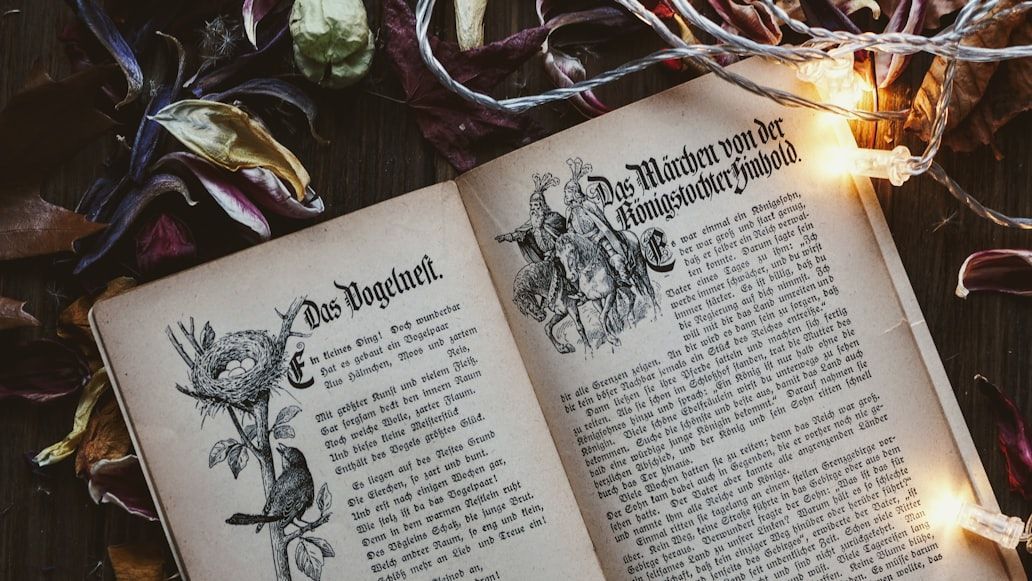

Image: Natalia Y.

Disney movies have adapted several beloved fairy tales and stories, which means that, for those who experienced these stories as movies for the first time, coming across the original tales can be shocking, as they are quite different, and sometimes even scary and gory.

Most of Disney's movies are intended for children, so these stories had to be adapted and often softened for the audience. Let’s see how Disney changed famous stories when making them into movies.

1

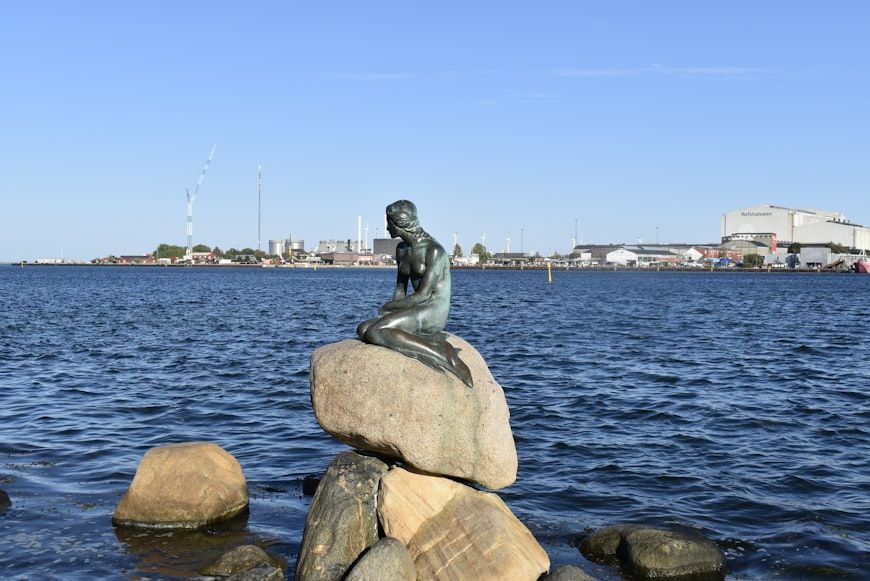
The Little Mermaid

Image: Anjali Shrivastava

This 1837 story by Hans Christian Andersen is, at first sight, similar to its movie adaptation. Yes, in the original, the Little Mermaid feels sharp pains each time she walks, but other elements remain. However, the main difference is in the ending: before the prince’s wedding, the sea witch tasks the Little Mermaid with killing the prince in order to live, but she prefers to die herself and turn into sea foam.

2

Cinderella

Image: The Now Time

The 1950 version of Cinderella also follows most of the original story. Most of the differences with the Brothers Grimm’s version come from elements added by Disney, such as the Fairy Godmother and the singing mice. But there is one gory element that needed to be changed before making a children’s movie: in the tale, Cinderella’s stepsisters, trying to fit into the crystal slipper, resort to cutting parts of their feet.

3

Snow White

Image: Priscilla Du Preez 🇨🇦

The first full-length Disney animated movie, Snow White and the Seven Dwarves was a resounding success. However, the story has some differences when compared to the original story by the Brothers Grimm. When the Queen gives Snow white the poisoned apple, it is not a true love’s kiss that wakes her. The prince sees her lying in her crystal coffin and wants to take her with him. When he moves the coffin, the piece of apple that’s still in her throat moves, and she wakes up. As punishment, the Queen is made to dance in shoes made from hot iron until she falls dead.

4

The hunchback of Notre Dame

Image: Marcel Strauß

When watching this lovely musical, it is difficult to imagine that it comes from a lengthy novel filled with tales of vengeance, obsession, social disparities, and a tragic ending. In Notre-Dame de Paris by Victor Hugo, Quasimodo is deaf and nearly mute, and he is isolated from the world. Frollo, an archdeacon inamoured by the young Esmeralda, accuses her of witchcraft and ultimately succeeds in killing her, while Frollo, instead of the chivalrous young man portrayed by Disney, takes advantage of Esmeralda but abandons her in her time of need.

5

Tangled

Image: Taylor Smith

A reimagination of the 19th-century Rapunzel by the Brothers Grimm, the Disney version adds many elements to the story, such as the magical properties of the hair or Rapunzel being a stolen princess. In the original, Rapunzel’s parents give her away as payment for a stolen lettuce. When a prince comes across her tower, they fall in love, but they are tricked by the witch, with the prince falling into a thorny bush and hurting his eyes. Luckily, there is a happy ending where they are reunited, and Rapunzel’s tears restore the prince’s sight.

6

The princess and the frog

Image: Adam Currie

This 2009 version, set in New Orleans, is only loosely based on several classic tales featuring a prince-turned-frog. While in the Disney version, the kiss turns Tiana into a frog, in the classic fairy tale, the princess, disgusted by the idea of kissing the frog prince, throws him violently against the wall. Luckily for him, it works just as well as a kiss, and he returns to his original form.

7

Beauty and the Beast

Image: jerry klein

The main fairytale behind this Disney classic is of French origin. In it, the reason for Belle’s arrival at the castle is quite different: her father steals a rose from the Beast’s garden and is imprisoned. Belle’s sisters blame her for their father’s misfortunes and demand that she stay in his place. She goes to the castle, filled with invisible servants, where the Beast tries to make her fall in love with him. After being allowed to visit her family, she returns to find the Beast dying. After professing her love, the Beast turns into a prince, and they live happily ever after.

8

Frozen

Image: Carmen Keuper

Loosely based on Hans Christian Andersen’s The Snow Queen, Disney’s Frozen turns a dark story featuring a villainous Queen into a tale of sisterly love. In the original story, Gerda (the inspiration behind the character of Anna) goes on a quest to rescue her friend Kai from the clutches of the evil Snow Queen. Ultimately, her tears are able to melt the ice shards in Kai’s heart and save him.

9

Pinocchio

Image: Rhamely

Inspired by the 1883 Italian novel The Adventures of Pinocchio by Carlo Collodi, the Disney movie gives us a much more tame version of the story. In the original, Pinocchio is rude and cruel. Often chastised by Jiminy Cricket, he ends up killing him and is punished in consequence. A moral tale about disobedience and laziness, the original Pinocchio is only able to turn into a human boy after working hard and learning to care for others.

10

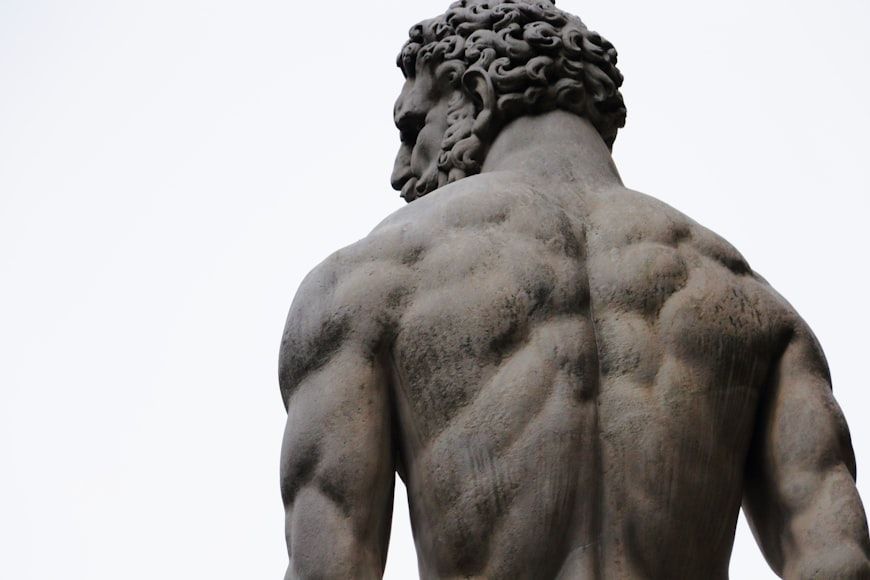
Hercules

Image: Simone Pellegrini

As with most mythological stories, the original tale of Hercules is quite tragic, and not the happy ending story presented by Disney. A product of the affair of Zeus with a mortal woman, Hercules is hated by Hera, Zeus’ wife, who drives him mad. While out of his mind, he murders his wife, Megara, and their children. To atone for this crime, he performs 12 seemingly impossible labours. In the end, Hercules dies after being poisoned, but he is eventually turned into a god by Zeus.



10 weird historical events that no one has been able to explain (yet)


Published on June 9, 2026


Image: Walters Art Museum, Public domain, via Wikimedia Commons

Who doesn't like a good mystery? And if the mystery isn’t a work of fiction but the result of a true story, even better! The great unsolved enigmas of history are absolutely fascinating. Some have been solved over time, but there are still many old secrets for which neither scientists nor historians have found an explanation—yet. Time-travel with us as we uncover 10 of the biggest historical mysteries that will probably never be cracked!

1

A ghost island

Image: Tanner, Henry S., Public domain, via Wikimedia Commons

Bermeja Island is mentioned in navigation texts written by European travelers and appears in cartography from the 16th to 19th centuries. Old maps place it off the north coast of the Yucatán Peninsula; however, multiple searches over the years have yielded no concrete evidence of its existence.

So, what happened to Isla Bermeja? Was it a cartographic error? Did it sink due to a tidal wave? Because of its geopolitical significance, some have even suggested that it was blown up by the CIA! A 2009 study by the Autonomous University of Mexico concluded that Isla Bermeja does not exist today, nor were any traces found at its supposed coordinates. Yet, it will forever remain a mystery that will surely keep many entertained.

2

The longest alien signal ever

Image: Credit: Big Ear Radio Observatory and North American AstroPhysical Observatory (NAAPO)., Public domain, via Wikimedia Commons

In 1977, Ohio State University’s Big Ear radio telescope, used in the search for extraterrestrial intelligence, detected a signal now known as the Wow! signal. While reviewing the data, astronomer Jerry R. Ehman noticed a sequence represented as "6EQUJ5." Baffled by the anomaly, he circled it and wrote "Wow!" in the margins.

The signal lasted 72 seconds and, unfortunately, has never been repeated. To this day, no one can fully explain the phenomenon, although some suggest it may have come from a man-made source. Still, the Wow! signal remains one of the strongest candidates for potential extraterrestrial contact ever detected.

3

The disappearance of an entire Inuit village

Image: Edward S. Curtis, Public domain, via Wikimedia Commons

How is it possible for an entire village to vanish without a trace? Believe it or not, this is said to have happened nearly a century ago. According to lore, a small Inuit village in Canada was well known among fur trappers who visited regularly to trade. But in 1930, something very strange supposedly occurred.

A hunter named Joe Labelle claimed he visited the village one day and couldn’t find a single person. Reports said there were guns and food left behind, and even claims that the graves in the cemetery were empty. A thorough investigation, however, found no conclusive evidence of what happened to the villagers. Some witnesses from nearby towns even reported seeing a huge green light. Theories ranged from mass migration to extraterrestrial abductions. The Royal Canadian Mounted Police has since dismissed the case as an urban legend. Some still believe the story to be true.

4

The Joyita Mystery

Image: bbb

We know thousands of shipwreck stories, but this one is quite unique. The MV Joyita, designed to be nearly unsinkable, was found adrift in the South Pacific, practically unharmed, but the crew had disappeared completely.

In October 1955, the American merchant vessel left the port of Apia in Samoa with 16 crew members and 9 passengers bound for the Tokelau Islands. After days without news, a rescue mission was launched. Five weeks later, the Joyita was spotted more than 600 miles west of its intended route. The vessel was partially submerged, and there was no sign of the passengers or crew. Four tons of cargo and all three life rafts were missing. They were never seen again.

5

A mummy and a mysterious fluid

Image: Gary Todd from Xinzheng, China, CC0, via Wikimedia Commons

Do you know where one of the best-preserved mummies was found? Hint: not in Egypt. Xin Zhui, the Marquise of Dai during the Western Han Dynasty in China, was discovered in her tomb at Mawangdui 2,000 years after her death, along with hundreds of valuable documents and artifacts.

What makes this mummy so extraordinary is how well-preserved her body is. Her organs and veins remain intact, and she still has hair and even eyelashes. Scientists analyzed the fluid present in the coffin and discovered it was acidic and contained salt and magnesium. They believe this mysterious liquid may have been responsible for preserving Xin Zhui so well. What they don’t know is whether it was intentionally poured into the coffin or came from the body itself.

6

A missing prime minister

Image: Yoichi Okamoto, Public domain, via Wikimedia Commons

The United States has its fair share of presidents who died while in office, but none of our 45 presidents have ever disappeared without a trace. Did you know that this actually happened in The Land Down Under?

Harold Edward Holt was the Prime Minister of Australia from 1966 until his presumed death in 1967. He loved the ocean and spearfishing. During a weekend trip with friends, Holt visited the remote Cheviot Beach to take a swim. Rough sea conditions that day caused him to be swept away by the waves, and he never reappeared. Despite an intensive search, his body was never found, which has given rise to numerous conspiracy theories. Ironically, Australians built the Harold Holt Memorial Swimming Centre in Melbourne in his honor.

7

The anonymous hijacker

Image: FBI, Public domain, via Wikimedia Commons

Many famous criminals have managed to remain unidentified for decades, but the D.B. Cooper case is something else entirely. In 1971, Cooper boarded a flight from Portland to Seattle. Shortly after takeoff, he showed a flight attendant a device he claimed was a bomb and demanded four parachutes and $200,000 in cash.

The crew landed to meet Cooper’s demands in exchange for the passengers and then took off again. As the plane flew over southwestern Washington, Cooper jumped into the cold, rainy night carrying his haul. His whereabouts and true identity were never discovered, although it is likely he didn’t survive the jump. In 1980, some of the ransom money was found near the Columbia River. Although the FBI officially closed the case in 2016, amateur sleuths continue to try to crack it.

8

Dancing to death

Image: Pieter Brueghel the Elder, Public domain, via Wikimedia Commons

Can you imagine an epidemic where the main symptom is uncontrollable dancing? Sounds like science fiction, doesn’t it? Yet this really happened during the Middle Ages. In 1518, a dancing plague struck Strasbourg, Alsace, in what is now France. This strange condition affected up to 400 people, making them dance frantically for weeks. It is said that some even died of heart attacks, exhaustion, or strokes.

Doctors and authorities tried all kinds of measures to stop the spread. They even banned music for a while! To this day, scientists are not certain what caused this bizarre condition: it may have been food poisoning from toxins in the ergot fungus, or perhaps a case of stress-induced mass hysteria.

9

A manuscript no one understands

Image: Public domain, via Wikimedia Commons

The Voynich manuscript is a codex written roughly 500 years ago in an unknown language and writing system by an anonymous author. Known as Voynichese, the manuscript was named after Wilfrid Voynich, a Polish bibliophile and antiquarian who purchased it in 1912.

Radiocarbon testing has shown that it dates to the early 15th century. Many cryptographers and codebreakers have attempted to decipher its roughly 240 pages without success. The manuscript contains diagrams and illustrations of unknown plants and astrological symbols. Some believe it may be a made-up language, a secret code, a work of fiction, or even a hoax. If you think you can solve this mystery, the Voynich manuscript is available for viewing at Yale University’s Beinecke Rare Book and Manuscript Library.

10

An ancestor of movable-type printing

Image: Bernhard

Similar to the Voynich manuscript, the Phaistos Disc is a fired clay disc believed to have been created during the Bronze Age. It was discovered by an Italian archaeologist in the basement of a palace in Crete, Greece, in 1908.

What makes this disc fascinating is that it contains a mysterious message. Stamped into the clay is a set of signs, forming a text that many scientists have tried to decipher—without success. It is considered an early attempt at printing, a technological innovation that would not become widespread for several centuries. While enthusiasts still hope the enigma can be solved, this is unlikely unless other documents are discovered to provide context.

Looking for an extra scoop of literary fun?

Learn more with our Word of the day

liminal

/ˈlɪmənəl/