Words and their different meanings

Wait… That’s not what that means: English words that change by country


Published on April 30, 2026


Image: Patrick Tomasso

The English language can travel as far as humans do. In fact, it has been doing so for thousands of years. Words can contain more than one definition, and even more than two or three are sometimes accepted. The important matter is to understand each other, and that is not just a problem of words, but of context, place, and relationships. How many times has it happened to you to be using all the right words in a conversation and still end up completely confused? Let's look at some words that may have confused us on more than one occasion!

1

Biscuit

Image: Habib Dadkhah

If you've ever dunked your biscuits in milk, you know exactly what comfort looks like. But ask for the same thing in London and watch the confusion unfold. In the UK, a biscuit is what we'd call a cookie. Ours? They'd call it a scone.

The word itself has a messy history. Before 1800, nobody could even agree on the spelling: bisket, bisquet, biscuit. It described a sweet baked treat made with flour, eggs, and sugar. "Bis" also means twice in Latin, because the original biscuit was bread baked twice to survive long journeys.

2

Chips

Image: Esperanza Doronila

Nothing feels more American than grabbing a bag of chips on a vacation road trip, somewhere between a gas station and nowhere. But in London, the scenery is totally different. Order chips in a London pub and you'll get something closer to what we call French fries: hot, thick, and usually next to a piece of battered fish.

Here's the real twist: what the British call "crisps" is exactly what we call chips. The words essentially swapped sides of the Atlantic. The word itself traces back to simply "chipping" a potato into pieces. By the 1860s, fish and chips had become a British institution.

3

Pants

Image: Mnz

Tell a British person nice pants! And they will probably cover his mouth and start laughing, either from embarrassment or from amusement. In the UK, "pants" mean underwear. What we call pants, they call trousers. Consider yourself warned.

Back in the old days, both countries used the same word "pantaloons", borrowed from Pantalone, an old merchant character from Italian theater who wore long, baggy trousers. Americans shortened it to pants and kept the meaning. Over in Britain, they kept a more intimate definition. There is more: in modern British slang, calling something "pants" means it's terrible.

4

Jumper

Image: Dan Gold

The meaning of jumper literally jumped from one piece of clothing to another. In the US, we call a jumper a sleeveless dress, often worn over a shirt. Many school uniform regulations include jumpers for girls. Instead, the UK version is different. There, "jumper" means a pullover, jacket, or sweater.

5

To table something

Image: insung yoon

How many tasks did you table this week? Well, let’s table that issue for now; we'd better talk about this tomorrow. In this phrase, to table something means to postpone under consideration, but what if it meant the exact opposite? In fact, it does.

The American Heritage Dictionary lists two meanings for the phrase "on the table". The first one is the one already mentioned, and the second one is to put something up for discussion right now. Confusing to say the least, isn’t it?

No surprise that the UK and the Commonwealth use the definition we don’t use. Because why would it be simple?

6

Bonnet

Image: Evan Brorby

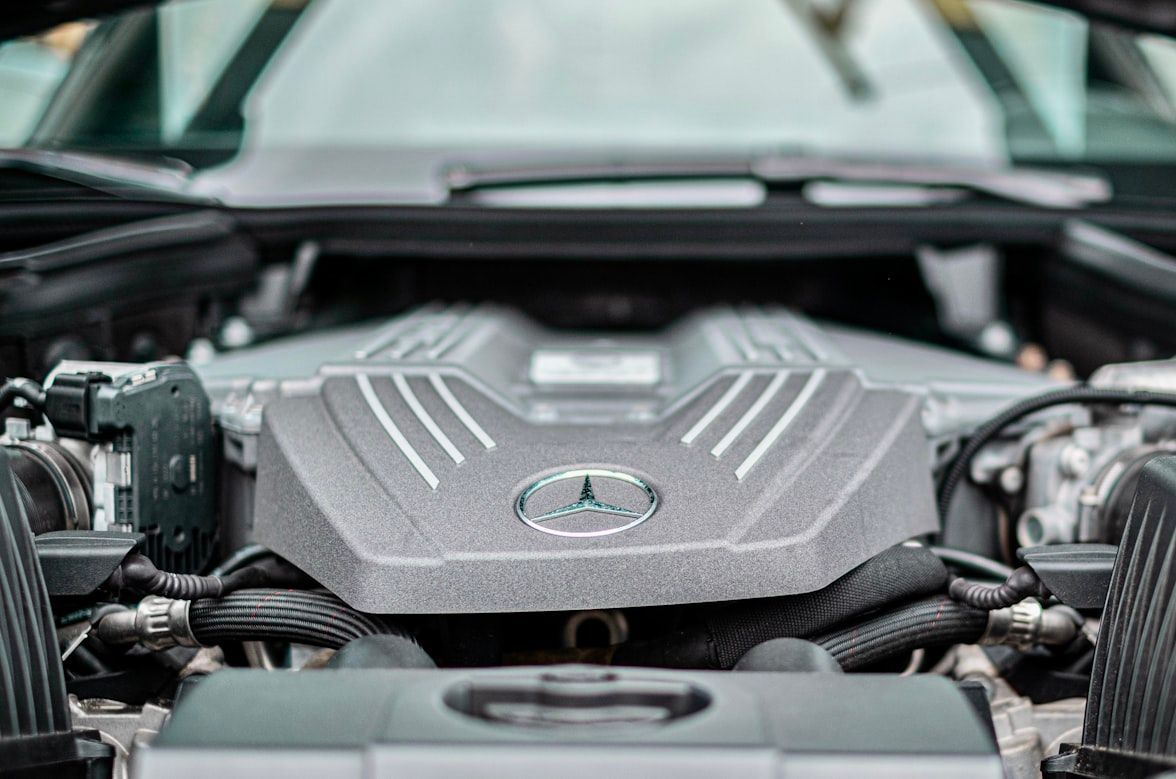
One goes on a baby’s head, the other on a Lamborghini: both are called a bonnet. The important thing to know is that in both cases, something important is being covered. In America, a bonnet is a hat. The kind of hat that has a brim and a ribbon that ties under the chin.

We have all seen them on babies, on ladies, and on pioneers. Instead, in the UK, a bonnet is the hood of a car. That part that covers the engine. So, phrases like "pop the bonnet" have nothing to do with the cute accessory; it simply means opening the hood of a car.

7

Trolley

Image: Simon Hermans

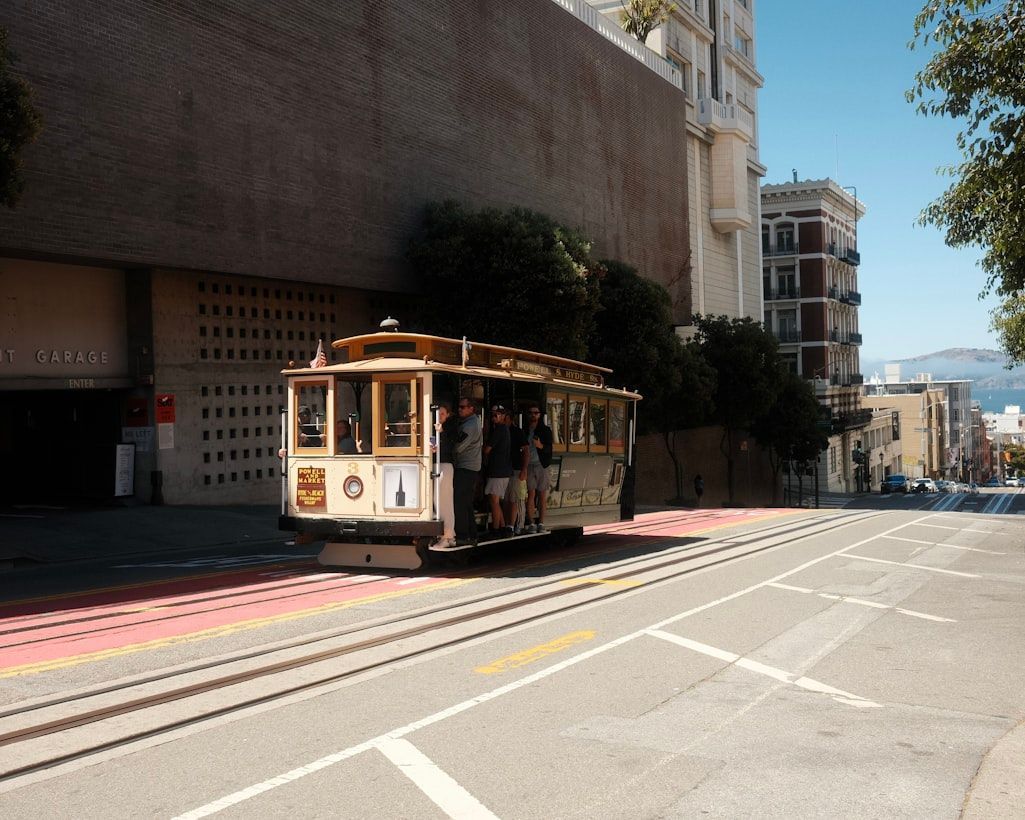
The word trolley can mean very different things depending on where you are. It can be a little train or a streetcar in the USA, often used in street rides and city tours.

On the other hand, on the British side, a trolley is nothing more than a cart. Its most common use is for a shopping cart. So, "catch the trolley" and "grab the trolley" have completely different meanings. Does anyone have any idea about this one?

8

Banger

Image: Haley Lawrence

You probably heard "this song is a total banger" before. "Take on Me " by A-ha and "Funkytown" by Lipps inc are, with no doubt, total bangers. But what if I told you a banger can come with potatoes? In fact, bangers and mash is one of the most famous dishes in England. So the meaning must be different. Or rather, the word simply has more than one meaning. Banger can be a music hit for the Americans and a sausage for the British at the same time. You just have to be careful how and when you use this word.

9

Fancy

Image: Lolita Ruckert

If someone lives in a huge apartment in New York and has a fancy car, wears fancy clothes, and goes to fancy restaurants, you might think he’s a refined or classy person, and you will probably not be wrong. But, if I go on a trip to London, I will hear this word is rather used as a verb, not as an adjective. Why is that? Because the British use of this word is different. Fancy means to want or to desire something. "Fancy a cup of tea?" or " fancy going to the cinema?" So, in London, the real question is not to be fancy, but what you fancy doing.

10

Mad

Image: Andre Hunter

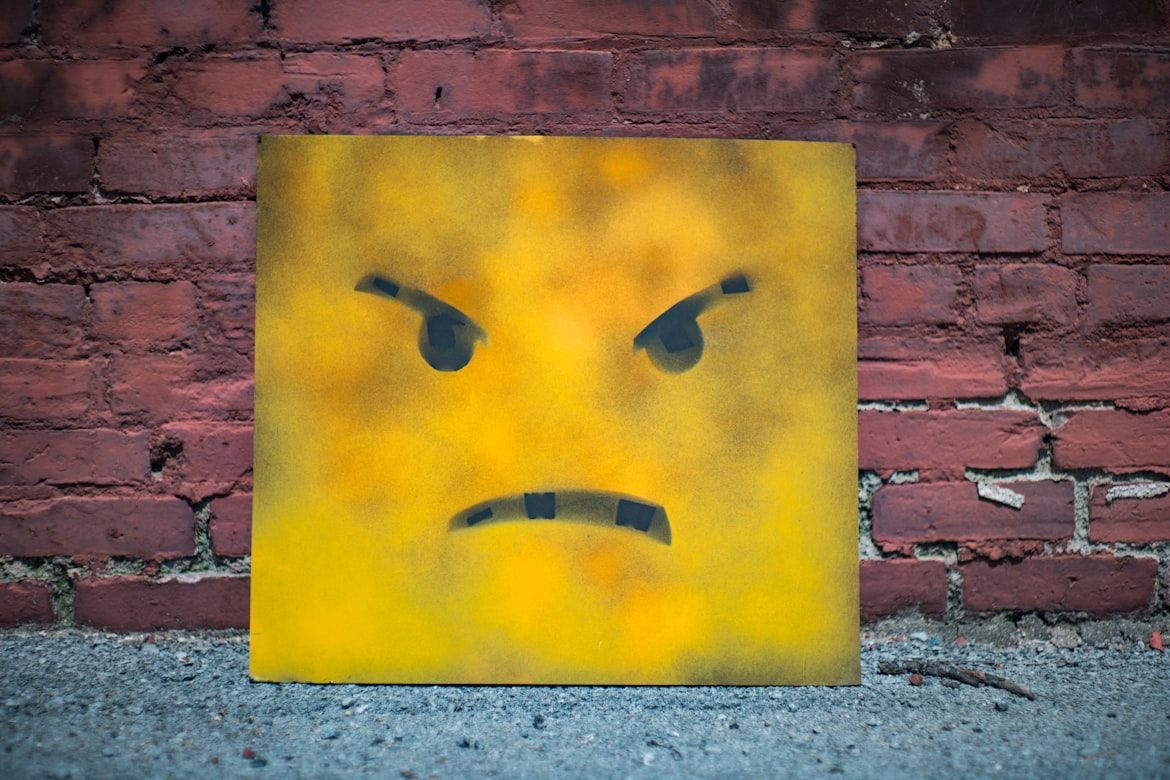
So which came first: angry or crazy? We’ve reached the last word, and here is the story behind mad. In Britain, mad has always meant crazy, referring to someone suffering from madness, a serious mental illness. That meaning never left. Ask any British person today, and a mad person is still someone out of their mind. They also use mad to mean enthusiastic. Passionate. That is where "Jack is mad about Mary" comes from. He is not angry at her. He is completely gone for her.

Using mad to mean angry? That is actually on us. It is an Americanism. Somewhere along the way, Americans took the word and redirected it straight toward anger. And we never looked back.

10 weird historical events that no one has been able to explain (yet)


Published on April 30, 2026


Image: Walters Art Museum, Public domain, via Wikimedia Commons

Who doesn't like a good mystery? And if the mystery isn’t a work of fiction but the result of a true story, even better! The great unsolved enigmas of history are absolutely fascinating. Some have been solved over time, but there are still many old secrets for which neither scientists nor historians have found an explanation—yet. Time-travel with us as we uncover 10 of the biggest historical mysteries that will probably never be cracked!

1

A ghost island

Image: Tanner, Henry S., Public domain, via Wikimedia Commons

Bermeja Island is mentioned in navigation texts written by European travelers and appears in cartography from the 16th to 19th centuries. Old maps place it off the north coast of the Yucatán Peninsula; however, multiple searches over the years have yielded no concrete evidence of its existence.

So, what happened to Isla Bermeja? Was it a cartographic error? Did it sink due to a tidal wave? Because of its geopolitical significance, some have even suggested that it was blown up by the CIA! A 2009 study by the Autonomous University of Mexico concluded that Isla Bermeja does not exist today, nor were any traces found at its supposed coordinates. Yet, it will forever remain a mystery that will surely keep many entertained.

2

The longest alien signal ever

Image: Credit: Big Ear Radio Observatory and North American AstroPhysical Observatory (NAAPO)., Public domain, via Wikimedia Commons

In 1977, Ohio State University’s Big Ear radio telescope, used in the search for extraterrestrial intelligence, detected a signal now known as the Wow! signal. While reviewing the data, astronomer Jerry R. Ehman noticed a sequence represented as "6EQUJ5." Baffled by the anomaly, he circled it and wrote "Wow!" in the margins.

The signal lasted 72 seconds and, unfortunately, has never been repeated. To this day, no one can fully explain the phenomenon, although some suggest it may have come from a man-made source. Still, the Wow! signal remains one of the strongest candidates for potential extraterrestrial contact ever detected.

3

The disappearance of an entire Inuit village

Image: Edward S. Curtis, Public domain, via Wikimedia Commons

How is it possible for an entire village to vanish without a trace? Believe it or not, this is said to have happened nearly a century ago. According to lore, a small Inuit village in Canada was well known among fur trappers who visited regularly to trade. But in 1930, something very strange supposedly occurred.

A hunter named Joe Labelle claimed he visited the village one day and couldn’t find a single person. Reports said there were guns and food left behind, and even claims that the graves in the cemetery were empty. A thorough investigation, however, found no conclusive evidence of what happened to the villagers. Some witnesses from nearby towns even reported seeing a huge green light. Theories ranged from mass migration to extraterrestrial abductions. The Royal Canadian Mounted Police has since dismissed the case as an urban legend. Some still believe the story to be true.

4

The Joyita Mystery

Image: bbb

We know thousands of shipwreck stories, but this one is quite unique. The MV Joyita, designed to be nearly unsinkable, was found adrift in the South Pacific, practically unharmed, but the crew had disappeared completely.

In October 1955, the American merchant vessel left the port of Apia in Samoa with 16 crew members and 9 passengers bound for the Tokelau Islands. After days without news, a rescue mission was launched. Five weeks later, the Joyita was spotted more than 600 miles west of its intended route. The vessel was partially submerged, and there was no sign of the passengers or crew. Four tons of cargo and all three life rafts were missing. They were never seen again.

5

A mummy and a mysterious fluid

Image: Gary Todd from Xinzheng, China, CC0, via Wikimedia Commons

Do you know where one of the best-preserved mummies was found? Hint: not in Egypt. Xin Zhui, the Marquise of Dai during the Western Han Dynasty in China, was discovered in her tomb at Mawangdui 2,000 years after her death, along with hundreds of valuable documents and artifacts.

What makes this mummy so extraordinary is how well-preserved her body is. Her organs and veins remain intact, and she still has hair and even eyelashes. Scientists analyzed the fluid present in the coffin and discovered it was acidic and contained salt and magnesium. They believe this mysterious liquid may have been responsible for preserving Xin Zhui so well. What they don’t know is whether it was intentionally poured into the coffin or came from the body itself.

6

A missing prime minister

Image: Yoichi Okamoto, Public domain, via Wikimedia Commons

The United States has its fair share of presidents who died while in office, but none of our 45 presidents have ever disappeared without a trace. Did you know that this actually happened in The Land Down Under?

Harold Edward Holt was the Prime Minister of Australia from 1966 until his presumed death in 1967. He loved the ocean and spearfishing. During a weekend trip with friends, Holt visited the remote Cheviot Beach to take a swim. Rough sea conditions that day caused him to be swept away by the waves, and he never reappeared. Despite an intensive search, his body was never found, which has given rise to numerous conspiracy theories. Ironically, Australians built the Harold Holt Memorial Swimming Centre in Melbourne in his honor.

7

The anonymous hijacker

Image: FBI, Public domain, via Wikimedia Commons

Many famous criminals have managed to remain unidentified for decades, but the D.B. Cooper case is something else entirely. In 1971, Cooper boarded a flight from Portland to Seattle. Shortly after takeoff, he showed a flight attendant a device he claimed was a bomb and demanded four parachutes and $200,000 in cash.

The crew landed to meet Cooper’s demands in exchange for the passengers and then took off again. As the plane flew over southwestern Washington, Cooper jumped into the cold, rainy night carrying his haul. His whereabouts and true identity were never discovered, although it is likely he didn’t survive the jump. In 1980, some of the ransom money was found near the Columbia River. Although the FBI officially closed the case in 2016, amateur sleuths continue to try to crack it.

8

Dancing to death

Image: Pieter Brueghel the Elder, Public domain, via Wikimedia Commons

Can you imagine an epidemic where the main symptom is uncontrollable dancing? Sounds like science fiction, doesn’t it? Yet this really happened during the Middle Ages. In 1518, a dancing plague struck Strasbourg, Alsace, in what is now France. This strange condition affected up to 400 people, making them dance frantically for weeks. It is said that some even died of heart attacks, exhaustion, or strokes.

Doctors and authorities tried all kinds of measures to stop the spread. They even banned music for a while! To this day, scientists are not certain what caused this bizarre condition: it may have been food poisoning from toxins in the ergot fungus, or perhaps a case of stress-induced mass hysteria.

9

A manuscript no one understands

Image: Public domain, via Wikimedia Commons

The Voynich manuscript is a codex written roughly 500 years ago in an unknown language and writing system by an anonymous author. Known as Voynichese, the manuscript was named after Wilfrid Voynich, a Polish bibliophile and antiquarian who purchased it in 1912.

Radiocarbon testing has shown that it dates to the early 15th century. Many cryptographers and codebreakers have attempted to decipher its roughly 240 pages without success. The manuscript contains diagrams and illustrations of unknown plants and astrological symbols. Some believe it may be a made-up language, a secret code, a work of fiction, or even a hoax. If you think you can solve this mystery, the Voynich manuscript is available for viewing at Yale University’s Beinecke Rare Book and Manuscript Library.

10

An ancestor of movable-type printing

Image: Bernhard

Similar to the Voynich manuscript, the Phaistos Disc is a fired clay disc believed to have been created during the Bronze Age. It was discovered by an Italian archaeologist in the basement of a palace in Crete, Greece, in 1908.

What makes this disc fascinating is that it contains a mysterious message. Stamped into the clay is a set of signs, forming a text that many scientists have tried to decipher—without success. It is considered an early attempt at printing, a technological innovation that would not become widespread for several centuries. While enthusiasts still hope the enigma can be solved, this is unlikely unless other documents are discovered to provide context.

Looking for an extra scoop of literary fun?

Learn more with our Word of the day

disquiet

/dɪsˈkwaɪət/