Names that lie

Why 'Ladybugs' aren't ladies and 9 other misleading animal names!


Published on February 7, 2025


Image: Jo Taylor

Some animals have commonly been given names that might lead you to believe false things about them. For example, as we all know, guinea pigs are not pigs, sea horses are not horses, and starfish are neither stars nor fish. So, how did these names come to be? While lookalike allegations may justify some, others are simply far-fetched. Is there any truth or reason behind these inaccurate nicknames—like "firefly"? Let’s explore 10 animal names that are, arguably, misnomers.

1

Mountain Chicken

Image: Yaroslav Savateikin

Let’s start with one of the most far-fetched names on this list. Mountain chickens aren’t birds at all—they’re large frogs. And they don’t live in mountains, either. These frogs are found mostly in the Caribbean, inhabiting lowland rainforests and swamps. A more accurate and realistic name for them is "giant ditch frogs," which refers to their large size and their tendency to dwell near water bodies.

So, how did they get this name? The story goes that locals found the frog’s meat similar in taste and texture to chicken. Yes, this now critically endangered species was once considered a delicacy in local cuisines.

2

Red panda

Image: Flickr

You would think that the red panda is just a smaller, red version of the giant panda. After all, they share cute faces, patches around their eyes, and similar snouts and ears. But you’d be wrong—red pandas are not bears.

Here’s the explanation: The word "panda" is believed to derive from the Nepali word ponya, which refers to animals with claws adapted for eating bamboo. This is the biggest trait red and giant pandas have in common: their heavily bamboo-based diets. Red pandas, sometimes nicknamed "firefoxes," belong to a mammal family of their own and are more closely related to skunks than to giant pandas.

3

Titmouse

Image: Matthew Goeckner

Titmouses aren’t rodents—did you know? Instead, they are songbirds known for their gray or bluish-gray feathers. One of the most common species is the tufted titmouse, and you’ll be pleased to know that the plural form is, indeed, "titmice."

The name "titmouse" comes from Old English, where tit referred to a small creature, and mase was a general term for a bird. Over time, mase became obsolete, and "titmase" was transformed into "titmouse" due to the similarity between the words. Arguably, there’s also some physical resemblance between the gray color and beady, round eyes of both titmice and mice.

4

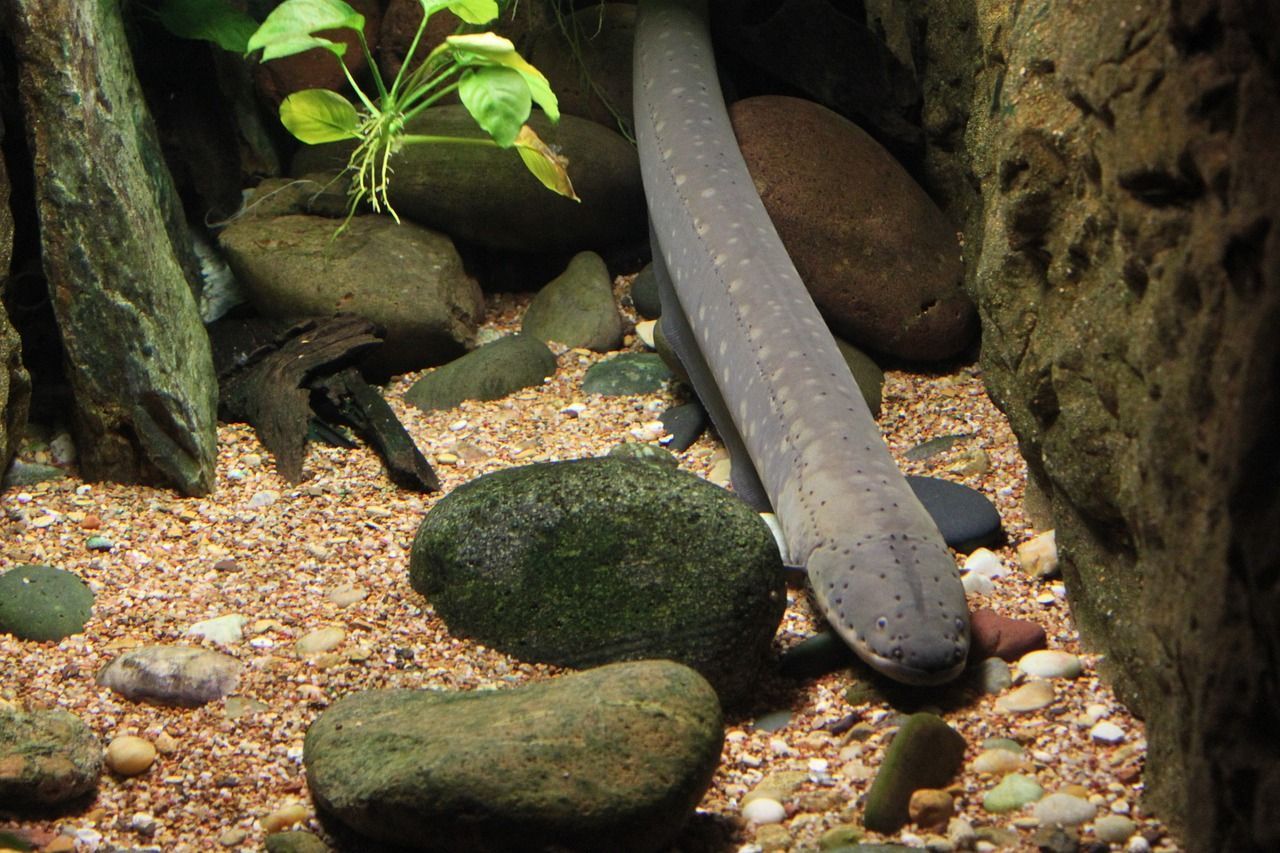
Electric eel

Image: k10legs

Yes, the name "electric eel" is misleading—but not for the reasons you might think. These aquatic animals are indeed capable of generating shocks of electricity, up to ​​860 volts, which they use to stun their prey or defend themselves. However, strictly speaking, they are not eels.

Unlike true eels, which belong to the family Anguillidae, electric eels are part of the knifefish family and are more closely related to catfish. Early European explorers misnamed them based on their elongated, eel-like bodies.

5

Seahorse

Image: Sergiu Iacob

Seahorses are fish, just like salmon or clownfish. Arguably, they look nothing like those species. Instead, for centuries, humans have noticed their resemblance to horses. Seahorses have a distinctive upright swimming posture, elongated heads and necks, and a caudal fin that even resembles a horse’s mane.

Their scientific name, Hippocampus, is borrowed from the Ancient Greek word hippókampos. Interestingly, the term didn’t originally refer to this animal but to a mythological marine creature. In Greek, hippos means "horse," and kampos means "sea monster."

6

Guinea pig

Image: Jack Catalano

Guinea pigs aren’t pigs—nor are they from Guinea, the West African country. Instead, they are rodents native to South America. By now their name has become synonymous with "experiment subject" because of how frequently they were used in scientific research.

There are a couple of theories behind their misleading name. The "pig" part likely comes from the squealing noises they make, which resemble those of piglets. As for "guinea," it might derive from the British coin of the same name, implying they were sold for its equivalent value. Another theory is that European sailors, associating distant Guinea with anything exotic, mistakenly applied the name to these South American rodents.

7

Koala bear

Image: Valeriia Miller

The koala is often called a "koala bear," but it’s not a bear at all. European settlers in Australia gave it this name because its round face and fluffy ears reminded them of bear cubs.

Koalas are, in fact, marsupials. Like kangaroos, they carry their young in pouches. The word koala comes from the Dharug language (an Aboriginal language of Australia) and is believed to mean "no water," referring to the koala's ability to survive on eucalyptus leaves with minimal water intake. Did you know? Eucalyptus leaves are low in nutrients and mildly toxic. As a result, koalas have a slow metabolism and sleep up to 20 hours a day.

8

Firefly

Image: Tony Phan

Fireflies don’t handle fire. They do, however, possess the ability to produce light, a phenomenon called bioluminescence. This light creates the illusion of tiny flames flying through the night. No wonder they have been associated with magic and fascination for centuries.

Despite their name, fireflies aren’t flies—they’re beetles. They produce light through a chemical reaction in their abdomens, which they use to attract mates or communicate. In fact, ​​different firefly species flash in distinct rhythms to help them identify each other.

9

Prairie Dogs

Image: Werner Hilversum

The first time you hear the term "prairie dogs," you might picture packs of dogs roaming freely across the prairies. In reality, these animals are rodents and belong to the ground squirrel family.

The name is believed to have been given by early European settlers due to their high-pitched sounds. Prairie dogs are capable of producing sophisticated and varied calls to communicate with one another, sometimes sounding like man’s best friend. The "prairie" part of their name comes from their habitat—vast grasslands and prairies across North America. These rodents are expert burrowers and typically live in small family groups called "coteries," where members groom and protect each other.

10

Ladybug

Image: Pixabay

It’s not only that ladybugs aren’t all female—they aren’t truly bugs, either. Instead, they are a type of beetle. These round and colorful insects have been widely associated with good luck and fortune for centuries. The reason for this has to do with the story behind their nickname.

The name "ladybug" originated in the Middle Ages, when farmers prayed to the Virgin Mary for help with pests in their crops. The beetles, which helped control aphid populations, were called "Our Lady's birds" or "Our Lady's beetles," later shortened to "ladybirds" or "ladybeetles." Over time, much to the frustration of entomologists, this evolved into the popular term "ladybugs."



Secrets in plain view

The untold stories behind 15 of the world’s most famous artworks


Published on February 7, 2025


Image: Ståle Grut

Art is often more than just visually stunning; it can carry deep, hidden meanings and symbols that offer a richer experience when understood. From elements that tell part of the artwork’s story to deliberate messages and strange secrets, here are 15 famous artworks with hidden layers you might not have noticed before.

1

The Mona Lisa by Leonardo da Vinci

Image: Eric TERRADE

Though the Mona Lisa is perhaps the most famous painting in the world, the identity of the woman in the portrait has long been a subject of debate. Most scholars believe she is Lisa Gherardini, a Florentine woman married to a wealthy merchant, Francesco del Giocondo. However, numerous alternative ideas have emerged, including theories that the subject is an idealized figure or even a concealed self-portrait of Da Vinci.

2

The Thinker by Auguste Rodin

Image: Avery Evans

Rodin’s famous sculpture, The Thinker, was originally conceived as part of a larger work but became iconic in its own right. Despite its fame, many curious facts about the sculpture are often overlooked. For example, its original name was actually The Poet, which supports the theory that the statue was meant to depict Dante.

3

The Birth of Venus by Sandro Botticelli

Image: rook76

Botticelli’s The Birth of Venus blends classical mythology with Renaissance ideals of beauty. Venus, standing on a shell, symbolizes divine beauty and spiritual rebirth. Curiously, some believe it was modeled after the long-lost Venus Anadyomene, a painting by the ancient Greek artist Apelles, known only through Roman author Pliny the Elder’s description.

4

The Scream by Edvard Munch

Image: JWCohen

Munch’s The Scream captures a moment of extreme emotional distress. The swirling sky, vivid in color, reflects the inner turmoil of the subject. While Munch claimed the inspiration came from a panic attack he experienced while walking, some argue that the red skies may have been inspired by the eruption of Krakatoa in 1883, which caused vivid sunsets around the world.

5

The School of Athens by Raphael

Image: Olya Solod

In Raphael’s The School of Athens, ancient philosophers are depicted in conversation, but the placement of the figures is deliberate. Plato and Aristotle are centrally placed, with Plato pointing upwards, symbolizing his belief in ideal forms, while Aristotle’s gesture points horizontally, emphasizing his empirical approach.

6

The Statue of Liberty

Image: Laurenz Heymann

The Statue of Liberty is not just a symbol of freedom; its design includes several symbolic elements. The broken chain at her feet represents the abolition of slavery, while the torch symbolizes enlightenment. But most curiously, Lady Liberty's face is said to have been modeled after the artist Frederic-Auguste Bartholdi's mother.

7

The Last Supper by Leonardo da Vinci

Image: maxbrux

Da Vinci’s Last Supper holds numerous symbols, most notably the geometric composition. The table itself forms a triangle, symbolizing the Holy Trinity, while Christ’s position in the center divides the composition into a perfect balance of divine and human. Even the placement of Judas, isolated from the others on the opposite side of Christ, visually hints at his betrayal.

8

American Gothic by Grant Wood

Image: ChicagoPhotographer

Grant Wood’s iconic American Gothic has often been interpreted as a commentary on rural American values, but there are more layers to the painting. In fact, it was inspired by a real house built in the style of "Carpenter Gothic," which Wood found rather pretentious for such a humble home. The characters, however, aren’t the real inhabitants of the house but Wood’s dentist and his sister.

9

Venus de Milo by Alexandros of Antioch

Image: Daniele D'Andreti

The Venus de Milo represents idealized beauty in ancient Greek sculpture, but its missing arms add to its mystery. The lost limbs have sparked theories about its original pose, enhancing the statue's allure. Interestingly, some suggest the figure may not depict Aphrodite/Venus at all, but Amphitrite, the sea goddess worshiped on the island of Milos.

10

The Night Watch by Rembrandt

Image: Václav Pluhař

A master of visual storytelling, Rembrandt was well known for including hidden messages and symbolism. In his masterpiece The Night Watch, some believe the artist makes a subtle cameo. In the middle of the painting, behind a man in green and a guard with a metal helm, you can spot a faint figure, widely thought to be Rembrandt himself.

11

The Vitruvian Man by Leonardo da Vinci

Image: Marek Studzinski

Leonardo’s Vitruvian Man is not just a study of human anatomy; it symbolizes the Renaissance belief in the harmony between art and science. But beyond the perfect proportions, keen observers have noted that the man depicted appears to suffer from an inguinal hernia—an ailment that could have been fatal at the time. Given that artists often used cadavers as models, it's likely that Leonardo based the figure on a real, deceased individual.

12

The Kiss by Gustav Klimt

Image: Mariangela Cruz

Klimt’s The Kiss is renowned for its use of gold leaf, evoking the sacred beauty of religious art found in churches. Some art historians even speculate that the lovers in the painting are not just symbolic figures, but a representation of Klimt himself and his long-time partner, fashion designer Emilie Flöge.

13

Liberty Leading the People by Eugène Delacroix

Image: s880

Delacroix’s Liberty Leading the People uses the allegorical figure of Liberty to symbolize the spirit of revolution during France's July Revolution of 1830. However, the woman in the painting has a name—_Marianne_—a powerful symbol of the French Republic ever since the first French Revolution of 1789.

14

Self-Portrait with Bandaged Ear by Vincent van Gogh

Image: Jean Carlo Emer

Van Gogh's Self-Portrait with Bandaged Ear captures a deeply personal moment following the infamous incident in which he—allegedly—severed his own ear. However, some art historians now believe that the wound was in fact the product of an altercation with friend and fellow artist Paul Gauguin. A deft fencer, Gauguin might have acted in self-defense during a violent bout of psychosis of his friend.

15

David by Michelangelo

Image: Mateus Campos Felipe

Michelangelo’s David symbolizes strength and humanism, embodying both intellectual and physical power. While its proportions follow classical ideals, David’s unusually large head and oversized right hand stand out. Additionally, his heart-shaped pupils are a curious detail, possibly symbolizing his love for Florence or a playful nod to the letter "D," often depicted as a heart in Renaissance art.

Looking for an extra scoop of literary fun?

Learn more with our Word of the day

diminish

/dəˈmɪnɪʃ/