Can you say this 85-letter word? English’s extreme mouthfuls


Published on July 11, 2026


Image: vvoe

In casual conversation, you’d probably never use most English words that go past 15 or 20 letters. They are usually scientific or medical terms built by stacking smaller words together. Yet, exploring these linguistic giants is a fun way to learn how our language handles specialized vocabulary. Let’s take a look at some of the longest words in the English-speaking world, starting with one so ridiculously big it stretches the definition of what a word can be. Can you guess what it is?

1

Methionylthreonylthreonylglutaminylarginyl…

Image: Andrey_Popov

To kick off the list, we have to look at a number that looks like a typo, but is entirely accurate: 189,819 letters. This is the full chemical name for the human muscle protein known commonly as titin.

Because proteins are complex chains of amino acids, their formal chemical names must list every single component in order. This particular sequence starts with methionylthreonylthreonylglutaminylarginyl… and keeps going for thousands of syllables. If you wanted to print it out, it would easily fill more than 50 pages. Want to try reading it out loud? You might want to clear your schedule, because it would take more than three hours.

2

Taumata…

Image: Michal Durinik

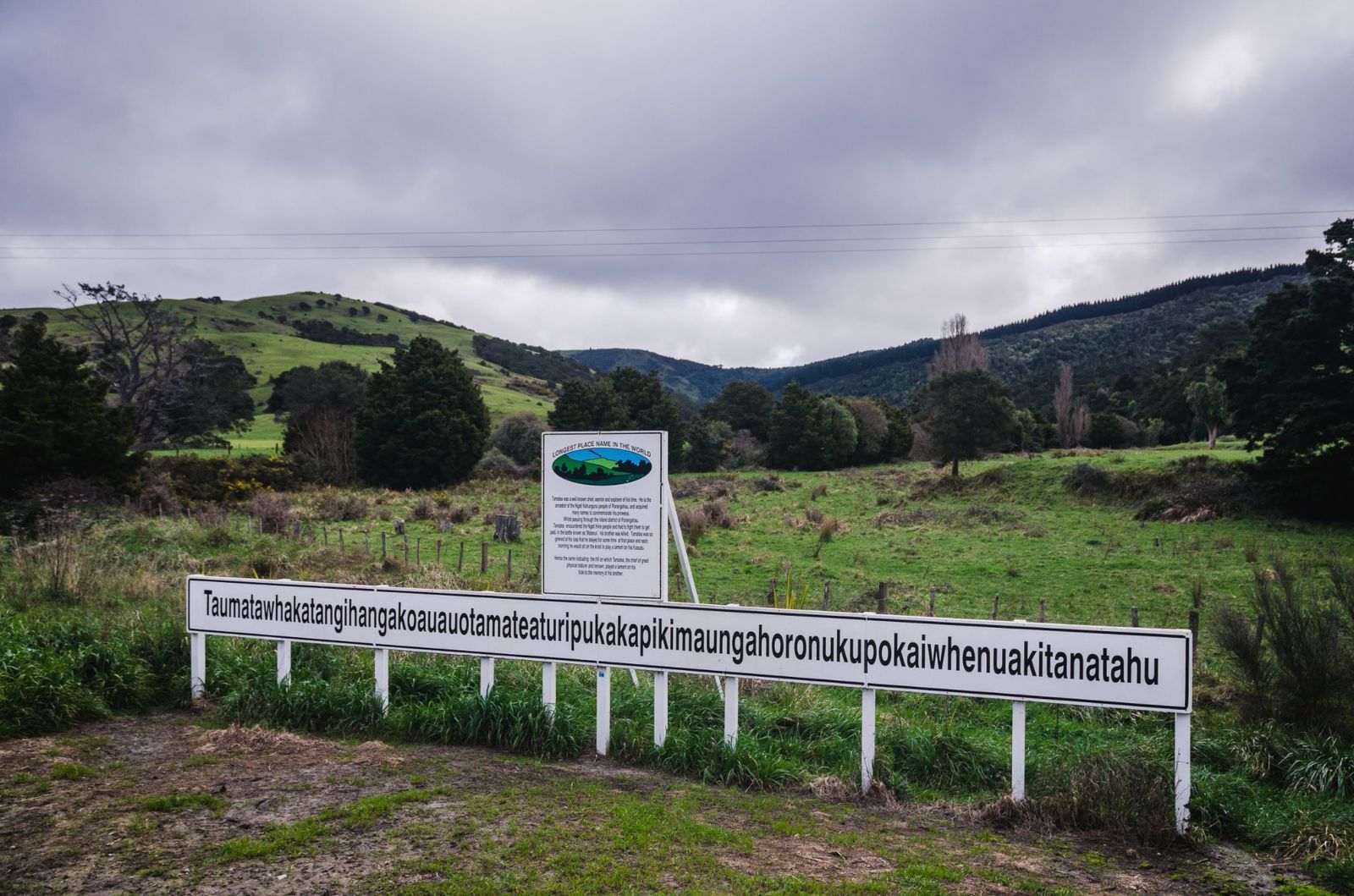
The longest place name in English belongs to a 1,001-foot-high hill located in Hawke's Bay, New Zealand. It boasts a staggering 85 letters: Taumatawhakatangihangakoauauotamateaturipukakapikimaungahoronukupokaiwhenuakitanatahu.

Derived from the Māori language, this long title translates to a poetic statement: "the place where Tamatea, the man who had big knees, the climber of mountains, the slider, the land-swallower that traveled about, played the nose flute that he had to the loved ones". Unsurprisingly, locals and tourists alike usually save their breath and refer to it simply as "Taumata".

3

Chargoggagoggmanchauggauggagoggchaubunagungamaugg
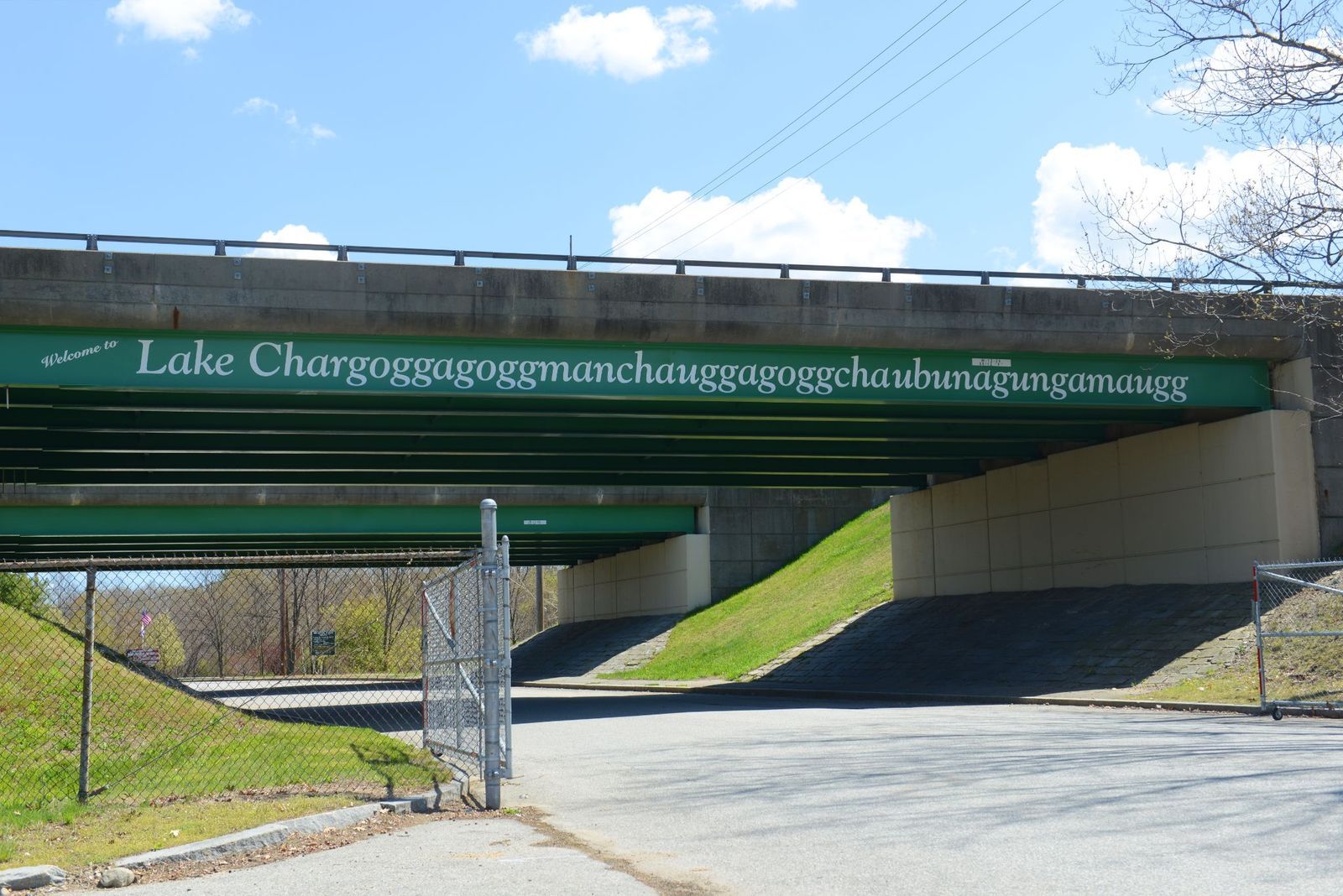
Image: Wangkun Jia

Not to be outdone, the United States has its own geographical giant sitting in Massachusetts. With a total of 49 letters, Lake Chargoggagoggmanchauggauggagoggchaubunagungamaugg is the longest official place name in America.

While the name originates from the language of the Nipmuc people, this huge version is believed to be a humorous invention by a local newspaper editor in the early 20th century. Along with the long spelling, the editor popularized a fake translation: "You fish on your side; I fish on my side; nobody fishes in the middle." Today, it’s also known as Webster Lake by anyone trying to type it into a GPS.

4

Pneumonoultramicroscopicsilicovolcanoconiosis

Image: west_photo

The longest word entered in most standard English dictionaries is Pneumonoultramicroscopicsilicovolcanoconiosis, which is 45 characters long. Found in specialized volumes like Merriam-Webster’s Medical Dictionary, it refers to a severe lung disease caused by the chronic inhalation of fine silicate or quartz dust, typically associated with volcanic activity. Ironically, medical professionals don’t actually use this word in daily practice; they simply call the condition silicosis.

5

Pseudopseudohypoparathyroidism

Image: H_Ko

Pseudopseudohypoparathyroidism, at 30 letters, is a rare medical condition that mimics the physical skeletal traits of another disorder called pseudohypoparathyroidism. Aside from its impressive physical length, it holds a unique distinction in lexicography: it’s the only word in the dictionary that features a repeating consecutive "pseudo".

6

Antidisestablishmentarianism & more

Image: chrisdorney

There’s a unique category of words that almost never appear in real sentences. Because they lack everyday utility, dictionaries acknowledge their existence but choose not to give them formal entries.

This group includes antidisestablishmentarianism (28 letters), which refers to a 19th-century political movement in Britain. Also, the classic floccinaucinihilipilification (29 letters), a mashup of Latin roots that means the act or habit of judging something to be completely worthless. Finally, the most beloved of this group is supercalifragilisticexpialidocious (34 letters), the iconic nonsense phrase made famous by Walt Disney’s Mary Poppins.

7

Methylenedioxymethamphetamine

Image: BLACKDAY

In the medical world, knowing a term like methylenedioxymethamphetamine (29 letters) is essential. While that mouthful might look unfamiliar at first glance, it refers to a synthetic amphetamine known for its hallucinogenic properties. Because nobody wants to write or say all 29 letters in a casual conversation, people have opted to use its much shorter street name, ecstasy, or its concise chemical acronym, MDMA.

8

Electroencephalographically & more

Image: YAKOBCHUK VIACHESLAV

In the context of a research lab, some specialized technical terms fall into the twenty-to-thirty-letter sweet spot. Some of them are: Electroencephalographically (doing something by means of an electroencephalograph, a medical machine used to read and record brain wave patterns); radioimmunoelectrophoresis (a laboratory technique that uses radioactive labels to analyze specific proteins); laryngotracheobronchitis (a medical condition involving severe inflammation in the larynx, trachea, and bronchial tubes); and hydrochlorofluorocarbon (a type of greenhouse gas).

9

Counterrevolutionaries & more

Image: Casimiro PT

These are long but feel more recognizable. At 22 letters, we can find terms like counterrevolutionaries (individuals who fight to overthrow a newly established revolutionary government), deinstitutionalization (the social and political process of moving patients out of asylum institutions), and otorhinolaryngological (anything relating to the medical specialty of the ear, nose, and throat).

10

Incomprehensibilities & more

Image: Pornpimon Ainkaew

If you’re looking for everyday 21-letter words, terms like incomprehensibilities (things that are impossible to understand) will do the trick. Also, this tier features medical terms like pseudohermaphroditism (a condition involving ambiguous external genitalia) and psychoneuroimmunology (the branch of medicine that studies how a person’s emotional state impacts their immune system).



10 weird historical events that no one has been able to explain (yet)


Published on July 11, 2026


Image: Walters Art Museum, Public domain, via Wikimedia Commons

Who doesn't like a good mystery? And if the mystery isn’t a work of fiction but the result of a true story, even better! The great unsolved enigmas of history are absolutely fascinating. Some have been solved over time, but there are still many old secrets for which neither scientists nor historians have found an explanation—yet. Time-travel with us as we uncover 10 of the biggest historical mysteries that will probably never be cracked!

1

A ghost island

Image: Tanner, Henry S., Public domain, via Wikimedia Commons

Bermeja Island is mentioned in navigation texts written by European travelers and appears in cartography from the 16th to 19th centuries. Old maps place it off the north coast of the Yucatán Peninsula; however, multiple searches over the years have yielded no concrete evidence of its existence.

So, what happened to Isla Bermeja? Was it a cartographic error? Did it sink due to a tidal wave? Because of its geopolitical significance, some have even suggested that it was blown up by the CIA! A 2009 study by the Autonomous University of Mexico concluded that Isla Bermeja does not exist today, nor were any traces found at its supposed coordinates. Yet, it will forever remain a mystery that will surely keep many entertained.

2

The longest alien signal ever

Image: Credit: Big Ear Radio Observatory and North American AstroPhysical Observatory (NAAPO)., Public domain, via Wikimedia Commons

In 1977, Ohio State University’s Big Ear radio telescope, used in the search for extraterrestrial intelligence, detected a signal now known as the Wow! signal. While reviewing the data, astronomer Jerry R. Ehman noticed a sequence represented as "6EQUJ5." Baffled by the anomaly, he circled it and wrote "Wow!" in the margins.

The signal lasted 72 seconds and, unfortunately, has never been repeated. To this day, no one can fully explain the phenomenon, although some suggest it may have come from a man-made source. Still, the Wow! signal remains one of the strongest candidates for potential extraterrestrial contact ever detected.

3

The disappearance of an entire Inuit village

Image: Edward S. Curtis, Public domain, via Wikimedia Commons

How is it possible for an entire village to vanish without a trace? Believe it or not, this is said to have happened nearly a century ago. According to lore, a small Inuit village in Canada was well known among fur trappers who visited regularly to trade. But in 1930, something very strange supposedly occurred.

A hunter named Joe Labelle claimed he visited the village one day and couldn’t find a single person. Reports said there were guns and food left behind, and even claims that the graves in the cemetery were empty. A thorough investigation, however, found no conclusive evidence of what happened to the villagers. Some witnesses from nearby towns even reported seeing a huge green light. Theories ranged from mass migration to extraterrestrial abductions. The Royal Canadian Mounted Police has since dismissed the case as an urban legend. Some still believe the story to be true.

4

The Joyita Mystery

Image: bbb

We know thousands of shipwreck stories, but this one is quite unique. The MV Joyita, designed to be nearly unsinkable, was found adrift in the South Pacific, practically unharmed, but the crew had disappeared completely.

In October 1955, the American merchant vessel left the port of Apia in Samoa with 16 crew members and 9 passengers bound for the Tokelau Islands. After days without news, a rescue mission was launched. Five weeks later, the Joyita was spotted more than 600 miles west of its intended route. The vessel was partially submerged, and there was no sign of the passengers or crew. Four tons of cargo and all three life rafts were missing. They were never seen again.

5

A mummy and a mysterious fluid

Image: Gary Todd from Xinzheng, China, CC0, via Wikimedia Commons

Do you know where one of the best-preserved mummies was found? Hint: not in Egypt. Xin Zhui, the Marquise of Dai during the Western Han Dynasty in China, was discovered in her tomb at Mawangdui 2,000 years after her death, along with hundreds of valuable documents and artifacts.

What makes this mummy so extraordinary is how well-preserved her body is. Her organs and veins remain intact, and she still has hair and even eyelashes. Scientists analyzed the fluid present in the coffin and discovered it was acidic and contained salt and magnesium. They believe this mysterious liquid may have been responsible for preserving Xin Zhui so well. What they don’t know is whether it was intentionally poured into the coffin or came from the body itself.

6

A missing prime minister

Image: Yoichi Okamoto, Public domain, via Wikimedia Commons

The United States has its fair share of presidents who died while in office, but none of our 45 presidents have ever disappeared without a trace. Did you know that this actually happened in The Land Down Under?

Harold Edward Holt was the Prime Minister of Australia from 1966 until his presumed death in 1967. He loved the ocean and spearfishing. During a weekend trip with friends, Holt visited the remote Cheviot Beach to take a swim. Rough sea conditions that day caused him to be swept away by the waves, and he never reappeared. Despite an intensive search, his body was never found, which has given rise to numerous conspiracy theories. Ironically, Australians built the Harold Holt Memorial Swimming Centre in Melbourne in his honor.

7

The anonymous hijacker

Image: FBI, Public domain, via Wikimedia Commons

Many famous criminals have managed to remain unidentified for decades, but the D.B. Cooper case is something else entirely. In 1971, Cooper boarded a flight from Portland to Seattle. Shortly after takeoff, he showed a flight attendant a device he claimed was a bomb and demanded four parachutes and $200,000 in cash.

The crew landed to meet Cooper’s demands in exchange for the passengers and then took off again. As the plane flew over southwestern Washington, Cooper jumped into the cold, rainy night carrying his haul. His whereabouts and true identity were never discovered, although it is likely he didn’t survive the jump. In 1980, some of the ransom money was found near the Columbia River. Although the FBI officially closed the case in 2016, amateur sleuths continue to try to crack it.

8

Dancing to death

Image: Pieter Brueghel the Elder, Public domain, via Wikimedia Commons

Can you imagine an epidemic where the main symptom is uncontrollable dancing? Sounds like science fiction, doesn’t it? Yet this really happened during the Middle Ages. In 1518, a dancing plague struck Strasbourg, Alsace, in what is now France. This strange condition affected up to 400 people, making them dance frantically for weeks. It is said that some even died of heart attacks, exhaustion, or strokes.

Doctors and authorities tried all kinds of measures to stop the spread. They even banned music for a while! To this day, scientists are not certain what caused this bizarre condition: it may have been food poisoning from toxins in the ergot fungus, or perhaps a case of stress-induced mass hysteria.

9

A manuscript no one understands

Image: Public domain, via Wikimedia Commons

The Voynich manuscript is a codex written roughly 500 years ago in an unknown language and writing system by an anonymous author. Known as Voynichese, the manuscript was named after Wilfrid Voynich, a Polish bibliophile and antiquarian who purchased it in 1912.

Radiocarbon testing has shown that it dates to the early 15th century. Many cryptographers and codebreakers have attempted to decipher its roughly 240 pages without success. The manuscript contains diagrams and illustrations of unknown plants and astrological symbols. Some believe it may be a made-up language, a secret code, a work of fiction, or even a hoax. If you think you can solve this mystery, the Voynich manuscript is available for viewing at Yale University’s Beinecke Rare Book and Manuscript Library.

10

An ancestor of movable-type printing

Image: Bernhard

Similar to the Voynich manuscript, the Phaistos Disc is a fired clay disc believed to have been created during the Bronze Age. It was discovered by an Italian archaeologist in the basement of a palace in Crete, Greece, in 1908.

What makes this disc fascinating is that it contains a mysterious message. Stamped into the clay is a set of signs, forming a text that many scientists have tried to decipher—without success. It is considered an early attempt at printing, a technological innovation that would not become widespread for several centuries. While enthusiasts still hope the enigma can be solved, this is unlikely unless other documents are discovered to provide context.

Looking for an extra scoop of literary fun?

Learn more with our Word of the day

ungrateful

/ˌənˈɡreɪtfəl/