Be articulate!

Most people don’t know the exact word for these 12 situations. Do you?


Published on June 27, 2026


Image: Pisit Heng

English is full of surprisingly precise words for feelings, situations, and experiences that most people struggle to describe. Some come from ancient Greek or Latin, while others were borrowed from languages like Welsh or Swedish. A few are still rare today, but all of them manage to describe very specific things. Take a look at the following 12 examples and see if there are one or two that you can add to your daily vocabulary!

1

Paraprosdokian

Image: Paolo Bendandi

A paraprosdokian is a sentence that suddenly changes meaning at the very end, forcing you to rethink what came before. The word comes from Greek roots meaning "against expectation."

Unsurprisingly, comedians and writers love using paraprosdokians for humor and surprise (pun intended). A famous example is: "I’ve had a perfectly wonderful evening, but this wasn’t it." The unexpected ending is what makes it work.

2

Nibling

Image: Mahdi Teymouri

"Nibling" is a gender-neutral word that refers to a niece or nephew. It is widely credited to linguist Samuel E. Martin in 1951 as a parallel to the word "sibling."

For decades, the term remained obscure, but it became more popular online in the 2010s as many English speakers sought more inclusive family language.

3

Kakorrhaphiophobia

Image: Usman Yousaf

Kakorrhaphiophobia means an irrational fear of failure. The intimidating word comes from Greek roots connected to fear and failure, making it one of English’s longest phobia names.

Although rarely used in everyday life, psychologists connect the idea to perfectionism, anxiety, and fear of disappointing others. The word often appears in lists of unusual English vocabulary.

4

Formication

Image: Jan Baborák

Formication is the sensation that insects are crawling on or under your skin when nothing is actually there. The term comes from the Latin word formica, meaning "ant."

Doctors recognize it as a real neurological symptom linked to anxiety, sleep deprivation, menopause, certain illnesses, and drug withdrawal. Despite the strange name, it has been documented for decades.

5

Dysania

Image: Slaapwijsheid.nl

Dysania describes the extreme difficulty of getting out of bed in the morning. While many people jokingly relate to it, the term is often associated with fatigue, depression, or sleep disorders.

Unlike ordinary laziness, dysania refers to a persistent struggle to leave the bed even after waking up. The word became popular online thanks to lists of oddly specific modern vocabulary (not unlike this one).

6

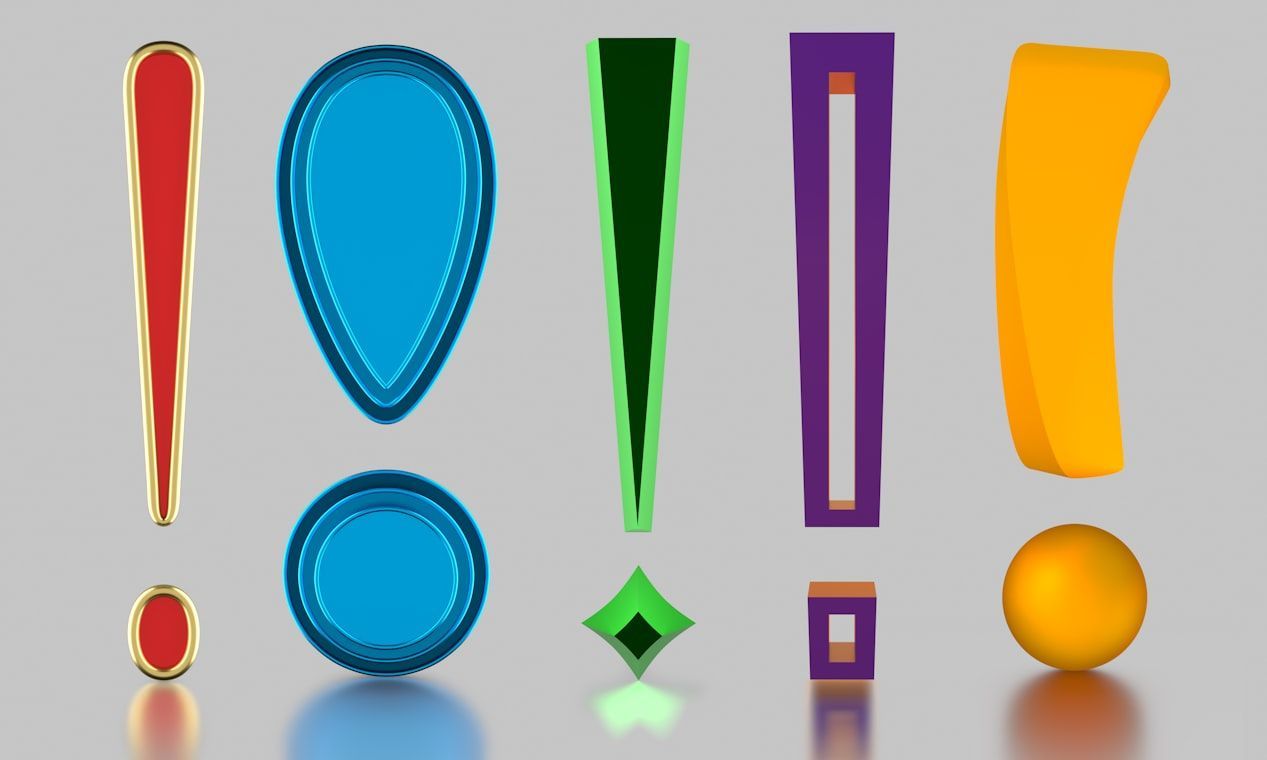
Interrobang

Image: Buddha Elemental 3D

The interrobang combines a question mark and an exclamation point into one punctuation mark. It was invented in 1962 by advertising executive Martin K. Speckter.

He believed advertisements needed a cleaner way to show excited questions like "You paid how much???!!!" Although it never became standard punctuation, the symbol still exists in Unicode and modern fonts.

7

Latibulate

Image: Thomas Bormans

"Latibulate" means to hide away from society or retreat into a safe corner. It comes from the Latin latibulum, meaning "hiding place."

The word is extremely rare today, which only adds to its mysterious appeal. It is often included in collections of forgotten English words.

8

Hiraeth

Image: Billy Williams

Hiraeth is a Welsh word describing deep longing for a home, place, or time that may never truly return. It goes beyond ordinary nostalgia or homesickness.

Many writers describe hiraeth as mourning something lost, imagined, or impossible to recover fully. Among them, J.L. Borges said, "One does not miss places, but the moments spent in them."

9

Tmesis

Image: Hakim Menikh

Tmesis happens when a word or phrase is split apart, and another word is inserted in the middle. English examples include "abso-bloody-lutely" and "fan-freaking-tastic."

The term comes from a Greek word meaning "cutting." Ancient Greek and Latin poets used tmesis long before modern English speakers turned it into a playful part of casual conversation.

10

Apricity

Image: Cristina Gottardi

Apricity means the warmth of the sun during winter. The word entered English in the 1600s and comes from the Latin apricus, meaning "warmed by the sun."

Although it disappeared from common speech for centuries, apricity can sometimes be found in specific texts, since few terms describe such a precise seasonal feeling so well.

11

Clinomania

Image: Tom Hills

Clinomania refers to an overwhelming desire to stay in bed. The name combines Greek roots linked to beds and obsession, giving it a more intense meaning than simple tiredness.

The word is sometimes confused with dysania, but clinomania suggests a stronger emotional urge to remain under the covers.

12

Lagom

Image: Tracey Parish

Lagom is a Swedish word meaning "just the right amount," not too much nor too little. It reflects a broader Scandinavian philosophy centered on balance and moderation.

The term became internationally popular during the 2010s alongside Nordic lifestyle trends like hygge.
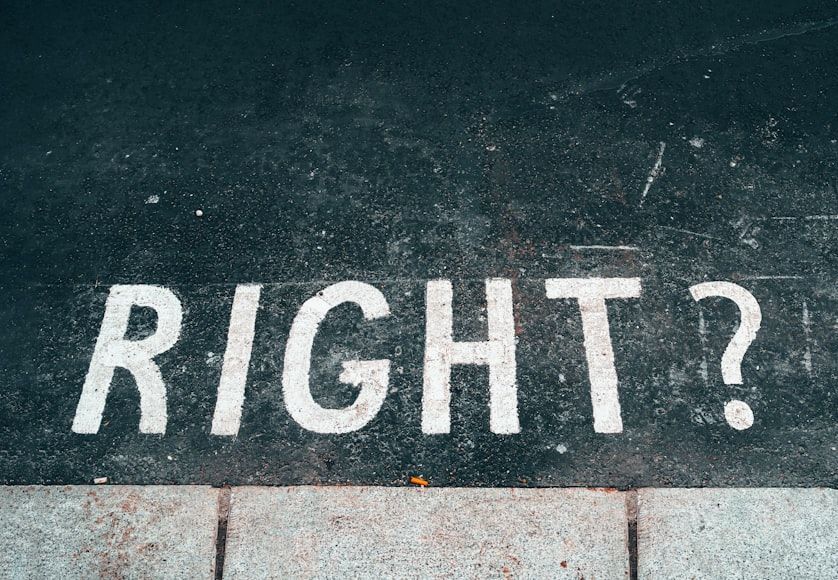


We just know that we know nothing

12 facts that people often get wrong


Published on June 27, 2026


Image: Andrea De Santis

No one can claim to know everything, but most people go through life confident about certain things. However, some of these widely held beliefs are not actually correct, despite their popularity. Let’s have a look at some "facts" you might have gotten wrong!

1

Insects are animals

Image: Syed Ali

The idea that insects—particularly mosquitoes—are not animals is widespread, but it’s also incorrect. In fact, insects are the most diverse group within the Animal kingdom, with more than a million species described and representing more than half of the animal population of the planet.

2

Tomatoes (and many other "veggies") are actually fruits

Image: Heder Neves

The mistake comes from not considering that "fruit" is not only a culinary term but also a botanical one. Botanically, a fruit is the part of a plant that develops from a flower and contains seeds. This makes tomatoes, peppers, cucumbers, eggplants, and many other foods that we call vegetables actually fruits in the scientific sense.

3

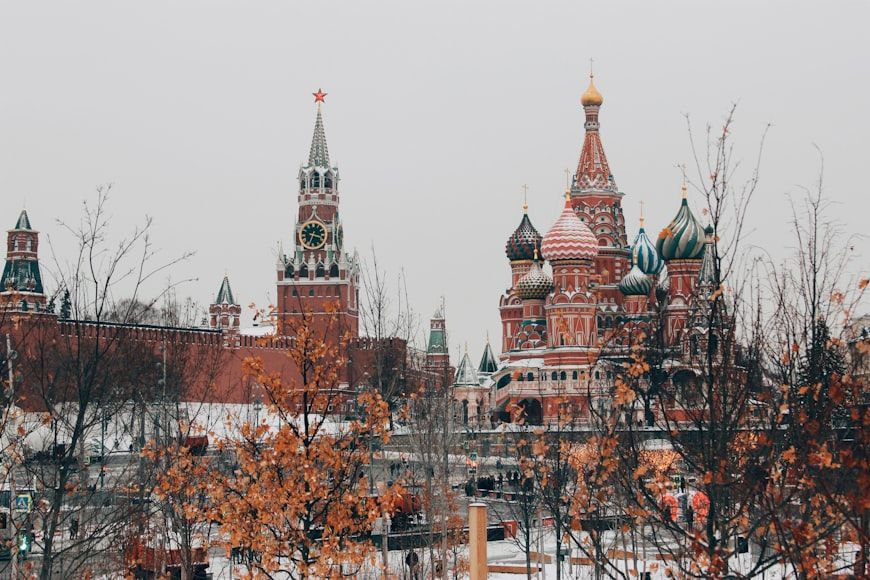
Russia is both in Europe and Asia

Image: Michael Parulava

Countries have a political delimitation, while continents are divided according to geographical criteria. The Russian Federation is the largest country on Earth, bordering fourteen other countries and extending across eleven time zones. It spans across a good part of Eastern Europe, but also across the Ural mountains—one of the recognized borders between Europe and Asia—and stretches deep into northern Asia.

4

The flu is not caused by cold weather

Image: Towfiqu barbhuiya

While cold weather isn’t harmless, it is not the direct cause of illnesses like the flu, which are caused by viruses. In colder months, people tend to spend more time indoors and often avoid ventilating rooms, creating conditions that make it easier for viruses to spread and cause illness.

5

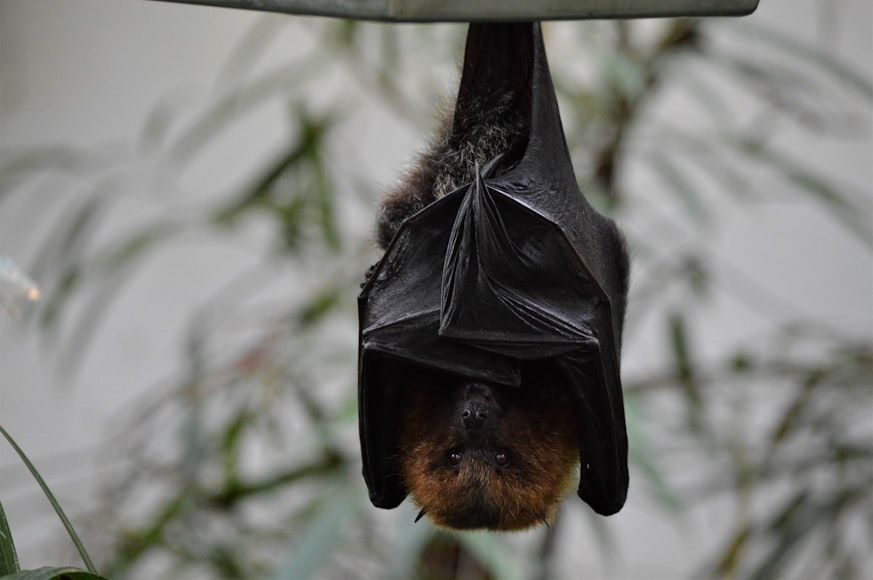
Bats are not blind

Image: Riizz

Bats might not prefer to be out during bright daylight, but this does not mean that they are blind. In fact, many species have excellent eyesight, though it is adapted to low-light or nighttime conditions. On top of that, bats also use echolocation, which allows them to navigate and hunt with remarkable precision in complete darkness.

6

You don't need to wait 24 hours to file a missing persons report

Image: Volodymyr Hryshchenko

The belief that you must wait a full day before reporting someone missing is a myth popularized by movies and TV shows. In reality, the law does not require a waiting period. In fact, law enforcement agencies stress that the first 24 hours are often the most critical, so a missing person should be reported immediately.

7

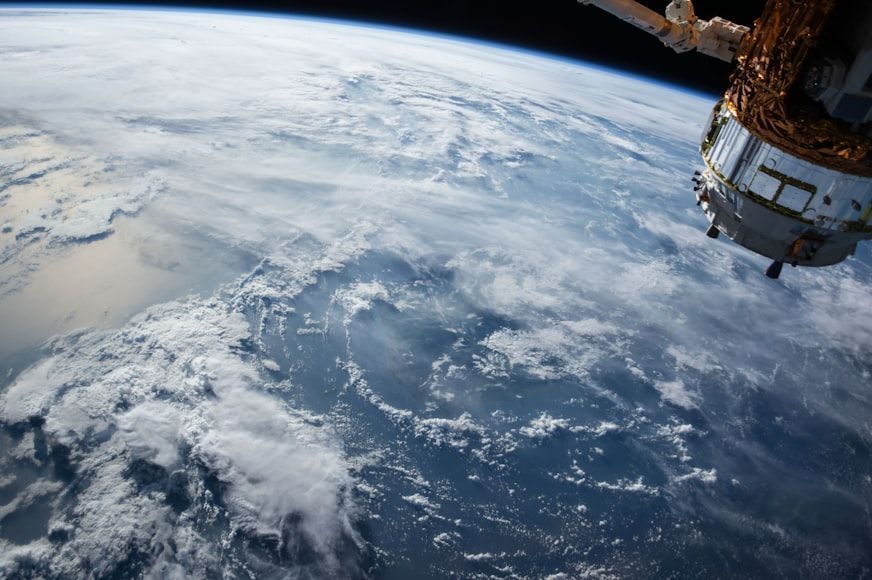
The Great Wall of China can’t be seen from space

Image: NASA

Some man-made structures are visible from space without magnification, but despite popular belief, the Great Wall of China is not one of them. While it is quite long, being over 13,000 miles long, it is relatively narrow, and its earthy colors blend in with the surrounding landscape, making it nearly impossible to spot with the naked eye from orbit.

8

Mount Everest is not the tallest mountain on Earth

Image: Andreas Gäbler

This one is tricky: Mount Everest is the highest mountain on Earth (29,032 feet)… if you measure the distance from sea level to peak. For the actual tallest mountain, the answer might vary depending on how you measure. Measured from base to summit, Mauna Kea in Hawaii is the tallest at 33,474 feet—though much of it is underwater. Mount McKinley (Denali) in Alaska rises about 18,000 feet from its base to the peak, making it the tallest mountain entirely above sea level. And Ecuador’s Mount Chimborazo, while shorter in height, is the farthest point on Earth from the planet’s center due to the equatorial bulge.

9

The Northern and Southern Hemispheres have opposite seasons

Image: Kyle Glenn

The Earth is tilted on an axis, which causes the amount of sunlight each hemisphere receives to change as it orbits the Sun. Because of this tilt, when the Northern Hemisphere is tilted toward the Sun and experiences summer, the Southern Hemisphere is tilted away and experiences winter—and vice versa. This is why the Southern Hemisphere celebrates Christmas during summer.

10

It’s not dangerous to wake a sleepwalking person

Image: Kate Stone Matheson

Standard medical advice is to gently guide a sleepwalker back to bed rather than waking them, but not because waking them is inherently dangerous. People tend to sleepwalk during deep sleep, so waking them up might startle them or cause confusion and disorientation.

11

Shaving won’t make your hair grow thicker

Image: Supply

Hair color and thickness are determined by genetics, not by shaving. Hair naturally gets thin at the ends, so when you shave it, the hair shaft appears to be thicker and darker because of the blunt cut. But it's just an optical illusion; the natural size of the shaft remains unchanged.

12

Coffee won’t dehydrate you

Image: Mike Kenneally

Coffee is a natural diuretic, meaning it can increase trips to the bathroom. However, the water in brewed coffee still contributes to your hydration and offsets its mild diuretic effect. If you consume coffee in moderation—3 to 5 cups a day, depending on your tolerance—you should be alright. However, drinking extra water on the side is never a bad idea.

Looking for an extra scoop of literary fun?

Learn more with our Word of the day

gumption

/ˈɡəm(p)ʃən/