Your pup will thank you

Can dogs really tell time? The answer will surprise you!


Published on June 19, 2025


Image: Jametlene Reskp

Dogs are part of the family: They're our best friends and our constant companions. But over the years, myths about dog behavior have made their way into common belief. Some sound logical, while others are just crazy, but how do we separate fact from fiction? Can dogs really tell time? Is chocolate always deadly? Let's take a look at some of the most common myths about our four-legged friends, some of which might just surprise you!

1

Myth: You can’t teach an old dog new tricks

Image: Dominik QN

Many dog owners believe that once their pup has reached a certain age, training becomes impossible. It’s only logical: When we see a young pup and their eagerness to pick up on commands quickly, we tend to think older ones won’t be able to do that. Because of this, many people give up on training their senior dogs, assuming the effort won’t pay off. But is this belief really true? Place your bets!

2

Myth debunked! Old dogs can learn new tricks

Image: Camylla Battani

As it turns out, age is just a number: Dogs are capable of learning at any stage of life! While older dogs may take a little longer to pick up new habits, just like we humans, their brains remain highly adaptable.

Training activities work best when it’s fun, positive, and rewarding, so grab some tasty treats and start small. Short, frequent training sessions are the key to success.

3

Myth: Dogs have no sense of time

Image: Matthew Henry

Ever leave the house and come back to a dog who acts like you’ve been gone for years? Many assume dogs don’t understand time, thinking they react the same whether you’ve been gone for five minutes or five hours.

Since they don’t read clocks, it’s easy to assume they live entirely in the moment. But if that’s the case, how do they seem to know exactly when it’s time for dinner or their daily walk?

4

Myth debunked! Dogs do know the difference

Image: Karsten Winegeart

Science confirms that dogs have a sense of time. Studies have shown that dogs can distinguish between different time intervals, meaning they know the difference between an hour and several hours. But how?

They associate events with specific routines. If you always walk them at a certain time, they’ll start anticipating it. Some experts believe dogs use scent to tell time, as human odors change throughout the day. So yes, your dog really does know if you’re late for dinner!

5

Myth: It’s safe to leave a dog in a car with the windows down

Image: Tim Mossholder

On warm days, it’s tempting to crack the windows and run into the store, thinking your pup will be fine for a few minutes. After all, they have fresh air, right? Many people assume that as long as the windows are open, there’s no risk of overheating. But just how safe is it?

6

Myth debunked! Even with windows down, a hot car is deadly

Image: John Carlo Tubelleza

Leaving a dog in a parked car, even for a few minutes, can be incredibly dangerous. Cars heat up shockingly fast, even with the windows cracked, and dogs have a harder time regulating body temperature than humans.

Heatstroke can set in quickly, and once it does, it can be fatal. If you wouldn’t sit in a parked car on a hot day, why would you let your dog do so?

7

Myth: Dogs can’t smell your feelings

Image: Erica Magugliani

Humans rely on words to express emotions, but dogs sadly don’t have that luxury. Many assume that while dogs pick up on body language, they can’t actually sense how we feel.

After all, emotions are internal, right? However, have you ever felt your dog was closer than ever when you’re feeling down? Is that real, or is it just your mind playing tricks?

8

Myth debunked! Dogs can smell your emotions

Image: Eric Ward

If you said this was possible, you were right! Dogs don’t just guess your feelings; they can smell them! Their noses are 100,000 times more powerful than ours, meaning they pick up on chemical changes in our bodies.

When we’re scared or anxious, we sweat slightly differently, releasing hormones like adrenaline and cortisol. Your dog doesn’t just see your nervous body language; they literally smell your fear. So yes, they know when you’re having a bad day, and that’s why they’re always ready to comfort you.

9

Myth: A little bit of chocolate won’t hurt a dog

Image: James Barker

Chocolate is delicious, and dogs seem eager to try everything we eat, don’t they? We might feel tempted to share our piece of chocolate with our furry best friend.

Many people believe that while chocolate is technically bad for dogs, a small amount won’t actually cause harm. If a dog sneaks a bite of a cookie or a tiny piece of chocolate, it’s no big deal… right?

10

Myth debunked! Even small amounts of chocolate can be dangerous

Image: Artem Sapegin

Well, chocolate contains theobromine, a chemical that is toxic to dogs. The danger of it depends on the type of chocolate and the size of the dog. Naturally, dark chocolate is the worst, as it contains the highest levels of theobromine.

While a tiny bit of milk chocolate might not be fatal, it can still cause vomiting, diarrhea, or heart issues. If your dog eats any chocolate, call your vet immediately. You know the saying: Better safe than sorry!

11

Myth: It’s okay to give my dog ibuprofen for pain

Image: Stas Svechnikov

When humans have aches and pains, we reach for ibuprofen or aspirin. Some dog owners assume it’s safe to give their pups a tiny dose of these medications if they’re injured or sick. After all, if it helps humans, it must help dogs too, right?

12

Myth debunked! Human medications can be highly toxic to dogs

Image: Laula Co

That’s actually not the case! Giving ibuprofen to your dog can have serious, even fatal, consequences.

Dogs process medication differently than humans, and even small doses can cause stomach ulcers, kidney damage, or liver failure. If your dog is in pain, never give them human medicine. Just consult your vet for safe, pet-approved pain relief options. What works for us doesn’t always work for them!



Hospital secrets

What is a "Code Gray" and what you should know if you hear it at the E.R.


Published on June 19, 2025


Image: voronaman

A trip to the emergency room can be stressful enough without hearing doctors and nurses speak a language that sounds like a secret code. One minute, someone is asking for medication "STAT," the next there’s a "Code Gray," and another patient is suddenly "NPO." What do those words really mean? Some are official medical terms, others are insider slang, but they all help hospital staff communicate quickly when every second counts. Here are 10 of those codes explained.

1

Code Gray

Image: PeopleImages

The E.R. can be hectic and unpredictable. Most patients are frightened or uncomfortable, but now and then someone becomes aggressive because of pain, confusion, mental illness, or the effects of alcohol or other substances. That’s when you can hear "Code Gray" announced over the speakers.

The code is used to summon security officers to help manage a violent or combative situation. While color codes vary from one hospital to another, Code Gray commonly signals that staff needs extra assistance to protect patients, visitors, and healthcare workers. Even if you know it now, most people in the waiting room never know what happened, and that’s exactly the point.

2

NPO

Image: PeopleImages

You have a scheduled surgery, you’re in your bed waiting to be taken to the surgery room, and you ask for a cup of coffee to make the wait lighter. The nurse will probably tell you you’re an NPO. You may think it’s serious, but it’s simply a procedure.

"NPO" is an abbreviation that comes from the Latin phrase Nil Per Os, which means "nothing by mouth." It tells patients they cannot eat, drink, or sometimes even take medication until doctors say it’s safe. The rule is most common before surgery or certain medical tests, when food or liquids could increase the risk of complications or alter the results. It may be frustrating, but it’s an important part of keeping patients safe.

3

STAT!

Image: PeopleImages

You’ve probably been through the experience of visiting an emergency room, either to get checked or to visit a loved one. In that part of the hospital where everyone is rushing to save lives, you’ve probably heard a doctor asking for the R.C.P. cart or medication "STAT!" It sounds urgent, and that's because it is.

The expression comes from the Latin statim, which means "immediately" or "without delay." Hospitals have used Latin medical terms for centuries, but STAT is one of the few that remains part of everyday conversation. When a doctor says it, the request jumps to the top of the priority list. It doesn’t always refer to a life-or-death situation, but it does mean the medical team needs something done as quickly as possible.

4

Code Pink

Image: Vladimir Tretyakov

Newborns are always a reason to celebrate at the hospital. Parents usually rest happily next to their child as they receive congratulations from close relatives. However, the hospital is always prepared to handle extremely rare emergencies under "code pink."

If you hear a "Code Pink," it usually means a baby or young child is suspected of being abducted from the hospital. Within seconds, security officers respond, exits may be monitored or blocked, and staff begins following carefully rehearsed procedures. Although different hospitals sometimes use different color codes, Code Pink has become widely recognized across North America as one of the most serious alerts a hospital can issue.

5

Walkie-talkie

Image: Arunporn Thanapotivirat

If you’ve ever spent a few days in the hospital, you’ve probably noticed that some patients are walking up and down the halls, while others need help just getting out of bed. When a nurse refers to someone as a "walkie-talkie," it’s actually good news.

This informal expression refers to patients who can walk on their own, use the bathroom without assistance, and handle most basic tasks independently. It’s not an official medical term, of course, but it’s commonly used among healthcare workers because it quickly tells the next shift that the patient requires less hands-on care than many others.

6

Total

Image: sebra

As nurses change shifts, you’ll often hear them give a quick report about each patient. One person may only need medication, while another is described as a "total."

The term is short for a patient who requires total care. They may need help eating, bathing, getting dressed, turning in bed, or moving from one place to another. Although the expression sounds impersonal, it’s simply a practical way for caregivers to communicate how much assistance someone needs.

7

Frequent flyer

Image: Studio Romantic

Most people hear "frequent flyer" and think of an airline reward program. And that’s correct, but in an emergency room, the phrase has a very different meaning.

A frequent flyer is an informal nickname for patients who repeatedly return to the hospital, often due to chronic illness, recurring medical conditions, or other ongoing health issues. Behind the light-hearted nickname is often a difficult reality. Many of these patients are simply dealing with medical problems that require regular emergency care, and the expression is just a way to make the experience a bit lighter among the familiar faces of doctors and nurses.

8

WOW

Image: Studio Romantic

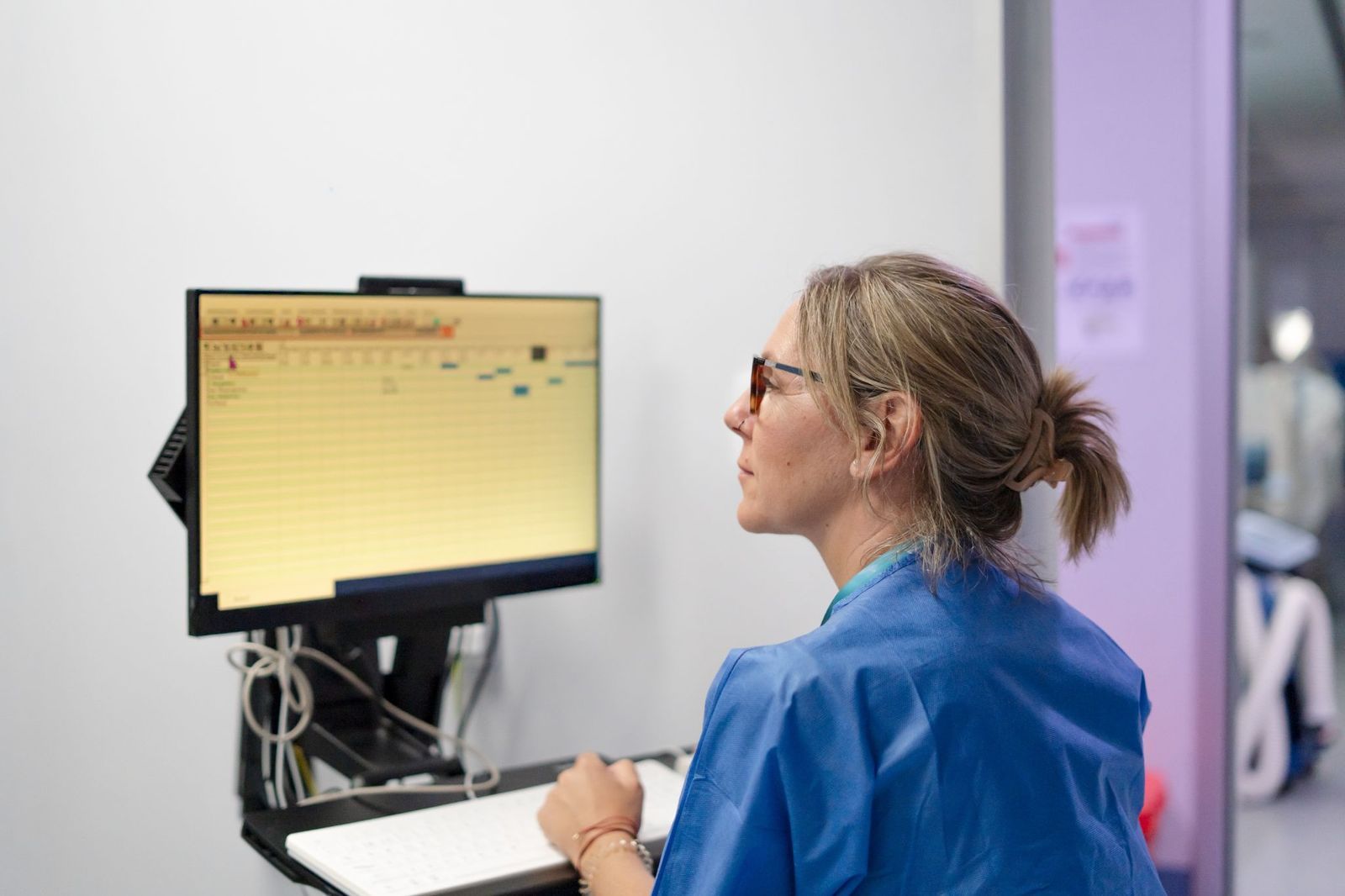
Not all codes are for patients. The next time you’re in a hospital, look closely at what the nurse is pushing from room to room. It may look like a small rolling desk with a computer on top. Staff often call it a "WOW," short for "workstation on wheels."

As hospitals switched from paper charts to electronic medical records, these mobile computers became essential. Nurses use them to review test results, scan medications, update patient charts, and check doctors’ orders without leaving the bedside. The name sounds funny, but the technology helps caregivers spend more time with patients instead of walking back and forth to a nursing station.

9

Sharp container

Image: NMK-Studio

After getting a shot or having blood drawn, most patients never think about where the used needle ends up. It certainly doesn't go into an ordinary trash can.

Hospitals place needles, scalpels, and other sharp medical instruments into special containers designed to prevent accidental injuries. These sturdy, puncture-resistant boxes are sealed when full and safely disposed of in accordance with strict health regulations. This not only protects nurses, but it also protects cleaning crews, waste handlers, and even the public from dangerous needle sticks. It’s one of the most important safety measures in every hospital, even though most patients never notice it.

10

B-52

Image: Photoroyalty

If you’ve ever watched a medical drama, you've probably seen a patient become so agitated that several staff members rush into the room. In situations like that, a doctor or nurse may ask for a "B-52." But the name has nothing to do with numbers themselves; it actually comes from a medicine.

B-52 is hospital slang for a fast-acting injection used to calm down patients who are severely combative or at risk of harming themselves or others. The nickname comes from a commonly used combination of medications that usually include diphenhydramine, haloperidol, and lorazepam. It’s strictly reserved for when other methods of calming the patient haven’t worked.

Looking for an extra scoop of literary fun?

Learn more with our Word of the day

uproarious

/ˌəpˈrɔriəs/