Everyday expressions

Where does the phrase “close, but no cigar” come from? 8 idioms' origins


Published on December 9, 2023


Image: Pisit Heng

Idioms are a rare breed, aren’t they? They confuse non-native speakers to no end, as they can’t simply be deduced from the meaning of individual words. After all, who in their right mind would accuse someone of stealing their intangible thunder? Or complain about having to burn lamp oil at midnight?

English speakers use these idioms all the time but rarely stop to figure out where they come from. If you were ever curious about how spilling beans might connect to confessing a secret, then this article is exactly what you need.

1

Steal Someone’s Thunder

Image: Michał Mancewicz

The very literal origin of this idiom comes from the play "Appius and Virginia," written by English dramatist John Dennis in the early 1700s. For the production of his play, Dennis created a new method to imitate the sound of thunder. Sadly, "Appius and Virginia" had disappointing attendance and was canceled shortly after. However, Dennis soon after discovered that a production of Macbeth was using his thunder device, to critical acclaim. According to literary scholar Joseph Spence, Dennis angrily exclaimed, "Damn them! They will not let my play run, but they steal my thunder."

2

Close But No Cigar

Image: Yohan Cho

This idiom has a surprising lighthearted aspect to it. While its meaning entails soul-crushing defeat, one can’t help but also imagine a Groucho Marx-looking character chewing on a big cigar. And this lightheartedness might not be completely accidental: After all, this idiom comes from the cheerful world of carnival games.

In the late 19th century, carnival games were targeted for adults, not children. Therefore, instead of handing out oversized stuffed animals of undefined species, winners might receive objects like cigars as prizes. The idiom "close but no cigar" was born from those players that almost won, but didn’t earn a prize.

3

I’ve Got It In The Bag

Image: Tyler Hilton

The most widely accepted use of this idiom comes from America’s very own national pastime: baseball. In 1916, the New York Giants (now known as the San Francisco Giants) had an incredible winning streak of 26 consecutive games. The Giants believed that, if they were in the lead during the last inning of a game, moving a bag filled with extra baseballs off the field would secure their victory. They had "captured" the game in the bag. This team’s superstition has now evolved into an everyday idiom that means secured and complete success.

4

Spill The Beans

Image: Milada Vigerova

Picture this: You are at work, hanging by the water cooler, and you are trying to get your favorite coworker to reveal a piece of office gossip that promises to be huge. We have all been there, but did you know that by asking your coworker to "spill the beans", you might be referencing one of the very first instances of democracy?

The origins of this idiom are still debated, but the consensus is that it most likely comes from a voting system from Ancient Greece. This process involved placing colored beans in a vase (white for yes, black for no). Tallying up the votes would then literally require someone to spill the vase and count each bean that was cast.

5

Burning The Midnight Oil

Image: Ritabrata Das

Almost every student can attest to spending many sleepless nights burning the midnight oil in front of a seemingly endless pile of textbooks. While the origin of this idiom comes from oil lamps used in the 17th century, students all across the world still refer to this expression when talking about working late into the night.

The first known use of "burning the midnight oil" comes from a book written by English poet Francis Quarles in 1635. More recently, in 1972, country music legends Dolly Parton and Porter Wagoner recorded a collaborative studio album titled The Right Combination • Burning the Midnight Oil.

6

Turn A Blind Eye

Image: Leimenide

While turning a blind eye might make us think about that lenient schoolteacher who occasionally gave us a pass on our missing homework, the most commonly accepted origin of this idiom comes from the nautical world. Specifically, from the iconic 18th century British Admiral Horatio Nelson.

In 1801, Nelson led the British attack alongside fellow Admiral Sir Hyde Parker in the Battle of Copenhagen. Nelson, who was blind in one eye, received a flag message from Parker that urged him to retreat. However, Nelson believed that the British fleet should continue to push forward, so he held his telescope to his blind eye and pretended he hadn’t seen Parker’s message.

7

Under The Weather

Image: Raimond Klavins

Weirdly enough, another unexpected nautical term has found its way into this list! While nowadays feeling "under the weather" means feeling ill, the origin of this idiom dates back to slang used by sailors as far back as the 19th century.

The term "under the weather bow" was used to refer to the side of the ship that was exposed the most during storms. Sailors would seek shelter in their cabins to avoid getting seasick, literally going under the ship’s deck to escape the weather. The first literary use of this term was by American author Donald Grant Mitchell in his 1855 book Fudge Doings. In the book, a character describes a nasty experience in a steamer as feeling "a little under the weather."

8

Raised By Wolves

Image: Carlos Felipe Ramírez Mesa

Throughout the years, countless parents have repeated the same question to their misbehaving children at the dinner table: "Were you raised by wolves?" And, while the current intention of these parents is to highlight bad manners and improper etiquette, it might hurt their case to learn that several outstanding characters from myths and literature were, in fact, raised by wolves.

Perhaps the first and most famous story of children raised by wolves is that of the founders of Ancient Rome, Romulus, and Remus. In the myth, the brothers are abandoned on the bank of a river, where they are found and nurtured by a she-wolf, before being eventually adopted by a shepherd. Furthermore, the protagonist of Rudyard Kipling’s 1894 novel The Jungle Book is a boy named Mowgli who is raised in the jungle by wolves.



Hospital secrets

What is a "Code Gray" and what you should know if you hear it at the E.R.


Published on December 9, 2023


Image: voronaman

A trip to the emergency room can be stressful enough without hearing doctors and nurses speak a language that sounds like a secret code. One minute, someone is asking for medication "STAT," the next there’s a "Code Gray," and another patient is suddenly "NPO." What do those words really mean? Some are official medical terms, others are insider slang, but they all help hospital staff communicate quickly when every second counts. Here are 10 of those codes explained.

1

Code Gray

Image: PeopleImages

The E.R. can be hectic and unpredictable. Most patients are frightened or uncomfortable, but now and then someone becomes aggressive because of pain, confusion, mental illness, or the effects of alcohol or other substances. That’s when you can hear "Code Gray" announced over the speakers.

The code is used to summon security officers to help manage a violent or combative situation. While color codes vary from one hospital to another, Code Gray commonly signals that staff needs extra assistance to protect patients, visitors, and healthcare workers. Even if you know it now, most people in the waiting room never know what happened, and that’s exactly the point.

2

NPO

Image: PeopleImages

You have a scheduled surgery, you’re in your bed waiting to be taken to the surgery room, and you ask for a cup of coffee to make the wait lighter. The nurse will probably tell you you’re an NPO. You may think it’s serious, but it’s simply a procedure.

"NPO" is an abbreviation that comes from the Latin phrase Nil Per Os, which means "nothing by mouth." It tells patients they cannot eat, drink, or sometimes even take medication until doctors say it’s safe. The rule is most common before surgery or certain medical tests, when food or liquids could increase the risk of complications or alter the results. It may be frustrating, but it’s an important part of keeping patients safe.

3

STAT!

Image: PeopleImages

You’ve probably been through the experience of visiting an emergency room, either to get checked or to visit a loved one. In that part of the hospital where everyone is rushing to save lives, you’ve probably heard a doctor asking for the R.C.P. cart or medication "STAT!" It sounds urgent, and that's because it is.

The expression comes from the Latin statim, which means "immediately" or "without delay." Hospitals have used Latin medical terms for centuries, but STAT is one of the few that remains part of everyday conversation. When a doctor says it, the request jumps to the top of the priority list. It doesn’t always refer to a life-or-death situation, but it does mean the medical team needs something done as quickly as possible.

4

Code Pink

Image: Vladimir Tretyakov

Newborns are always a reason to celebrate at the hospital. Parents usually rest happily next to their child as they receive congratulations from close relatives. However, the hospital is always prepared to handle extremely rare emergencies under "code pink."

If you hear a "Code Pink," it usually means a baby or young child is suspected of being abducted from the hospital. Within seconds, security officers respond, exits may be monitored or blocked, and staff begins following carefully rehearsed procedures. Although different hospitals sometimes use different color codes, Code Pink has become widely recognized across North America as one of the most serious alerts a hospital can issue.

5

Walkie-talkie

Image: Arunporn Thanapotivirat

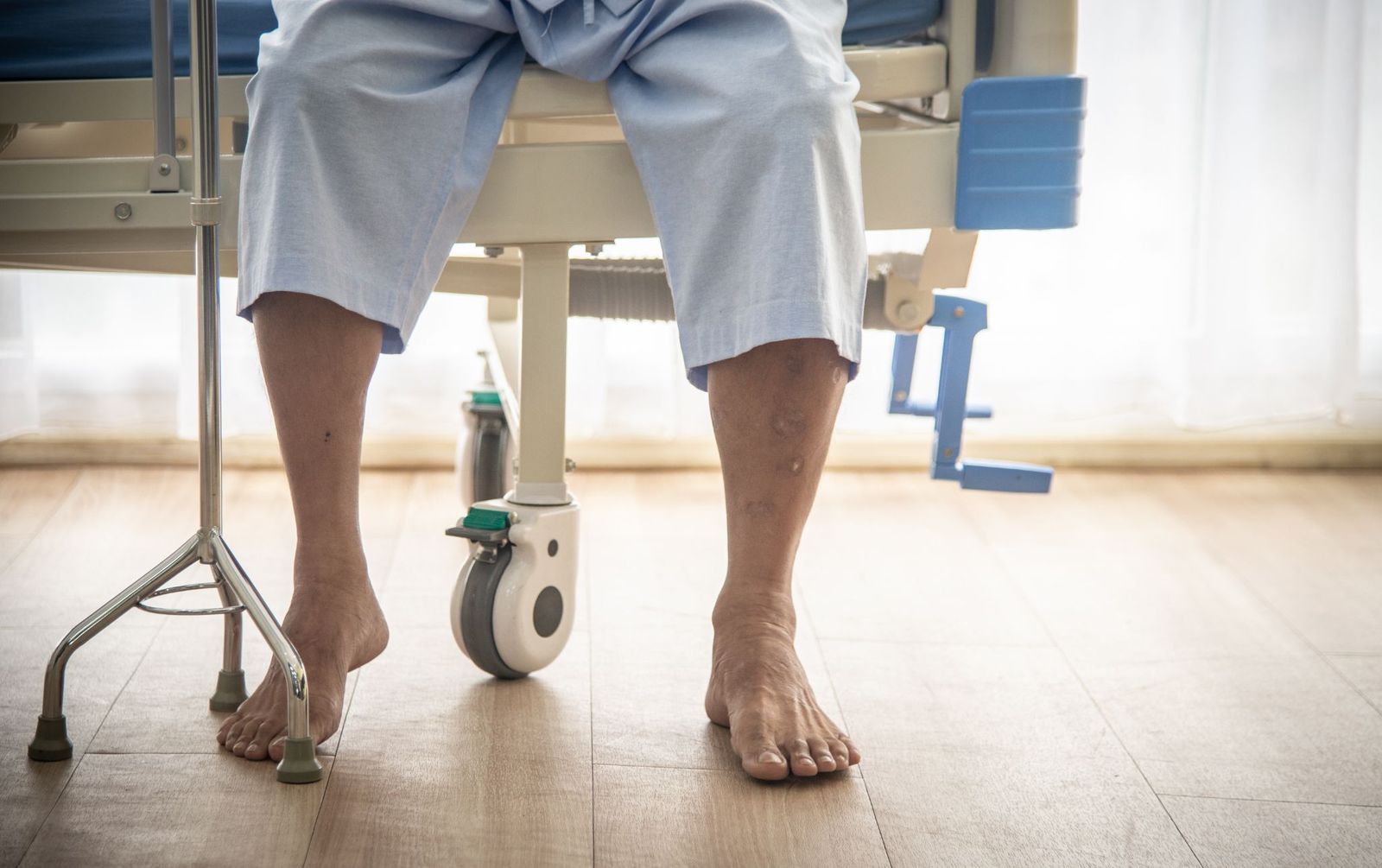
If you’ve ever spent a few days in the hospital, you’ve probably noticed that some patients are walking up and down the halls, while others need help just getting out of bed. When a nurse refers to someone as a "walkie-talkie," it’s actually good news.

This informal expression refers to patients who can walk on their own, use the bathroom without assistance, and handle most basic tasks independently. It’s not an official medical term, of course, but it’s commonly used among healthcare workers because it quickly tells the next shift that the patient requires less hands-on care than many others.

6

Total

Image: sebra

As nurses change shifts, you’ll often hear them give a quick report about each patient. One person may only need medication, while another is described as a "total."

The term is short for a patient who requires total care. They may need help eating, bathing, getting dressed, turning in bed, or moving from one place to another. Although the expression sounds impersonal, it’s simply a practical way for caregivers to communicate how much assistance someone needs.

7

Frequent flyer

Image: Studio Romantic

Most people hear "frequent flyer" and think of an airline reward program. And that’s correct, but in an emergency room, the phrase has a very different meaning.

A frequent flyer is an informal nickname for patients who repeatedly return to the hospital, often due to chronic illness, recurring medical conditions, or other ongoing health issues. Behind the light-hearted nickname is often a difficult reality. Many of these patients are simply dealing with medical problems that require regular emergency care, and the expression is just a way to make the experience a bit lighter among the familiar faces of doctors and nurses.

8

WOW

Image: Studio Romantic

Not all codes are for patients. The next time you’re in a hospital, look closely at what the nurse is pushing from room to room. It may look like a small rolling desk with a computer on top. Staff often call it a "WOW," short for "workstation on wheels."

As hospitals switched from paper charts to electronic medical records, these mobile computers became essential. Nurses use them to review test results, scan medications, update patient charts, and check doctors’ orders without leaving the bedside. The name sounds funny, but the technology helps caregivers spend more time with patients instead of walking back and forth to a nursing station.

9

Sharp container

Image: NMK-Studio

After getting a shot or having blood drawn, most patients never think about where the used needle ends up. It certainly doesn't go into an ordinary trash can.

Hospitals place needles, scalpels, and other sharp medical instruments into special containers designed to prevent accidental injuries. These sturdy, puncture-resistant boxes are sealed when full and safely disposed of in accordance with strict health regulations. This not only protects nurses, but it also protects cleaning crews, waste handlers, and even the public from dangerous needle sticks. It’s one of the most important safety measures in every hospital, even though most patients never notice it.

10

B-52

Image: Photoroyalty

If you’ve ever watched a medical drama, you've probably seen a patient become so agitated that several staff members rush into the room. In situations like that, a doctor or nurse may ask for a "B-52." But the name has nothing to do with numbers themselves; it actually comes from a medicine.

B-52 is hospital slang for a fast-acting injection used to calm down patients who are severely combative or at risk of harming themselves or others. The nickname comes from a commonly used combination of medications that usually include diphenhydramine, haloperidol, and lorazepam. It’s strictly reserved for when other methods of calming the patient haven’t worked.

Looking for an extra scoop of literary fun?

Learn more with our Word of the day

evocative

/əˈvɑkədɪv/