Linguistic innovation

Shakespeare said it first: 10 words coined by the Bard


Published on August 9, 2026
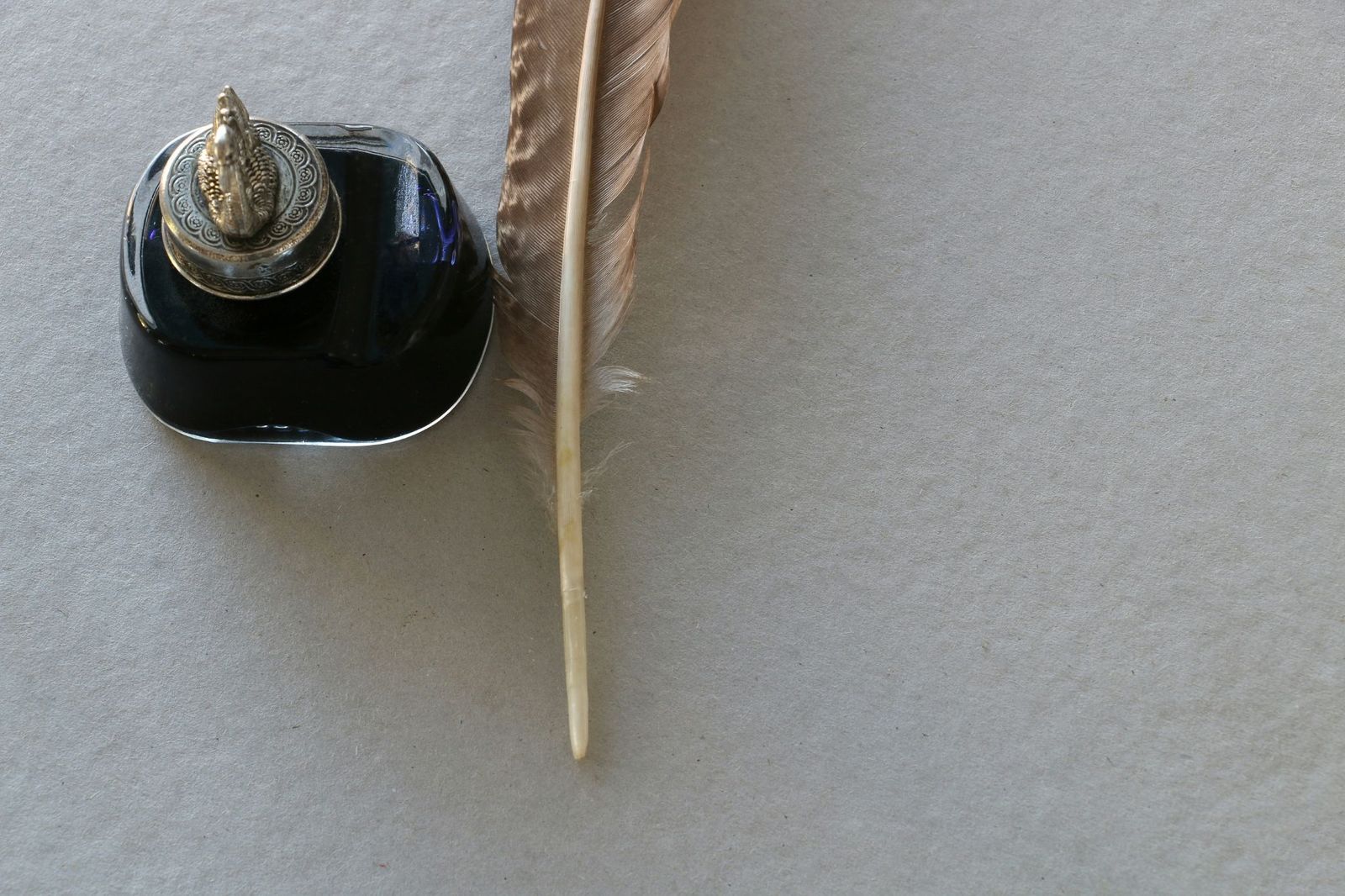

Image: Pierre Bamin

Rumor has it that William Shakespeare coined over 1,700 new English words or, at least, he was the first to put them in writing. If you have ever heard this fact, it might make you think of sophisticated-sounding terms like sanctimonious, equivocal, or radiance, all invented by the Bard. But many of the words we use in everyday life have Shakespearean origins, no matter how mundane they might seem. Let’s explore Shakespeare’s mark on our daily vocabulary.

1

Bedroom

Image: Cassidy Dickens

First recorded in: A Midsummer Night's Dream

When Shakespeare first used the word ‘bedroom’ (around the 1580s), the common way of referring to a space intended for sleeping was ‘chamber’ or ‘bedchamber’. Why did the bard choose a different word then? He was not referring to what we now understand as a bedroom. In Act 2, Scene 2 of A Midsummer Night's Dream, when Lysander asks Hermia for "bed-room", he is asking to lie next to her in the bed. The change from ‘space in the bed’ to ‘a room intended for sleeping’ occurred a few decades later, and the current use of 'bedroom' was set around the 1610s.

2

Swagger

Image: Alex Sheldon

First recorded in: A Midsummer Night's Dream

We commonly use this word to describe the behavior or attitude of someone very confident and bold, and its first recorded use was not that different, though it bore a negative connotation. In Act 3, Scene 1 of A Midsummer Night's Dream, Puck uses the word "swaggering" to mockingly describe the rustic manners of the actors rehearsing a play. A few years later, Shakespeare used "swaggerer" in Act 2, Scene 4 of Henry IV, Part 2, to describe the noisy, boastful, and brawling Pistol. Nowadays, ‘swagger’ is most of the time used with a positive connotation.

3

Lonely

Image: Lukas Rychvalsky

First recorded in: Coriolanus

If Shakespeare ever heard Kelly Clarkson singing "doesn't mean I'm lonely when I'm alone," he would think the verse redundant, because he coined the word ‘lonely’ to mean ‘alone’. In Coriolanus (Act 4, Scene 1), the titular character says "I go alone, like to a lonely dragon, that his fen makes fear'd and talk'd of more than seen". While Coriolanus used the word to compare himself with a solitary or isolated creature, ‘lonely’ evolved to mean ‘sad for lack of company’ in the early 19th century.

4

Assassination

Image: Maxim Hopman

First recorded in: Macbeth

While linguists believe that ‘assassine’ was already in use in the 1570s, ‘assassination’ was first recorded in print around 1605 in Shakespeare’s Macbeth. A word of Arabic origin (from hassassin, ‘hashish-user’) that pejoratively described a group of mercenary killers, it had entered English through the Italian assassino. In Macbeth (Act 1, scene 7), the main character, while contemplating killing the king, refers to the potential murder as an ‘assassination’.

5

Fashionable

Image: Clarissa Watson

First recorded in: Troilus and Cressida

While in modern times we understand fashionable as ‘following the latest trends’, Shakespeare’s use was slightly different. In Act 3, scene 3 of Troilus and Cressida, the character Ulysses describes time as "a fashionable host", using the term to mean ‘popular’. While its meaning has changed slightly since then, the association with something popular remains.

6

Eyeball

Image: Marina Vitale

First recorded in: Venus and Adonis

Was Shakespeare the first to record this word? Yes and no. In 1575, a scholar named William Patten had recorded the term ‘eye ball’, but Shakespeare was the first to use it as a single word in the 1593 poem Venus and Adonis, "Look in mine eyeballs, there thy beauty lies". How did people refer to the eyeball before that? They simply called it the ‘eye’.

7

Generous

Image: Annie Spratt

First recorded in: Julius Caesar

Historians are certain about this one: the word ‘generous’ was not coined by Shakespeare, but he was responsible for making it popular and cementing its meaning as ‘freely giving’. From the Latin generosus (‘of noble birth’, ‘honorable’), the term had entered English through French with that original meaning. Shakespeare had used it as ‘honorable’ or ‘high ranking’ in Love's Labour's Lost (c. 1594), but he later used it in 1599's Julius Caesar (Act 2, scene 3) to describe the unselfishness and altruism of Caesar, who had made provisions for every Roman citizen in his will.

8

Undress

Image: Teddy Bae

First recorded in: The Taming of the Shrew

Before Shakespeare’s time, English people certainly undressed, but they used words like unclothe, strip, or the Old English unscrydan to describe the action. The French dresser (´to arrange’, ‘put in order’) entered English in the 14th century, and shifted from general to personal order in the following century, eventually being used solely for clothes. Shakespeare’s The Taming of the Shrew (c. 1590) contains the first written record of the opposite verb, ‘to undress’, in its prologue: "Madam, undress you, and come now to bed."

9

Varied

Image: Yoav Farhi

First recorded in: Titus Andronicus

Although ‘vary’ (from the Latin variare, ‘to change or make different’) was already in use during the 1500s, Shakespeare is widely considered the first to record its adjectival form with the meaning ‘something that contains many different things’. In 1591’s Titus Andronicus (Act 3, scene 1), the character Marcus compares the voice of his now-mute niece Lavinia with a bird that sang "sweet varied notes".

10

Critic

Image: Vitaly Gariev

First recorded in: Love’s Labour’s Lost

The Greek kritikos, meaning ‘able to judge’, was already used in English before Shakespeare’s time, but it referred to skilled judges or literary correctors. In Act 3, scene 1, of Love’s Labour’s Lost, Berowne, initially cynical about love but having fallen for Rosalind, describes his former self as "A critic, nay, a nightwatch constable", making this the first recorded use of the word to mean someone who points out flaws or looks upon others with contempt.


Deathbed statements

Beyond the grave: Take a look at the last words of 12 famous people


Published on August 9, 2026


Image: Daderot, CC0, via Wikimedia Commons

Throughout history, hundreds of historical figures have left their mark on the world through their marvelous achievements. When their lives came to an end, their last words were often a reflection of their lives and ideals. From George Washington and Mark Twain to Frank Sinatra and Leonardo Da Vinci, in this article, we will reveal 12 final words of memorable personalities.

1

George Washington

Image: The New York Public Library

After serving two terms as the United State's first president, George Washington retired to his Virginia plantation. In mid-December 1799, he developed a cold and a severe sore throat. Despite doctors' efforts to cure him, the end was imminent.

His long-time secretary, Tobias Lear, was at his side during his last days and documented all the events that transpired, including the former president's last words. According to his account, shortly before he took his last breath George Washington said "Tis well" —an old-fashioned way of saying "everything is okay."

2

Humphrey Bogart

Image: Signal Corps Archive from United States, Public domain, via Wikimedia Commons

Noir icon of perpetual elegance and rebellious charisma, Humphrey Bogart is an undisputed legend in cinema history. A Hollywood Golden Age star, Bogart is still remembered today for his scar on his upper lip, his everlasting cigarette, and his perfect portrayal of gangsters and detectives.

At the age of 57 Bogart was diagnosed with esophageal cancer, for which he was hospitalized for several months. According to lore, the legendary star's last words were "I should never have switched from scotch to martinis." However, his wife Lauren Bacall confirmed that the last thing he actually said was "Goodbye Kid. Hurry back," before she left his bedside to get their children.

3

Mark Twain

Image: Miscellaneous Items in High Demand, PPOC, Library of Congress, Public domain, via Wikimedia Commons

As one of the greatest American writers of all time, Mark Twain is usually credited with all sorts of great quotes that he often didn't say. For that reason, there are different versions of what his last words were before he died in 1910 at the age of 74.

The most plausible theory can be found in an article published one day after his death. According to this chronicle, Samuel Langhorne Clemens' last words were not spoken aloud but written. The famous humorist and essayist reportedly wrote to his daughter Clara, who accompanied him on his bedside, "Give me my glasses."

4

Joan Crawford

Image: MGM, Public domain, via Wikimedia Commons

Joan Crawford, the Oscar winner for Mildred Pierce and one of the greatest stars of Hollywood's golden age, died in 1977 of a heart attack.

The actress, who had a complicated personality, was true to her nature until her last breath. She was so ill that her doctor felt it wasn’t worth taking her to the hospital. One of her nurses began to pray aloud in desperation. Losing her patience, Crawford snapped for the last time and said, "Damn it... Don't you dare ask God to help me."

5

Marco Polo

Image: Municipal Library of Trento, CC0, via Wikimedia Commons

The year 2024 marked the 700th anniversary of the death of the man who better described remote lands. Marco Polo was a merchant who spent more than 20 years of his life traveling through the Orient and wrote about his adventures in a book that became a bestseller when the printing press wasn’t even invented.

Marco Polo was, and still is, a legend. When, on his deathbed, his wife and friends begged the brave explorer to confess if what he had told in the book was true, he barely whispered: "I have not told the half of what I saw and did."

6

Groucho Marx

Image: MGM, Public domain, via Wikimedia Commons

Julius Henry Marx, better known as Groucho Marx, is considered one of the most influential comedians of all time. The man with the bushy black mustache was one of the Marx Brothers. Together they made 13 films, including the classic Duck Soup. After a long and prominent career, Groucho passed away in Los Angeles in 1977 at the age of 86.

His brilliant one-liners are still remembered and replayed to this day, so it is not surprising that not one but several final words are attributed to him. A few close friends have suggested that his last line was "This is no way to live!", while most suggest that his last words were in fact dedicated to his wife: "Die, my dear? Why, that's the last thing I'll do!"

7

Voltaire

Image: Nicolas de Largillière, Public domain, via Wikimedia Commons

Voltaire, the French writer, philosopher, historian, and lawyer, one of the major figures of the Enlightenment, died in 1778 at the age of 83. Different accounts of his deathbed make it impossible to determine exactly what his last days were like.

One of these stories, however, is consistent with his ideas about God and his well-known criticism of the Church. According to this version, when the priest asked him if he wanted to renounce Satan before he died, Voltaire replied, "This is no time to make new enemies."

8

L. Frank Baum

Image: William Wallace Denslow, Public domain, via Wikimedia Commons

L. Frank Baum was a prolific American author. He wrote 55 novels, 82 short stories, and more than 200 poems. However, his most memorable work is his series of children's fantasy books The Wonderful Wizard of Oz.

On May 5, 1919, Baum suffered a heart attack. He died the next day, shortly before his 63rd birthday. Disturbed by the imminence of death, he whispered to his wife: "Now we can cross the Shifting Sands," a clear reference to the Land of Oz.

9

Augustus

Image: National Archaeological Museum of Athens, CC0, via Wikimedia Commons

Augustus, the first Roman emperor, is often attributed with the phrase: "Behold, I found Rome of clay, and leave her to you of marble," alluding to the great infrastructural works carried out during his prosperous 40 years of rule.

However, according to other historical accounts, his last words were addressed to the friends who stayed with him on his deathbed: "Have I played the part well? Then applaud, as I exit."

10

Frank Sinatra

Image: English: Distributed by NBC. Photographer unknown., Public domain, via Wikimedia Commons

"Darling, you've gone through worse and you can beat this too. You have to fight," implored Barbara Marx, Frank Sinatra's fourth wife, to her beloved on his deathbed. "I'm losing," The Voice whispered through teary eyes.

Barbara recounted the last hours of the singer of such hits as My Way and New York, New York in her memoir Lady Blue Eyes: My Life With Frank. Frank Sinatra, one of the most popular entertainers of the mid-20th century, pronounced his last words in 1998 at the age of 82.

11

Leonardo Da Vinci

Image: Jean-Auguste-Dominique Ingres, CC0, via Wikimedia Commons

Despite being one of the most famous artists of the Renaissance, Leonardo da Vinci was very hard on himself. All his life he challenged his own limits, evident in his paintings and sculptures as well as in his inventions, some of which were truly revolutionary.

Even after a lifetime of success, he wasn’t quite satisfied. When he suffered a stroke at the age of 67, he sent for a priest to receive the Holy Sacrament and, according to historians, his greatest regret was that he hadn’t achieved excellence with his work. In that sense, it is said that his last words were: "I have offended God and mankind because my work did not reach the quality it should have."

12

Joe DiMaggio

Image: National Museum of Health and Medicine, Public domain, via Wikimedia Commons

The Yankee Clipper was one of the greatest baseball players of all time but he is also known for having been married to the iconic American actress Marilyn Monroe. Joe and Marilyn were together for less than three years. In 1955 the actress left him for American playwright Arthur Miller.

DiMaggio was devastated. He never married again, and never got over his one true love. His last words before he died in 1999 at the age of 84 were: "I'll finally get to see Marilyn."

Looking for an extra scoop of literary fun?

Learn more with our Word of the day

monotonous

/məˈnɑtənəs/