Naming oddities

10 oddly named US towns and cities and their surprising stories


Published on August 11, 2026
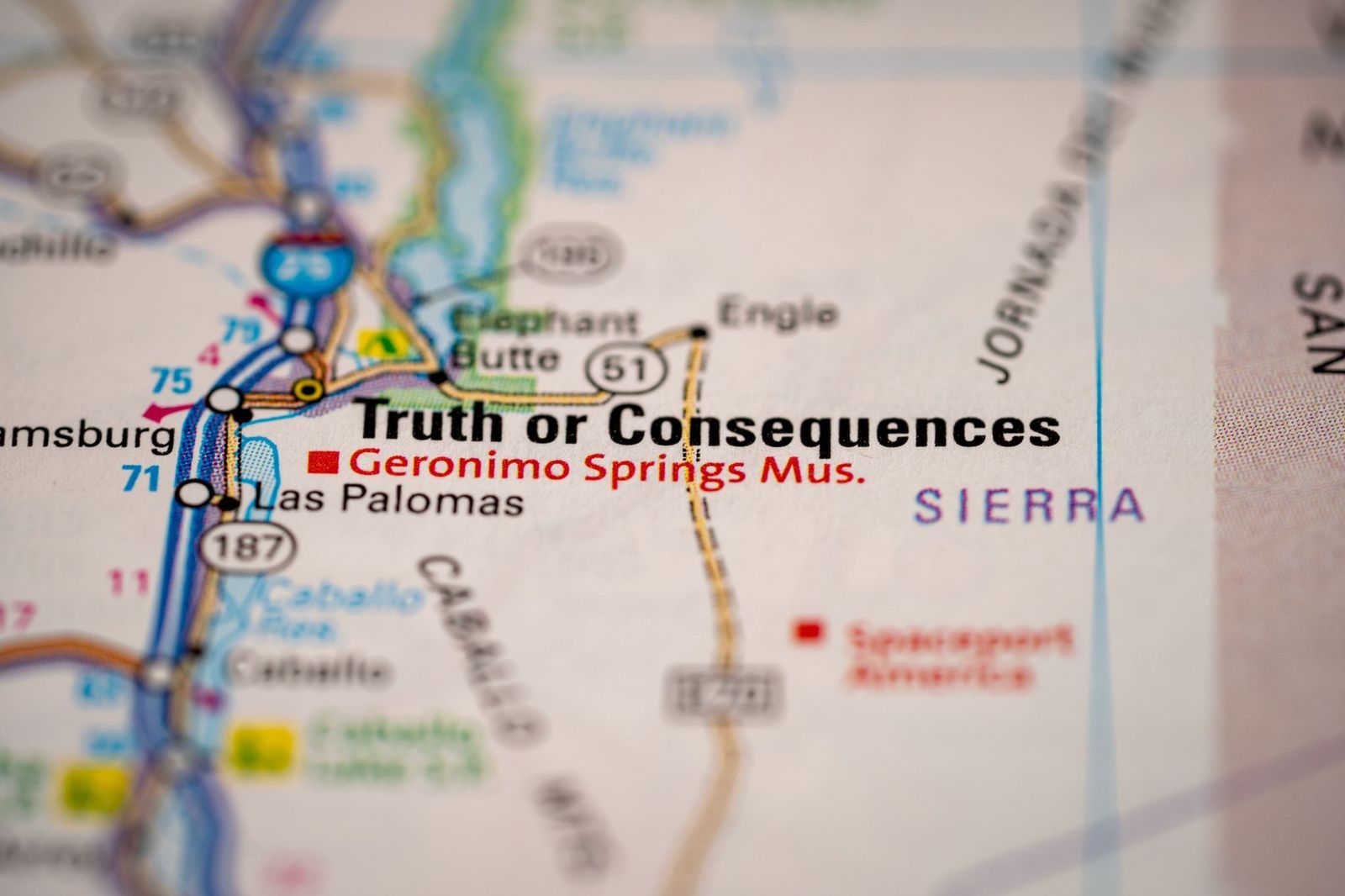

Image: Erman Gunes

America is home to over 19,000 incorporated cities and towns. While many have familiar names, others sound so unusual that they often force credibility. However, behind these atypical names, there are stories rooted in America's past, from the Gold Rush and the westward expansion to local legends that have endured for generations. Let's walk through some of the most peculiar city names out there and discover their surprising origins.

1

Tombstone, Arizona

Image: 1960s Travis

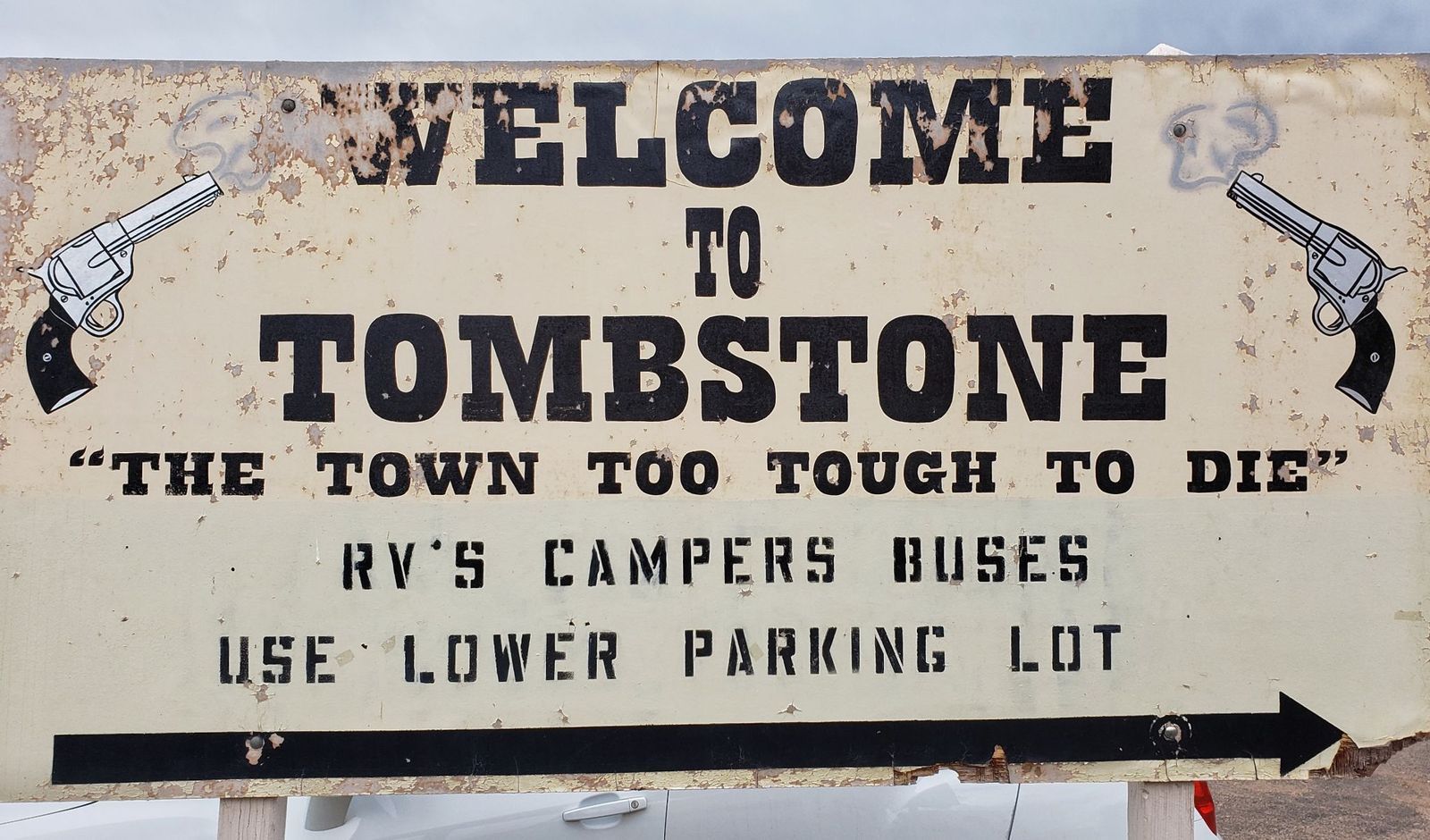
Founded in 1879 by prospector Ed Schieffelin, Tombstone owes its notoriously bleak name to a sarcastic remark. While searching for silver in southeastern Arizona, Schieffelin was warned by soldiers that the only thing he would find in Apache territory was his own tombstone.

Instead, Schieffelin struck one of the richest silver deposits in the American West. He named his mining claim Tombstone, and the booming town that sprang up around it quickly became one of the frontier's most prosperous communities, best remembered today by Old West figures like Wyatt Earp and Doc Holliday.

2

Truth or Consequences, New Mexico

Image: SevenMaps

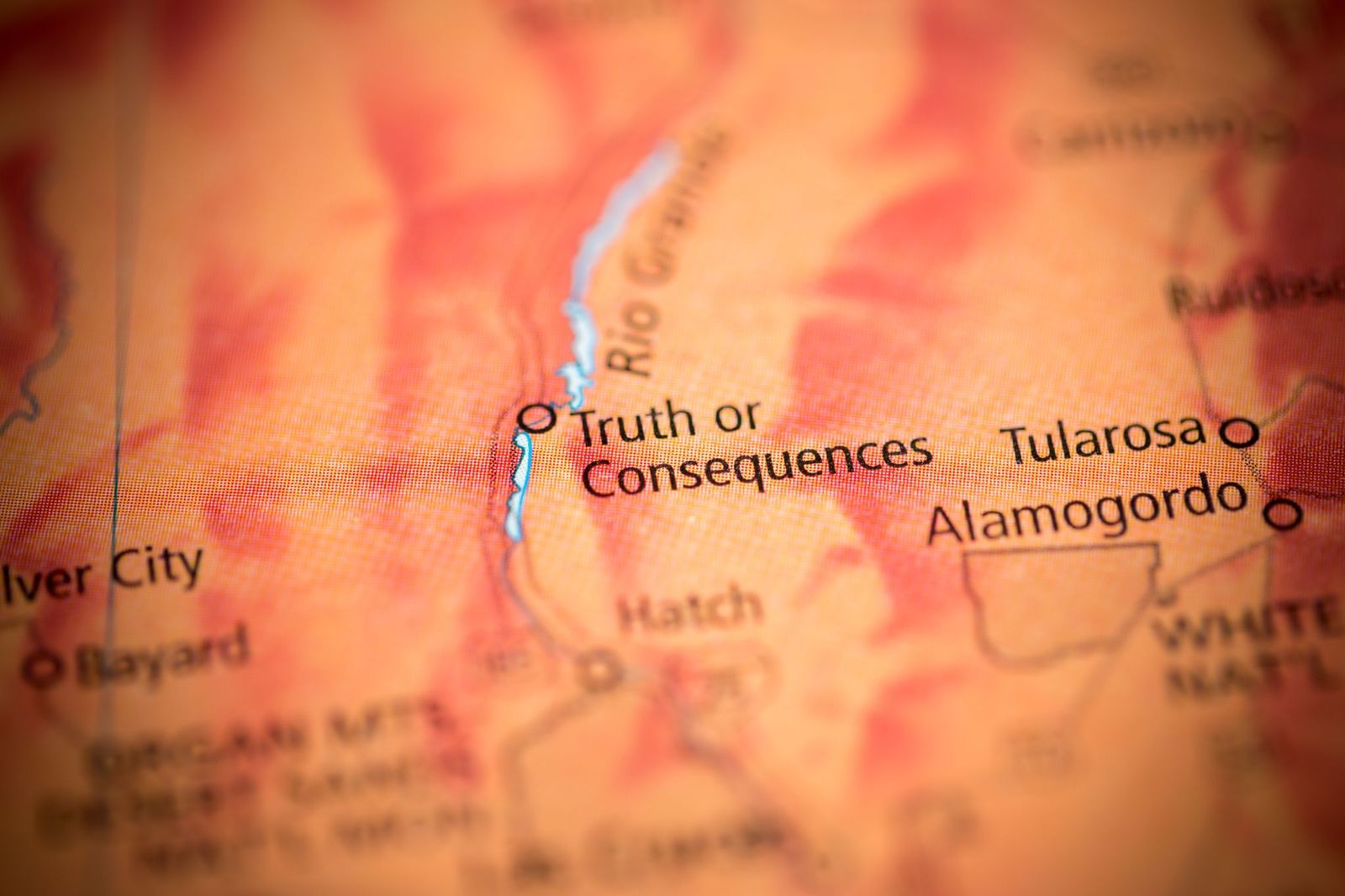
Originally known as Hot Springs, this community was founded in the late nineteenth century around a series of natural mineral springs that attracted visitors. By the middle of the twentieth century, it had become a well-known spa destination in the Southwest.

Everything changed in 1950, when radio personality Ralph Edwards announced that he would broadcast the anniversary episode of his wildly popular show Truth or Consequences from any town willing to adopt the show's name. In one of the most successful publicity campaigns in American history, the residents of Hot Springs voted in favor of the change, and the town still bears its unusual name more than 70 years later.

3

Zzyzx, California

Image: Kevin Key

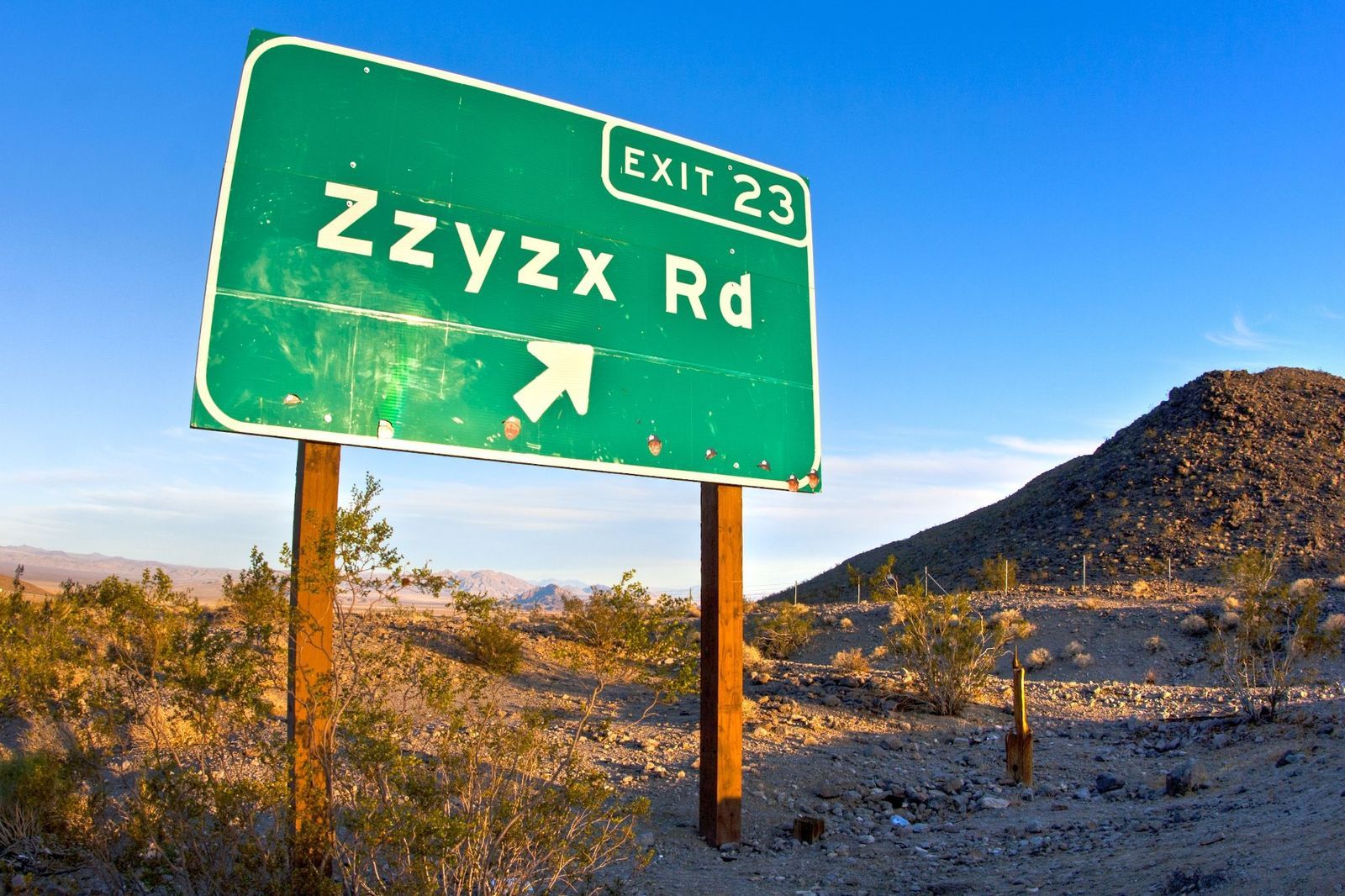
In 1944, minister and radio evangelist Curtis Howe Springer established a health resort in the Mojave Desert and deliberately named it Zzyzx. Springer claimed that he chose that specific name with the intention of making it the last word of the English dictionary.

Although the resort eventually closed and the federal government reclaimed the land, the name survived: today, Zzyzx is home to a desert studies center operated by California State University, and remains one of the most unusual names in America.

4

Accident, Maryland

Image: SevenMaps

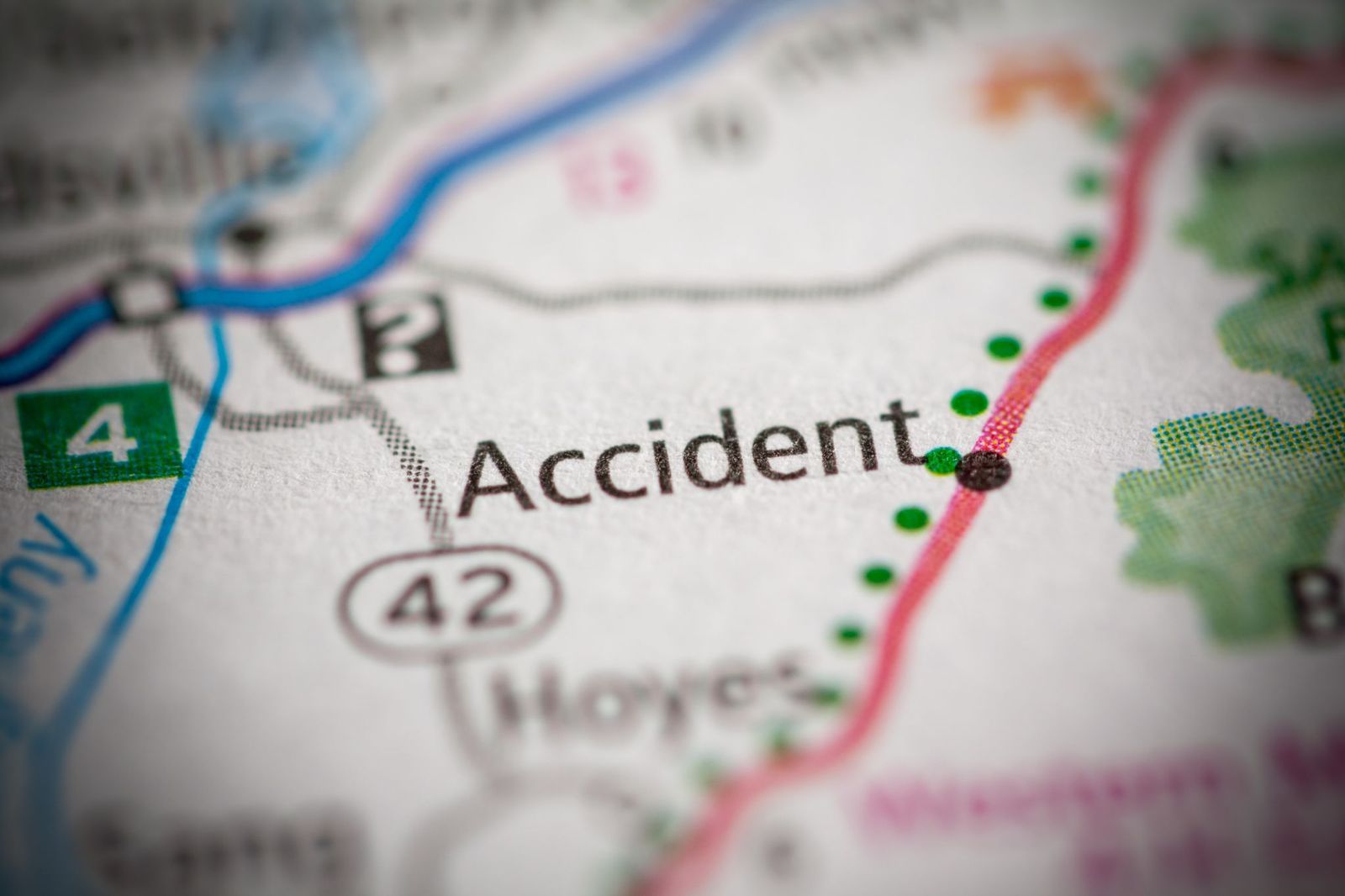
Founded during the colonial era, Accident traces its origins to a remarkable surveying mistake during the 1750s. Two surveyors, working independently, selected exactly the same 315-acre parcel while mapping western Maryland.

The overlapping claim became known as "The Accident", and when settlers established a community there, the name stuck. More than two centuries later, the town continues to embrace the name and its fortuitous history.

5

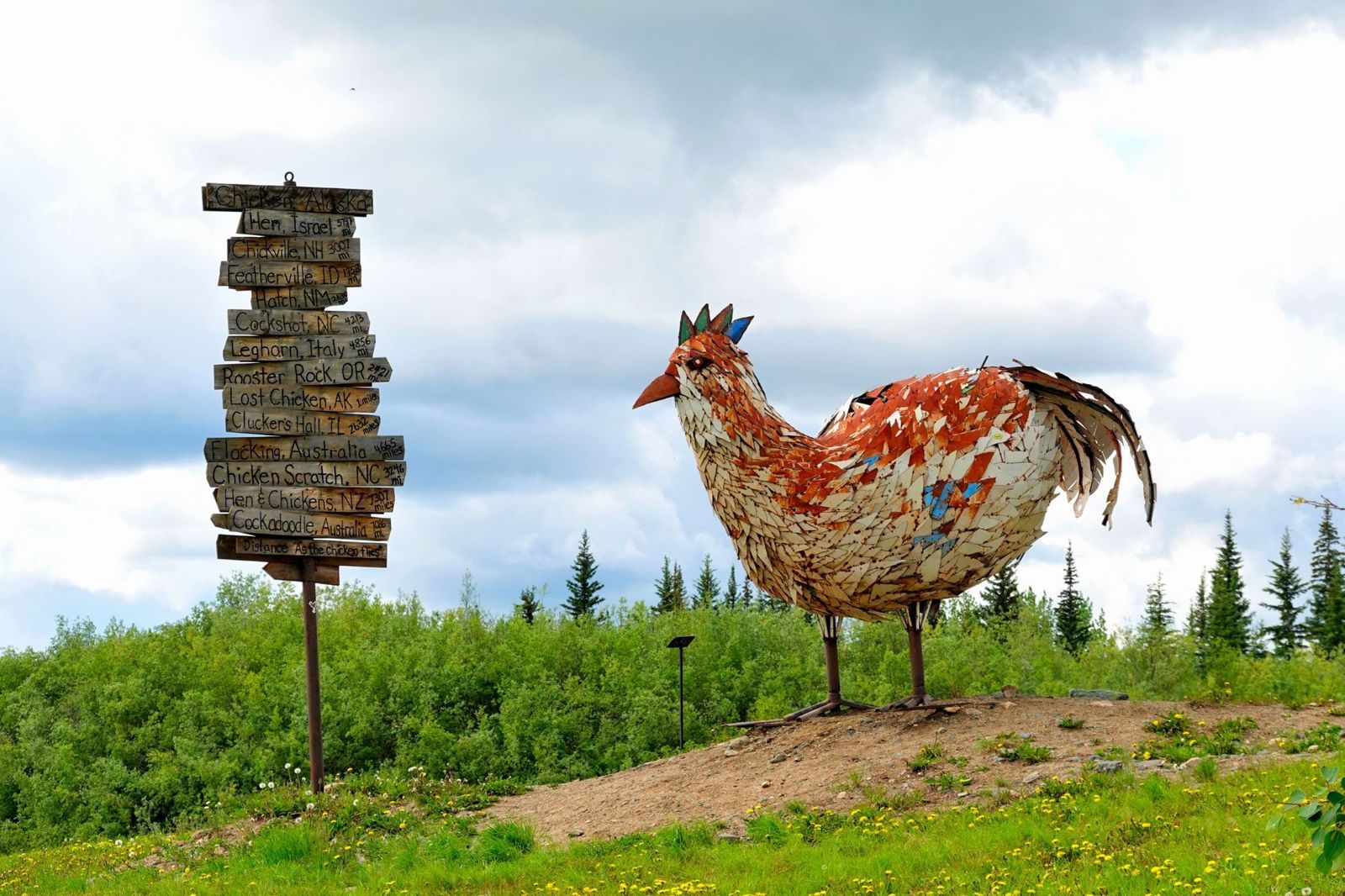
Chicken, Alaska

Image: Robert Sockey

The community of Chicken was established during Alaska's gold rush around 1902. Prospectors frequently hunted the local ptarmigan for food and originally wanted to name the settlement after the bird.

The problem was that few of the miners could agree on how to spell ptarmigan. Rather than risk embarrassment, and because the two species share some similarities, they chose the much simpler name Chicken.

6

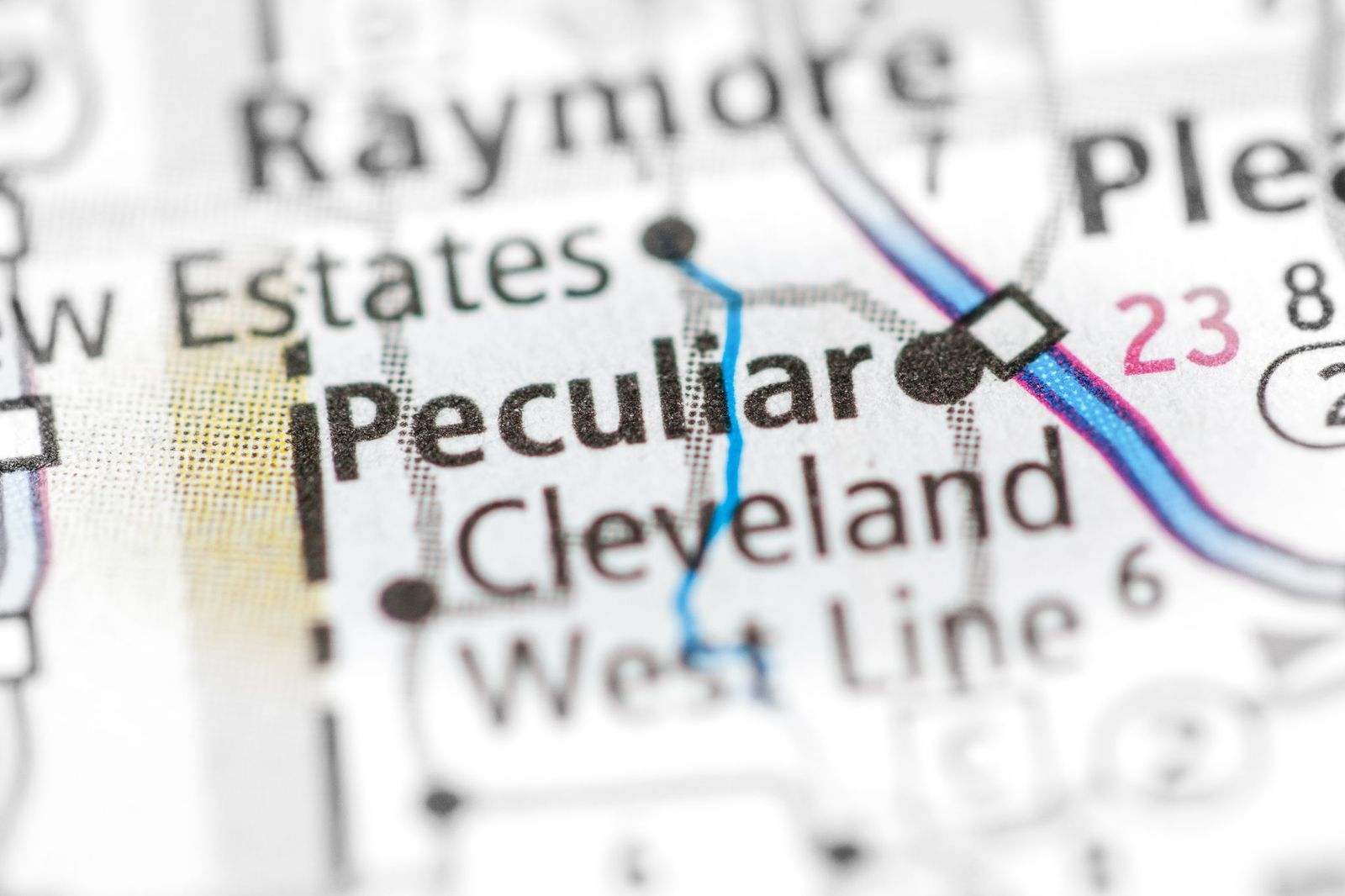
Peculiar, Missouri

Image: SevenMaps

Founded in 1868, as the railroad expanded across western Missouri, the community encountered an unexpected problem when applying for a post office: Every proposed town name had already been claimed elsewhere in the state.

The story goes that the local postmaster, in frustration, wrote to Washington stating that he didn't care what the town was called as long as it was something "peculiar." More than 150 years later, Peculiar still bears the name with pride.

7

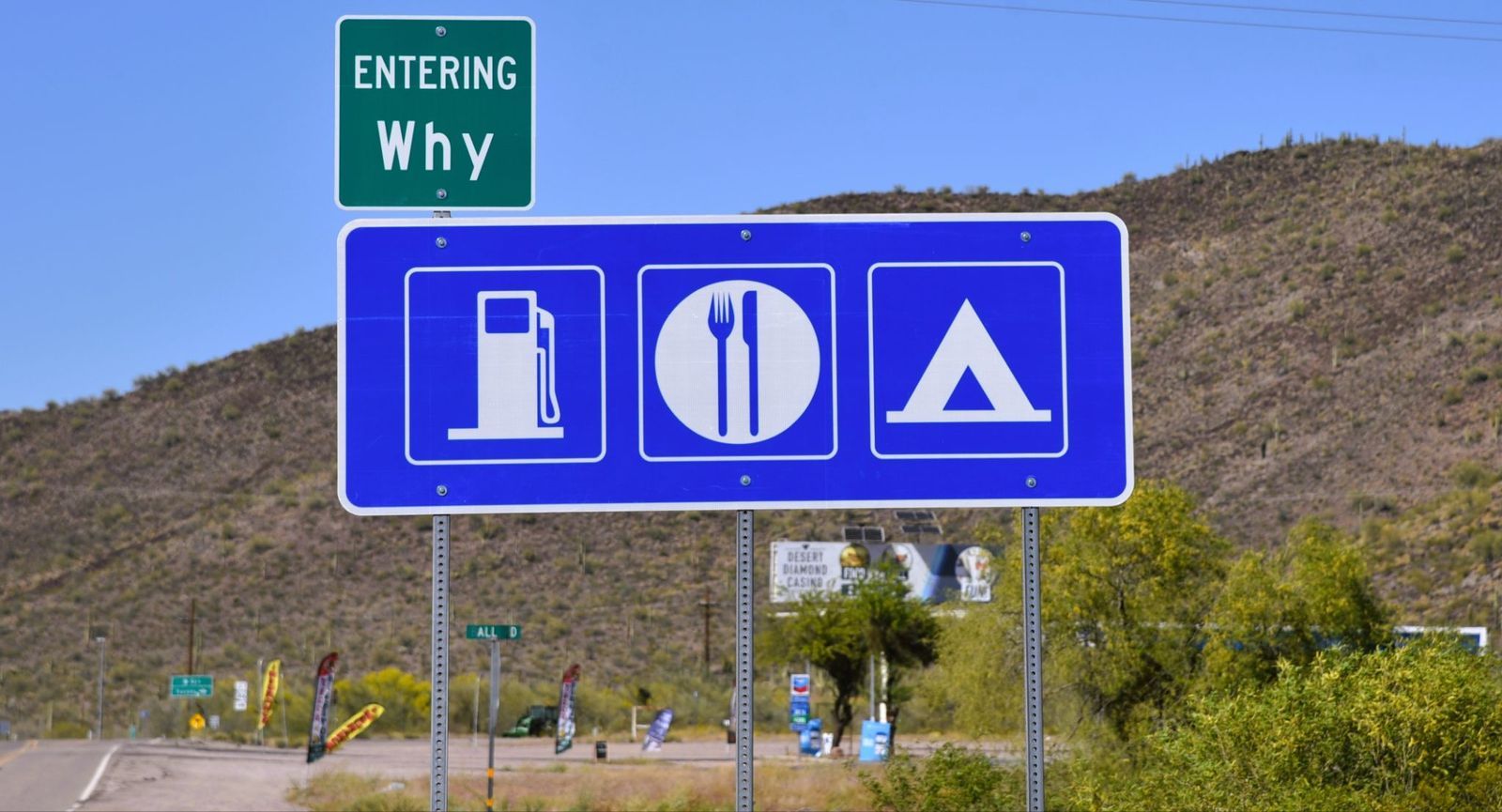
Why, Arizona

Image: Thomas Trompeter

"Why" is a community located in the Sonoran Desert, whose unusual name is the product of an unexpected legal technicality. The settlement developed during the early twentieth century at the point where the State Routes 85 and 86 intersected in the shape of the letter "Y."

The community originally wanted to call itself "Y" in honor of that intersection, but because Arizona law required community names to contain at least three letters, they spelled it out. As a result, even after the intersection has since been redesigned, the town of Why still keeps one of the most curious and memorable names in America.

8

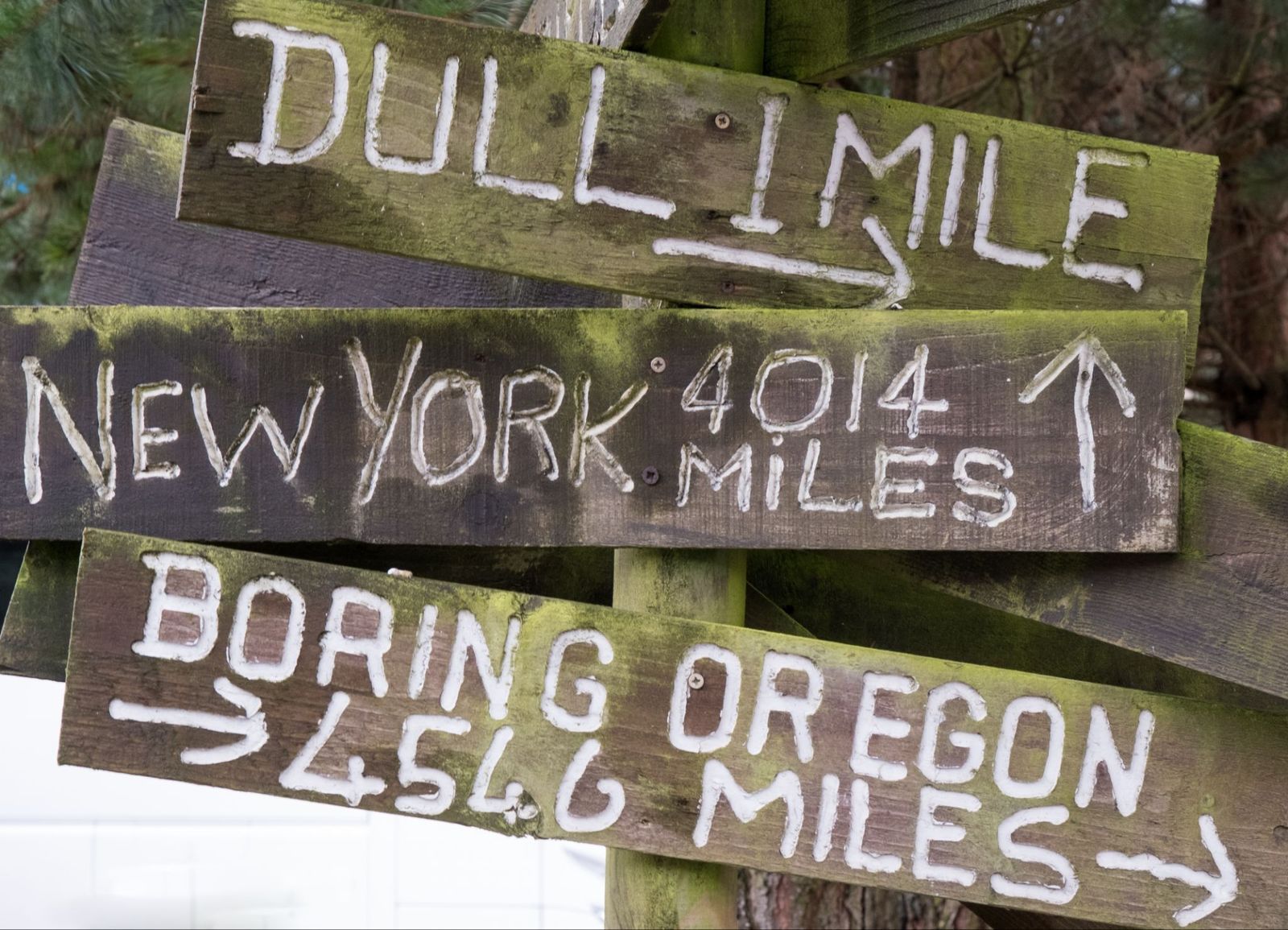
Boring, Oregon

Image: Johann Knox

While the name "Boring" may sound unflattering, its story is a pretty common one. The town is named after William Harrison Boring, a Union Army veteran who moved into the area in the 1870s and became one of its earliest settlers.

Over time, the accidental double meaning of Boring turned it into a tourist curiosity. The community, rather than shy away from the jokes, embraced them, even forming a lighthearted partnership with the village of Dull, Scotland, to celebrate their similarly harsh names.

9

Hell, Michigan

Image: Notorious4life (talk) (Uploads), CC0, via Wikimedia Commons

Hell began as a small milling community in southern Michigan during the 1830s, when pioneer George Reeves established it along nearby waterways. The exact origin of its name is shrouded in legend and local folklore.

One of the most popular stories claims that, when Reeves was asked what the settlement should be called, he jokingly replied: "Call it Hell for all I care." On the other hand, some historians believe that the name evolved from early German settlers using the word hell, meaning "bright".

While the true origin of the name may never be known, the town of Hell fully embraced its reputation, welcoming thousands of visitors each year with thematic attractions and souvenirs.

10

Jackpot, Nevada

Image: pswister

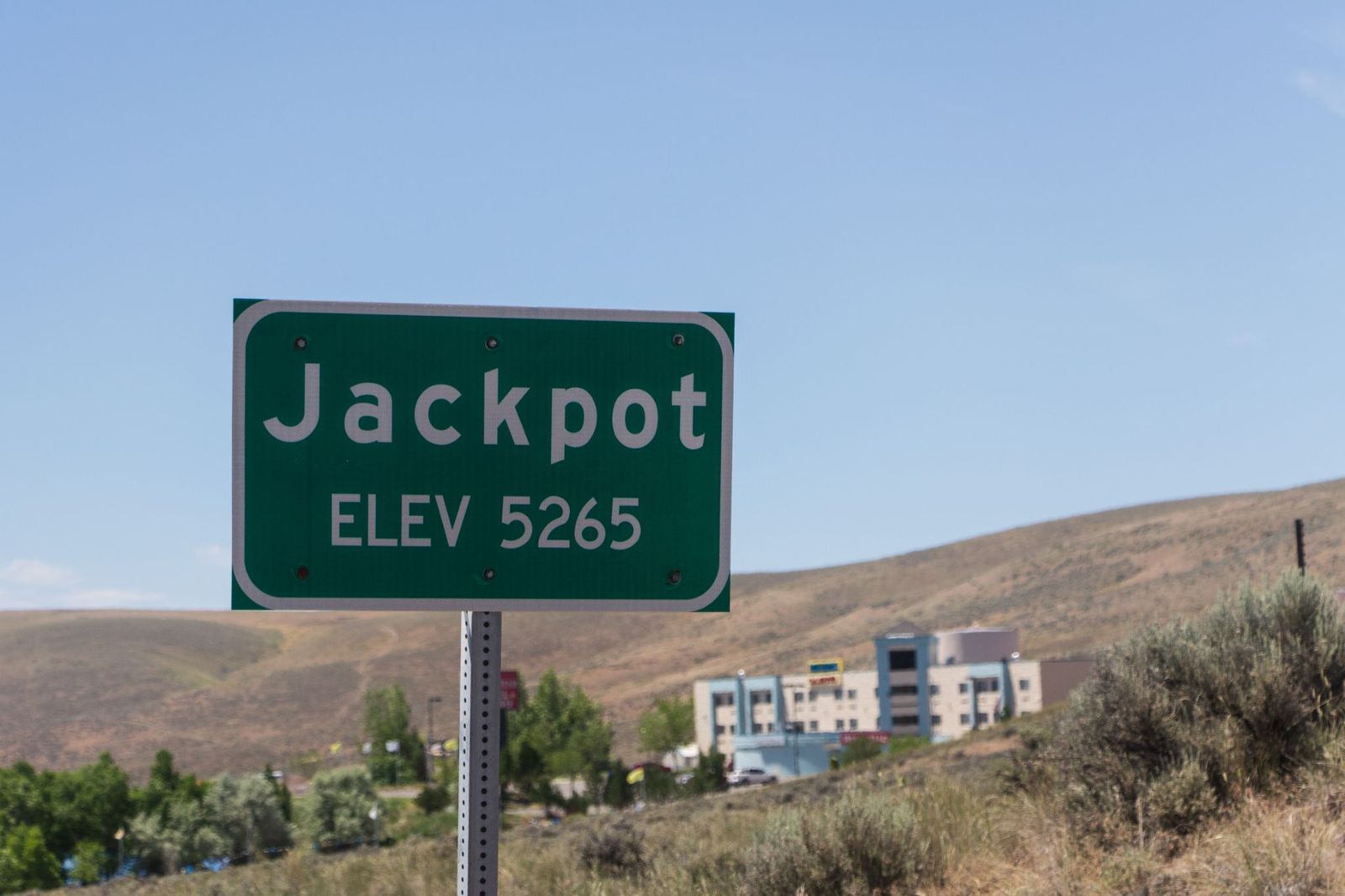
Unlike many Western towns that grew naturally around mines or railroads, Jackpot was created almost overnight in 1954 as a direct result of Idaho banning casino gambling. Entrepreneurs realized they could attract Idaho residents simply by building casinos just across the Nevada border.

The new community was aptly named Jackpot, and it quickly became a thriving destination. Few towns have a name that so perfectly matches the reason they came into existence.
Translation and interpretation

Was the forbidden fruit really an apple? 10 Bible surprises


Published on August 11, 2026


Image: Mariordo, CC BY-SA 4.0, via Wikimedia Commons

What if some of the Bible stories you grew up with aren't exactly what the Bible says? Was the forbidden fruit really an apple? Were there actually three Wise Men? Did "God helps those who help themselves" really come from the Bible? Over centuries, translations, traditions, and famous works of art have added details that became so familiar, we stopped questioning them. But go back to the texts, and some of these stories look surprisingly different. From Eve's "apple" to the date of Jesus' birth, here are 10 familiar parts of the Bible that may not be quite what we remember.

1

The forbidden fruit was an apple

Image: Albrecht Dürer, Public domain, via Wikimedia Commons

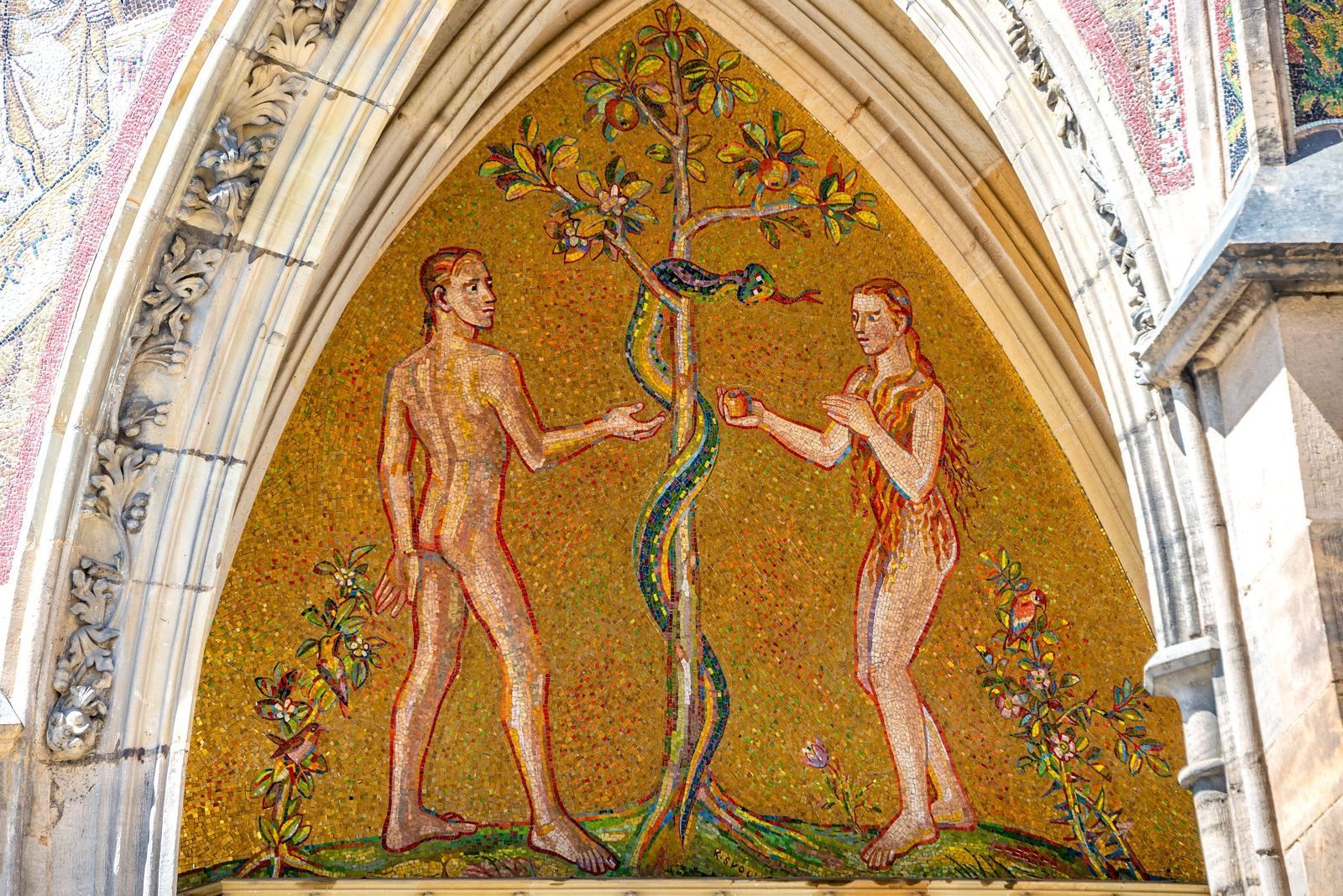
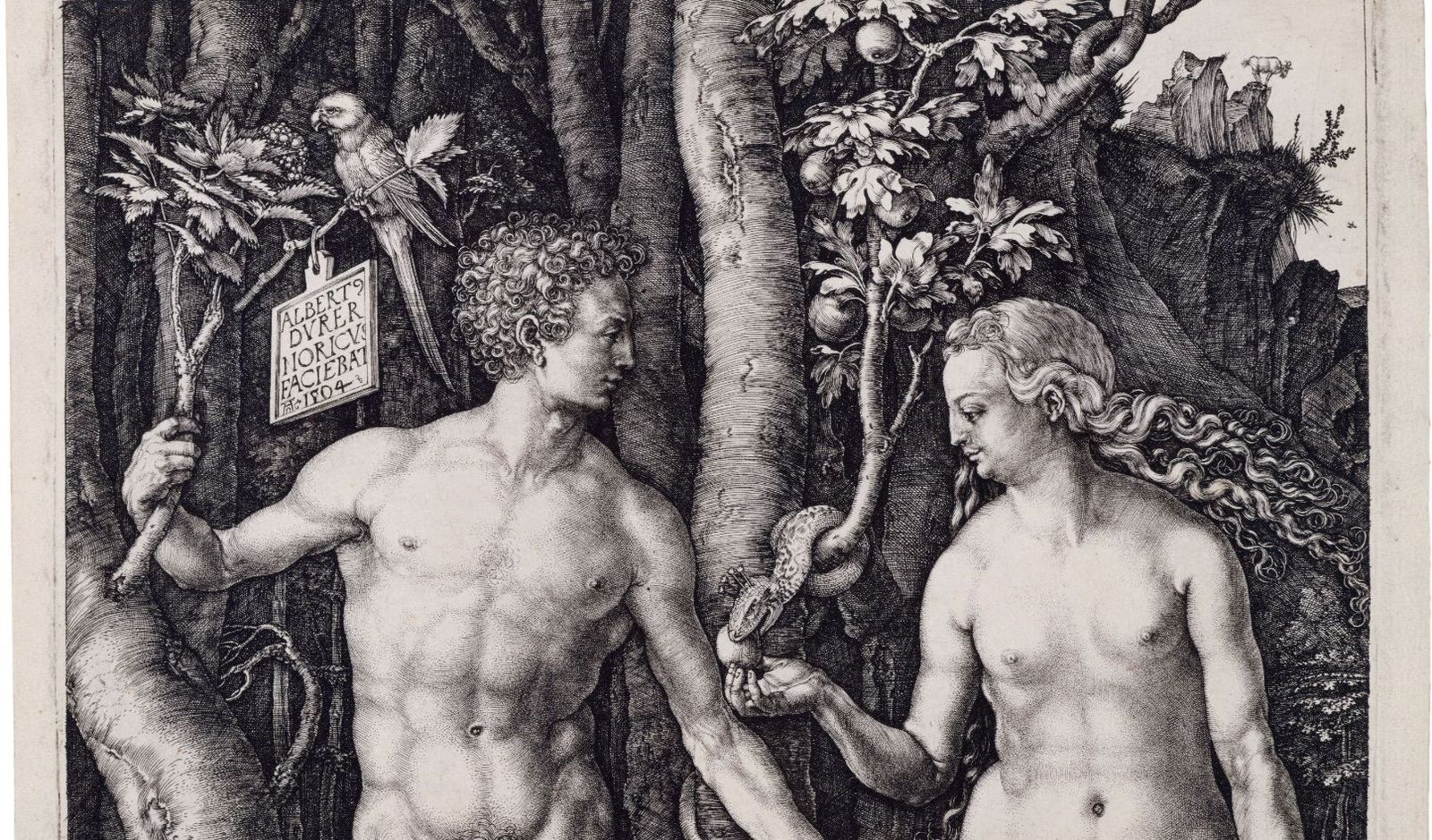
When you picture the Garden of Eden, what fruit comes to mind? Most people imagine an apple, but there's just one problem: the Bible never says it was an apple.

In the Book of Genesis, the fruit is simply called "the fruit of the tree of the knowledge of good and evil." The original Hebrew text uses the word peri, which simply means "fruit." The apple connection came centuries later, largely through the Latin translation. The Latin word malum can mean both "apple" and "evil," making it an especially fitting symbol for the story. Over time, that association spread through Christian art and literature. Famous works such as Albrecht Dürer’s 1504 engraving Adam and Eve (also known as The Fall of Man) helped cement the image of Eve holding an apple. Today, it's one of the most famous scenes in history, even though the original biblical text doesn’t identify the fruit as an apple at all.

2

There were three wise men/kings

Image: Rawpixel.com

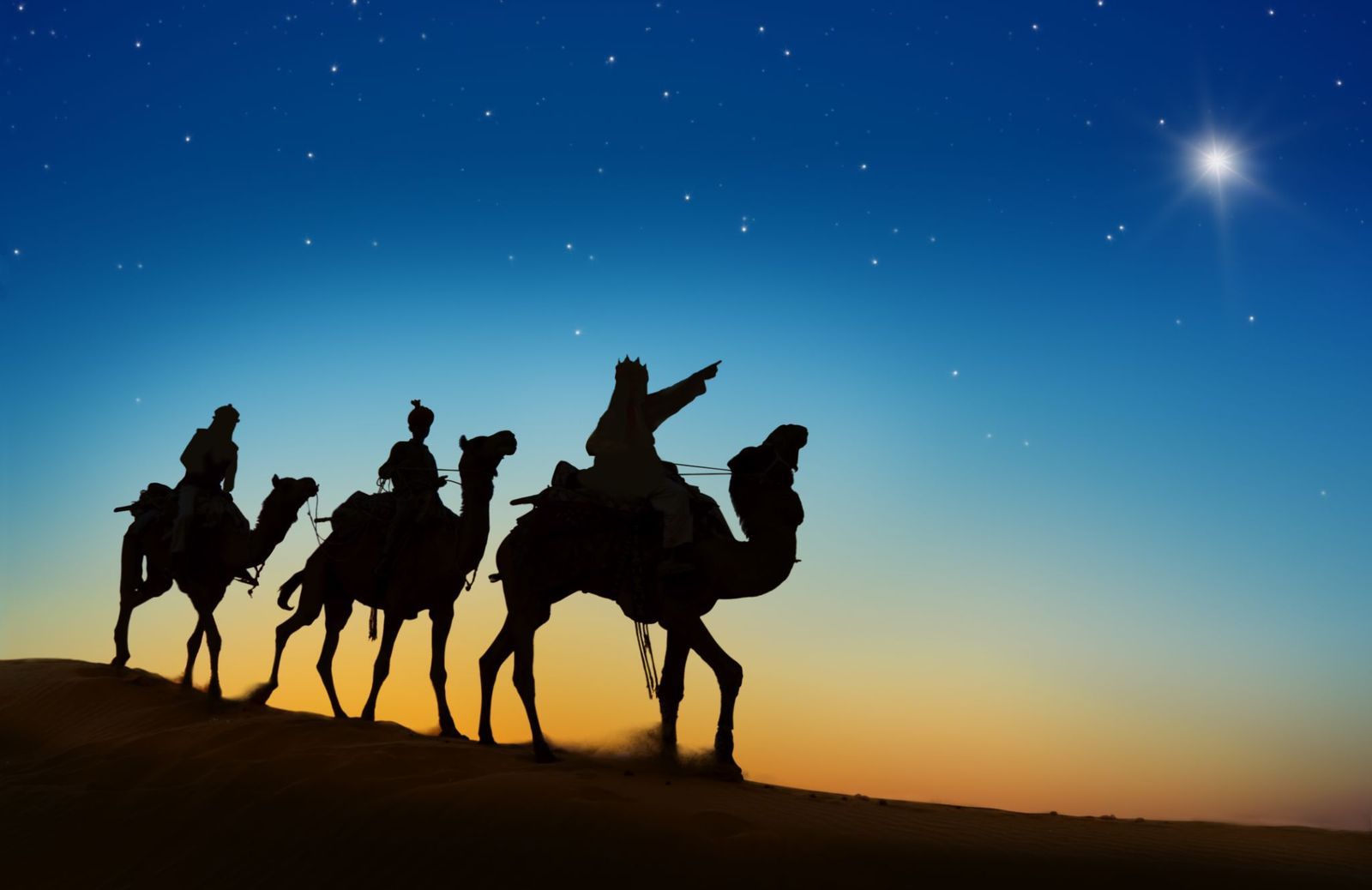
The story of Jesus' birth is so famous that most of us picture the Three Wise Men, sometimes called the Three Kings, standing beside the manger. But the thing is, over the centuries, the story picked up a few details that aren't actually in the Bible.

In the Gospel of Matthew, the only Gospel that mentions these visitors, they are described simply as Magi from the East. The original Greek word, magoi, referred to learned scholars, astrologers, or priests from Persia or Babylon, not kings. But where did the number three come from? Matthew lists three gifts: gold, frankincense, and myrrh, but never says how many visitors brought them. Over the centuries, people naturally assumed there must have been three Magi, one for each gift. Even their familiar names, Melchior, Caspar, and Balthasar, were added later by Christian tradition. So, neither the number of visitors nor their names appears anywhere in the biblical text.

3

"God helps those who help themselves"

Image: Adam Nir

Whether it's used to motivate a friend, encourage a family member, or push yourself to finally make a difficult decision, "God helps those who help themselves" is one of the most familiar religious sayings in America. But here's the surprise: those words never appear in the Bible.

The idea can be traced to ancient Greek sources, including Aesop’s Fables, where the saying appears in an earlier form: "The gods help them that help themselves." The exact modern wording was written by English politician Algernon Sidney in 1698, but it was Benjamin Franklin who helped make it part of American culture when he included it in his 1736 edition of Poor Richard’s Almanack.

4

"Cleanliness is next to godliness"

Image: John Jackson, CC BY 4.0, via Wikimedia Commons

Many teenagers have heard "Cleanliness is next to godliness" when it was time to clean their rooms. But despite sounding like a Bible verse, the phrase never appears in Scripture.

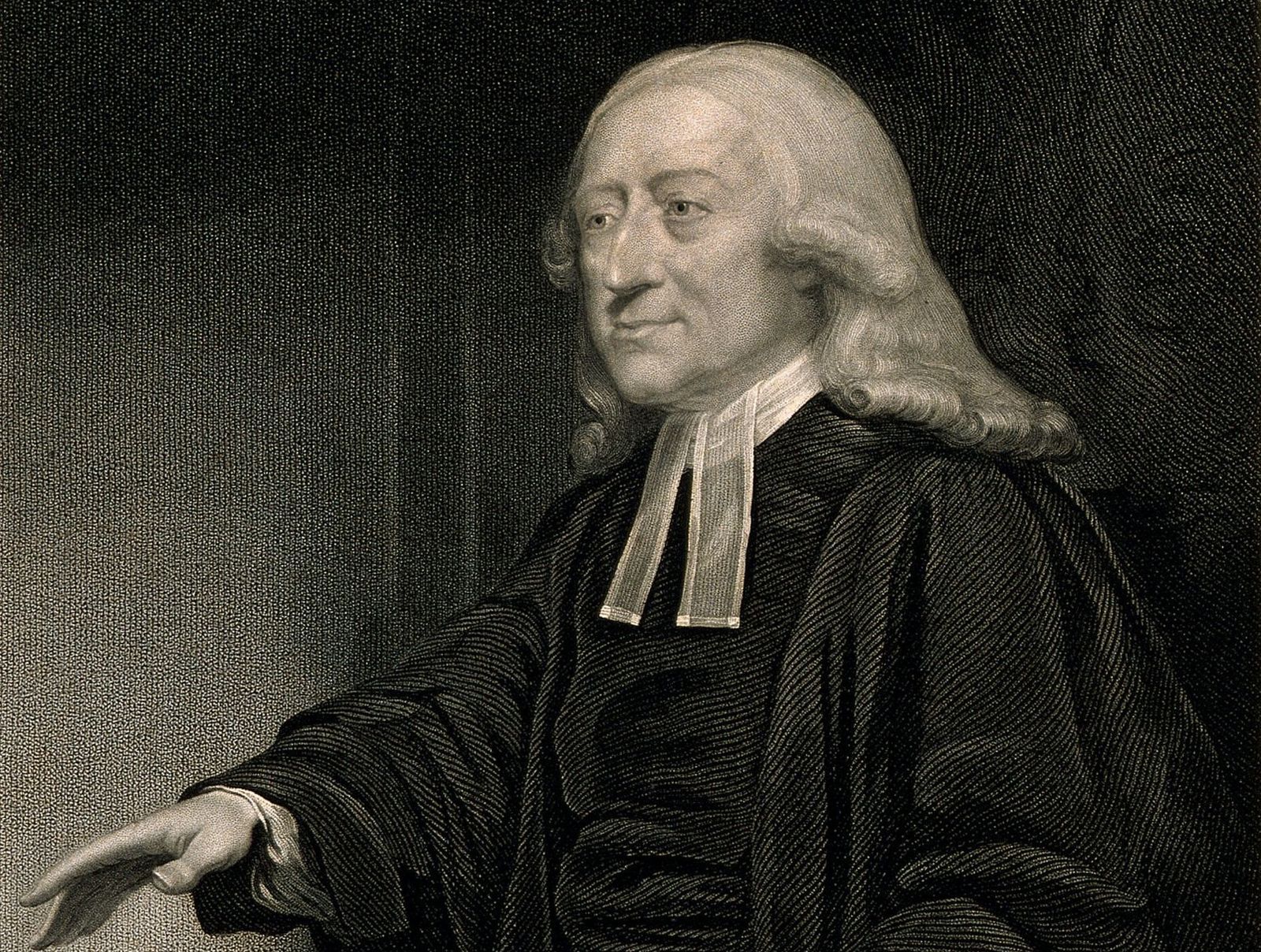
The Bible, particularly Leviticus, does contain extensive laws requiring people to wash their bodies and clothes in certain circumstances, especially before religious rituals. But the famous saying itself came much later. In 1605, Francis Bacon wrote in The Advancement of Learning that "cleanness of body" was connected to reverence for God. Then, in 1786, it was Methodist leader John Wesley who used the wording we recognize today in a sermon: "Cleanliness is indeed next to Godliness." Over time, the phrase became a familiar saying that many people simply assumed came from the Bible.

5

The date of Jesus' birth

Image: http://www.parrocchiasantagata.org, CC0, via Wikimedia Commons

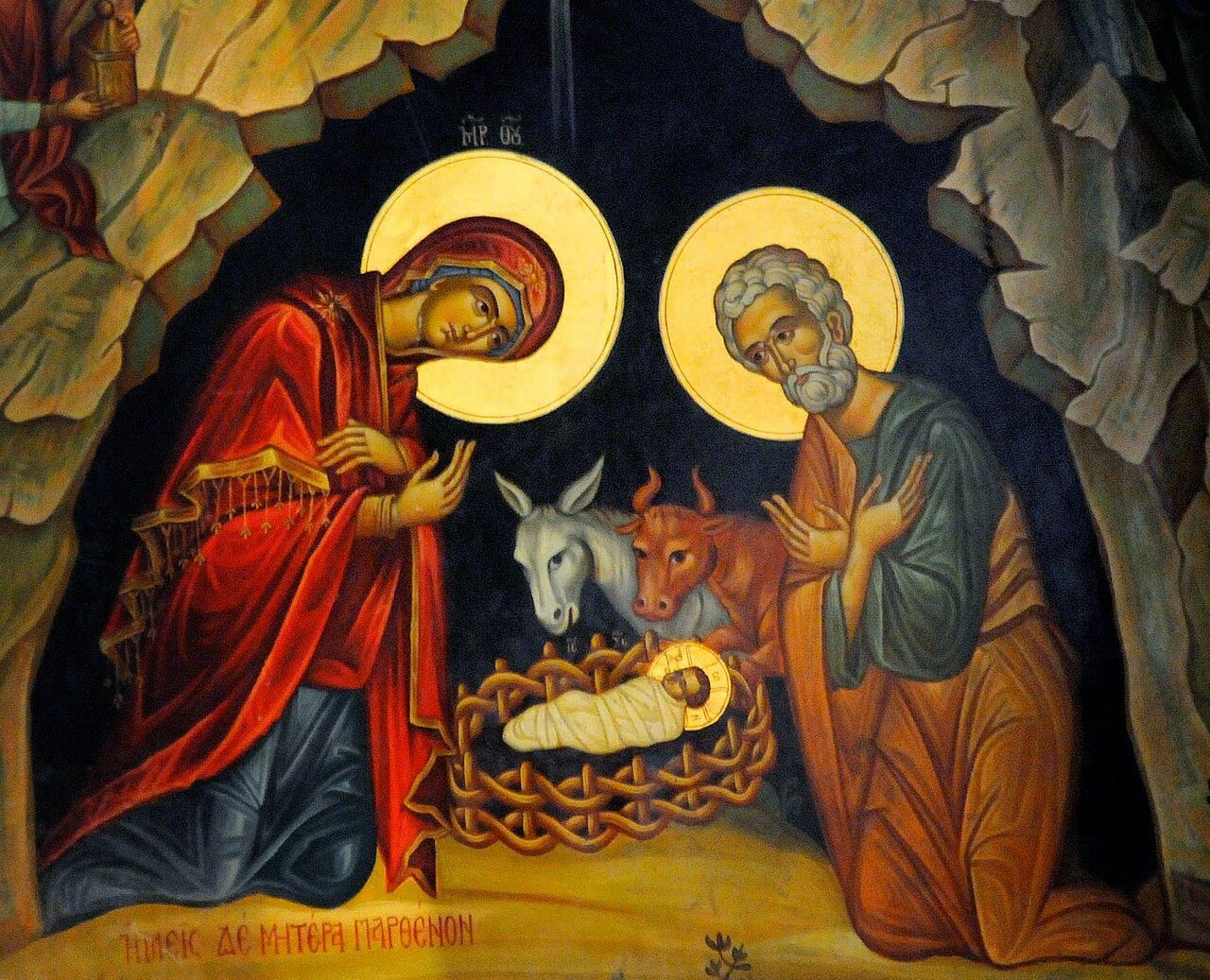
When it comes to famous dates, December 25 may be the most recognizable of all, universally associated with Christmas. But here's the surprising part: the Bible never gives any specific date for Jesus' birth.

The Gospels of Matthew and Luke describe the Nativity but never provide a calendar date, so how did December 25 become Christmas? There are two leading theories. The first is that the Roman Church was celebrating Christmas on December 25 by 336 AD, during Constantine's reign, possibly choosing the date to coincide with existing Roman winter festivals and make it easier to convert the empire to Christianity. The second points to an early Christian tradition that calculated Jesus' birth date from the supposed date of his crucifixion, eventually arriving at December 25.

6

Jonah and the Whale

Image: Pieter Lastman, Public domain, via Wikimedia Commons

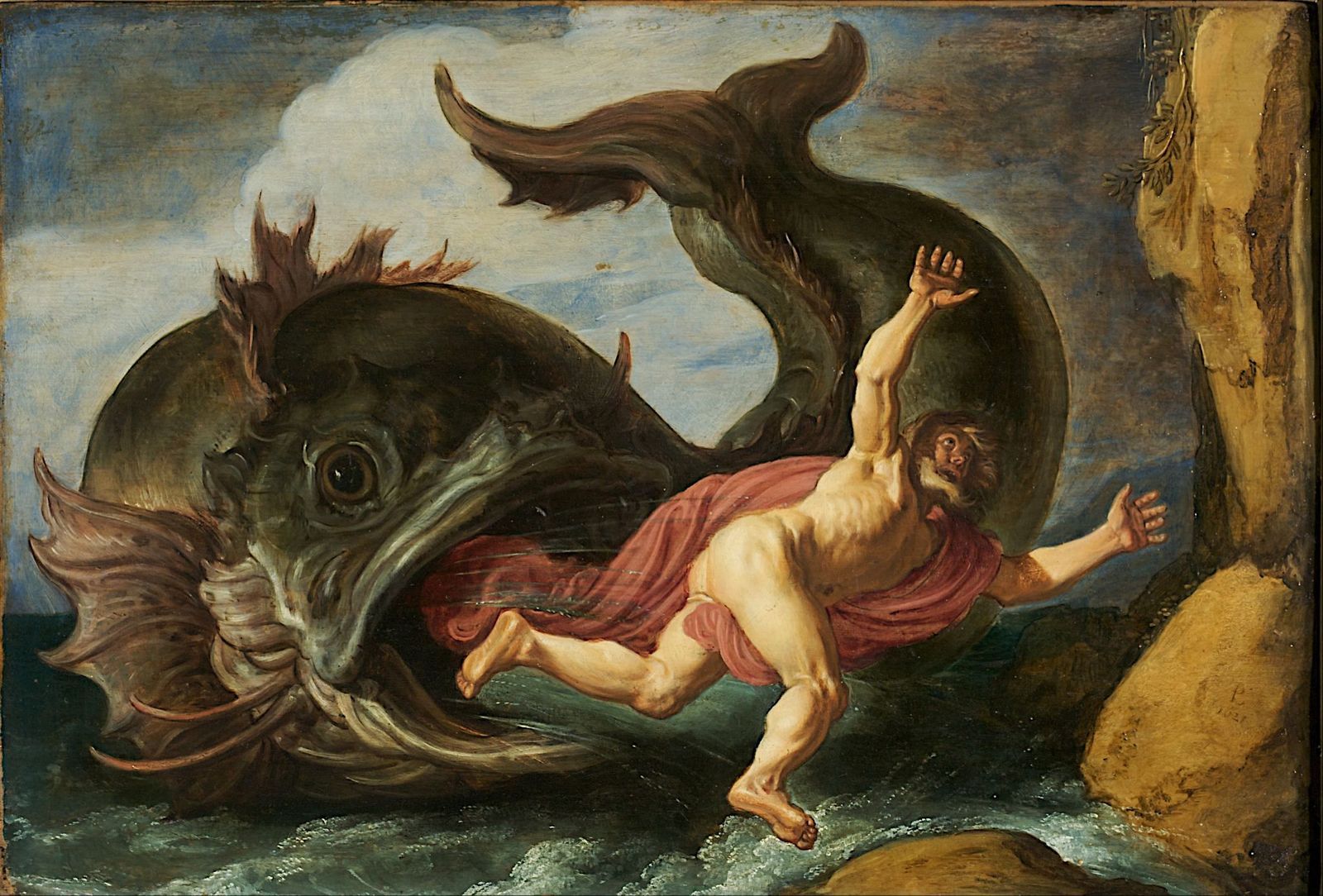
The story of Jonah and the Whale is so famous that it has appeared literally or symbolically in innumerable works of art and literature, from Michelangelo's Sistine Chapel ceiling (1508-1512) to Herman Melville's 1851 novel Moby-Dick. But there's a small problem with the title we've given it: the Bible doesn’t actually say it was a whale.

In the Old Testament, the original Hebrew text of Jonah 1:17 uses the words dag gadol, meaning "great fish" or "large fish"; it doesn't identify the creature as a whale, or even specify what kind of fish it was. Most modern English translations therefore stick with "great fish," but the familiar "whale" interpretation developed through older translations and later European tradition, eventually becoming so widespread that "Jonah and the Whale" became the name almost everyone recognizes.

7

The serpent in Eden was Satan

Image: neurobit

Just as we've always pictured the forbidden fruit as an apple, many of us also assume the serpent in the Garden of Eden is the devil himself. But the original story is a little more complicated.

A plain reading of Genesis depicts the creature simply as a serpent or snake, using the Hebrew word nachash. It describes the serpent as clever and crafty, but it never calls it Satan or explicitly identifies it as the devil. So where did the connection come from? The answer comes from later parts of the Bible, particularly the New Testament. In Revelation 12:9 and 20:2, Satan is called "the ancient serpent" (ho ophis ho archaios in Greek), connecting him to the snake of Eden. Over time, Christian tradition applied that later connection back to Genesis, leading to the familiar belief that the serpent was Satan himself.

8

Delilah Cut Samson’s Hair

Image: Georg Pencz, CC0, via Wikimedia Commons

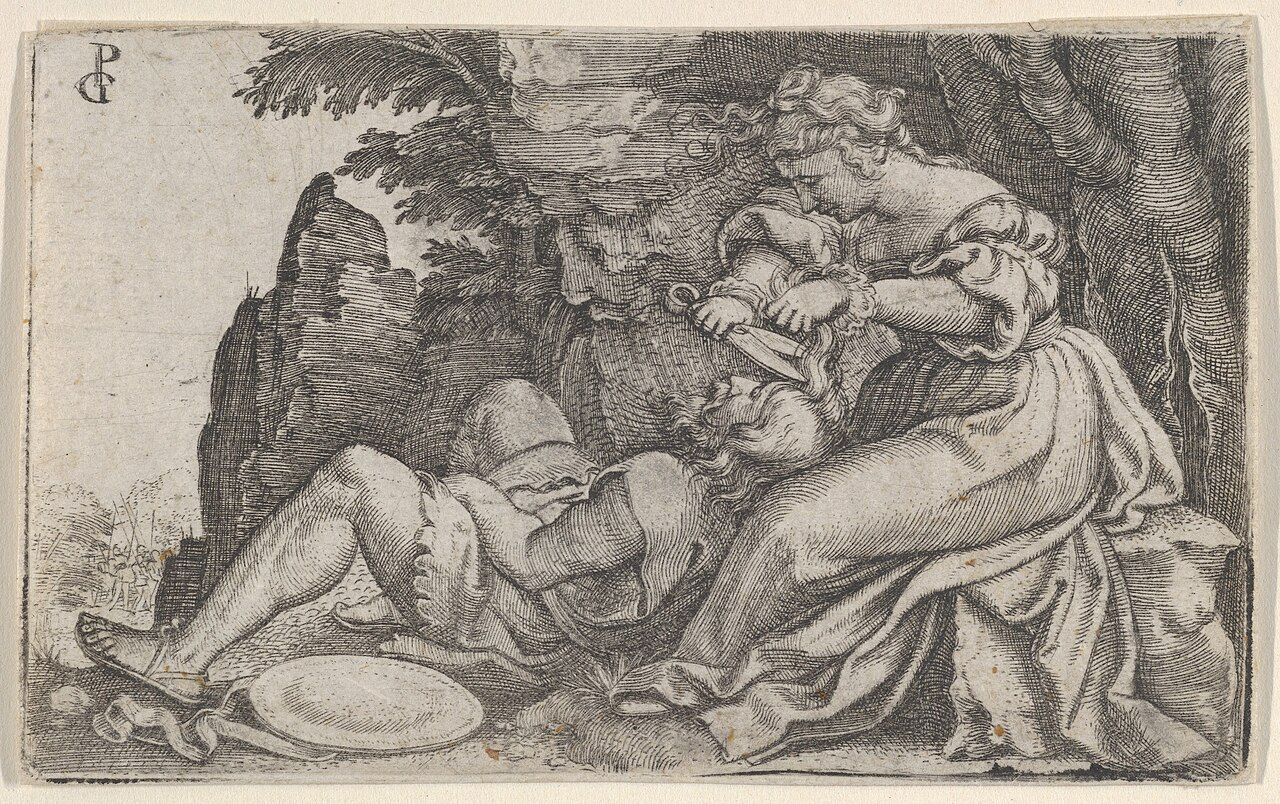
Many of us remember Samson for his legendary strength and the long hair that was said to be the source of his power. His story with Delilah is one of the Bible's most famous tales of betrayal, but there's one detail some people may have gotten wrong: Delilah didn't actually cut his long hair.

In Judges 16:19, Delilah has Samson's hair shaved while he sleeps on her lap. The text says she called for a man to do the shaving; it never says she did it herself. Yet paintings, films, and other retellings have often shown Delilah wielding the scissors herself, cementing that image in popular culture. It can be considered a small detail, but it’s a great example of how easily familiar Bible stories can pick up elements that aren't actually in the original text.

9

The Bible is a single-voice book

Image: Pixel-Shot

Many of us think of the Bible as a single book, written at one particular time by one author, or perhaps a handful of them. After all, that's how it looks when you pick one up in a hotel room, but its history is far more complicated.

The Bible is actually a collection of books written by over 40 authors over roughly 1,500 years, from about 1400 BC to AD 100. The exact number of books varies by religious tradition: Protestant Bibles contain 66 books, while Catholic and Orthodox traditions include additional books. Across these different traditions, the writings were produced by kings, prophets, fishermen, and scholars in Hebrew, Aramaic, and Greek. They also span a tremendous range of literary styles, including history, poetry, songs, laws, letters, and prophecy. So while we hold it as one book today, the Bible is actually a collection of many different writings produced across centuries.

10

Original manuscripts still exist

Image: https://www.themorgan.org/manuscript/350198, Public domain, via Wikimedia Commons

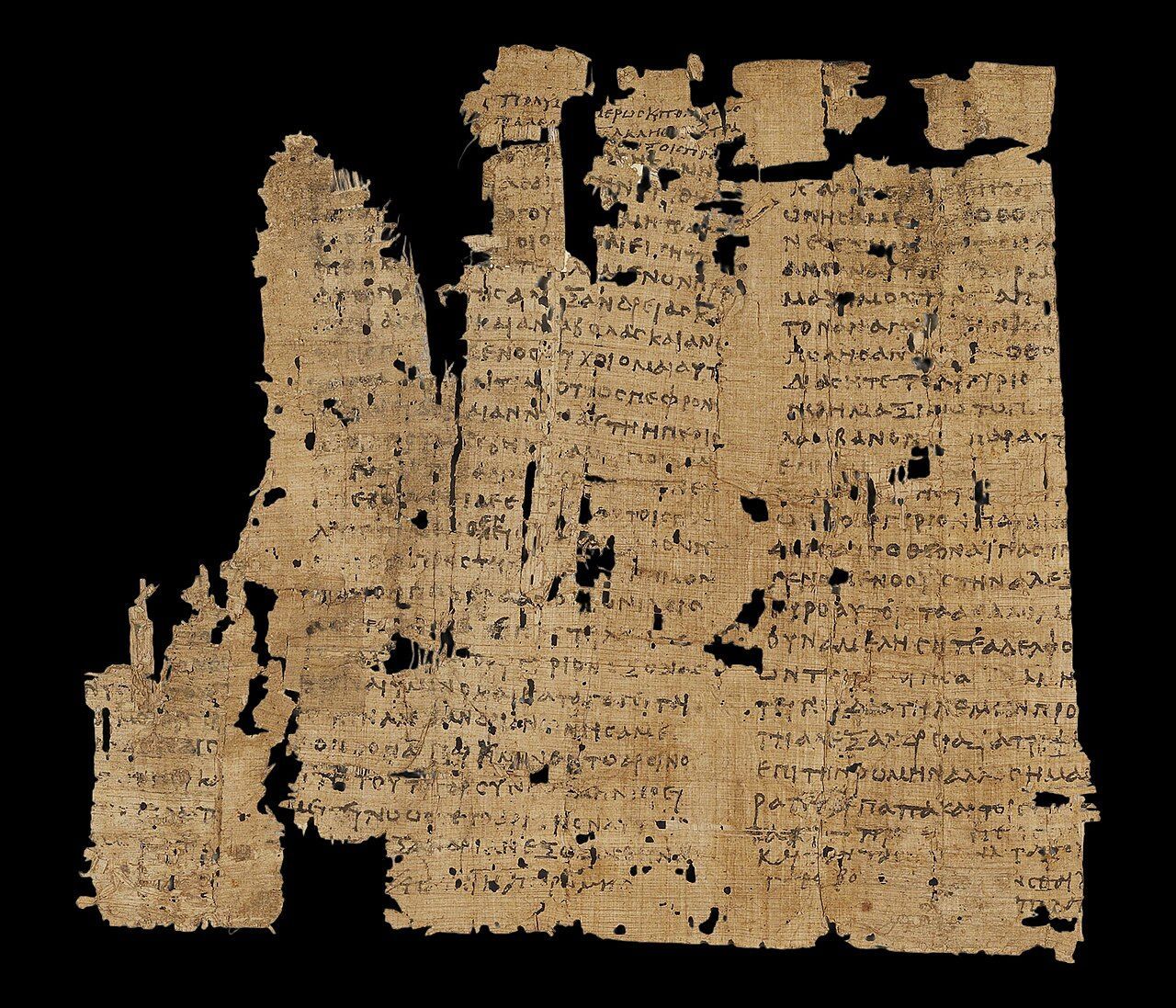
Many people assume that at least a few original fragments of the Bible must still exist somewhere. It would be incredible if they did, but none of the original manuscripts, known as autographs, have survived.

The earliest biblical texts were written on fragile materials such as papyrus and animal skins, which could deteriorate through humidity, heat, handling, and simple age. Wars, fires, and other destruction also contributed to their disappearance. So how do we know what the originals said? Through a technique called textual criticism: expert scholars compare thousands of handwritten copies, ancient translations, and quotations from early Christian writers. When they find passages that match across different sources, or differences that reveal how a text changed over time, they can work backward to determine what the original most likely said, even though the original manuscripts themselves are gone.

Looking for an extra scoop of literary fun?

Learn more with our Word of the day

credible

/ˈkrɛdəbəl/