Customer success vocabulary
This is why receptionists must never use the word "unfortunately"
Published on September 17, 2026

There's a reason why a handful of phrases keep coming at us from public-facing workers across many industries. Decades and decades of trial and error have taught brands which words put customers at ease, which expressions to reach for, and which to avoid at all costs — like "unfortunately" or "I don’t know that." Let's explore 10 of the vocabulary tools used by waiters, hosts, receptionists, and customer service reps, and the real reasoning behind each one.
"Are we ready to order?"

Have you ever been left wondering why your waitress keeps speaking in the first-person plural? That plural "we" has a name: linguists call it "the royal we", or nosism, meaning the substitution of a group pronoun for a singular one. Monarchs used it for centuries to speak as though they embodied an entire nation; King Edward VII was still doing it in official documents as late as 1902.
It’s unclear when restaurant servers picked up the habit, but it works. By including themselves in the sentence, waiters imply that every step of the dining experience is a team activity that they lead gladly.
"No problem"
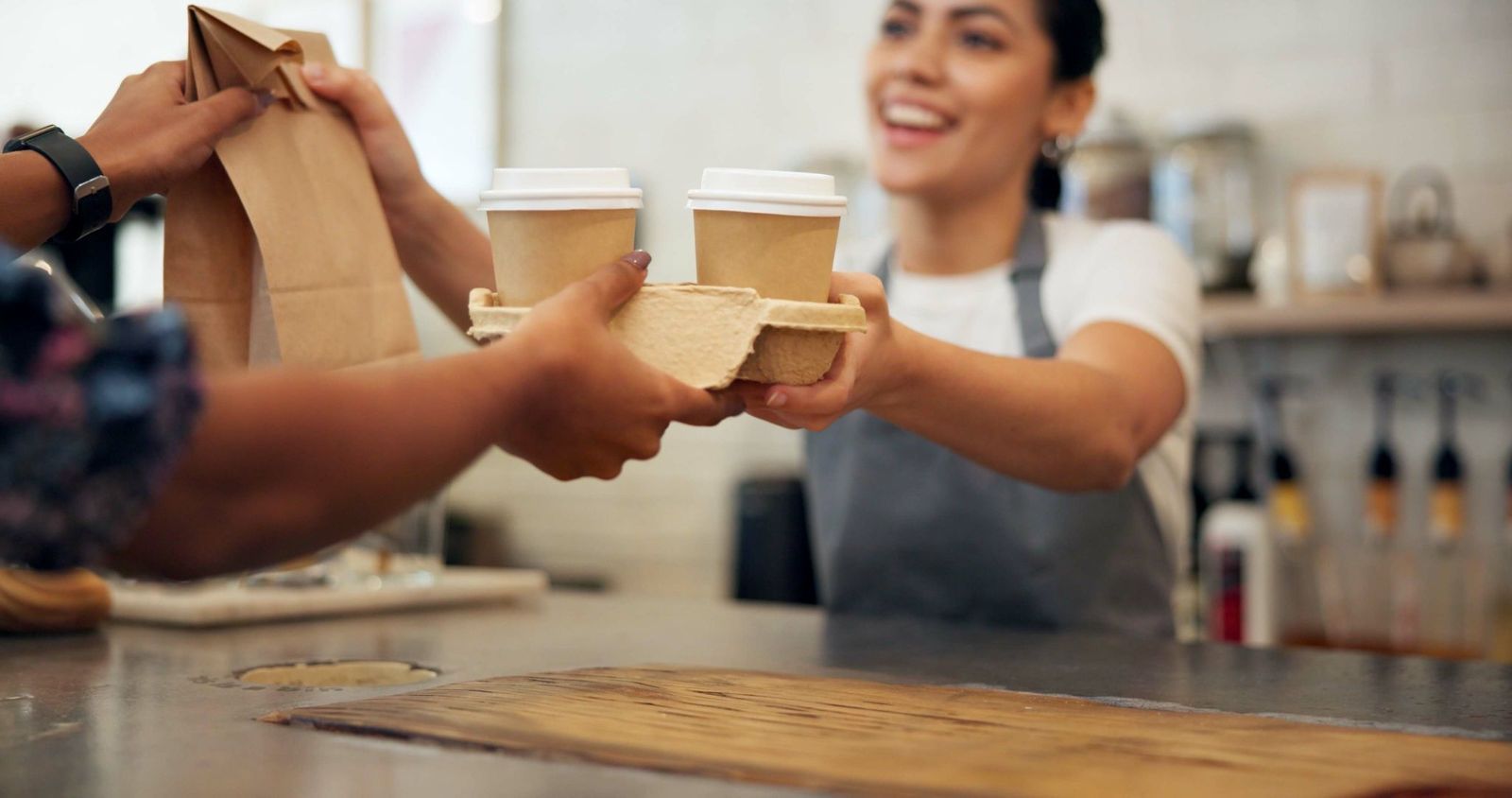
When you thank your barista, receptionist, or cashier, you are more likely to hear "no problem" than "you’re welcome". This one stems from naturally friendly and gallant behavior that has set in society in recent decades.
Linguist Aaron Dinkin studied the phenomenon in 2017 and confirmed that younger speakers had opted out of "you’re welcome," since it suggests that effort was spent and is being graciously accepted. "No problem" is a humble assurance that the help cost nothing at all, even if it’s a little white lie at least half of the time.
"Here's what I'm going to do for you"

Here’s something a customer never wants to hear: "Unfortunately, there’s nothing I can do about that." Experts advise never to use that adverb in the face of a customer’s problem, since it suggests the company is powerless or worse, indifferent.
Instead, the magic words to use are these: "Here's what I'm going to do for you." That will instantly please a customer who is looking for possible solutions. The phrase can be traced back to a 1980 policy at the Ritz-Carlton, where co-founder Horst Schulze gave every employee the authority to spend up to $2,000 per guest fixing a problem on the spot.
"Hi, Sarah!"

In 1936, Dale Carnegie wrote in How to Win Friends and Influence People that a person's name is "the sweetest and most important sound in any language," and customer service training is careful to apply that wisdom.
Hearing your own name signals that you're being treated as a person rather than a ticket number. Modern software made the trick easier, since caller ID and account records now hand an agent your name before they've said hello. It can backfire, though; hearing one’s name repeatedly in the middle of a heated conversation can become irritating and sound like mockery.
"That shouldn't have happened"

An alternative to this one is "that would upset me, too." These phrases are a nod to the notion that the client is always right. Companies now admit that the latter is not necessarily true, though, but that often, indulging a customer's complaint, however unreasonable, is cheaper than losing their trust.
"That shouldn't have happened" updates the idea: it validates how a customer feels without declaring them factually correct. Researchers coined the term "service recovery paradox" in 1992 after finding that customers who complain and get an empathetic, competent response often end up more loyal than customers who never had a problem at all.
"I understand"

The two most empathetic words an agent can say are these. The concept behind it is called "active listening." It was so named in a 1957 essay by psychologist Carl Rogers and Richard Farson, and it didn't come from business at all. It came from Rogers's therapy sessions, where he found that people couldn't move toward a solution until they felt genuinely heard first.
Sales trainers later built an entire technique around the same insight, nicknamed "Feel, Felt, Found," which opens with exactly this line before pivoting to a fix. The order matters more than the words, because agents know that offering a solution before acknowledging the feeling can make people argue harder.
"Let me connect you with..."

This is the go-to sentence to use instead of a dreaded "I can't help you with that." In the industry, this is called a "warm transfer," as opposed to the far more common and far more resented "cold transfer," where you're bounced to a stranger who has no idea why you called and makes you start over. Ideally, a rep will personally explain your problem to another expert and build a bigger team to come up with solutions.
"Great question"

This is the euphemism phrase to use in place of "I don't know." It’s friendly, humble, and a preamble to a brief research that will follow. Technically, saying "That’s a great question" in a conversation is a stalling tactic. It borrows a few seconds through flattery while the brain scrambles for an answer.
"Have a nice day"

In 1963, a Worcester, Massachusetts commercial artist named Harvey Ball was paid $45 to design a simple smiling face for an insurance company, State Mutual Life Assurance, meant only to boost employee morale. Seven years later, two Philadelphia brothers paired the design with the words "Have a Happy Day," soon changed to "Have a Nice Day," trademarked the combination, and sold more than 50 million pins by 1972.
The four words have now become the obligatory send-away greeting that some businesses even write in their windows. It has also become the default sign-off for practically every customer transaction in America; "goodbye" might sound too dramatic.
"Found everything ok?"

"Found everything ok?" That question usually greets customers when they reach the cashier in retail stores. It can be traced back to Walmart's national "People Greeter" program in the 1980s, designed to do two things at once: make shoppers feel noticed and discourage theft.
The restaurant version of the same check-in is the "How’s everything?" a few minutes after bringing the food to the table. Waiters are trained to ask this to spot possible complaints early on, and also to remind customers that someone’s paying attention to their experience.


