Fiddlesticks!

What’s a nicer word for vomit? Discover 11 terms to soften awkward things


Published on July 25, 2026


Image: patpitchaya

We all need to say things that are not pleasant-sounding from time to time. But we can choose how we express such things. That's especially true when the topic involves bodily functions or other unpleasant realities. English is full of words that soften, sanitize, or medicalize things we'd rather not describe too vividly. Some come from Latin or Greek, others from doctors' offices, and a few were invented simply because saying the blunt version felt awkward. Here are 11 examples of "nice" words for not-so-nice things.

1

"Perspiration" sounds better than "sweat"

Image: Hans Reniers

If "sweat" sounds a bit too direct, perspiration offers a more polished alternative. The word comes from the Latin perspirare, meaning "to breathe through," and originally referred to moisture passing through the skin. By the 18th and 19th centuries, it had become the preferred choice in polite society, especially among writers and etiquette experts who considered "sweat" a little too earthy.

The distinction wasn't always scientific, but social. Victorians often treated "perspiration" as the refined term while reserving "sweat" for hard labor or athletic exertion. Today, both words describe the same natural process, but "perspiration" still carries a more formal, clinical tone in advertisements, medicine, and everyday conversation.

2

"Flatulence" is somewhat better than "passing gas"

Image: BlueRingMedia

Few topics inspire more creative wording than this one. While everyday English offers plenty of colorful expressions, the medical term for flatulence is derived from the Latin flatus, meaning "wind" or "blowing."

The funny part is that it's completely normal. Digestive specialists note that healthy adults commonly pass gas many times a day as part of ordinary digestion. Using a gentler expression doesn't change the biology; it simply makes discussing it a little less awkward.

3

"Restroom" sounds better than "toilet"

Image: Tim Mossholder

Americans rarely ask, "Where's the toilet?" Instead, they're far more likely to ask for the restroom, even though almost nobody goes there to rest. The word became popular during the early 20th century as a polite substitute that avoided mentioning the room's actual purpose.

It's one of English's classic euphemisms. Similar terms like "bathroom" and "washroom" focus on the room's features rather than the activities that take place inside.

4

"Expectoration" sounds much better than "spitting"

Image: Towfiqu barbhuiya

Doctors rarely tell patients to "spit." Instead, they'll often ask them to expectorate. The word comes from the Latin expectorare, meaning "to drive from the chest," and specifically refers to expelling mucus or phlegm rather than simply spitting.

Because it's more precise, the term remains standard in hospitals and medical textbooks. Outside healthcare, however, few people ever use it. It's a perfect example of how scientific language can make an unpleasant subject sound surprisingly dignified.

5

"Cerumen" sounds better than "earwax"

Image: Franco Antonio Giovanella

Most people know it as "earwax," but physicians and hearing specialists almost always call it "cerumen." The term comes from the Latin word cera, meaning "wax," and is the official anatomical term for the substance naturally produced in the ear canal.

Using the scientific term doesn't make it any less ordinary, but it certainly sounds more professional. That's why you'll find "cerumen" in medical charts, anatomy textbooks, and audiology clinics instead of the much more familiar everyday word.

6

"Halitosis" is better than "bad breath"

Image: Vitaly Gariev

"Halitosis" may sound like an intimidating medical condition, but it's simply the clinical term for persistent bad breath. Although doctors use the word today, it became widely known thanks to Listerine advertising campaigns during the early 1900s, which presented halitosis as a treatable problem rather than just an occasional inconvenience.

Those advertisements are still studied by marketing historians because they helped transform mouthwash into a household staple. It's a reminder that sometimes a sophisticated-sounding word can completely change how people think about an everyday issue.

7

"Emesis" sounds a lot better than "vomit"

Image: Alexey Demidov

Hospitals rarely record that a patient "vomited." Instead, medical records almost always use the term "emesis," borrowed from the Greek word emein, meaning "to vomit." The more formal language helps healthcare professionals communicate with precision while maintaining an objective tone.

The same Greek root appears in words like "antiemetic," the name for medications that prevent nausea and vomiting. Outside medical settings, though, most people stick with simpler vocabulary, even if it's a bit less elegant.

8

"Stool" is significantly better than "poop"

Image: fr0ggy5

When doctors, laboratories, or researchers discuss bodily waste, they almost always use the word "stool" in direct reference to the bathroom.

The term removes much of the emotional reaction that everyday words can provoke. That's one reason formal writing almost always favors "stool" over the more casual vocabulary heard in ordinary conversation.

9

"Urinate" is marginally better than "pee"

Image: jacopo marello

Children usually learn the word "pee" long before they ever hear the word "urinate," but the latter is the preferred term in medicine. It comes from the Latin urina, which also gave English words like "urinary," "urinalysis," and "urology."

Using "urinate" creates a neutral, professional tone that's especially helpful in healthcare. It allows doctors and patients to discuss sensitive topics comfortably without resorting to slang or overly childish language.

10

"Menstruation" is somewhat better than "period"

Image: Natracare

Many cultures have developed indirect ways of referring to a period, but medicine generally uses the more formal term "menstruation." It comes from the Latin mensis, meaning "month," reflecting the cycle's roughly monthly pattern.

English has accumulated dozens of euphemisms over the centuries, from "that time of the month" to more playful nicknames, revealing how reluctant many societies have been to discuss the subject openly. Today, "menstruation" is widely preferred in education and healthcare because it's both accurate and neutral.

11

"Decompose" sounds better than "rot"

Image: Nancy Hughes

Most people would say something rotted, but scientists usually say it decomposed. The two words describe essentially the same process, yet "decompose" emphasizes the natural biological breakdown of organic material by bacteria, fungi, and other microorganisms.

Because it's more precise and emotionally neutral, the word appears regularly in biology, ecology, archaeology, and forensic science. Sometimes the nicest-sounding word also happens to be the most scientifically accurate, proving that language can soften reality without sacrificing the truth.



If it rhymes, it must be true

"Because it's there": The 10 most poetic answers to concrete questions


Published on July 25, 2026


Image: Daniel Prudek

History is full of memorable questions, but every so often, someone answers in a way that outlives the question itself. Whether spoken on a mountain, a battlefield, in a prison, or in the halls of government, these replies became famous because they condensed courage, wit, conviction, or wisdom into just a few unforgettable words. Discover 10 real exchanges in which a simple answer became part of history because of the beautiful way in which it was expressed.

1

"Because it's there." — George Mallory

Image: MBS ID

British mountaineer George Mallory offered this famously concise reply during a 1923 interview before another attempt on Mount Everest, then the only major summit that had never been conquered, to the question "Why do you want to climb Mount Everest?" His three words expressed the human desire to explore simply because something remains unexplored.

Mallory disappeared on Everest with fellow climber Andrew "Sandy" Irvine in June 1924, and historians still debate whether they reached the summit before dying. His answer became one of the defining quotations of exploration and later inspired John F. Kennedy's case for going to the Moon.

2

"The report of my death was an exaggeration." — Mark Twain

Image: Daniel L. Locke

In 1897, newspapers mistakenly reported that Mark Twain had died while he was living in London. When a reporter contacted him to verify the rumor, the celebrated author responded with the dry wit that had made him America's best-known humorist.

Although the exact wording varies slightly among contemporary accounts, the sentence quickly became one of the most quoted lines in English. More than a century later, it remains the perfect comeback whenever rumors spread faster than the truth.

3

"Not because they are easy, but because they are hard." — John F. Kennedy

Image: 360b

President John F. Kennedy answered the question "Why go to the Moon?" during his celebrated speech at Rice University in Houston on September 12, 1962. Rather than emphasizing technology or national prestige, he argued that difficult goals reveal the best qualities of a nation.

In the same address, Kennedy even referenced George Mallory's explanation for climbing Everest, linking mountaineering with space exploration. Seven years later, Apollo 11 fulfilled the challenge by landing the first humans on the Moon.

4

"Am I not destroying my enemies when I make friends of them?" — Abraham Lincoln

Image: Caleb Fisher

Abraham Lincoln was frequently criticized during the Civil War for showing compassion toward former enemies instead of seeking revenge. Rather than defending himself with a lengthy argument, he replied with a rhetorical question that completely reframed the criticism.

The answer reflected Lincoln's belief that reconciliation could achieve what military victory alone never could. It has endured as one of history's most elegant expressions of forgiveness, leadership, and political wisdom.

5

"What else should one do?" — Sir Edmund Hillary

Image: EvaL Miko

After becoming, with Tenzing Norgay, the first confirmed climber to reach the summit of Mount Everest in 1953, Edmund Hillary continued exploring some of the world's most remote places. His curiosity never disappeared simply because one great goal had been achieved.

When asked why he kept climbing, Hillary's understated reply reflected the modest personality that made him admired far beyond mountaineering. Like George Mallory before him, he suggested that true explorers climb because exploration itself is the reward.

6

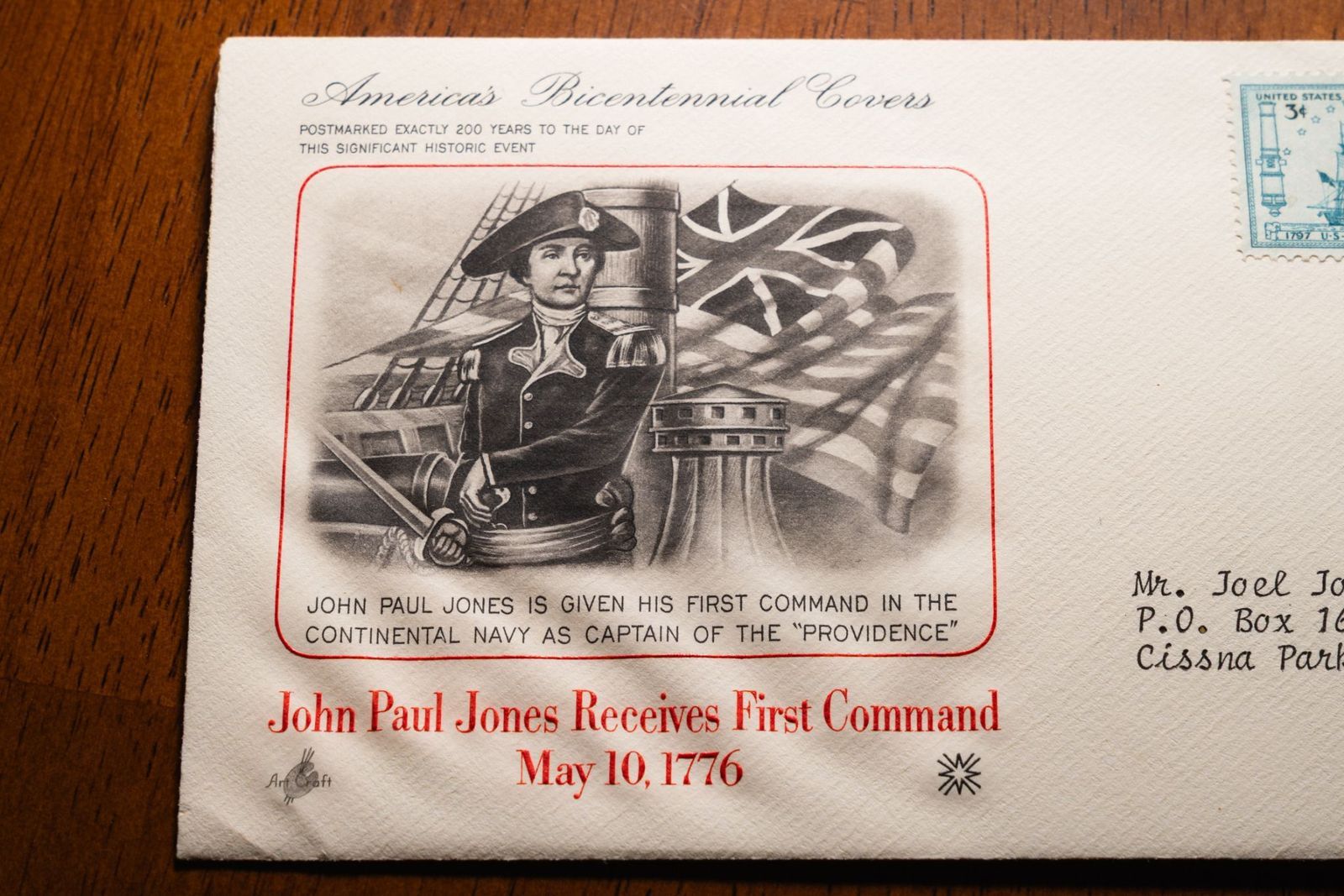
"I have not yet begun to fight!" — Captain John Paul Jones

Image: Logan Bush

During the Battle of Flamborough Head in 1779, Captain John Paul Jones commanded the badly damaged Bonhomme Richard against the British warship Serapis. With his vessel burning and close to sinking, the British demanded that he surrender.

Jones's refusal instantly rallied his crew, who fought on and eventually captured the enemy ship. Whether recorded word for word or slightly embellished over time, the reply became one of the most celebrated declarations of courage in naval history.

7

"Yes. Stand out of my sunlight." — Diogenes of Sinope

Image: huseyinturk_photograph

Ancient writers tell that Alexander the Great visited the philosopher Diogenes in Corinth and generously offered to grant him any wish. Instead of requesting wealth, power, or honors, Diogenes simply asked the conqueror to stop blocking the sunshine.

The exchange became one of antiquity's most enduring philosophical anecdotes. In a single sentence, Diogenes demonstrated that a person who desires almost nothing cannot easily be controlled, even by the most powerful ruler on Earth.

8

"To the strongest." — Alexander the Great

Image: Happy window

According to one ancient tradition, Alexander the Great was asked the question "To whom do you leave your kingdom?" as he lay dying in Babylon in 323 BC. Rather than naming a specific heir, he reportedly answered with two words that left the future of his empire completely uncertain.

Whether historically exact or not, the reply became inseparable from Alexander's legend. Without an undisputed successor, his generals fought for decades in the Wars of the Diadochi, dividing one of history's greatest empires into rival kingdoms.

9

"I am the master of my fate, I am the captain of my soul." — Nelson Mandela, quoting Invictus

Image: Sean Aidan Calderbank

These words close Invictus, the 1875 poem by English writer William Ernest Henley. Nelson Mandela often drew strength from the poem during his imprisonment under South Africa's apartheid regime, where he spent 27 years behind bars, and used it to reply to a reporter who asked: "How do you survive 27 years in prison without losing your dignity?"

By embracing Henley's verse, Mandela transformed it into a universal symbol of resilience and inner freedom. The quotation came to embody his belief that while others may control your circumstances, they cannot govern your spirit.

10

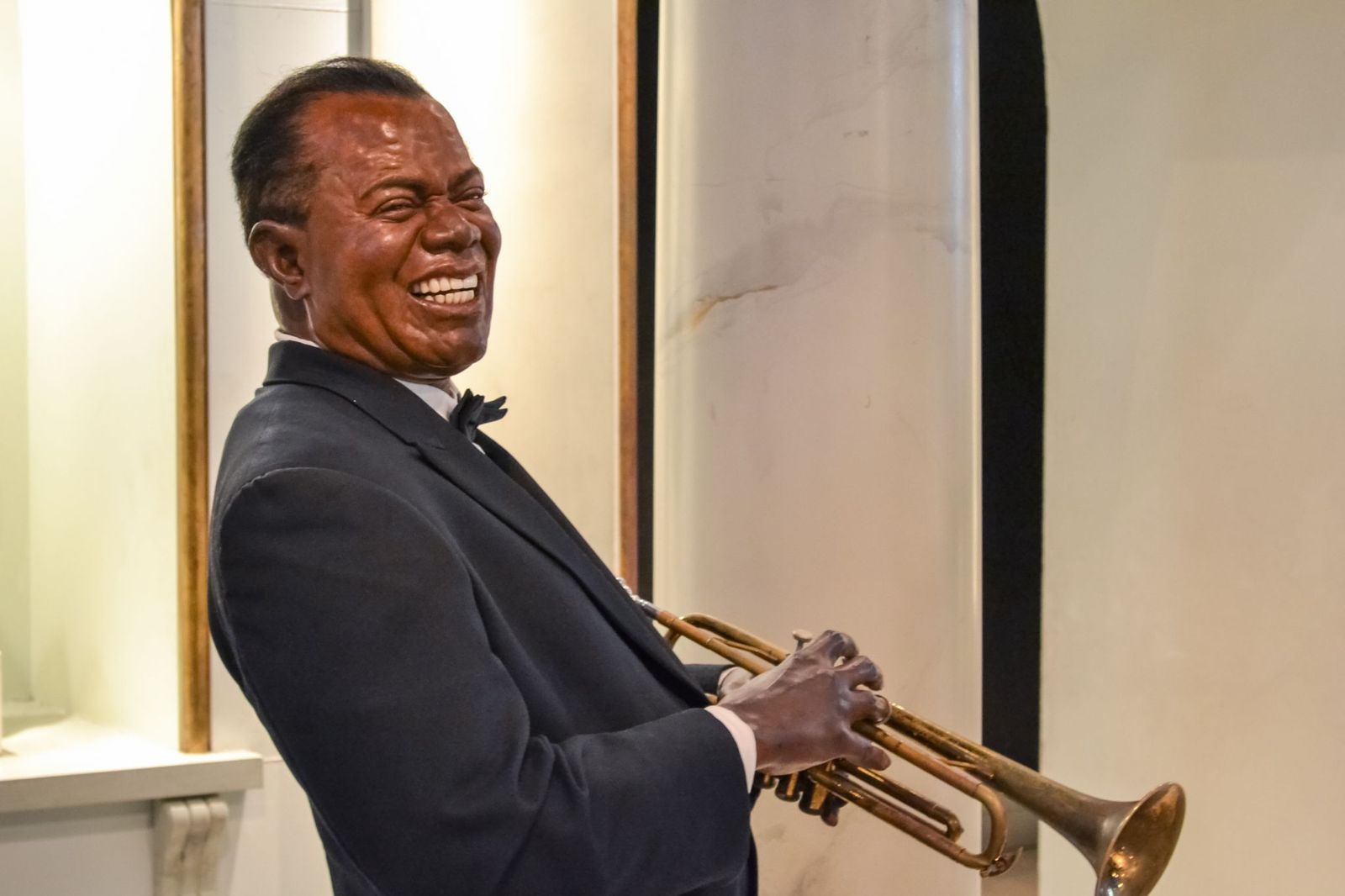
"If you have to ask, you'll never know." — Louis Armstrong

Image: Alina Zamogilnykh

Louis Armstrong was asked countless times by journalists to explain jazz, a genre that transformed American music during the twentieth century. Rather than describing technical aspects or blues traditions, he dismissed the very idea that jazz could be reduced to a definition.

His poetic and somewhat annoyed answer suggests that some experiences can only be understood by living them. More than a clever reply, it became one of the most quoted observations in music history.

Looking for an extra scoop of literary fun?

Learn more with our Word of the day

intractable

/ˌɪnˈtræktəb(ə)l/