The best-kept secrets in the animal kingdom
You should stay away from these 12 mammals with unusual defenses
Published on June 21, 2025
 Image: Rijksmuseum, CC0, via Wikimedia Commons
Did you know that there is a venomous primate? And what about a species of cetacean that expels a reddish substance into the water to escape predators? These are just two examples of some of the most extraordinary defense mechanisms among mammals; however, there are many more! From amazing behaviors to unique abilities, here we share 12 mammals’ best methods of protection for you to discover some of the most unusual and fun facts in the animal kingdom!!
Crested porcupine
 Image: analogicus
Found in Africa and southern Europe, the crested porcupine is one of the best-protected mammals. Almost its entire body is covered with quills with black-and-white banding, which helps predators spot them from a distance. When threatened, the porcupine shakes its tail quills, producing a rattling sound. If this doesn’t scare the enemy away, it charges backward to stab with its quills.
These bristles break off easily, and once they enter the predator's body, tiny barbs on the tips can become embedded deeper into the wound, potentially damaging blood vessels or even internal organs. Many inexperienced predators may die as a result of porcupine-quill injuries.
Pygmy sperm whale
 Image: Nahuel Robledo
Unlike its larger and better-known relatives, the pygmy sperm whale is so small that it relies on other mechanisms to defend itself against predators. This whale uses a highly unusual defense: it expels a reddish-brown substance through its anus, which it then agitates with its tail to create a large, dark cloud in the water. This cloud obscures the whale from view, allowing it to escape quickly and evade predators.
Although other cetaceans, such as the dwarf sperm whale, use similar tactics, this is a highly uncommon defense among mammals. In fact, it closely resembles the defense mechanisms found in cephalopods like squids and octopuses, which, ironically, are among the pygmy sperm whale’s favorite prey!
Arctic Hare
 Image: Natalia_Kollegova
The Arctic hare, the largest species of hare in North America, lives in the Arctic tundra and other icy biomes. Although it is a very fast mammal, its relatively small size means it must rely on ingenious ways to defend itself against potential predators. In its case, the most effective weapon is its fur.
Arctic hares are brown or grey during the summer, but when winter arrives, their coats turn white. This seasonal camouflage allows them to remain hidden in the snow. But that's not all—females build insulated, hidden shelters, and hares often form large groups to stay warm and avoid predators, increasing their chances of survival in the harsh Arctic environment.
Pangolin
 Image: Studio Crevettes
The pangolin has so many ingenious defense mechanisms that it has few natural enemies to worry about. For one, its body is almost completely covered in large, overlapping scales, giving it the appearance of a giant pine cone. It also has large, powerful claws on its forelimbs, although it rarely needs to use them.
Why? Because when threatened, a pangolin can curl into a tight ball, making it nearly impossible for most predators to attack. The sharp edges of its scales provide strong protection, almost like natural armor. In addition, pangolins can lash out with their heavy tails, causing serious injuries. And there’s more! If all else fails, a pangolin’s last resort is to spray a foul-smelling substance from its anus. Better to admire this fantastic animal from afar, don’t you think?
Three-banded armadillo
 Image: Mylene2401
Another mammal with bulky armor is the armadillo. However, in most species, this turtle-like shell offers little real protection against large predators, so they often rely on digging into the ground to escape danger. Among all armadillo species, only the South American three-banded armadillo depends heavily on its armor for protection.
Thanks to its loosely jointed shell, which allows a greater range of movement, it can roll into a perfect ball, making it nearly untouchable to most predators. During an attack, the three-banded armadillo not only closes itself tightly but also uses an additional clever trick: it creates a loud snapping sound that may startle potential enemies.
Opossum
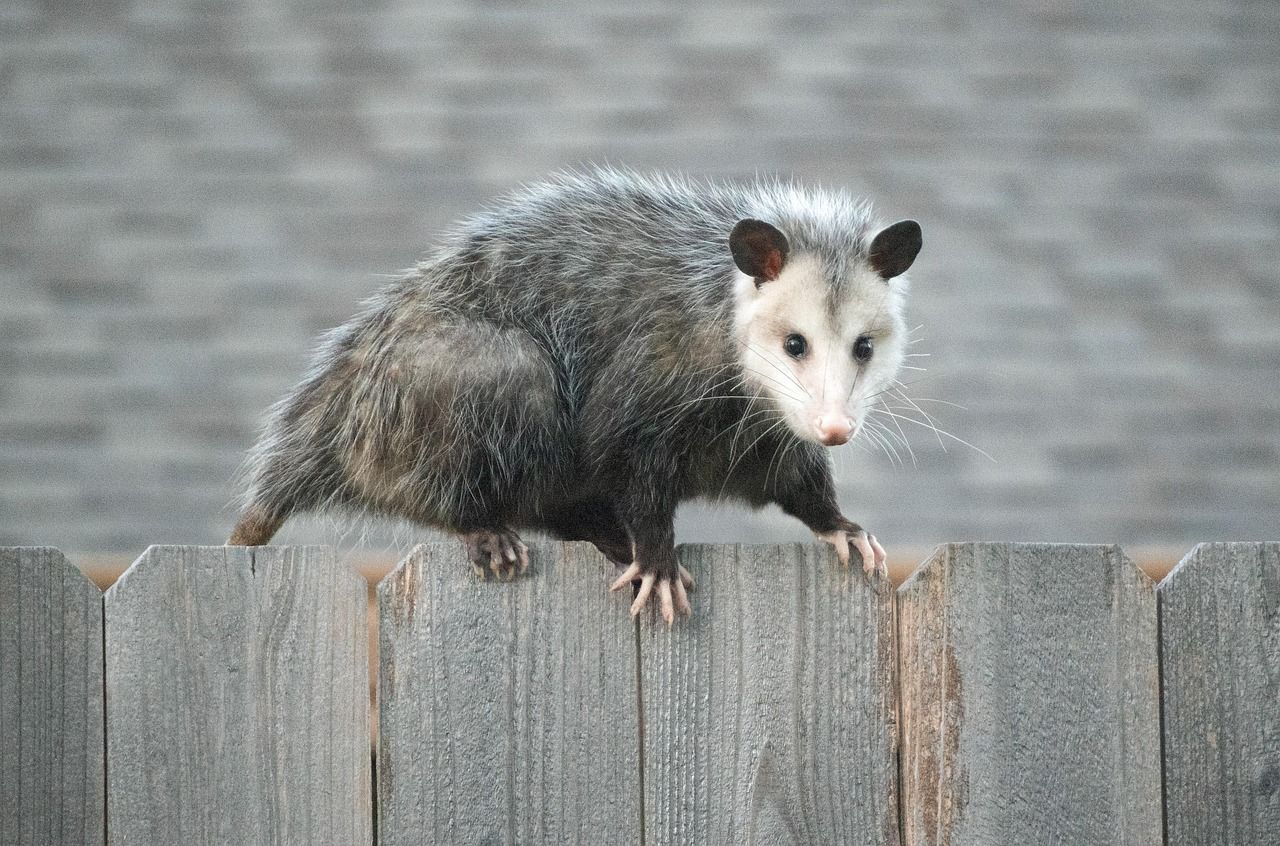 Image: Nature-Inspires
Everybody knows that the idiom playing possum means "playing dead." But do you know where it comes from? The American opossum has a unique way of reacting to danger. If typical mammalian defenses—such as growling, baring its teeth, and biting—fail, this adorable furry animal collapses to the ground with its mouth open and remains completely motionless, feigning death. It even releases a putrid, corpse-like odor!
Since many predators prefer to kill their own prey, they usually leave the seemingly dead opossum alone. What’s most remarkable about this marsupial’s defense is that it’s not a conscious act—it’s a physiological response triggered by extreme stress. The opossum can remain in this comatose-like state for several minutes to a few hours, only regaining mobility once the threat has passed.
Giraffe
 Image: Photo Lily
Yes, the giraffe is the tallest animal in the world, and you might think that alone would be enough to keep any other animal away. However, this gentle giant still needs to be cautious. While adult giraffes are relatively safe, young giraffes are vulnerable to predators such as lions, hyenas, and crocodiles.
Giraffes have several defense mechanisms. Their long legs allow them to run at high speeds, and they can deliver powerful kicks with their hooves, strong enough to kill a lion. Their long necks not only help them reach tall trees but also serve as formidable weapons: they can use them like clubs, swinging them with great force in a behavior known as "necking." Additionally, their fur produces chemicals with a strong odor, which may have antibacterial or insect-repelling properties and possibly serve as a mild deterrent to predators.
Dormouse
 Image: saguari
A dormouse is a small rodent found in Europe, Africa, and Asia. It gets its name from its long hibernation period. Like most mammals, a dormouse's primary method of defense is to bite an attacker. But if this fails—or if it's confronted by a much larger animal—it has an ace up its sleeve.
Dormice usually escape predators by fleeing, but with a twist. The skin on a dormouse’s tail is very loose, so if a predator grabs it by the tail, the skin can slip off, allowing the animal to escape. Once safe, the exposed part may heal, but the tail is permanently shortened. This form of autotomy is common in reptiles and invertebrates but extremely rare in mammals, making dormice a particularly unique and fascinating creature.
Skunk
 Image: Bryan Padron
Okay, you probably know about this one, but the skunk’s powerful defensive method definitely deserves a place on this list. Most of us have experienced the unpleasant task of covering our noses to avoid the foul smell of a skunk. But do you know how it works? A skunk’s chemical weapon is produced by a pair of glands located near its anus. These glands are so well developed that they can spray the fluid up to nine and a half feet.
Skunks also have remarkably good aim and usually target the predator’s face. If the spray hits an animal’s eyes, it can cause temporary blindness and intense irritation—another reason to give these animals plenty of space. That said, skunks use their chemical defense only as a last resort, since their supply is limited and it can take up to ten days for the glands to fully recharge.
Potto
 Image: Daderot, CC0, via Wikimedia Commons
Have you ever heard of pottos? Found in the jungles of Africa, pottos are a small nocturnal species of primate. There are many curious things about this mammal, but what is most striking is its very unusual defense mechanism. Due to their slow movements, pottos are vulnerable to several predators. To protect themselves, they have enlarged neural spines on their vertebrae that protrude from the neck and shoulders.
These tubercles, or bony growths, have pointed tips that are probably used as weapons. The spines may also serve as a kind of shield, protecting the potto’s neck from lethal bites, as predators often aim for the neck or back of the head of their helpless prey.
Platypus
 Image: Michael Jerrard
The platypus is famous for being one of the few mammals that lay eggs, but did you know it also has an unusual defense mechanism? The male platypus has sharp, retractable spurs on its hind feet connected to venom glands. When threatened or grabbed by a predator, the platypus kicks with these spurs, injecting venom.
Although the venom can cause severe pain and incapacitate medium-sized animals, it is not lethal to humans. However, people who have been stung by a platypus report that the pain is among the most intense they have ever experienced. Interestingly, only the male platypus produces this venom.
Slow loris
 Image: SONIC
This 13-inch-long, nocturnal primate found in the rainforests of Southeast Asia may look harmless—even cute. Yet it has a powerful secret that protects it from predators. The slow loris has poison glands on its elbows. But that’s not all: it can lick the poison and spread it over its fur. Female lorises even cover their babies in this poison before leaving them to go hunting.
Because the slow loris sucks the poison into its mouth, it effectively has a venomous bite as well. When threatened, it can bite and inject the venom into its attacker, causing intense pain and swelling. In fact, some people have died from anaphylactic shock after being bitten by slow lorises. Who knew such a thing as a poisonous primate existed? Consider yourself warned!