Think again

You’ve been wrong all along—10 facts that prove how little we really know


Published on February 5, 2026

Image: Elimende Inagella

You repeat them every day—often without thinking twice. But a surprising number of "facts" we take for granted are just plain wrong. Whether it’s the recommended water intake or the behavior of lightning, prepare for a reality check. These 10 everyday misconceptions will make you rethink everything you thought you knew.

1

You lose most heat through your head

Image: Ladislav Stercell

You lose heat through any part of your body that’s exposed—not just your head. This myth likely started from an outdated military study in which soldiers in Arctic conditions wore full-body gear but no hats, for some reason.

Heat loss is driven by surface area and exposure. If you're unlucky enough to be naked in freezing weather, you'll lose heat evenly across your body—not primarily from your scalp.

2

Water conducts electricity

Image: Leo Rivas

Pure water is actually a very poor conductor of electricity. It’s the impurities in water—like dissolved minerals and salts—that allow it to carry an electric current.

However, since the water we commonly encounter is rarely pure, it readily conducts electricity—making contact between water and electrical sources hazardous.

3

Shaving makes hair grow back thicker

Image: Supply

Also, nope—it only looks that way. Shaved hair has a blunt edge, which can make it feel coarser or appear darker than unshaved hair.

Hair growth is determined by follicles beneath the skin. Since shaving only trims hair above the surface, it has no effect on thickness, color, or growth rate.

4

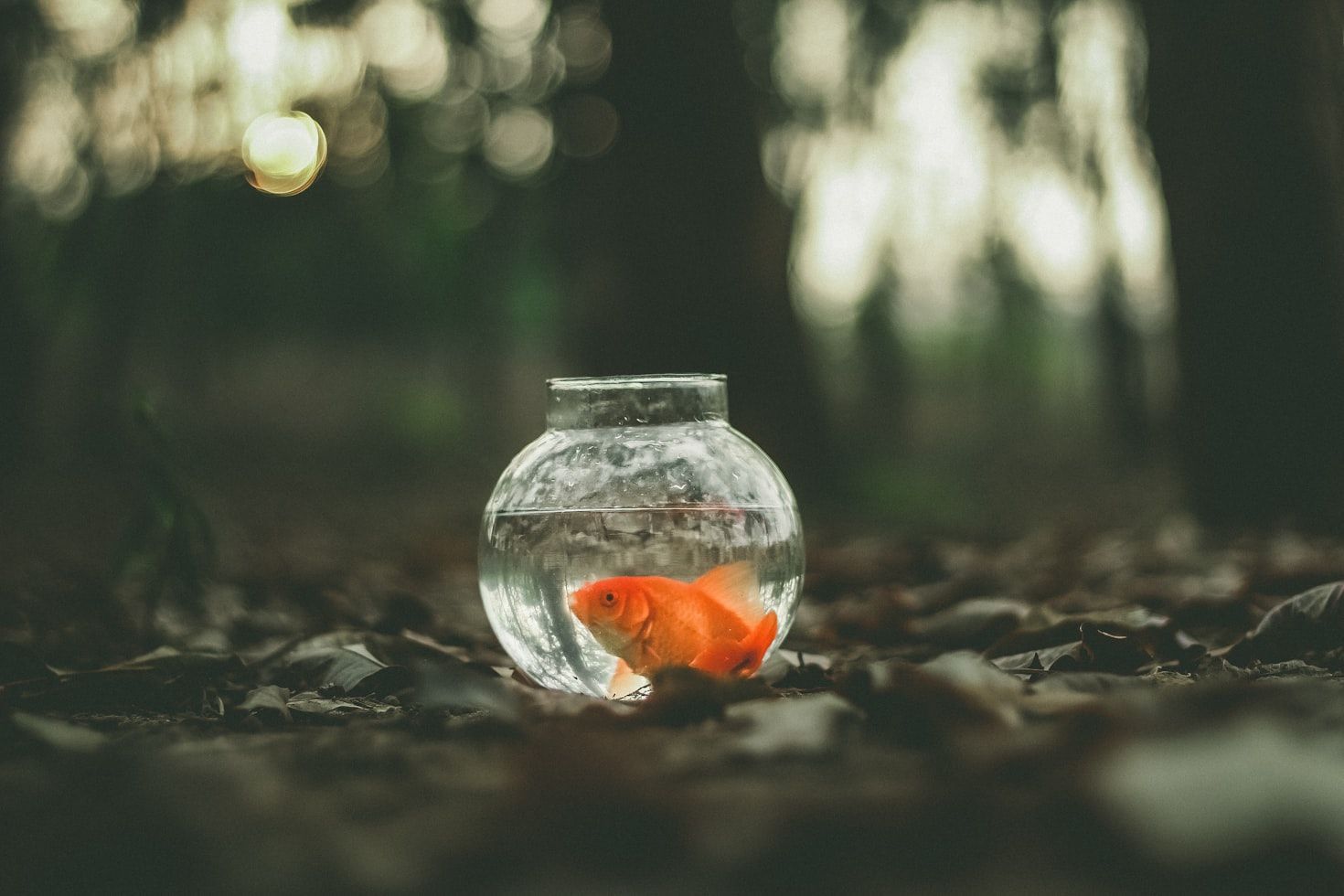
Goldfish have a 3-second memory

Image: Ahmed Zayan

Goldfish can actually remember things for weeks, even months. They’re far smarter than we usually give them credit for.

Moreover, studies have shown goldfish can be trained to respond to feeding times and light cues. So don’t keep yours in a tiny bowl—it’s far too small for their cognitive and physical needs.

5

Lightning never strikes the same place twice

Image: NOAA

It absolutely does—and often. The Empire State Building gets hit about 25 times a year. This is because lightning follows the path of least resistance, which often means tall, conductive structures get hit repeatedly.

So, if you’re caught in an electrical storm, don’t run toward the last spot that was struck—chances are, lightning will hit there again!

6

Glass is a slow-moving liquid

Image: C. G.

Glass is an amorphous solid—not a liquid—and despite popular belief, its molecules don’t flow over time.

The myth likely originated from old window panes, which are sometimes thicker at the bottom. This thickness is due to historical manufacturing techniques—not because gravity caused the glass to flow downward.

7

You need to drink 8 glasses of water a day

Image: Joseph Greve

Hydration needs vary depending on age, activity level, climate, and diet—and they don’t require exactly eight glasses. Food and other beverages also count toward your fluid intake.

In reality, the "8 glasses a day" rule isn’t based on hard science; it’s simply a general guideline to prevent dehydration. Under normal conditions, drinking when you’re thirsty is usually enough to stay well hydrated.

8

Blood is blue in your veins

Image: Олег Мороз

Blood is always red—it only appears blue through the skin because of how light interacts with tissue and veins.

The only real color difference is that oxygen-rich blood is bright red, while deoxygenated blood is a darker red. Humans and other vertebrates do not have truly blue blood.

9

Gum stays in your stomach for 7 years

Image: Quinten de Graaf

While it’s true that swallowed gum can’t be digested, it doesn’t stay in your stomach—it passes through the digestive system normally.

The same happens with things like corn kernels or hard seeds. Only when large amounts of gum are swallowed—often along with other indigestible objects—can it lead to blockages or health issues.

10

Waking a sleepwalker is dangerous

Image: Romain GROSSIER

While a sleepwalker may be confused or startled if awakened, it’s not inherently dangerous and can sometimes be the safest way to prevent accidental injury.

Experts often recommend gently guiding sleepwalkers back to bed, but waking them is also acceptable if there’s an immediate risk of harm.


MAGIC MAYHEM

10 Legendary Magic Tricks That Still Leave Us Spellbound


Published on February 5, 2026


Image: Joseph Two

Who doesn’t love a little bit of magic? From children to adults, a magician’s tricks can leave us mesmerized and bring back our sense of awe. In this enchanting realm, the lines between reality and illusion blur, and for a fleeting moment, we're transported to a place where anything is possible.

Prepare to have your mind twisted as we explore the history of 10 of the most astonishing magic tricks ever performed.

1

The Great Escape

Image: Bain News Service

Harry Houdini's escape from the "Chinese Water Torture Cell" remains one of the most iconic and death-defying stunts in history. Heavily restrained and suspended upside down in a glass tank filled with water, Houdini astonished audiences as he wriggled free from his chains and emerged unscathed. His ability to cheat death and escape from the most perilous situations captured the imagination of millions and cemented his legacy as the greatest escape artist of all time.

2

The Vanishing Of The Statue Of Liberty

Image: Pierre Blaché

In one of his most famous illusions, David Copperfield made the Statue of Liberty disappear before a live audience. With cameras positioned around the statue and spectators free to look around for the missing statue, the trick left everyone stunned and questioning their own eyesight. While the trick - which took months of planning and coordination - relies mostly on misdirection, it is still one of the most ambitious feats in magic history.

3

Sawing Someone In Half

Image: Jeremy Thompson from Los Angeles, California, CC BY 2.0

The classic illusion of sawing an assistant or volunteer in half has been a staple of magic shows for centuries, but none have executed it quite like magician P.T. Selbit. In 1921, Selbit astounded audiences by performing the trick for the first time on stage. Using a large saw to seemingly divide his assistant in two - who was tied and locked inside a wooden crate - Selbit’s ingenious illusion, which he enhanced by having members of the public participate, soon became a sensation in the world of magic.

4

Biting The Bullet

Image: Cody Wingfield

Penn & Teller are known for their edgy and unconventional approach to magic, and their bullet catch trick is no exception. In this seemingly death-defying stunt, both illusionists catch a bullet fired by each other at the same time with their mouths! A different volunteer signs the tip of each bullet to assure the public that the caught bullets are the same ones they loaded into their guns. Despite the apparent danger, the duo has successfully performed the trick countless times, leaving audiences both terrified and amazed.

5

Walking on Water

Image: Priscilla Du Preez

British magician Dynamo stunned onlookers when he seemingly just started walking on the waters of the River Thames in London. With no visible means of support, the magician appeared to defy physics as he strolled effortlessly across the water's surface. The extraordinary stunt was reported in most UK newspapers at the time, and while other magicians have attempted the feat in shallower waters, Dynamo’s supreme illusion remains unsurpassed.

6

The Disappearing Elephant

Image: Jesse Schoff

Imagine if, instead of acknowledging the elephant in the room, you simply made it disappear altogether. Puns aside, in 1918 famous escapist Harry Houdini did precisely this, baffling audiences with his illusion of making a full-sized elephant vanish into thin air. After hiding the elephant inside a cabinet, he suddenly draws the curtains to reveal that the animal has vanished. The trick, which has since become a legend in magic circles, continues to confound audiences to this day.

7

Levitation

Image: Piotr Wilk

The ability to seemingly fly or levitate objects has long been a Holy Grail of magic, but few have mastered the art quite like Criss Angel. Known for his mind-boggling illusions, Angel has mesmerized audiences with his seemingly impossible feats of levitation. Whether floating above the Las Vegas strip or levitating a group of spectators, Angel's mastery of illusion is certainly not bound by the limitations of gravity.

8

The Indian Rope Trick

Image: Erwan Hesry

The Indian Rope Trick is one of the most infamous magic tricks in history, as it is shrouded in mystery. In this illusion, a rope is thrown into the air, where it magically stands erect, defying gravity. Then, a young boy climbs the rope and disappears into thin air, only to reappear moments later unharmed. Historical accounts of the trick go back as far as the 9th century, but to this day, no one is certain of how it was done.

9

Metamorphosis

Image: Aziz Acharki

Invented by English illusionist John Nevil Maskelyne, the classic illusion of metamorphosis involves the instantaneous swapping of places of a magician and their assistant. One of the most famous renditions of this trick was performed by The Pendragons, a couple of expert magicians who executed the illusion with unparalleled precision and speed. In a matter of seconds, the couple would trade positions inside a locked box, leaving audiences gasping in disbelief at the seamless transformation.

10

The Table of Death

Image: DDP

In this terrifying illusion, a magician lies on a table while sharp swords are suspended above, and the performer must seemingly struggle to escape before the blades are released. Usually, a curtain partially obscures the magician’s movements, but when it is pulled, the performer is revealed to be free and unharmed. Although the modern version of this trick is attributed to American magician André Kole, many include this unnerving stunt in their stage performances.

Looking for an extra scoop of literary fun?

Learn more with our Word of the day

respite

/ˈrɛspət/